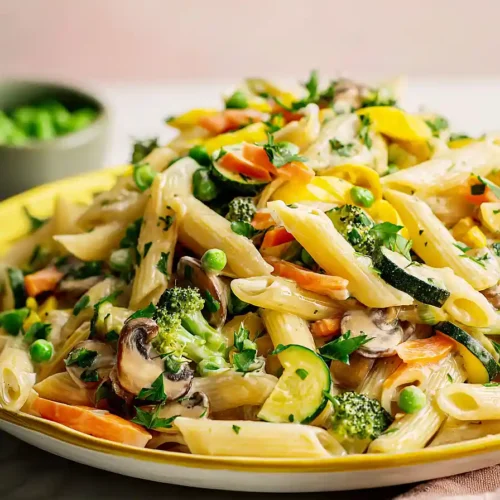
Cheesy Pioneer Woman's Pasta Primavera
Delicious Cheesy Pioneer Woman's Pasta Primavera recipe with step-by-step instructions.
Ingredients
For the pasta and vegetables::
- 1 lb pasta (I always use Barilla penne rigate)
- 4 tbsp unsalted butter
- 2 tbsp olive oil
- 1/2 cup onion
- 5 cloves garlic, minced
- 1.5 cups broccoli
- 2 carrots (peeled and sliced into 1/4-inch rounds)
- 1 red bell pepper (seeded and cut into 1/2-inch strips)
- 1 yellow squash
- 2 zucchini (halved lengthwise and sliced 1/2-inch thick)
- 8 oz mushrooms
- 1/2 cup frozen peas (I use Birds Eye for best color)
- 1/4 tsp red pepper flakes
- salt
- black pepper
For the sauce::
- 1 tbsp unsalted butter (I like Kerrygold for the sauce base)
- 1/2 cup dry white wine
- 1/2 cup chicken broth
- 1 cup heavy cream
- 1 cup half-and-half
- 3/4 cup parmesan cheese (freshly grated for a smoother sauce)
- 6 basil leaves
Instructions
- Begin by prepping all vegetables: peel and slice carrots into 1/4-inch rounds, seed and cut red bell pepper into 1/2-inch strips, halve zucchini lengthwise and slice into 1/2-inch thick pieces, slice yellow squash into similar thickness, and slice mushrooms. Cut broccoli into bite-sized florets. Place all prepped vegetables on a large plate, organized by cooking time. While prepping, bring a large pot of salted water to a boil and add the pasta, cooking until al dente according to package directions. I like to taste the pasta a minute before the package time suggests—it should have a slight firmness when you bite it.
- Heat 4 tablespoons unsalted butter and 2 tablespoons olive oil in a large skillet over medium-high heat. Once the butter foams, add the minced garlic and diced onion, cooking for 1 to 2 minutes until fragrant and just beginning to soften. Add the broccoli and carrots (the vegetables that need the most cooking time), stirring for about 1 minute until they're lightly coated with the butter mixture and beginning to soften slightly. Transfer these to your plate and repeat with the red bell pepper, cooking for 1 to 2 minutes before moving it to the plate as well.
- Add 1 tablespoon fresh unsalted butter to the skillet and quickly cook the yellow squash and zucchini for under 1 minute, just to lightly soften them—these vegetables release water quickly and can become mushy if overcooked. Transfer to the plate with the other vegetables. Add the sliced mushrooms and cook for 1 to 2 minutes until they begin to release their moisture and brown slightly. Pour in the white wine and chicken broth, stirring for 1 to 2 minutes to deglaze the pan and reduce slightly. This builds a flavorful base for your sauce.
- Reduce the heat to medium and pour in the heavy cream and half-and-half, stirring to combine. Let this simmer gently for about 1 minute to warm through. Remove from heat and stir in the freshly grated Parmesan cheese, salt, and black pepper to taste. I always grate my own Parmesan rather than using pre-shredded—it melts into the sauce much more smoothly and creates a silkier texture without the anti-caking agents. Stir gently until the cheese is fully incorporated and the sauce is smooth.
- Stir the basil leaves and all the sautéed vegetables from Step 2 back into the cream sauce, followed by the frozen peas. Gently fold everything together over low heat to combine without breaking down the vegetables. Drain the cooked pasta from Step 1 and add it directly to the skillet, tossing gently to coat every piece with the creamy sauce. The residual heat will continue to warm the peas and soften them slightly without overcooking them.
- Transfer the pasta primavera to serving bowls or a platter. Top each serving with an extra sprinkle of freshly grated Parmesan, a pinch of salt, freshly ground black pepper, and a fresh basil leaf or two for color and brightness. Serve immediately while the sauce is still silky and warm.