Finding creative ways to use up rhubarb season’s bounty can feel overwhelming, especially when you’ve already made your third batch of strawberry rhubarb pie and your family is starting to give you sideways glances. Plus, let’s be honest – not everyone in the house is always on board with rhubarb’s tart flavor in traditional desserts.
That’s where this orange rhubarb bread comes to the rescue: it balances the tang of fresh rhubarb with bright citrus notes, bakes up into a moist quick bread that’s perfect for breakfast or snacking, and uses simple pantry staples you probably already have in your kitchen.

Why You’ll Love This Orange Rhubarb Bread
- Unique flavor combination – The tangy rhubarb paired with bright orange creates a refreshing twist on traditional quick breads that’ll wake up your taste buds.
- Perfect for using garden rhubarb – If you have rhubarb growing in your yard or find it at the farmers market, this is a delicious way to put it to use instead of letting it go to waste.
- Simple pantry ingredients – Most of what you need is probably already in your kitchen, making this an easy recipe to whip up without a special grocery trip.
- Great for breakfast or snack time – This bread works just as well with your morning coffee as it does for an afternoon treat, giving you plenty of opportunities to enjoy it.
What Kind of Rhubarb Should I Use?
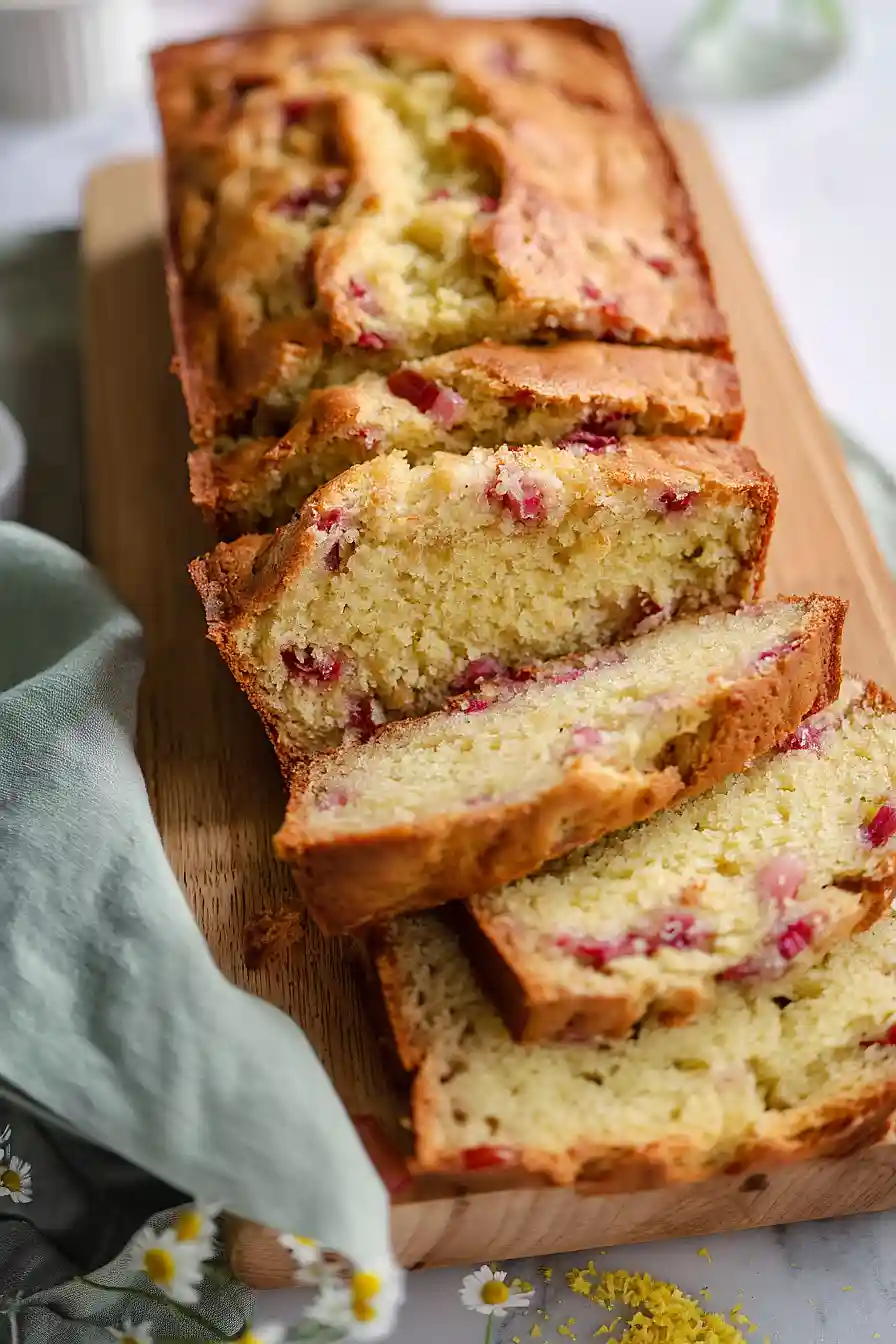
Fresh rhubarb is always your best bet for this bread, and you’ll find it in season during spring and early summer at most grocery stores and farmers markets. The color of the stalks – whether they’re deep red, pink, or mostly green – doesn’t really affect the flavor, so grab whatever looks fresh and firm. If fresh rhubarb isn’t available, frozen rhubarb works just fine too, though you’ll want to thaw it first and drain off any excess liquid before measuring it out. When prepping your rhubarb, make sure to trim off and discard the leaves (they’re toxic) and cut the stalks into small, even pieces about half an inch long so they distribute nicely throughout the bread.
Options for Substitutions
This recipe is pretty forgiving when it comes to swaps, so here are some options if you need them:
- Rhubarb: Fresh rhubarb works best, but frozen rhubarb is totally fine too. Just thaw it first and drain any excess liquid before using. You could also try cranberries or chopped strawberries for a different fruity twist.
- Orange juice and rind: If you don’t have fresh oranges, bottled orange juice works just fine. For the rind, you can use 1/2 teaspoon of orange extract instead, or try lemon juice and zest for a different citrus flavor.
- Butter: You can swap butter with an equal amount of vegetable oil or melted coconut oil. The texture will be slightly different but still tasty.
- All-purpose flour: Whole wheat flour can replace up to half of the all-purpose flour for a heartier bread. Going completely whole wheat might make it a bit dense, so stick with a 50/50 mix if you want to try it.
- Baking powder: Don’t substitute this one – baking powder is what makes the bread rise properly, so it’s pretty important to keep it as is.
Watch Out for These Mistakes While Baking
The biggest mistake when baking with rhubarb is skipping the sugar toss in step one, which draws out excess moisture and prevents your bread from turning out gummy or undercooked in the middle.
Overmixing the batter after adding the dry ingredients is another common error – stir just until the flour disappears to keep your bread tender instead of tough and dense.
Since rhubarb releases liquid as it bakes, check for doneness by inserting a toothpick into the center; it should come out with just a few moist crumbs, not wet batter, and if the top is browning too quickly, tent it loosely with foil during the last 20 minutes.
Don’t rush the cooling process either – letting the bread rest in the pan for those 5 minutes and then on the rack helps it set properly so it slices cleanly without crumbling apart.
What to Serve With Orange Rhubarb Bread?
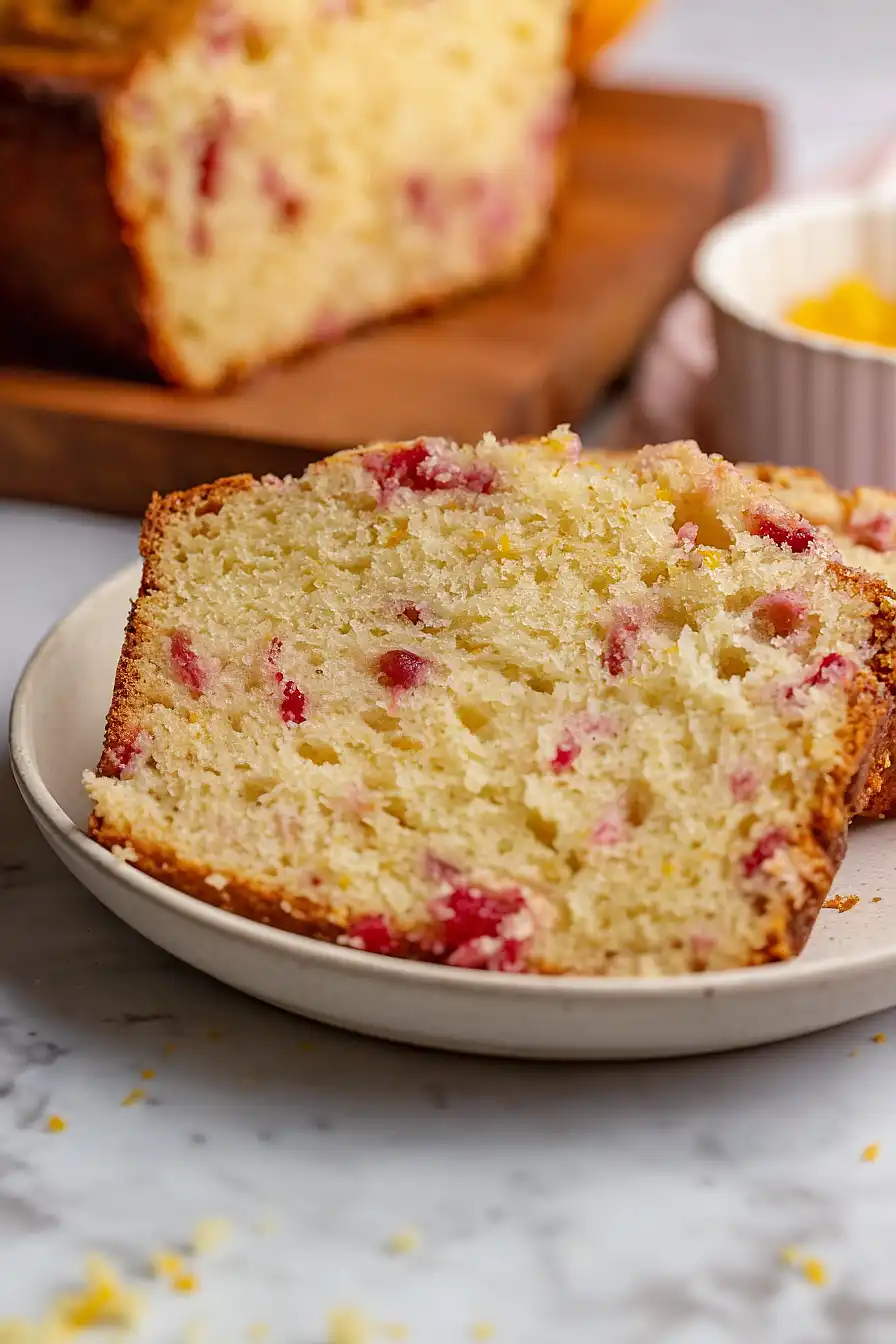
This sweet bread is perfect for breakfast or an afternoon snack with a hot cup of coffee or tea. I love spreading a thick layer of softened butter or cream cheese on a warm slice – the tanginess pairs really well with the sweet rhubarb and citrus flavors. You could also serve it alongside fresh berries and a dollop of whipped cream for a simple dessert, or toast it up the next day and top it with a bit of jam. For a brunch spread, set it out with some scrambled eggs and fresh fruit salad to balance out the sweetness.
Storage Instructions
Store: This orange rhubarb bread keeps really well at room temperature for about 3 days when wrapped tightly in plastic wrap or stored in an airtight container. If you want it to last longer, pop it in the fridge where it’ll stay fresh for up to a week.
Freeze: You can freeze this bread for up to 3 months, which is great for preserving that fresh rhubarb flavor. Wrap it tightly in plastic wrap, then again in aluminum foil or place in a freezer bag. I like to slice it first so I can grab individual pieces whenever I want them.
Thaw: Just leave the bread on the counter for a couple hours to thaw completely, or if you’re impatient like me, warm individual slices in the microwave for about 20-30 seconds. It tastes almost as good as fresh from the oven!
| Preparation Time | 20-30 minutes |
| Cooking Time | 70-80 minutes |
| Total Time | 160-190 minutes |
| Level of Difficulty | Medium |
| Servings | 12 slices |
Estimated Nutrition
Estimated nutrition for the whole recipe (without optional ingredients):
- Calories: 2300-2500
- Protein: 28-32 g
- Fat: 40-46 g
- Carbohydrates: 450-480 g
Ingredients
For the rhubarb mixture:
- 2.25 cups rhubarb (chopped into 1/2-inch pieces)
- 0.33 cup sugar
For the bread batter:
- 3.25 cups flour (I always use King Arthur all-purpose flour)
- 1.25 tsp salt
- 4.5 tsp baking powder
- 1.5 tsp orange rind (finely zested for best aroma/flavor)
- 0.33 cup butter (I like Kerrygold unsalted butter for this)
- 1.25 cup sugar
- 1.2 tsp ground cinnamon
- 1 egg (large, room temperature at about 70°F)
- 0.66 cup orange juice
- 1 tsp vanilla
Step 1: Prepare Mise en Place and Dry Ingredients
- 2.25 cups rhubarb, chopped into 1/2-inch pieces
- 0.33 cup sugar
- 3.25 cups flour
- 1.25 tsp salt
- 4.5 tsp baking powder
- 1.5 tsp orange rind, finely zested
- 1.2 tsp ground cinnamon
Finely zest the orange rind and set aside—this captures the essential oils for maximum aroma and flavor.
Chop the rhubarb into 1/2-inch pieces and toss with 1/3 cup sugar in a bowl; this maceration will help draw out excess moisture from the rhubarb so your bread stays moist rather than watery.
While the rhubarb sits, whisk together the flour, salt, baking powder, cinnamon, and reserved orange zest in a separate bowl.
I always sift my dry ingredients to avoid lumps and ensure the baking powder distributes evenly throughout the bread for consistent rise.
Step 2: Cream Butter and Sugar, Then Build the Wet Base
- 0.33 cup butter
- 1.25 cup sugar
- 1 egg, large, room temperature
- 0.66 cup orange juice
- 1 tsp vanilla
In a large bowl, cream together the softened butter and 1.25 cups sugar for 2-3 minutes until light and fluffy—this incorporates air and creates a tender crumb.
Make sure your egg is at room temperature, as cold eggs won’t blend smoothly into the butter mixture.
Add the egg, then the orange juice and vanilla, mixing well after each addition until the batter is smooth and homogeneous.
This wet base will carry all your liquid flavors and bind with the dry ingredients.
Step 3: Combine Wet and Dry Ingredients
- dry ingredient mixture from Step 1
- wet base from Step 2
Fold the dry ingredient mixture from Step 1 into the wet base from Step 2 using a spatula or wooden spoon, stirring until just combined—do not overmix, as this can develop too much gluten and result in a dense, tough bread.
Stop folding as soon as you don’t see streaks of flour; a few small lumps are perfectly fine and will disappear during baking.
Step 4: Fold in Rhubarb and Prepare for Baking
- rhubarb mixture from Step 1
- combined batter from Step 3
Gently fold the macerated rhubarb from Step 1 (including any accumulated juices) into the batter until evenly distributed throughout.
I like to reserve a few rhubarb pieces to scatter on top of the batter before baking for a nice presentation.
Pour the batter into a greased 9×5 inch loaf pan (or similar size), smoothing the top gently with a spatula, then add any reserved rhubarb pieces to the surface.
Step 5: Bake Until Golden and Set
Bake in a preheated 350°F oven for 1 hour to 1 hour and 10 minutes, until a toothpick inserted into the center comes out with just a few moist crumbs (not wet batter).
The top should be golden brown.
If the top is browning too quickly before the center is done, tent loosely with foil for the last 15-20 minutes of baking.
Step 6: Cool and Finish
Let the bread cool in the pan for 5 minutes—this allows the structure to set slightly so it won’t fall apart when you turn it out.
Run a thin knife around the edges of the pan to release it, then turn the bread out onto a wire cooling rack.
Let it cool completely for at least 1 hour before slicing; this allows the crumb to firm up and makes for cleaner, more beautiful slices.
Tender Orange Rhubarb Bread
Ingredients
For the rhubarb mixture::
- 2.25 cups rhubarb (chopped into 1/2-inch pieces)
- 0.33 cup sugar
For the bread batter::
- 3.25 cups flour (I always use King Arthur all-purpose flour)
- 1.25 tsp salt
- 4.5 tsp baking powder
- 1.5 tsp orange rind (finely zested for best aroma/flavor)
- 0.33 cup butter (I like Kerrygold unsalted butter for this)
- 1.25 cup sugar
- 1.2 tsp ground cinnamon
- 1 egg (large, room temperature at about 70°F)
- 0.66 cup orange juice
- 1 tsp vanilla
Instructions
- Finely zest the orange rind and set aside—this captures the essential oils for maximum aroma and flavor. Chop the rhubarb into 1/2-inch pieces and toss with 1/3 cup sugar in a bowl; this maceration will help draw out excess moisture from the rhubarb so your bread stays moist rather than watery. While the rhubarb sits, whisk together the flour, salt, baking powder, cinnamon, and reserved orange zest in a separate bowl. I always sift my dry ingredients to avoid lumps and ensure the baking powder distributes evenly throughout the bread for consistent rise.
- In a large bowl, cream together the softened butter and 1.25 cups sugar for 2-3 minutes until light and fluffy—this incorporates air and creates a tender crumb. Make sure your egg is at room temperature, as cold eggs won't blend smoothly into the butter mixture. Add the egg, then the orange juice and vanilla, mixing well after each addition until the batter is smooth and homogeneous. This wet base will carry all your liquid flavors and bind with the dry ingredients.
- Fold the dry ingredient mixture from Step 1 into the wet base from Step 2 using a spatula or wooden spoon, stirring until just combined—do not overmix, as this can develop too much gluten and result in a dense, tough bread. Stop folding as soon as you don't see streaks of flour; a few small lumps are perfectly fine and will disappear during baking.
- Gently fold the macerated rhubarb from Step 1 (including any accumulated juices) into the batter until evenly distributed throughout. I like to reserve a few rhubarb pieces to scatter on top of the batter before baking for a nice presentation. Pour the batter into a greased 9x5 inch loaf pan (or similar size), smoothing the top gently with a spatula, then add any reserved rhubarb pieces to the surface.
- Bake in a preheated 350°F oven for 1 hour to 1 hour and 10 minutes, until a toothpick inserted into the center comes out with just a few moist crumbs (not wet batter). The top should be golden brown. If the top is browning too quickly before the center is done, tent loosely with foil for the last 15-20 minutes of baking.
- Let the bread cool in the pan for 5 minutes—this allows the structure to set slightly so it won't fall apart when you turn it out. Run a thin knife around the edges of the pan to release it, then turn the bread out onto a wire cooling rack. Let it cool completely for at least 1 hour before slicing; this allows the crumb to firm up and makes for cleaner, more beautiful slices.