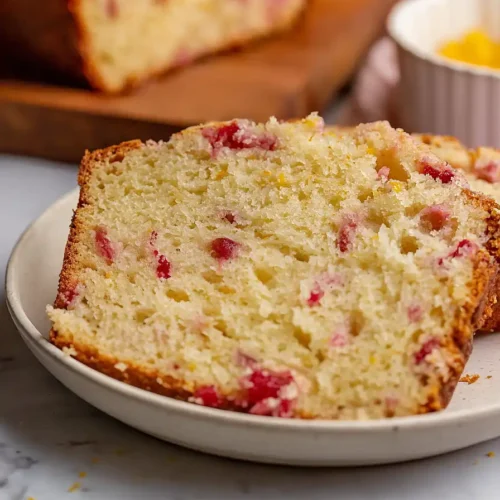
Tender Orange Rhubarb Bread
Delicious Tender Orange Rhubarb Bread recipe with step-by-step instructions.
Ingredients
For the rhubarb mixture::
- 2.25 cups rhubarb (chopped into 1/2-inch pieces)
- 0.33 cup sugar
For the bread batter::
- 3.25 cups flour (I always use King Arthur all-purpose flour)
- 1.25 tsp salt
- 4.5 tsp baking powder
- 1.5 tsp orange rind (finely zested for best aroma/flavor)
- 0.33 cup butter (I like Kerrygold unsalted butter for this)
- 1.25 cup sugar
- 1.2 tsp ground cinnamon
- 1 egg (large, room temperature at about 70°F)
- 0.66 cup orange juice
- 1 tsp vanilla
Instructions
- Finely zest the orange rind and set aside—this captures the essential oils for maximum aroma and flavor. Chop the rhubarb into 1/2-inch pieces and toss with 1/3 cup sugar in a bowl; this maceration will help draw out excess moisture from the rhubarb so your bread stays moist rather than watery. While the rhubarb sits, whisk together the flour, salt, baking powder, cinnamon, and reserved orange zest in a separate bowl. I always sift my dry ingredients to avoid lumps and ensure the baking powder distributes evenly throughout the bread for consistent rise.
- In a large bowl, cream together the softened butter and 1.25 cups sugar for 2-3 minutes until light and fluffy—this incorporates air and creates a tender crumb. Make sure your egg is at room temperature, as cold eggs won't blend smoothly into the butter mixture. Add the egg, then the orange juice and vanilla, mixing well after each addition until the batter is smooth and homogeneous. This wet base will carry all your liquid flavors and bind with the dry ingredients.
- Fold the dry ingredient mixture from Step 1 into the wet base from Step 2 using a spatula or wooden spoon, stirring until just combined—do not overmix, as this can develop too much gluten and result in a dense, tough bread. Stop folding as soon as you don't see streaks of flour; a few small lumps are perfectly fine and will disappear during baking.
- Gently fold the macerated rhubarb from Step 1 (including any accumulated juices) into the batter until evenly distributed throughout. I like to reserve a few rhubarb pieces to scatter on top of the batter before baking for a nice presentation. Pour the batter into a greased 9x5 inch loaf pan (or similar size), smoothing the top gently with a spatula, then add any reserved rhubarb pieces to the surface.
- Bake in a preheated 350°F oven for 1 hour to 1 hour and 10 minutes, until a toothpick inserted into the center comes out with just a few moist crumbs (not wet batter). The top should be golden brown. If the top is browning too quickly before the center is done, tent loosely with foil for the last 15-20 minutes of baking.
- Let the bread cool in the pan for 5 minutes—this allows the structure to set slightly so it won't fall apart when you turn it out. Run a thin knife around the edges of the pan to release it, then turn the bread out onto a wire cooling rack. Let it cool completely for at least 1 hour before slicing; this allows the crumb to firm up and makes for cleaner, more beautiful slices.