Getting a satisfying dinner on the table during busy weeknights without spending hours in the kitchen can feel impossible. Between work, family obligations, and everything else on your plate, the last thing you want is a complicated recipe with a million steps or a grocery list a mile long.
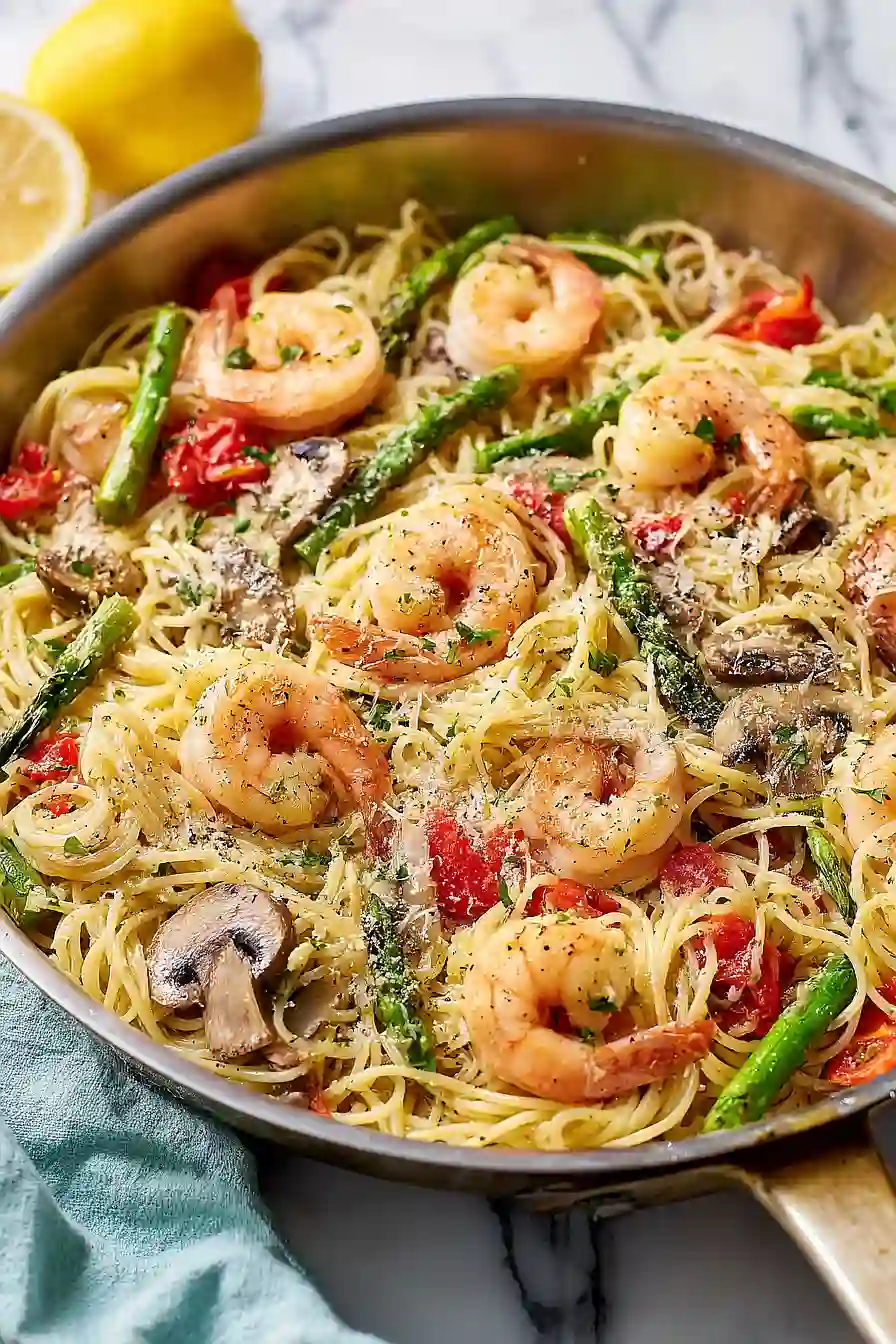
That’s where this shrimp pasta primavera comes in. It’s light yet filling, comes together in about 30 minutes, and uses simple ingredients that you can easily swap out based on what’s in your fridge. Plus, it looks fancy enough to serve to guests, even though it’s honestly one of the easiest pasta dishes you’ll ever make.
Why You’ll Love This Shrimp Pasta Primavera
- Ready in under 30 minutes – This recipe comes together quickly, making it perfect for busy weeknights when you want something homemade without spending hours in the kitchen.
- Light and healthy – Packed with fresh vegetables and lean shrimp, this pasta dish gives you a nutritious dinner that doesn’t feel heavy.
- Restaurant-quality at home – The combination of garlic, herbs, and Parmesan creates a flavorful sauce that tastes like something you’d order at an Italian restaurant, but for a fraction of the cost.
- Flexible and customizable – You can easily swap in whatever vegetables you have on hand or adjust the amount of shrimp based on your preference or budget.
What Kind of Shrimp Should I Use?
For this pasta primavera, you can use fresh or frozen shrimp – both work great. If you’re buying frozen, just thaw them in the fridge overnight or run them under cold water for a quick thaw before cooking. Size-wise, medium to large shrimp (around 31-40 count per pound) are perfect for this dish since they’re substantial enough to hold their own among the veggies but won’t overpower the pasta. You can buy them already peeled and deveined to save yourself some prep time, or if you prefer, leave the tails on for a fancier presentation – just remember to warn your dinner guests so they don’t accidentally eat them!

Options for Substitutions
This pasta dish is pretty forgiving when it comes to swapping ingredients:
- Shrimp: You can easily swap shrimp for chicken breast cut into bite-sized pieces, scallops, or even cubed firm tofu for a vegetarian option. Just adjust cooking times – chicken needs a bit longer, while scallops cook quickly like shrimp.
- Pasta: Any pasta shape works here. Try penne, fettuccine, or bowtie pasta. Whole wheat or gluten-free pasta are good alternatives too, just follow package directions for cooking times.
- Asparagus: Swap asparagus with green beans, zucchini, or broccoli florets. Cut them into similar-sized pieces so everything cooks evenly.
- Chicken broth: Vegetable broth works just as well here. In a pinch, you can use white wine or even pasta cooking water for a lighter sauce.
- Fresh herbs: If you don’t have all these fresh herbs, dried herbs work fine – just use about 1 teaspoon of each dried herb instead of 1 tablespoon fresh. You can also skip one or two herbs if you’re missing them.
- Parmesan: Pecorino Romano, Asiago, or even nutritional yeast for a dairy-free option can replace Parmesan. Each brings its own flavor, so start with less and add more to taste.
Watch Out for These Mistakes While Cooking
The biggest mistake with shrimp pasta is overcooking the shrimp, which turns them rubbery and tough – pull them from the heat as soon as they turn pink and curl into a C shape, usually around 2-3 minutes per side.
Cooking your pasta just one minute shy of the package directions is a smart move since it’ll continue cooking when you toss it with the hot sauce, preventing mushy noodles.
Don’t skip salting your pasta water generously (it should taste like the sea), as this is your only chance to season the pasta itself and makes a real difference in the final dish.
To keep your garlic from burning and turning bitter, add it after you’ve cooked the shrimp and asparagus, and stir constantly during that one-minute window – burnt garlic can ruin the whole dish.
What to Serve With Shrimp Pasta Primavera?
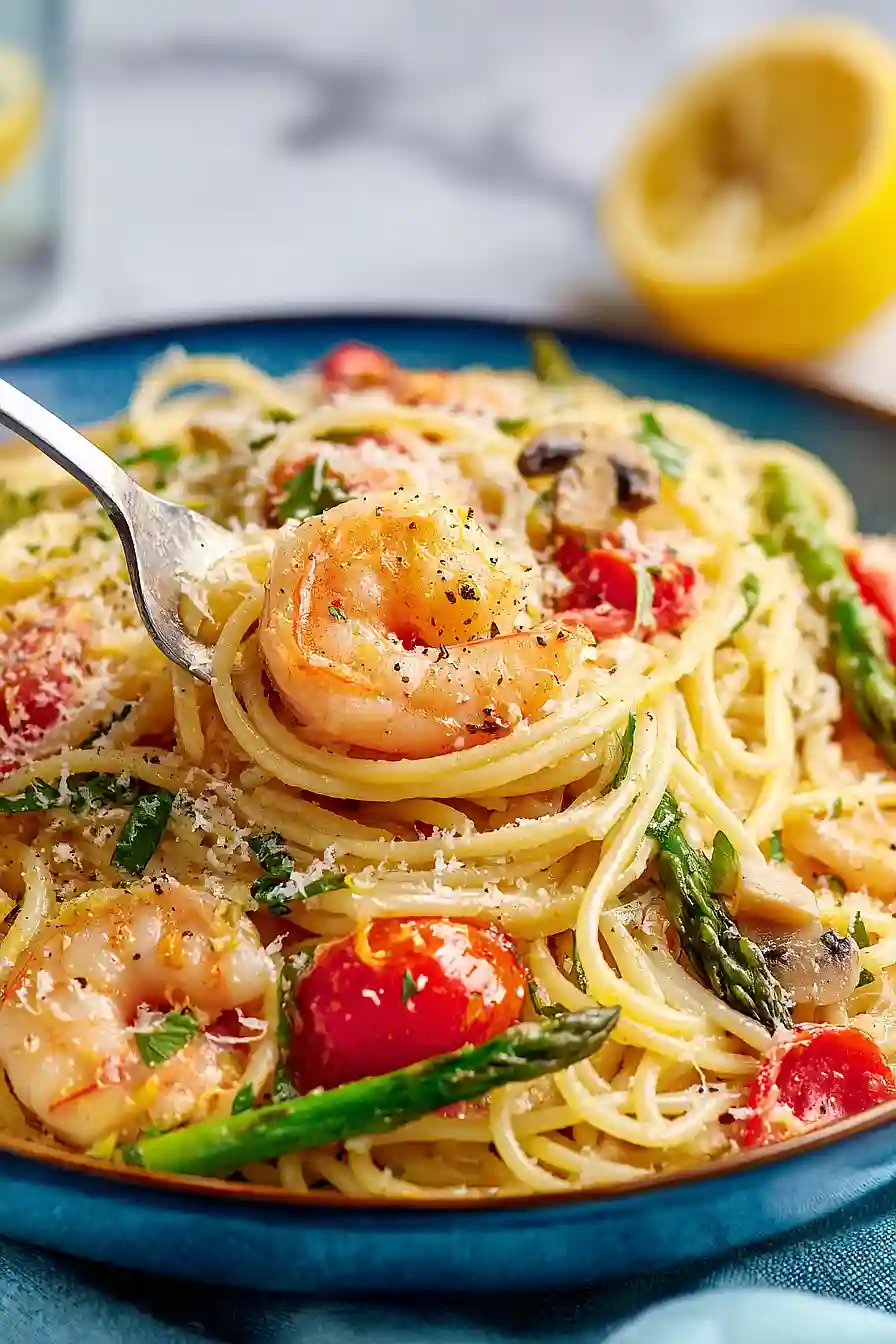
Since this pasta is already loaded with shrimp and veggies, I like to keep the sides simple and let the main dish shine. A warm loaf of garlic bread or some crusty Italian bread is perfect for soaking up any leftover sauce at the bottom of your bowl. A light Caesar salad or mixed greens with a lemon vinaigrette adds a nice fresh crunch without making the meal feel too heavy. If you’re feeding a crowd or want to make it more filling, you can also serve it alongside some roasted vegetables like zucchini or bell peppers that complement the primavera flavors.
Storage Instructions
Store: Keep your leftover shrimp pasta primavera in an airtight container in the fridge for up to 3 days. The shrimp stays tender and the veggies hold up pretty well, though the pasta might absorb some of the sauce as it sits.
Reheat: Warm it up in a skillet over medium-low heat with a splash of chicken broth or olive oil to bring back some moisture. You can also microwave it, but add a tablespoon of water and cover it to keep the shrimp from getting rubbery. Stir halfway through for even heating.
| Preparation Time | 10-15 minutes |
| Cooking Time | 10-15 minutes |
| Total Time | 20-30 minutes |
| Level of Difficulty | Easy |
| Servings | 2 servings |
Estimated Nutrition
Estimated nutrition for the whole recipe (without optional ingredients):
- Calories: 650-750
- Protein: 32-38 g
- Fat: 32-38 g
- Carbohydrates: 58-68 g
Ingredients
- 6 oz pasta (I always use Barilla linguine for this)
- 12 shrimp (peeled and deveined with tails removed)
- 6 asparagus spears (trimmed and cut into 2-inch pieces)
- 1/3 cup olive oil (I prefer Bertolli Extra Virgin for a richer taste)
- 3 garlic cloves
- 1/2 cup mushrooms (thinly sliced to cook quickly)
- 3/4 cup chicken broth
- 1 tomato
- 1/4 tsp salt
- 1/4 tsp red pepper flakes
- 1 1/2 tbsp basil
- 1 1/2 tbsp oregano
- 1 1/2 tbsp thyme
- 1 1/2 tbsp parsley
- 1/4 cup parmesan (freshly grated for a better melt and flavor)
- 1/2 teaspoon lemon zest
Step 1: Prepare Ingredients and Start Pasta
- 6 oz pasta
- 3 garlic cloves, minced
- 1/2 cup mushrooms, thinly sliced
- 1 tomato, chopped
- 6 asparagus spears, trimmed and cut into 2-inch pieces
- 1 1/2 tbsp basil
- 1 1/2 tbsp oregano
- 1 1/2 tbsp thyme
- 1 1/2 tbsp parsley
While the pasta water comes to a boil, prepare your mise en place: mince the 3 garlic cloves, thinly slice the mushrooms, cut the tomato into small chunks, trim and cut the asparagus into 2-inch pieces, and measure out all your herbs.
Start cooking the pasta according to package directions—this will take the longest and can cook while you prepare the sauce.
I always use Barilla linguine for this dish because it has the perfect texture to hold onto the sauce.
Step 2: Sear Shrimp and Asparagus
- 1/3 cup olive oil
- 12 shrimp, peeled and deveined with tails removed
- 6 asparagus spears, trimmed and cut into 2-inch pieces
Heat the olive oil in a large skillet over medium-high heat.
Once shimmering, add the shrimp and asparagus pieces, cooking for 3-4 minutes until the shrimp turn pink and the asparagus becomes tender-crisp.
The high heat creates a slight caramelization on the shrimp while keeping the asparagus vibrant.
Don’t stir constantly—let them sit for a minute or two to develop color.
Step 3: Build the Sauce Base with Aromatics
- 3 garlic cloves, minced
Add the minced garlic to the skillet and cook for about 1 minute, stirring constantly until fragrant.
The residual heat from the shrimp and asparagus will gently cook the garlic without burning it, releasing its full flavor into the oil.
Step 4: Create the Sauce with Vegetables and Broth
- 1/2 cup mushrooms, thinly sliced
- 3/4 cup chicken broth
- 1 tomato, chopped
- 1/4 tsp salt
- 1/4 tsp red pepper flakes
Stir in the sliced mushrooms, chicken broth, chopped tomato, salt, and red pepper flakes.
The mushrooms will release their liquid and meld with the broth to create a light, flavorful sauce.
Let this simmer uncovered for 2 minutes, allowing the flavors to meld and the liquid to reduce slightly.
I prefer using extra virgin olive oil like Bertolli for a richer, more rounded taste in dishes like this.
Step 5: Combine Pasta with Sauce and Season
- 6 oz pasta, cooked
- 1 1/2 tbsp basil
- 1 1/2 tbsp oregano
- 1 1/2 tbsp thyme
- 1 1/2 tbsp parsley
Drain the cooked pasta and add it directly to the skillet with the sauce.
Toss gently to coat all the pasta.
Add the fresh basil, oregano, thyme, and parsley, mixing thoroughly to distribute the herbs evenly throughout the dish.
The herbs will brighten the flavors and add a fresh finish to the primavera.
Step 6: Finish and Serve
- 1/4 cup parmesan, freshly grated
- 1/2 teaspoon lemon zest
Divide the pasta among serving bowls and top each portion with freshly grated Parmesan cheese and a sprinkle of lemon zest.
I always use freshly grated Parmesan instead of pre-shredded because it melts better into the warm pasta and has a more complex flavor.
The lemon zest adds a bright, acidic note that balances the richness of the oil and cheese.
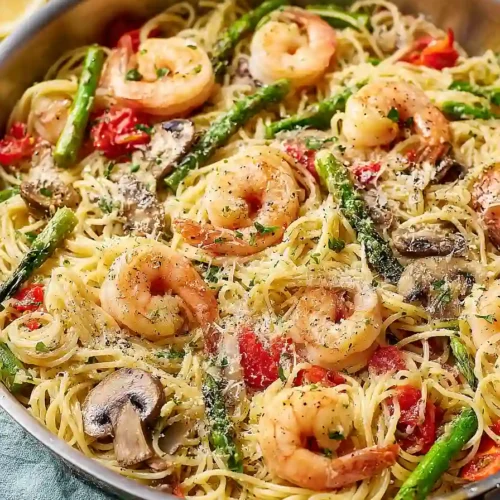
Tasty Shrimp Pasta Primavera
Ingredients
- 6 oz pasta (I always use Barilla linguine for this)
- 12 shrimp (peeled and deveined with tails removed)
- 6 asparagus spears (trimmed and cut into 2-inch pieces)
- 1/3 cup olive oil (I prefer Bertolli Extra Virgin for a richer taste)
- 3 garlic cloves
- 1/2 cup mushrooms (thinly sliced to cook quickly)
- 3/4 cup chicken broth
- 1 tomato
- 1/4 tsp salt
- 1/4 tsp red pepper flakes
- 1 1/2 tbsp basil
- 1 1/2 tbsp oregano
- 1 1/2 tbsp thyme
- 1 1/2 tbsp parsley
- 1/4 cup parmesan (freshly grated for a better melt and flavor)
- 1/2 teaspoon lemon zest
Instructions
- While the pasta water comes to a boil, prepare your mise en place: mince the 3 garlic cloves, thinly slice the mushrooms, cut the tomato into small chunks, trim and cut the asparagus into 2-inch pieces, and measure out all your herbs. Start cooking the pasta according to package directions—this will take the longest and can cook while you prepare the sauce. I always use Barilla linguine for this dish because it has the perfect texture to hold onto the sauce.
- Heat the olive oil in a large skillet over medium-high heat. Once shimmering, add the shrimp and asparagus pieces, cooking for 3-4 minutes until the shrimp turn pink and the asparagus becomes tender-crisp. The high heat creates a slight caramelization on the shrimp while keeping the asparagus vibrant. Don't stir constantly—let them sit for a minute or two to develop color.
- Add the minced garlic to the skillet and cook for about 1 minute, stirring constantly until fragrant. The residual heat from the shrimp and asparagus will gently cook the garlic without burning it, releasing its full flavor into the oil.
- Stir in the sliced mushrooms, chicken broth, chopped tomato, salt, and red pepper flakes. The mushrooms will release their liquid and meld with the broth to create a light, flavorful sauce. Let this simmer uncovered for 2 minutes, allowing the flavors to meld and the liquid to reduce slightly. I prefer using extra virgin olive oil like Bertolli for a richer, more rounded taste in dishes like this.
- Drain the cooked pasta and add it directly to the skillet with the sauce. Toss gently to coat all the pasta. Add the fresh basil, oregano, thyme, and parsley, mixing thoroughly to distribute the herbs evenly throughout the dish. The herbs will brighten the flavors and add a fresh finish to the primavera.
- Divide the pasta among serving bowls and top each portion with freshly grated Parmesan cheese and a sprinkle of lemon zest. I always use freshly grated Parmesan instead of pre-shredded because it melts better into the warm pasta and has a more complex flavor. The lemon zest adds a bright, acidic note that balances the richness of the oil and cheese.