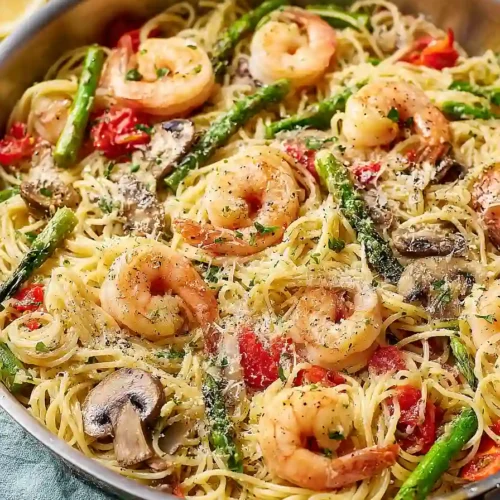
Tasty Shrimp Pasta Primavera
Delicious Tasty Shrimp Pasta Primavera recipe with step-by-step instructions.
Ingredients
- 6 oz pasta (I always use Barilla linguine for this)
- 12 shrimp (peeled and deveined with tails removed)
- 6 asparagus spears (trimmed and cut into 2-inch pieces)
- 1/3 cup olive oil (I prefer Bertolli Extra Virgin for a richer taste)
- 3 garlic cloves
- 1/2 cup mushrooms (thinly sliced to cook quickly)
- 3/4 cup chicken broth
- 1 tomato
- 1/4 tsp salt
- 1/4 tsp red pepper flakes
- 1 1/2 tbsp basil
- 1 1/2 tbsp oregano
- 1 1/2 tbsp thyme
- 1 1/2 tbsp parsley
- 1/4 cup parmesan (freshly grated for a better melt and flavor)
- 1/2 teaspoon lemon zest
Instructions
- While the pasta water comes to a boil, prepare your mise en place: mince the 3 garlic cloves, thinly slice the mushrooms, cut the tomato into small chunks, trim and cut the asparagus into 2-inch pieces, and measure out all your herbs. Start cooking the pasta according to package directions—this will take the longest and can cook while you prepare the sauce. I always use Barilla linguine for this dish because it has the perfect texture to hold onto the sauce.
- Heat the olive oil in a large skillet over medium-high heat. Once shimmering, add the shrimp and asparagus pieces, cooking for 3-4 minutes until the shrimp turn pink and the asparagus becomes tender-crisp. The high heat creates a slight caramelization on the shrimp while keeping the asparagus vibrant. Don't stir constantly—let them sit for a minute or two to develop color.
- Add the minced garlic to the skillet and cook for about 1 minute, stirring constantly until fragrant. The residual heat from the shrimp and asparagus will gently cook the garlic without burning it, releasing its full flavor into the oil.
- Stir in the sliced mushrooms, chicken broth, chopped tomato, salt, and red pepper flakes. The mushrooms will release their liquid and meld with the broth to create a light, flavorful sauce. Let this simmer uncovered for 2 minutes, allowing the flavors to meld and the liquid to reduce slightly. I prefer using extra virgin olive oil like Bertolli for a richer, more rounded taste in dishes like this.
- Drain the cooked pasta and add it directly to the skillet with the sauce. Toss gently to coat all the pasta. Add the fresh basil, oregano, thyme, and parsley, mixing thoroughly to distribute the herbs evenly throughout the dish. The herbs will brighten the flavors and add a fresh finish to the primavera.
- Divide the pasta among serving bowls and top each portion with freshly grated Parmesan cheese and a sprinkle of lemon zest. I always use freshly grated Parmesan instead of pre-shredded because it melts better into the warm pasta and has a more complex flavor. The lemon zest adds a bright, acidic note that balances the richness of the oil and cheese.