If you ask me, keto desserts don’t have to feel like a compromise.
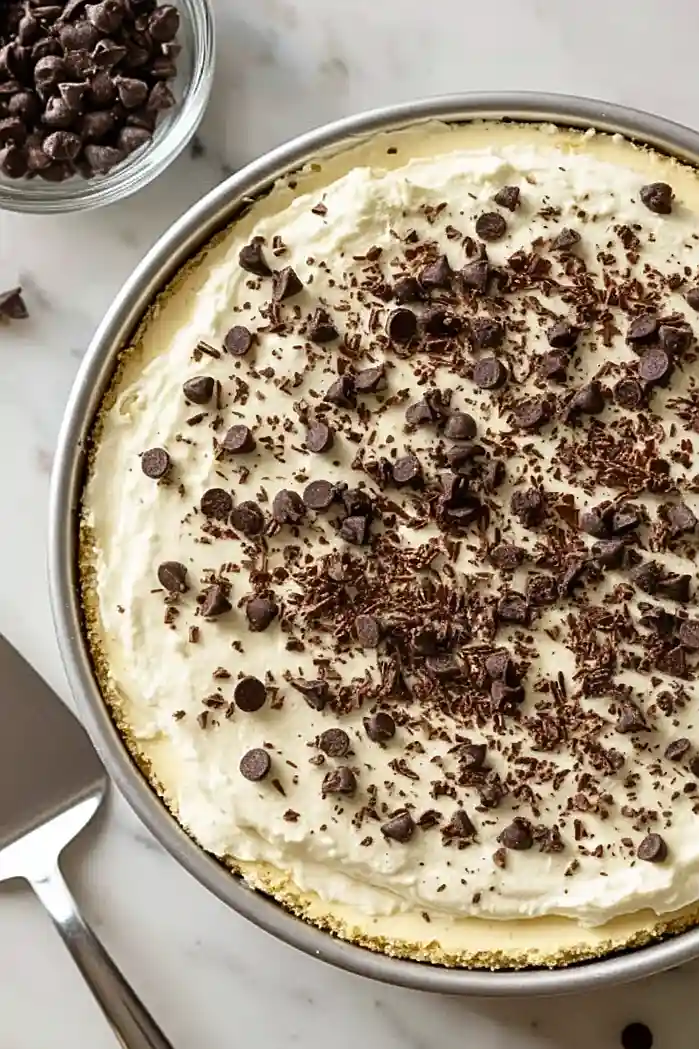
This Greek yogurt cheesecake delivers all the creamy, rich flavor you crave without the carbs. The almond flour crust provides a nice base while the cream cheese and Greek yogurt filling comes out smooth and satisfying.
It’s sweetened with erythritol and stevia instead of sugar, so you can enjoy a slice without the guilt. A handful of sugar-free chocolate chips mixed in adds little pockets of chocolatey goodness throughout.
It’s a low-carb treat that actually tastes like the real deal, perfect for when you want something sweet but want to stick to your keto goals.
Why You’ll Love This Greek Yogurt Cheesecake
- Keto-friendly dessert – This cheesecake uses almond flour and erythritol instead of traditional sugar and flour, so you can enjoy a sweet treat while staying in ketosis.
- Protein-packed – With Greek yogurt, cream cheese, and eggs, you’re getting a good amount of protein in every slice, making it more satisfying than regular cheesecake.
- Rich and creamy texture – The combination of cream cheese and Greek yogurt creates a smooth, tangy filling that’s just as good as any traditional cheesecake you’ve had.
- Ready in about an hour – From start to finish, this cheesecake takes just over an hour to make, which is pretty quick for a homemade dessert that looks and tastes this impressive.
- Chocolate lover’s dream – With chocolate chips mixed in and a chocolate topping, this recipe satisfies your chocolate cravings without the guilt.
What Kind of Greek Yogurt Should I Use?
For this keto cheesecake, you’ll want to use full-fat Greek yogurt to keep it rich and creamy while maintaining the low-carb profile. Regular Greek yogurt works perfectly fine, but if you want an extra thick and tangy cheesecake, go for the Icelandic-style yogurt (skyr) which has an even thicker consistency. Avoid the low-fat or fat-free versions since they often contain added sugars and won’t give you the same creamy texture. Make sure to check the label and pick a plain, unsweetened variety – some brands sneak in extra carbs that can throw off your macros.

Options for Substitutions
This keto cheesecake is pretty forgiving when it comes to swapping ingredients:
- Almond flour: You can replace almond flour with more coconut flour, but use only half the amount since coconut flour absorbs more liquid. So if you’re replacing 1.5 cups of almond flour, use about 0.75 cup of coconut flour and add an extra egg to the crust mixture.
- Erythritol: Any keto-friendly sweetener works here – try monk fruit sweetener, allulose, or xylitol in equal amounts. If you’re not following keto, regular sugar can be used in the same measurements.
- Greek yogurt: Sour cream makes a great substitute and gives an even tangier flavor. Use the same amount and you won’t need to change anything else in the recipe.
- Stevia drops: If you don’t have liquid stevia, just add an extra 2-3 tablespoons of your powdered sweetener. The drops just add extra sweetness without bulk, so adjust to your taste.
- Butter: Coconut oil works as a substitute for the crust, though it will give a slight coconut flavor. Use the same amount and make sure it’s melted.
- Chocolate chips: Any sugar-free chocolate chips will work, or you can chop up a sugar-free chocolate bar into chunks. For a different twist, try sugar-free white chocolate chips instead.
Watch Out for These Mistakes While Baking
The biggest mistake with keto cheesecakes is not bringing your cream cheese and Greek yogurt to room temperature before mixing, which leads to lumps that won’t smooth out no matter how long you beat the batter.
Overmixing after adding the eggs is another common error – this incorporates too much air and can cause cracks on the surface, so mix just until each egg is combined and no more.
To prevent a soggy crust, pre-bake it for 10 minutes before adding the filling, and make sure your butter is melted but not hot when mixing with the almond and coconut flours.
Finally, resist the urge to open the oven door during baking, as sudden temperature changes cause cracking, and let the cheesecake cool gradually in the oven with the door slightly open for about an hour before refrigerating.
What to Serve With Keto Cheesecake?
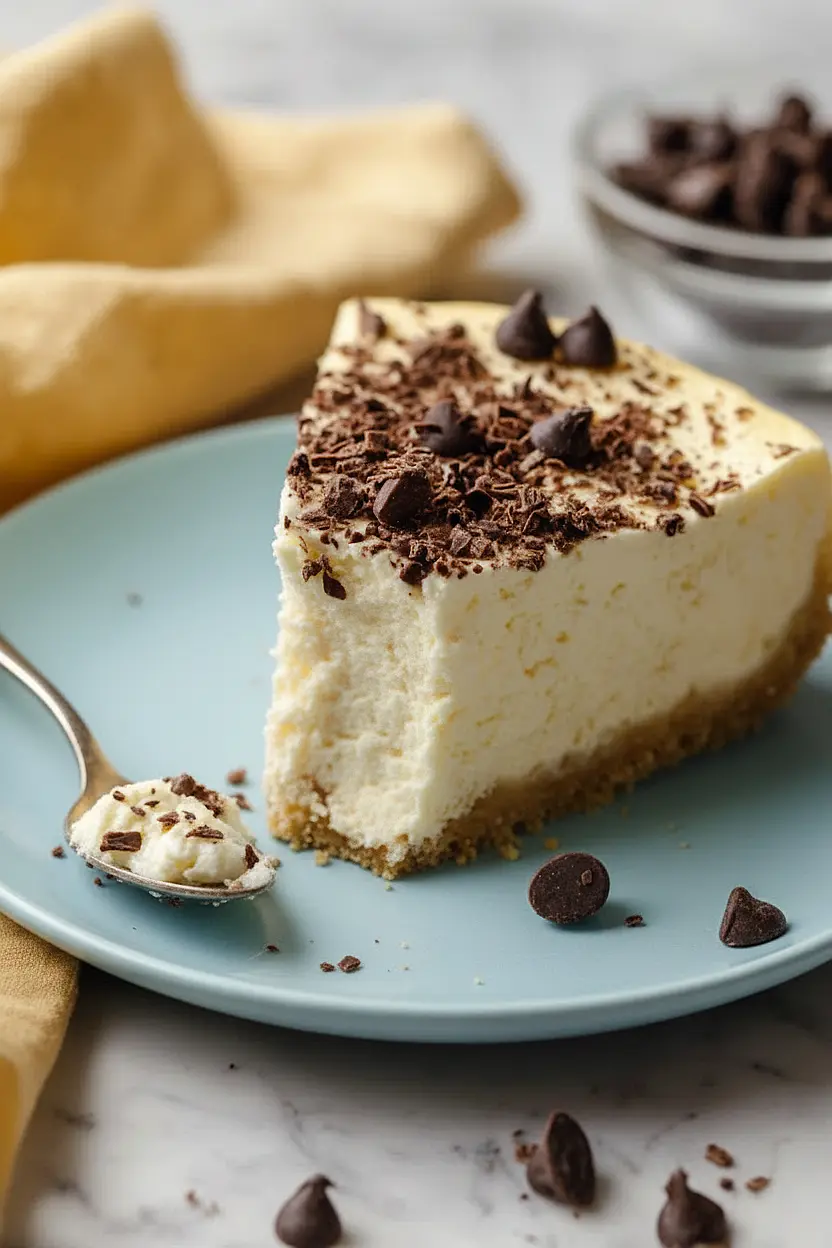
This keto cheesecake is rich and creamy enough to stand on its own, but a dollop of unsweetened whipped cream on top makes it even better. Fresh berries like raspberries or strawberries are perfect alongside since they’re naturally lower in carbs and add a nice tart contrast to the sweet, chocolatey cheesecake. If you want to get fancy, you could drizzle some sugar-free caramel sauce or add a sprinkle of chopped nuts like pecans or almonds for extra crunch. A hot cup of coffee or espresso is also a great pairing since it cuts through the richness and complements the chocolate flavors.
Storage Instructions
Store: This cheesecake keeps really well in the fridge for up to a week. Just cover it tightly with plastic wrap or keep it in an airtight container. The texture actually gets even better after a day or two as the flavors meld together, so it’s perfect for making ahead for a party or special occasion.
Freeze: You can freeze individual slices or the whole cheesecake for up to 3 months. Wrap each slice in plastic wrap and then in foil, or wrap the entire cheesecake well before freezing. This is great when you want to portion it out and just grab a slice whenever you’re craving something sweet.
Serve: For the best texture, let frozen slices thaw in the fridge overnight or at room temperature for about 30 minutes before eating. The cheesecake tastes amazing cold straight from the fridge, but you can also let it sit out for 10-15 minutes if you prefer a creamier, less firm texture.
| Preparation Time | 20-25 minutes |
| Cooking Time | 45-50 minutes |
| Total Time | 65-75 minutes |
| Level of Difficulty | Easy |
| Servings | 8 slices |
Estimated Nutrition
Estimated nutrition for the whole recipe (without optional ingredients):
- Calories: 3300-3600
- Protein: 80-95 g
- Fat: 275-300 g
- Carbohydrates: 110-130 g
Ingredients
For the crust:
- 1.75 cups almond flour (I always use King Arthur for a finer grind)
- 0.25 cup coconut flour
- 2 tbsp erythritol
- 0.25 cup butter (melted and cooled to room temperature)
For the filling:
- 24 oz cream cheese (I prefer Philadelphia brand for the best consistency)
- 8 oz greek yogurt (full-fat gives a much creamier texture)
- 4 eggs (room temperature, about 70°F)
- 0.66 cup erythritol
- 2 tsp vanilla
- 20 stevia drops
- Pinch of salt
For the topping:
- 0.5 cup chocolate chips (I use Lily’s dark chocolate chips)
- 0.25 cup chocolate
Step 1: Prepare the Crust and Preheat Oven
- 1.75 cups almond flour
- 0.25 cup coconut flour
- 2 tbsp erythritol
- 0.25 cup butter
Preheat your oven to 350°F (180°C).
While it heats, combine the almond flour, coconut flour, and erythritol in a bowl, whisking together to distribute the sweetener evenly.
Stir in the melted and cooled butter until the mixture resembles wet sand.
Press this mixture firmly into the bottom of a 9-inch springform pan, using the bottom of a measuring cup to create an even layer.
This will bake alongside the cheesecake, so don’t pre-bake it—the crust will firm up perfectly during the 45-minute bake time.
Step 2: Create the Creamy Cheese Base
- 24 oz cream cheese
- 8 oz greek yogurt
Using an electric mixer on medium speed, beat the room-temperature cream cheese and full-fat greek yogurt together for 2-3 minutes until smooth and creamy with no lumps.
Room temperature ingredients are essential here—cold cream cheese won’t blend smoothly and can create a grainy texture.
I like to let both ingredients sit on the counter for 30 minutes before starting to ensure they’re truly at room temperature.
Step 3: Sweeten and Flavor the Filling
- 0.66 cup erythritol
- 2 tsp vanilla
- 20 stevia drops
- cheese and yogurt mixture from Step 2
Add the erythritol, vanilla, and stevia drops to the cheese mixture from Step 2.
Mix on medium speed for 1-2 minutes, scraping down the sides of the bowl halfway through to ensure the sweetener is fully incorporated and no streaks of it remain.
This prevents any artificial sweetness from concentrating in one area of the cheesecake.
Step 4: Incorporate Eggs One at a Time
- 4 eggs
- Pinch of salt
- filling mixture from Step 3
Reduce mixer speed to low.
Add the room-temperature eggs one at a time, mixing on low speed for about 30 seconds after each addition and scraping the bowl between additions.
Adding eggs slowly prevents overmixing, which can incorporate too much air and create cracks on top during baking.
Once all four eggs are fully incorporated, add a pinch of salt and mix for just 15 more seconds.
Step 5: Bake the Cheesecake
- filling mixture from Step 4
Pour the filling mixture from Step 4 over the prepared crust in the springform pan, smoothing the top gently with a spatula.
Place the pan on the middle rack of the preheated 350°F oven and bake for 45 minutes.
The cheesecake is done when the edges are set but the center still jiggles slightly when you gently shake the pan—this is about a 1-2 inch diameter circle in the very center.
Turn off the oven, crack the door open about 4 inches, and let the cheesecake sit in the warm oven for another 30 minutes to cool gradually.
This gradual cooling prevents the sudden temperature change that causes cracks.
Step 6: Cool and Add Chocolate Topping
- 0.5 cup chocolate chips
- 0.25 cup chocolate
Remove the cheesecake from the oven and let it cool completely to room temperature on the counter, about 1-2 hours.
Once cooled, refrigerate for at least 4 hours or preferably overnight—this allows the cheesecake to set properly and develop its best texture.
When ready to serve, melt the chocolate chips and chocolate together in a microwave-safe bowl in 30-second intervals, stirring between each interval until smooth.
Drizzle or spread the melted chocolate over the top of the cheesecake just before serving.
Sugar-Free Greek Yogurt Cheesecake
Ingredients
For the crust
- 1.75 cups almond flour (I always use King Arthur for a finer grind)
- 0.25 cup coconut flour
- 2 tbsp erythritol
- 0.25 cup butter (melted and cooled to room temperature)
For the filling
- 24 oz cream cheese (I prefer Philadelphia brand for the best consistency)
- 8 oz greek yogurt (full-fat gives a much creamier texture)
- 4 eggs (room temperature, about 70°F)
- 0.66 cup erythritol
- 2 tsp vanilla
- 20 stevia drops
- Pinch of salt
For the topping
- 0.5 cup chocolate chips (I use Lily's dark chocolate chips)
- 0.25 cup chocolate
Instructions
- Preheat your oven to 350°F (180°C). While it heats, combine the almond flour, coconut flour, and erythritol in a bowl, whisking together to distribute the sweetener evenly. Stir in the melted and cooled butter until the mixture resembles wet sand. Press this mixture firmly into the bottom of a 9-inch springform pan, using the bottom of a measuring cup to create an even layer. This will bake alongside the cheesecake, so don't pre-bake it—the crust will firm up perfectly during the 45-minute bake time.
- Using an electric mixer on medium speed, beat the room-temperature cream cheese and full-fat greek yogurt together for 2-3 minutes until smooth and creamy with no lumps. Room temperature ingredients are essential here—cold cream cheese won't blend smoothly and can create a grainy texture. I like to let both ingredients sit on the counter for 30 minutes before starting to ensure they're truly at room temperature.
- Add the erythritol, vanilla, and stevia drops to the cheese mixture from Step 2. Mix on medium speed for 1-2 minutes, scraping down the sides of the bowl halfway through to ensure the sweetener is fully incorporated and no streaks of it remain. This prevents any artificial sweetness from concentrating in one area of the cheesecake.
- Reduce mixer speed to low. Add the room-temperature eggs one at a time, mixing on low speed for about 30 seconds after each addition and scraping the bowl between additions. Adding eggs slowly prevents overmixing, which can incorporate too much air and create cracks on top during baking. Once all four eggs are fully incorporated, add a pinch of salt and mix for just 15 more seconds.
- Pour the filling mixture from Step 4 over the prepared crust in the springform pan, smoothing the top gently with a spatula. Place the pan on the middle rack of the preheated 350°F oven and bake for 45 minutes. The cheesecake is done when the edges are set but the center still jiggles slightly when you gently shake the pan—this is about a 1-2 inch diameter circle in the very center. Turn off the oven, crack the door open about 4 inches, and let the cheesecake sit in the warm oven for another 30 minutes to cool gradually. This gradual cooling prevents the sudden temperature change that causes cracks.
- Remove the cheesecake from the oven and let it cool completely to room temperature on the counter, about 1-2 hours. Once cooled, refrigerate for at least 4 hours or preferably overnight—this allows the cheesecake to set properly and develop its best texture. When ready to serve, melt the chocolate chips and chocolate together in a microwave-safe bowl in 30-second intervals, stirring between each interval until smooth. Drizzle or spread the melted chocolate over the top of the cheesecake just before serving.