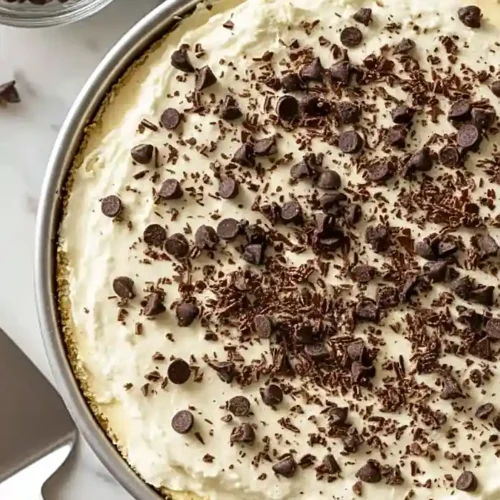
Sugar-Free Greek Yogurt Cheesecake
Delicious Sugar-Free Greek Yogurt Cheesecake recipe with step-by-step instructions.
Ingredients
For the crust
- 1.75 cups almond flour (I always use King Arthur for a finer grind)
- 0.25 cup coconut flour
- 2 tbsp erythritol
- 0.25 cup butter (melted and cooled to room temperature)
For the filling
- 24 oz cream cheese (I prefer Philadelphia brand for the best consistency)
- 8 oz greek yogurt (full-fat gives a much creamier texture)
- 4 eggs (room temperature, about 70°F)
- 0.66 cup erythritol
- 2 tsp vanilla
- 20 stevia drops
- Pinch of salt
For the topping
- 0.5 cup chocolate chips (I use Lily's dark chocolate chips)
- 0.25 cup chocolate
Instructions
- Preheat your oven to 350°F (180°C). While it heats, combine the almond flour, coconut flour, and erythritol in a bowl, whisking together to distribute the sweetener evenly. Stir in the melted and cooled butter until the mixture resembles wet sand. Press this mixture firmly into the bottom of a 9-inch springform pan, using the bottom of a measuring cup to create an even layer. This will bake alongside the cheesecake, so don't pre-bake it—the crust will firm up perfectly during the 45-minute bake time.
- Using an electric mixer on medium speed, beat the room-temperature cream cheese and full-fat greek yogurt together for 2-3 minutes until smooth and creamy with no lumps. Room temperature ingredients are essential here—cold cream cheese won't blend smoothly and can create a grainy texture. I like to let both ingredients sit on the counter for 30 minutes before starting to ensure they're truly at room temperature.
- Add the erythritol, vanilla, and stevia drops to the cheese mixture from Step 2. Mix on medium speed for 1-2 minutes, scraping down the sides of the bowl halfway through to ensure the sweetener is fully incorporated and no streaks of it remain. This prevents any artificial sweetness from concentrating in one area of the cheesecake.
- Reduce mixer speed to low. Add the room-temperature eggs one at a time, mixing on low speed for about 30 seconds after each addition and scraping the bowl between additions. Adding eggs slowly prevents overmixing, which can incorporate too much air and create cracks on top during baking. Once all four eggs are fully incorporated, add a pinch of salt and mix for just 15 more seconds.
- Pour the filling mixture from Step 4 over the prepared crust in the springform pan, smoothing the top gently with a spatula. Place the pan on the middle rack of the preheated 350°F oven and bake for 45 minutes. The cheesecake is done when the edges are set but the center still jiggles slightly when you gently shake the pan—this is about a 1-2 inch diameter circle in the very center. Turn off the oven, crack the door open about 4 inches, and let the cheesecake sit in the warm oven for another 30 minutes to cool gradually. This gradual cooling prevents the sudden temperature change that causes cracks.
- Remove the cheesecake from the oven and let it cool completely to room temperature on the counter, about 1-2 hours. Once cooled, refrigerate for at least 4 hours or preferably overnight—this allows the cheesecake to set properly and develop its best texture. When ready to serve, melt the chocolate chips and chocolate together in a microwave-safe bowl in 30-second intervals, stirring between each interval until smooth. Drizzle or spread the melted chocolate over the top of the cheesecake just before serving.