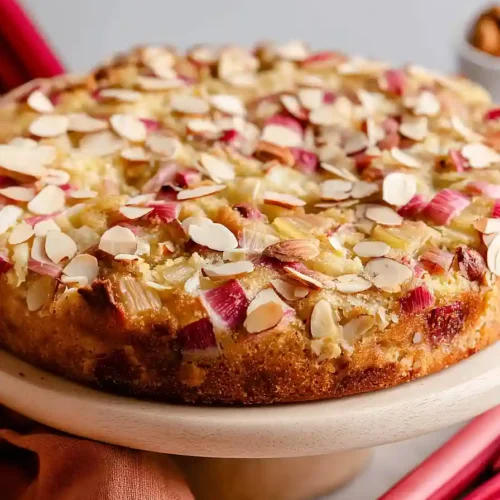
Tasty Norwegian Rhubarb and Almond Cake
Delicious Tasty Norwegian Rhubarb and Almond Cake recipe with step-by-step instructions.
Ingredients
For the cake batter::
- 12 tbsp butter (I like Kerrygold unsalted butter for this)
- 1 cup sugar
- 2 large eggs (room temperature, about 70°F)
- 1.75 cups flour (I always use King Arthur all-purpose flour)
- 1.5 tsp baking powder
- 1/2 tsp salt
- 1/2 cup milk
- 2 tsp almond essence (gives better texture and moisture)
- 1/2 tsp lemon zest
For the topping::
- 1.75 cups rhubarb (cut into 1-inch chunks)
- 4 tbsp raw sugar (optional, adds a nice crunch)
- 4 tbsp almonds (slivered or roughly chopped for best texture)
Instructions
- Preheat your oven to 350°F. While the oven heats, grease a 9x13 inch baking dish (or similar size) and line it with parchment paper, leaving a slight overhang on the sides for easy removal later. Prepare your rhubarb by cutting it into 1-inch chunks—I cut mine slightly uniform so they bake evenly and release their tartness consistently throughout the cake. Have all your dry ingredients measured and ready to go, which prevents lumps from forming when you add them to the wet mixture.
- In a large mixing bowl, beat the softened butter and sugar together for about 2 minutes until the mixture is light, fluffy, and pale in color. This creaming process incorporates air into the batter, which helps the cake rise and creates a tender crumb. Use room-temperature eggs from this point forward—they blend more smoothly into the creamed mixture and create a more uniform batter without lumps.
- Add the eggs one at a time, beating well after each addition to ensure they're fully incorporated before adding the next. This gradual incorporation prevents the batter from becoming grainy or separating. Once both eggs are mixed in, stir in the almond essence and lemon zest—the almond essence gives this Norwegian cake its distinctive texture and moisture, while the lemon zest adds a subtle brightness that complements the tart rhubarb beautifully.
- In a separate bowl, whisk together the flour, baking powder, and salt to combine evenly and break up any lumps. Alternate adding the dry ingredient mixture and milk to the creamed butter-egg mixture, starting and ending with the dry ingredients. Stir gently by hand just until no streaks of flour remain—overmixing at this stage can develop gluten and make the cake tough. The batter should be thick but pourable.
- Pour the batter from Step 4 into your prepared pan and spread it evenly. Scatter the rhubarb chunks over the batter—I like to distribute them fairly evenly so every slice gets a good amount of fruit. Sprinkle the raw sugar and almonds over the top. I find that raw (turbinado) sugar adds a pleasant crunch and keeps its crystals intact during baking, while slivered almonds create a more delicate texture than chopped ones.
- Bake for 30-40 minutes, until the top is golden brown and a toothpick inserted into the cake (not through a piece of rhubarb) comes out clean or with just a few moist crumbs. The rhubarb will soften and the juices will bubble up around the edges slightly. Allow the cake to cool in the pan for 10 minutes—this resting time lets the crumb structure set so it won't fall apart when you remove it.
- Lift the cake out of the pan using the parchment paper overhang and transfer it to a wire cooling rack. Remove the parchment paper carefully and let the cake cool completely before serving—this allows the flavors to develop fully and the texture to firm up. Serve at room temperature or slightly warm with a dollop of whipped cream or crème fraîche if desired.