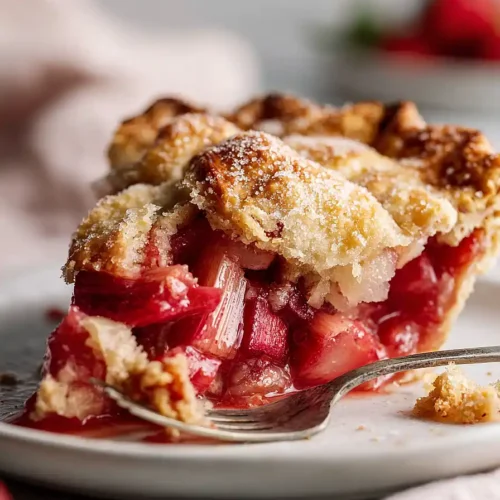
Strawberry Deep Dish Rhubarb Pie
Delicious Strawberry Deep Dish Rhubarb Pie recipe with step-by-step instructions.
Ingredients
For the dough::
- 2.75 cups flour (I always use King Arthur all-purpose flour)
- 1/2 tsp salt
- 14 tbsp unsalted butter (cut into 1/2-inch cubes and chilled)
- 1/4 cup lard (I prefer Armour brand for the flakiest crust)
- 1/2 cup water
For the filling::
- 1.5 lb strawberries (hulled and sliced into 1/4-inch thick rounds)
- 1.5 lb rhubarb (trimmed and cut into 1/2-inch pieces)
- 1.25 cup sugar
- 1/4 cup cornstarch
- 1/8 tsp salt
- 1/2 tsp vanilla extract
Instructions
- Pulse the flour and salt together in a food processor until combined. Add the chilled butter cubes and lard in batches, pulsing until the mixture resembles coarse breadcrumbs with some pea-sized pieces of fat still visible—this creates the flakiness. Add the water a little at a time while pulsing just until the dough comes together without being wet or sticky. Divide the dough in half, shape each portion into a disk, wrap in plastic wrap, and refrigerate for at least 30 minutes while you prepare the filling. I prefer using both butter and lard because the combination gives you the flakiest, most tender crust possible.
- While the dough chills, prepare your fruit by hulling and slicing the strawberries into 1/4-inch thick rounds and trimming and cutting the rhubarb into 1/2-inch pieces. In a large bowl, combine the prepared strawberries and rhubarb with the sugar, cornstarch, and salt, gently tossing until the fruit is evenly coated and the cornstarch is distributed throughout. Let this mixture sit at room temperature—the fruit will begin to release its juices and the cornstarch will absorb them, creating a thickened filling that won't make your pie soggy.
- Preheat your oven to 375°F. On a floured surface, roll out the larger dough disk into a circle about 1/8-inch thick and large enough to line your pie plate with a slight overhang. Transfer it to the pie plate, letting the edges drape over the rim. Pour the fruit filling mixture into the crust, mounding it slightly in the center. Wet the edges of the bottom crust with a little water using your finger or a pastry brush—this helps seal the top and bottom crusts together. Roll out the second dough disk and place it over the filling, then press the edges together firmly and crimp them decoratively with a fork or your fingers to seal.
- Brush the top crust generously with water and sprinkle with a light coating of sugar to give it a sparkling finish. Using a sharp knife, cut 4-5 slits in the top crust to allow steam to escape during baking—this prevents the filling from bubbling over and helps the crust bake evenly. Place the pie on a baking sheet (to catch any drips) and bake at 375°F for about 2 hours, until the crust is golden brown and you can see the filling beginning to bubble slightly through the slits. I like to rotate the pie halfway through baking to ensure even browning, and if the edges brown too quickly, tent them loosely with foil.
- Remove the pie from the oven and let it cool at room temperature for at least 5 hours before slicing. This resting time is crucial—the filling needs time to set as it cools so it slices cleanly rather than running. Resist the urge to cut into it sooner; patience here makes all the difference in presentation and texture. Once cooled, you can serve it at room temperature or gently reheat individual slices before serving.