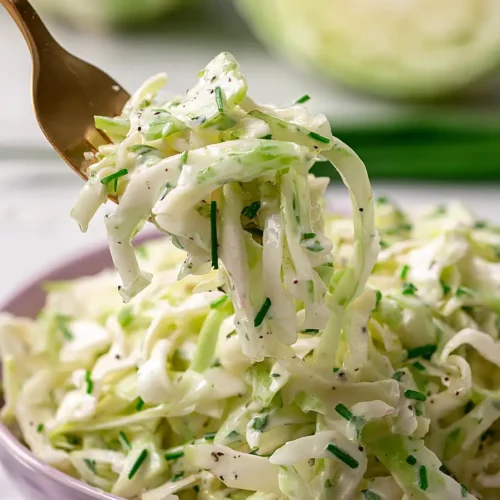
Quick German Coleslaw Dressing
Delicious Quick German Coleslaw Dressing recipe with step-by-step instructions.
Ingredients
For the cabbage
- 2 lb cabbage (shredded into very thin 1/8-inch strips)
- 2 tsp salt
For the dressing
- 1 medium onion (finely diced into 1/4-inch pieces)
- 1 cup sour cream (I use Daisy for a cleaner flavor)
- 4 tbsp white wine vinegar
- 1.5 tsp sugar
- 2 tbsp milk
- 1 tsp Dijon mustard
- 1/2 tsp celery seeds
- 1 bunch parsley
- 1 bunch chives (chopped into small 1/4-inch rings)
- salt
- pepper (freshly cracked Malabar pepper adds great depth)
Instructions
- Shred the cabbage into very thin 1/8-inch strips and place in a large bowl. Sprinkle with 2 teaspoons of salt and knead the cabbage by hand for 2-3 minutes, working the salt into the leaves until they begin to release their liquid. This salting process softens the cabbage and draws out excess moisture, which will help it absorb the dressing flavors more effectively. Cover the bowl and refrigerate for at least 3 hours, or up to 12 hours if time allows—this brining step is what gives German coleslaw its distinctive tender texture and concentrated flavor.
- While the cabbage brines, finely dice the onion into 1/4-inch pieces and chop the chives into small 1/4-inch rings. Roughly chop the parsley and set all aromatics aside. I prefer to prep these just before assembly so the herbs stay fresh and vibrant rather than oxidizing while sitting.
- In a separate bowl, whisk together the sour cream, white wine vinegar, Dijon mustard, sugar, celery seeds, and 2 tablespoons of milk until smooth and well combined. The vinegar and mustard add brightness and tang to balance the richness of the sour cream, while the celery seeds provide subtle aromatic notes traditional to German coleslaw. Taste the dressing and adjust seasoning if needed—this is your flavor foundation before combining with the cabbage.
- Drain the brined cabbage of any excess liquid that has accumulated (you may discard this liquid or save it if you prefer extra tanginess). Add the diced onion to the cabbage, then pour the dressing from Step 3 over the mixture. Toss everything together gently but thoroughly, making sure the dressing coats all the cabbage evenly. Season with additional salt, freshly cracked pepper, and more sugar if needed—I find freshly cracked Malabar pepper adds wonderful depth that pre-ground pepper can't match. Fold in the fresh chives and parsley just before serving to keep them bright and fresh.