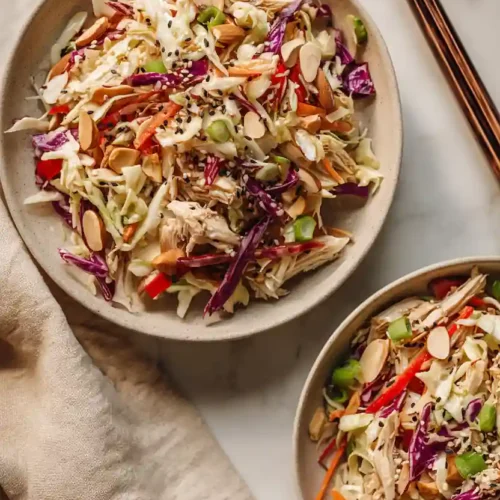
Healthy Chicken Coleslaw Salad with Ginger Dressing
Delicious Healthy Chicken Coleslaw Salad with Ginger Dressing recipe with step-by-step instructions.
Ingredients
For the salad::
- 3 chicken breasts (I like using Mary's Free-Range chicken for better flavor)
- 4 cups napa cabbage (finely shredded into 1/8-inch strips)
- 2.5 cups red cabbage
- 1 large carrot (julienned into thin 2-inch matchsticks)
- 1 bundle green onions
- 3 tbsp sesame seeds (toasted in a dry pan until fragrant)
- 1/3 cup slivered almonds
- 1/2 tsp sea salt
- 1/2 tsp black pepper
- 1/4 cup fresh cilantro, chopped
For the dressing::
- 5 tbsp coconut aminos (I always use Coconut Secret brand)
- 3 tbsp rice vinegar
- 3 tbsp sesame oil (toasted variety gives a deeper, nuttier aroma)
- 2 tbsp maple syrup
- 1.5 tbsp ginger (grated into a fine paste to distribute flavor)
- 5 garlic cloves
- 1 tbsp fresh lime juice
Instructions
- Start by preparing all your ingredients so cooking flows smoothly. Finely shred the napa cabbage and red cabbage into 1/8-inch strips, julienne the carrot into thin 2-inch matchsticks, slice the green onions (separating white and green parts), chop the cilantro, and mince the garlic cloves. While you're prepping, toast the sesame seeds and slivered almonds in a dry pan over medium heat for about 5 minutes, stirring frequently until fragrant and lightly golden. Transfer to a plate and set aside—this toasting step brings out their nutty flavors and adds crucial texture to the final dish.
- Bring a pot of salted water to a boil and add the chicken breasts. Simmer for 10-12 minutes until the internal temperature reaches 165°F and the chicken is cooked through (timing depends on thickness). Remove the chicken to a cutting board and let it cool for 2-3 minutes until it's easy to handle. Using two forks, shred the chicken into bite-sized pieces, discarding any bones or excess fat.
- In a jar or bowl, combine the coconut aminos, rice vinegar, toasted sesame oil, maple syrup, grated ginger, minced garlic, and fresh lime juice. Shake or whisk vigorously until the ingredients are well emulsified and the maple syrup fully dissolves. I always use toasted sesame oil rather than plain because it adds a deeper, nuttier complexity that really elevates the dish. Taste and adjust seasoning as needed—the dressing should be balanced between savory, slightly sweet, and tangy.
- In a large bowl, combine the shredded napa cabbage, red cabbage, julienned carrots, white parts of the green onions, and chopped cilantro. Pour the ginger dressing over the vegetables and toss thoroughly to coat everything evenly. Add the shredded chicken from Step 2, toasted sesame seeds and almonds from Step 1, and the green parts of the green onions. Toss everything together gently but thoroughly to distribute all components.
- Taste the assembled salad and season with sea salt and black pepper to your preference. I like to add the salt and pepper at the end rather than earlier because you can better judge how much seasoning is needed once all the components are combined. Serve immediately while the vegetables are still crisp and the salad has a nice textural contrast.