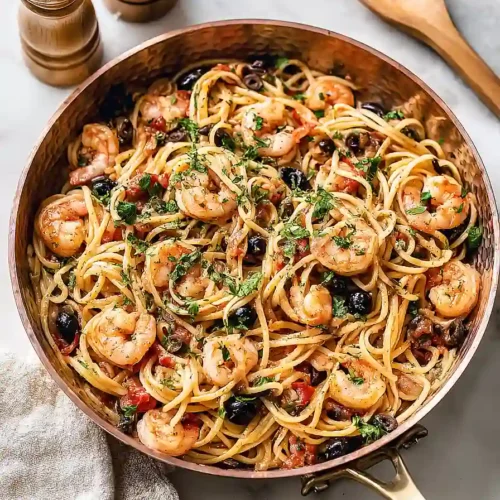
Garlic Pasta Puttanesca with Shrimp
Delicious Garlic Pasta Puttanesca with Shrimp recipe with step-by-step instructions.
Ingredients
For the shrimp::
- 1 lb shrimp (peeled and deveined, 21-25 count for best size)
- 1.5 tbsp olive oil
- 3 tsp butter (I use Kerrygold unsalted butter for rich flavor)
- 1/4 tsp salt
- 1/8 tsp pepper
For the pasta and sauce::
- 1 lb linguine (I always use Barilla for a consistent al dente texture)
- 1/2 cup red onion (finely diced into 1/4-inch pieces)
- 4 garlic cloves (freshly minced for best aroma)
- 3 tbsp tomato paste
- 3/4 cup white wine (use a dry Pinot Grigio for crisp acidity)
- 1 tsp salt
- 1/2 tsp pepper
- 1/2 cup kalamata olives (pitted and sliced into halves)
- 3 tbsp capers
- 2 tsp butter
- 1/2 cup pasta water (starchy water helps emulsify the sauce)
- 1/3 cup parmesan
- 1/4 cup parsley
- 1/4 tsp red pepper flakes
Instructions
- Bring a large pot of salted water to a boil—this takes time, so start it first. While waiting, prepare your mise en place: finely dice the red onion into 1/4-inch pieces, mince the garlic cloves, pit and halve the kalamata olives, measure out the capers, and have your pasta water reserved nearby. Chop the parsley and grate the parmesan cheese. This prep work ensures smooth cooking once you begin searing the shrimp.
- Heat 1.5 tablespoons olive oil and 1 teaspoon butter in a large skillet over medium-high heat. Season the shrimp with 1/4 teaspoon salt and 1/8 teaspoon pepper. Once the butter foams, add the shrimp and cook for 1-2 minutes per side until they turn opaque and just cooked through—they'll continue cooking slightly when we add them back later, so don't overcook them. Transfer the cooked shrimp to a plate and set aside.
- In the same skillet, add the diced red onion with a pinch of salt and sauté for 1-2 minutes until softened. Add the minced garlic and cook for 1 minute until fragrant. Stir in the tomato paste and cook for 1 minute, allowing it to caramelize slightly and deepen in flavor. This technique of cooking tomato paste develops its rich, concentrated taste that forms the foundation of the sauce.
- Pour in the dry white wine (Pinot Grigio adds crisp acidity) and scrape up any browned bits from the bottom of the skillet. Add 1 teaspoon salt and 1/2 teaspoon pepper, then simmer uncovered for 4-5 minutes until the wine reduces by about half. This reduction concentrates the flavors and cooks off the alcohol, leaving a bright, savory base for the puttanesca sauce.
- Once the wine has reduced, add the olives, capers, and remaining 2 teaspoons butter to the sauce, stirring to combine and melt the butter. Meanwhile, add the linguine to the boiling water and cook according to package directions until al dente—about 9-10 minutes. I always use Barilla because it consistently hits that perfect firm texture. Reserve about 1/2 cup of the starchy pasta water before draining.
- Transfer the cooked linguine directly to the skillet with the puttanesca sauce. Add the reserved pasta water (the starch in this water helps emulsify and thicken the sauce naturally), the shrimp from Step 2, half of the chopped parsley, and half of the grated parmesan. Toss everything together over low heat for 1-2 minutes until the pasta is well coated and the shrimp is heated through. Taste and adjust seasoning as needed—I often add a small pinch of red pepper flakes here for subtle heat.
- Divide the pasta puttanesca among serving bowls or plates. Top each portion with the remaining fresh parsley and parmesan cheese for brightness and texture. Serve immediately while the pasta is hot and the shrimp is tender.