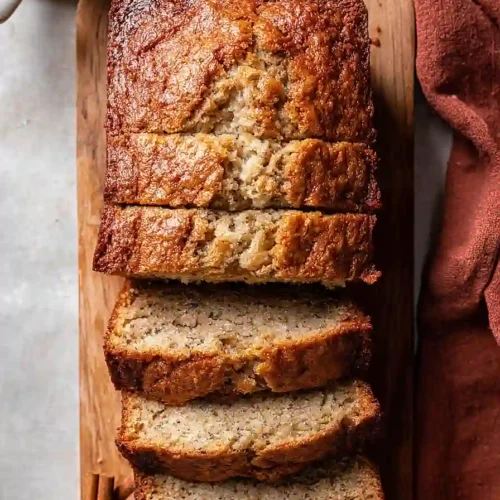
Best High Altitude Banana Bread
Delicious Best High Altitude Banana Bread recipe with step-by-step instructions.
Ingredients
For the wet ingredients::
- 1.75 cups bananas (mashed thoroughly until smooth)
- 1/2 cup sour cream (I prefer Daisy for the best moisture and tang)
- 7 tbsp butter (melted and cooled to room temperature)
- 1/2 cup sugar
- 1/3 cup brown sugar
- 2 tsp vanilla
- 2 eggs (large, at room temperature)
For the dry ingredients::
- 2 cups flour (I always use King Arthur all-purpose flour)
- 3/4 tsp baking soda
- 1 tsp baking powder
- 1/2 tsp salt
- 1/2 tsp cinnamon
- 1/4 tsp nutmeg (freshly grated for a more intense aroma)
- 1/8 tsp cardamom
- 1/8 tsp allspice
Instructions
- Heat your oven to 350°F—this lower temperature is crucial for high altitude baking as it prevents the bread from rising too quickly and collapsing. While the oven preheats, grease a 9x5 inch loaf pan generously with butter or cooking spray, making sure to coat the bottom and all sides evenly.
- In a large mixing bowl, combine the thoroughly mashed bananas with the sour cream, melted and cooled butter, both sugars, vanilla, and eggs. Whisk everything together until well combined and smooth—the sour cream will add moisture and tang that's especially important at high altitude. I like to use quality sour cream like Daisy; it makes a noticeable difference in the final texture.
- In a separate bowl, whisk together the flour, baking soda, baking powder, salt, cinnamon, freshly grated nutmeg, cardamom, and allspice. Whisking the dry ingredients together ensures even distribution of the leavening agents and spices throughout the bread—this is especially important at high altitude where uneven rising can be an issue.
- Add the dry ingredient mixture from Step 3 to the wet ingredients from Step 2, folding gently with a spatula until just combined—don't overmix. Some lumps are okay; overmixing develops gluten and can make the bread tough. I stop mixing as soon as I don't see streaks of flour, which keeps the crumb tender and delicate.
- Pour the batter into the prepared pan from Step 1 and smooth the top gently with a spatula. Bake for 55 minutes at 350°F. The bread is done when a toothpick inserted into the center comes out with just a few moist crumbs (not wet batter). At high altitude, the reduced air pressure means breads bake faster, so check a few minutes early if needed.
- Let the bread cool in the pan for 10 minutes—this allows the structure to set so it won't fall apart when you remove it. Then invert the loaf onto a wire cooling rack and let it cool completely. This prevents the bottom from becoming soggy from condensation.