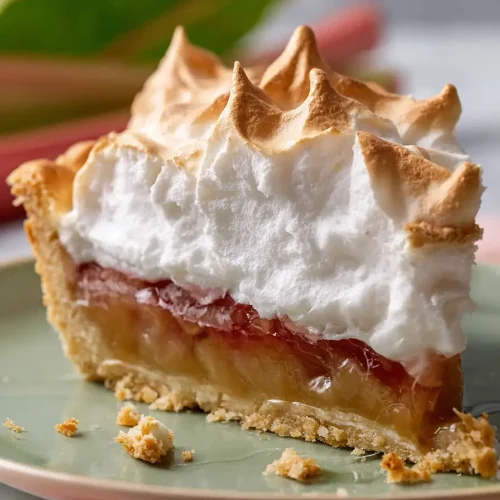
Best German Rhubarb Pie
Delicious Best German Rhubarb Pie recipe with step-by-step instructions.
Ingredients
For the crust::
- 1 3/4 cups flour (I always use King Arthur all-purpose flour)
- 1/4 cup sugar
- 0.3 cup butter (cold and cut into 1/2-inch cubes)
- 1 egg
- 1/2 tsp baking powder
- 1 tbsp vanilla sugar
For the rhubarb filling::
- 27 oz rhubarb (trimmed and cut into 1-inch pieces)
- 2/3 cup sugar
- 1/2 teaspoon lemon zest
- 2 packets pudding powder (I prefer Dr. Oetker vanilla flavor)
- 5 tbsp sugar
- 2 cups juice (apple or white grape juice adds great sweetness)
For the meringue::
- 3 egg whites (room temperature, about 70°F for better volume)
- 2/3 cup sugar
- 1/4 teaspoon cream of tartar
Instructions
- Trim the rhubarb and cut it into 1-inch pieces, then toss with 2/3 cup sugar in a bowl. Let this mixture sit at room temperature for 2 hours—the sugar will draw out the rhubarb's natural juices. After 2 hours, strain the rhubarb through a fine-mesh sieve, collecting the liquid in a measuring cup. You should have approximately 2 cups of juice; if you're a bit short, top it up with apple or white grape juice to reach 2 cups. Set the drained rhubarb aside and keep the juice nearby for the pudding step.
- Preheat your oven to 400°F. In a food processor, combine the flour, 1/4 cup sugar, cold butter cubes, egg, baking powder, and vanilla sugar, pulsing until the mixture resembles coarse breadcrumbs and just comes together. Press this dough firmly into the bottom and 1.5 inches up the sides of a 9-inch pie pan, creating an even thickness. Blind bake the crust for 10-12 minutes at 400°F until it's set but not yet golden—this gives you a head start on cooking and prevents a soggy bottom. I always use an all-purpose flour like King Arthur because it gives me consistent, reliable results every time.
- While the crust bakes, pour the 2 cups of rhubarb juice into a saucepan and bring it to a gentle boil over medium heat. In a small bowl, whisk together the pudding powder, 5 tablespoons sugar, and lemon zest to combine evenly. Once the juice is boiling, whisk in the pudding mixture to create a smooth paste, then continue cooking for 2-3 minutes, stirring constantly, until the pudding thickens and coats the back of a spoon. Remove from heat and let cool for 2 minutes, then fold in the drained rhubarb from Step 1 until evenly combined. I find that letting the pudding cool slightly before mixing in the rhubarb helps prevent the fruit from breaking apart.
- Remove the pre-baked crust from the oven and immediately pour the pudding-rhubarb filling from Step 3 into it, spreading it evenly. Return the pie to the 400°F oven and bake for 30-35 minutes until the filling is set but still slightly jiggly in the very center. The crust should be golden and the filling should look set around the edges.
- About 10 minutes before the pie finishes baking, place the room-temperature egg whites and cream of tartar in a clean, grease-free bowl. Using an electric mixer on medium-high speed, beat the egg whites until soft peaks form, then gradually add 2/3 cup sugar one tablespoon at a time while continuing to beat. Continue beating until stiff, glossy peaks form—this takes about 5-7 minutes total. When the pie comes out of the oven, immediately spread or dollop the meringue evenly over the hot filling, making sure it touches the crust edges to seal it (this prevents the meringue from shrinking). Return the pie to the oven and bake for 10 minutes until the meringue is golden brown on the peaks.
- Remove the pie from the oven and let it rest in the pan for at least 30 minutes at room temperature. This cooling time allows the meringue to set properly and the filling to firm up, making slicing cleaner and easier. The pie can be served warm or at room temperature, though I prefer to let it cool completely for the best texture and flavor.