I didn’t grow up drinking Guinness, but I sure grew up eating beef stew. My mom would make it on Sunday afternoons, filling the whole house with that warm, cozy smell. It wasn’t until I was in my twenties that a friend suggested adding beer to the pot, and honestly, I thought she was crazy.
Turns out, she was onto something. The Guinness does something magical to the beef—makes it tender and adds this deep, rich flavor that regular beef stew just doesn’t have. And before you worry, no, it doesn’t taste like beer. It just tastes like really, really good stew. The kind that makes you want seconds even when you’re already full.
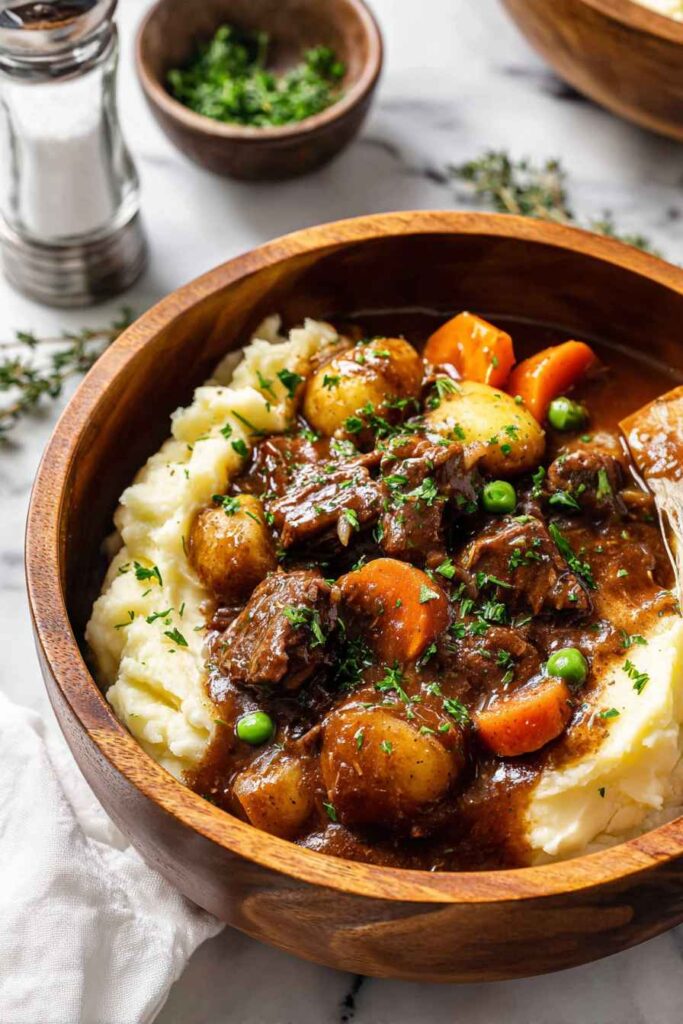
Why You’ll Love This Guinness Beef Stew
- Rich, deep flavors – The combination of Guinness stout and coffee creates an incredibly savory, complex taste that takes this stew way beyond the ordinary.
- Perfect for meal prep – This stew actually tastes better the next day as the flavors meld together, making it ideal for making ahead or enjoying leftovers throughout the week.
- Hearty and filling – Loaded with tender beef, potatoes, and vegetables, this one-pot meal is satisfying enough to warm you up on the coldest days.
- Great for entertaining – While it takes some time to simmer, most of it is hands-off cooking, so you can prep it in advance and impress your guests with minimal effort.

Possible Ingredient Substitutions
- Guinness stout: If you don’t have Guinness, any dark beer or stout will work great. Not a beer person? Replace it with an equal amount of beef broth plus 1 tablespoon of balsamic vinegar and 1 teaspoon of brown sugar to mimic that rich, slightly bitter flavor.
- Bacon: You can skip the bacon if needed, but you’ll want to add 2-3 tablespoons of olive oil to brown the beef. The bacon does add a nice smoky depth, so consider adding a pinch of smoked paprika if you leave it out.
- Coffee: The coffee adds depth, but if you don’t have any brewed, just use an extra cup of beef broth instead. The stew will still taste great, just slightly less complex.
- Beef chuck: Other tough cuts like bottom round or brisket work well here since they need that long, slow cooking time to become tender.
- Cabbage: Not a fan of cabbage? You can leave it out or replace it with parsnips or turnips for a different vegetable option.
- Baby gold potatoes: Red potatoes or russets cut into chunks work just fine. If using russets, cut them a bit larger since they break down more easily.
Avoid These Cooking Mistakes
Avoid skipping the browning step or overcrowding the pan, which steams the meat instead of creating that deep, caramelized crust that adds tons of flavor – work in batches and give each piece space to develop a proper sear.
Another mistake is adding the potatoes too early, which turns them into mush by the time the beef is tender, so wait until the last 30-40 minutes of cooking to add them.
Don’t let the Guinness boil rapidly after adding it, as this can make the stew taste bitter – instead, bring it to a gentle simmer and maintain low, steady heat throughout the cooking process.

Storage Guidelines
Store: This stew actually tastes even better the next day after all the flavors have had time to meld together. Keep it in an airtight container in the fridge for up to 4 days.
Freeze: Guinness beef stew is perfect for freezing. Let it cool completely, then portion it out into freezer-safe containers or bags and freeze for up to 3 months.
Reheat: Warm it up gently on the stovetop over medium-low heat, stirring occasionally until heated through. You can also microwave individual portions, but I find the stovetop gives you better results.
| Preparation Time | 20-30 minutes |
| Cooking Time | 180-210 minutes |
| Total Time | 200-240 minutes |
| Level of Difficulty | Medium |
Estimated Nutrition
Estimated nutrition for the whole recipe (without optional ingredients):
- Calories: 3500-3900
- Protein: 270-310 g
- Fat: 170-200 g
- Carbohydrates: 210-260 g
Ingredients
For the main stew:
- 4 diced bacon strips
- 3.5 lb beef chuck, cut in 2 inch chunks
- 2 cups guinness stout
- 2 1/2 cups beef stock
- 1 cup strong brewed coffee
- 2 bay leaves
- 2 sprigs thyme
- 1 tbsp kosher salt, or to taste
- 1 tbsp freshly cracked black pepper, or as needed
For the vegetables and aromatics:
- 1 large yellow onion, diced
- 3 chopped carrots
- 2 chopped celery ribs
- 1/4 head chopped cabbage
- 4 minced garlic cloves
- 2 tbsp tomato paste
- 1/4 cup all-purpose flour
- 1 lb baby golden potatoes, halved
To finish:
- 2 cups frozen peas, optional
Step 1: Render the Bacon
- 4 diced bacon strips
Preheat your oven to 350°F (175°C).
Add the diced bacon strips to a large Dutch oven set over medium-low heat.
Cook the bacon, stirring occasionally, until it is browned and has released its fat, about 8-10 minutes.
With a slotted spoon, remove the cooked bacon from the pot and transfer it to a small bowl, leaving the rendered fat behind.
Step 2: Sear the Beef
- 3.5 lb beef chuck, cut in 2 inch chunks
- 1 tbsp kosher salt, or to taste
- 1 tbsp freshly cracked black pepper, or as needed
Season the beef chuck chunks all over with kosher salt and freshly cracked black pepper.
Increase the heat under the Dutch oven to medium-high.
Working in batches if necessary, sear the beef on all sides in the rendered bacon fat until deeply browned, about 4-5 minutes per batch.
Remove the seared beef pieces from the pot and set aside.
Searing in batches prevents overcrowding, which ensures the beef browns properly.
Step 3: Saute the Vegetables and Build the Base
- 1 large yellow onion, diced
- 3 chopped carrots
- 2 chopped celery ribs
- 1/4 head chopped cabbage
- 4 minced garlic cloves
- 2 tbsp tomato paste
- 1/4 cup all-purpose flour
Reduce the heat to medium.
To the same pot, add the diced onion, chopped celery ribs, chopped cabbage, and chopped carrots.
Saute these vegetables, stirring frequently, until slightly softened, about 3-4 minutes.
Add the minced garlic and cook for an additional minute until fragrant.
Stir in the tomato paste and cook for 2-3 minutes, stirring continuously, until the tomato paste darkens in color.
Sprinkle the flour over the vegetables and stir well to coat everything evenly—this will help to thicken the finished stew.
Step 4: Deglaze the Pot and Add Liquids and Herbs
- 2 cups Guinness stout
- 2 1/2 cups beef stock
- 1 cup strong brewed coffee
- 3.5 lb beef chuck, cut in 2 inch chunks (seared, from Step 2)
- 4 diced bacon strips (rendered, from Step 1)
- 1 lb baby golden potatoes, halved
- 2 sprigs thyme
- 2 bay leaves
Pour in the Guinness stout, scraping the bottom of the pot with a silicone spoon or spatula to lift up any flavorful browned bits.
Add the beef stock and brewed coffee, then stir to combine.
Return the seared beef (from Step 2) and rendered bacon (from Step 1) to the pot.
Add in the halved baby golden potatoes, thyme sprigs, and bay leaves.
Stir everything together and bring the mixture up to a gentle simmer.
I like to make sure to really scrape up those browned bits—they add so much flavor to the finished stew.
Step 5: Braise the Stew and Finish
- 2 cups frozen peas, optional
Cover the Dutch oven with a lid and carefully transfer it to the preheated 350°F oven.
Let the stew braise for 3–3 1/2 hours, or until the beef is very tender.
Once done, remove the pot from the oven and discard the thyme sprigs and bay leaves.
Stir in the frozen peas (if using) and let the stew rest, covered, for 15 minutes before serving.
This rest helps the flavors come together.
For a deeper flavor, I sometimes add a splash more coffee or a bit of fresh thyme just before serving.
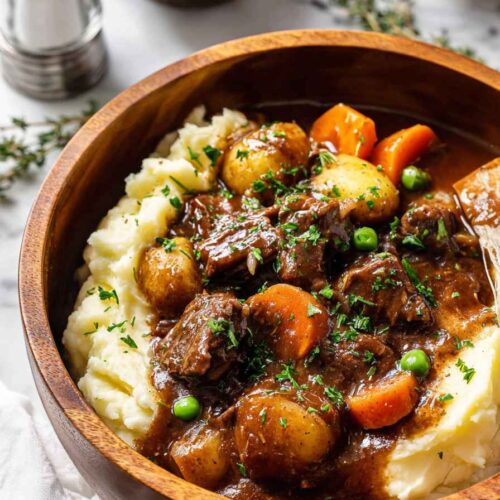
Ultimate Guinness Beef Stew
Ingredients
For the main stew:
- 4 diced bacon strips
- 3.5 lb beef chuck, cut in 2 inch chunks
- 2 cups Guinness stout
- 2 1/2 cups beef stock
- 1 cup strong brewed coffee
- 2 bay leaves
- 2 sprigs thyme
- 1 tbsp kosher salt, or to taste
- 1 tbsp freshly cracked black pepper, or as needed
For the vegetables and aromatics:
- 1 large yellow onion, diced
- 3 chopped carrots
- 2 chopped celery ribs
- 1/4 head chopped cabbage
- 4 minced garlic cloves
- 2 tbsp tomato paste
- 1/4 cup all-purpose flour
- 1 lb baby golden potatoes, halved
To finish:
- 2 cups frozen peas, optional
Instructions
- Preheat your oven to 350°F (175°C). Add the diced bacon strips to a large Dutch oven set over medium-low heat. Cook the bacon, stirring occasionally, until it is browned and has released its fat, about 8-10 minutes. With a slotted spoon, remove the cooked bacon from the pot and transfer it to a small bowl, leaving the rendered fat behind.
- Season the beef chuck chunks all over with kosher salt and freshly cracked black pepper. Increase the heat under the Dutch oven to medium-high. Working in batches if necessary, sear the beef on all sides in the rendered bacon fat until deeply browned, about 4-5 minutes per batch. Remove the seared beef pieces from the pot and set aside. Searing in batches prevents overcrowding, which ensures the beef browns properly.
- Reduce the heat to medium. To the same pot, add the diced onion, chopped celery ribs, chopped cabbage, and chopped carrots. Saute these vegetables, stirring frequently, until slightly softened, about 3-4 minutes. Add the minced garlic and cook for an additional minute until fragrant. Stir in the tomato paste and cook for 2-3 minutes, stirring continuously, until the tomato paste darkens in color. Sprinkle the flour over the vegetables and stir well to coat everything evenly—this will help to thicken the finished stew.
- Pour in the Guinness stout, scraping the bottom of the pot with a silicone spoon or spatula to lift up any flavorful browned bits. Add the beef stock and brewed coffee, then stir to combine. Return the seared beef (from Step 2) and rendered bacon (from Step 1) to the pot. Add in the halved baby golden potatoes, thyme sprigs, and bay leaves. Stir everything together and bring the mixture up to a gentle simmer. I like to make sure to really scrape up those browned bits—they add so much flavor to the finished stew.
- Cover the Dutch oven with a lid and carefully transfer it to the preheated 350°F oven. Let the stew braise for 3–3 1/2 hours, or until the beef is very tender. Once done, remove the pot from the oven and discard the thyme sprigs and bay leaves. Stir in the frozen peas (if using) and let the stew rest, covered, for 15 minutes before serving. This rest helps the flavors come together. For a deeper flavor, I sometimes add a splash more coffee or a bit of fresh thyme just before serving.