If you ask me, focaccia is one of the best breads to experiment with when you’re feeling creative.
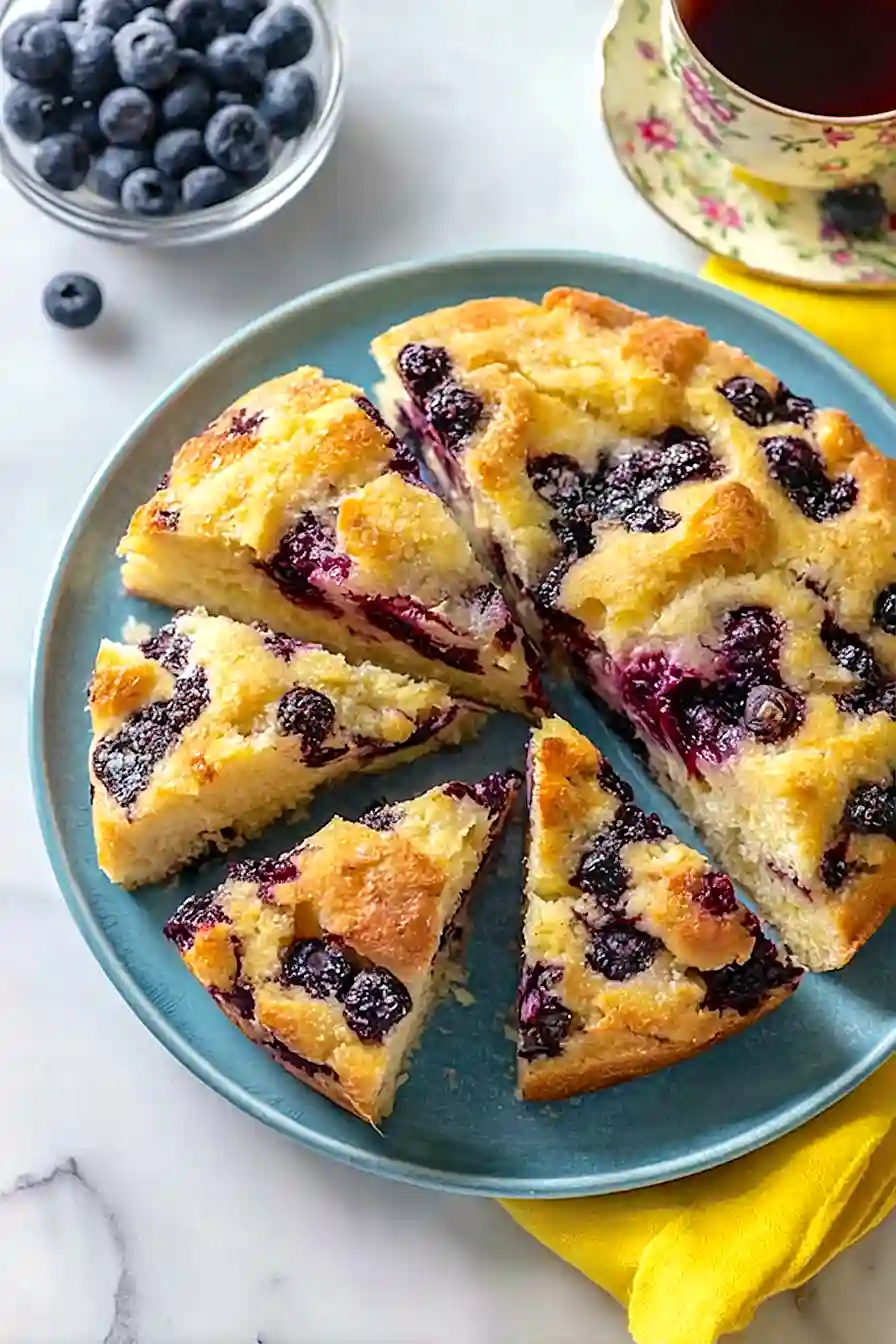
This sweet and tangy sourdough focaccia brings together fresh blueberries and bright lemon zest in a way that makes breakfast or brunch feel special. The soft, airy bread gets topped with a brown sugar crumble that bakes up nice and crumbly.
It’s finished with extra blueberries during baking and drizzled with a simple lemon glaze once it cools. The combination of sourdough tang, sweet berries, and citrus makes each bite interesting.
It’s a weekend baking project that’s worth the time, perfect for when you want something a little different from your usual loaf.
Why You’ll Love This Lemon Blueberry Sourdough Focaccia
- Sweet and tangy flavor combination – The bright lemon zest and juicy blueberries create a refreshing twist on traditional focaccia that’s perfect for breakfast or dessert.
- Impressive but approachable – This recipe looks like it came from a fancy bakery, but it’s easier than you think if you’re already comfortable with sourdough baking.
- Natural fermentation benefits – Using sourdough starter gives you all those gut-friendly benefits while creating a light, airy texture with amazing flavor.
- Perfect for special occasions – Whether you’re hosting brunch or bringing something to a potluck, this unique focaccia will have everyone asking for the recipe.
What Kind of Blueberries Should I Use?
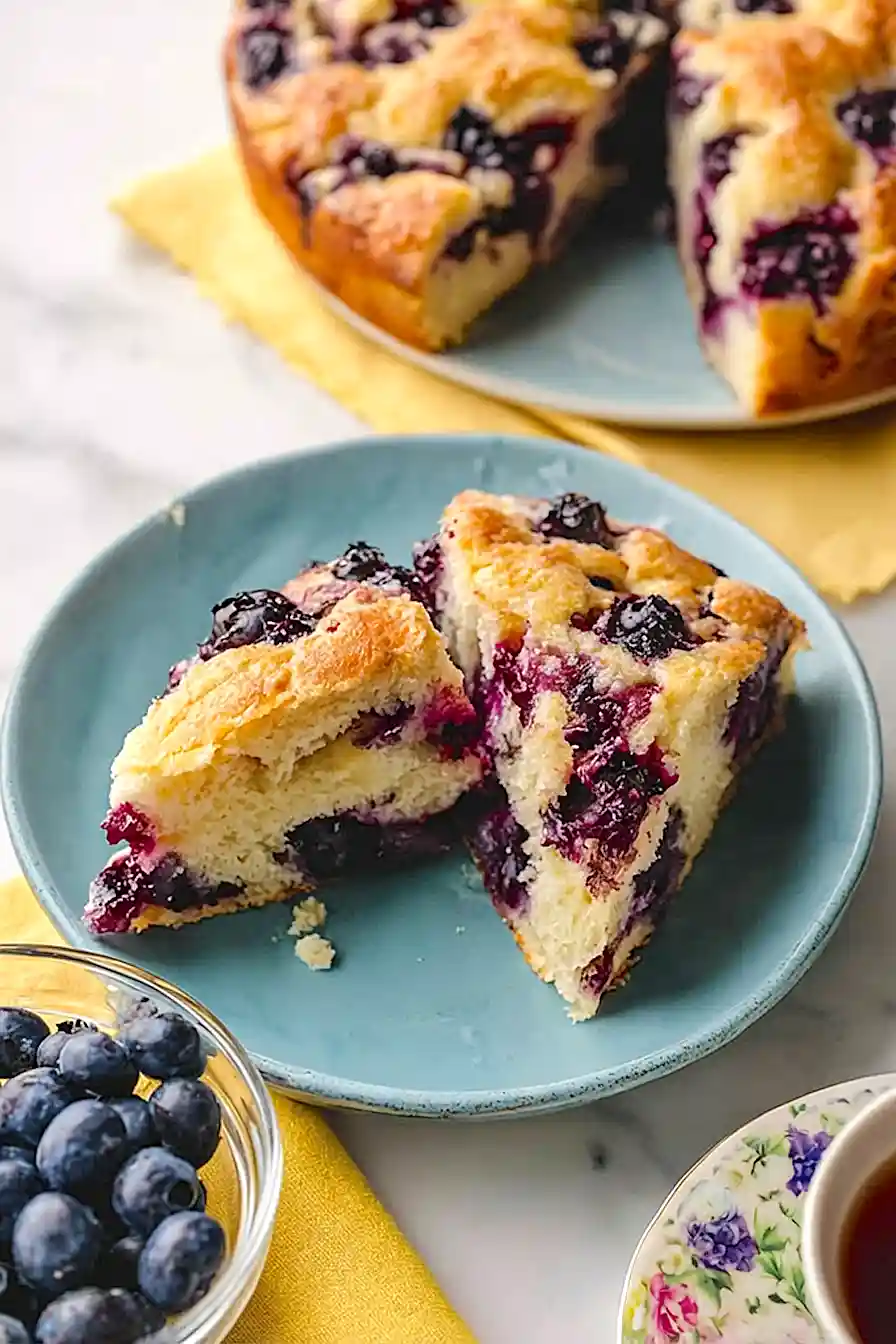
Fresh or frozen blueberries both work great for this focaccia, so use whatever you have on hand. If you’re using frozen blueberries, there’s no need to thaw them first – actually, keeping them frozen helps prevent them from bleeding too much color into your dough during mixing. Fresh blueberries will give you a slightly firmer texture and brighter pop of flavor, while frozen ones tend to be a bit juicier and can create pretty purple streaks throughout the bread. Just be gentle when folding them into the dough to avoid crushing them too much, regardless of which type you choose.
Options for Substitutions
While sourdough focaccia has some key ingredients you’ll want to keep, there’s still room for a few swaps:
- Sourdough starter and levain: These are pretty essential for that signature sourdough flavor and texture, so I’d recommend sticking with them. If you don’t have an active starter, you’ll need to plan ahead and get one going or borrow some from a friend.
- Blueberries: Fresh blueberries work great, but frozen ones are totally fine too. Just don’t thaw them before adding to the dough – toss them in frozen to prevent too much color bleeding.
- Lemon zest and juice: Fresh lemon is best here for that bright citrus flavor, but in a pinch you can use bottled lemon juice. For the zest, you could try orange zest for a different twist.
- Brown sugar: Regular white sugar works if that’s what you have. You can also use coconut sugar or maple sugar for a slightly different flavor profile.
- Olive oil: This is important for focaccia’s texture and flavor, but you can use a neutral oil like avocado or grapeseed if needed. Just know you’ll lose some of that classic focaccia taste.
- Vanilla essence: Vanilla extract is interchangeable here, or you could leave it out entirely from the glaze without major impact.
Watch Out for These Mistakes While Baking
The biggest mistake when making sourdough focaccia is not maintaining a consistent temperature of 78-80°F during the rise times, which can lead to under-proofed dough that bakes up dense instead of light and airy – consider using a proofing box or placing your dough near a warm spot in your kitchen.
Another common error is skipping the coil folds or doing them too aggressively, as these gentle stretches build structure without deflating the dough, so use wet hands and handle the dough like it’s delicate.
When adding the blueberries, make sure they’re completely dry and avoid overmixing them into the dough, or you’ll end up with purple streaks throughout your focaccia instead of pockets of fruit.
Finally, don’t rush the final dimpling step – those finger pokes should go all the way to the bottom of the pan to create the classic focaccia texture, and wait until your dough has properly proofed before adding the crumb topping, otherwise it won’t spread to the edges properly.

What to Serve With Lemon Blueberry Focaccia?
This lemon blueberry focaccia is perfect for brunch alongside a cup of coffee or tea, and it pairs really well with fresh fruit like sliced strawberries or a simple fruit salad. You can also serve it with whipped cream cheese or mascarpone for spreading, which complements the lemon and blueberry flavors nicely. If you’re making it for breakfast, it goes great with scrambled eggs and bacon on the side, or you can keep things simple and just enjoy it on its own as a sweet treat. For a fancier brunch spread, try serving it with Greek yogurt and honey for dipping.
Storage Instructions
Store: Keep your lemon blueberry focaccia in an airtight container at room temperature for up to 2 days. The texture stays best when it’s not refrigerated, though the blueberries might make it a bit more moist over time. If you do need to refrigerate it, it’ll last about 4 days but might lose some of that fluffy texture.
Freeze: This focaccia freezes really well! Cut it into portions and wrap each piece tightly in plastic wrap, then place in a freezer bag. It’ll keep for up to 2 months. I like to slice it before freezing so I can grab just what I need.
Serve: To enjoy frozen focaccia, let it thaw at room temperature for about an hour. For the best texture, warm it in a 300°F oven for 5-10 minutes to bring back that fresh-baked feel. You can also add a fresh drizzle of the lemon glaze after reheating if you want to brighten it up.
| Preparation Time | 240-270 minutes |
| Cooking Time | 25-30 minutes |
| Total Time | 265-300 minutes |
| Level of Difficulty | Hard |
| Servings | 12 slices |
Estimated Nutrition
Estimated nutrition for the whole recipe (without optional ingredients):
- Calories: 2600-2900
- Protein: 45-55 g
- Fat: 90-105 g
- Carbohydrates: 410-450 g
Ingredients
For the levain:
- 2 tsp sourdough starter
- 1/2 cup flour (I always use King Arthur all-purpose flour)
- 1/4 cup water
For the dough:
- 4.25 oz bubbly sourdough starter (active and fed 4-12 hours prior)
- 1.9 cups water
- 3 tbsp sugar
- 2 tsp salt
- 2 tbsp lemon zest
- 4 cups flour
- 1.25 cups fresh blueberries
- 3 tbsp olive oil (I prefer Filippi Berio extra virgin)
For the crumb topping:
- 3 tbsp unsalted butter (cold and cut into 1/4-inch cubes)
- 2.5 tbsp brown sugar
- 1/2 cup flour
- 1/4 tsp salt
- 3/4 tsp cinnamon
- 2 tbsp melted butter
For the garnish and glaze:
- 1/3 cup blueberries
- 1 cup powdered sugar (sifted to remove lumps)
- 4 tsp lemon juice (freshly squeezed for best acidity)
- 1 tsp vanilla
- 1 pinch salt
Step 1: Build the Sourdough Starter (Overnight Preparation)
- 2 tsp sourdough starter
- 1/2 cup flour
- 1/4 cup water
Mix the 2 teaspoons of sourdough starter with 1/4 cup water and 1/2 cup flour in a small bowl until combined.
Cover loosely and let sit at room temperature (around 78°F) overnight or for 8-12 hours until the mixture is bubbly and active.
This creates your levain, which will be the foundation of your dough’s flavor and rise.
You’ll know it’s ready when it has risen and shows visible bubbles throughout.
Step 2: Mix and Develop the Dough Base
- 4.25 oz bubbly sourdough starter
- 1.9 cups water
- 3 tbsp sugar
- 2 tsp salt
- 2 tbsp lemon zest
- 4 cups flour
In a large mixing bowl, combine the bubbly levain from Step 1 with 1.9 cups water, stirring until mostly dissolved.
Add 3 tablespoons sugar, 2 teaspoons salt, and 2 tablespoons lemon zest, mixing well to distribute the zest evenly throughout.
Add 4 cups flour and mix until a shaggy, sticky dough forms—don’t worry about it being messy at this stage.
Cover with a damp towel and let rest for 30 minutes (this is your autolyse, which allows the flour to fully hydrate and develops gluten naturally).
Step 3: Strengthen the Dough Through Coil Folds
- dough from Step 2
Perform 4-6 coil folds using wet hands: reach down to the bottom of the dough, stretch it up and over itself, rotating the bowl as you work around the dough.
This takes about 1-2 minutes total.
Cover and rest for 30 minutes at room temperature.
Repeat this folding and resting process two more times (so three sets of folds and rests total, 30 minutes each).
These gentle folds build strength and gluten structure without aggressive kneading.
I prefer coil folds over stretch-and-folds for sourdough because they’re less likely to deflate the air bubbles that have already formed.
Step 4: Incorporate Blueberries and Final Bulk Fermentation
- dough from Step 3
- 1.25 cups fresh blueberries
After your final coil fold, gently fold 1.25 cups fresh blueberries into the dough, being careful not to crush them too much—you want some to remain whole for texture.
Cover and let the dough rise at room temperature (78°F) for 2.5-3 hours until it has increased in volume by about 50% and shows visible bubbles under the surface.
The dough should jiggle slightly when you gently shake the bowl but shouldn’t be completely airy yet—this is bulk fermentation.
Step 5: Shape and Final Rise in the Pan
- dough from Step 4
- 3 tbsp olive oil
Line a 9×13-inch baking pan (or similar size) with parchment paper and coat generously with 3 tablespoons olive oil.
Gently transfer the dough to the prepared pan and use oiled fingers to slowly stretch and spread it to fill the pan evenly, working from the center outward.
Don’t force it—if it springs back, let it rest for 5-10 minutes before continuing.
Cover loosely with plastic wrap or a towel and let rise at 78-80°F for 2-3 hours until the dough is puffy and springs back slowly when poked (it should leave a slight indentation).
Step 6: Add Crumb Topping, Blueberries, and Dimple
- dough from Step 5
- 1/2 cup flour
- 2.5 tbsp brown sugar
- 1/4 tsp salt
- 3/4 tsp cinnamon
- 3 tbsp unsalted butter
- 2 tbsp melted butter
- 1/3 cup blueberries
While the dough is in its final rise, prepare the crumb topping by mixing 1/2 cup flour, 2.5 tablespoons brown sugar, 1/4 teaspoon salt, and 3/4 teaspoon cinnamon in a small bowl.
Cut 3 tablespoons cold unsalted butter into 1/4-inch cubes and work it into the dry mixture with your fingertips until it resembles coarse breadcrumbs.
When the dough is ready to bake, drizzle 2 tablespoons melted butter evenly over the surface.
Sprinkle the crumb topping and 1/3 cup fresh blueberries over the dough, pressing them gently into the surface.
Use your fingertips to create dimples all over the focaccia—these wells help distribute toppings and create the characteristic focaccia texture.
Step 7: Bake and Finish with Lemon Glaze
- focaccia from Step 6
- 1 cup powdered sugar
- 4 tsp lemon juice
- 1 tsp vanilla
- 1 pinch salt
Preheat your oven to 425°F and bake the focaccia for 25-30 minutes until the top is deep golden brown and the internal temperature reaches 200°F when measured in the center.
While the focaccia bakes, whisk together 1 cup sifted powdered sugar, 4 teaspoons fresh lemon juice, 1 teaspoon vanilla, and a pinch of salt until you have a pourable glaze—it should be thick but smooth.
When the focaccia comes out of the oven, let it cool for just 2-3 minutes, then pour the glaze evenly over the warm bread.
The warmth helps the glaze set beautifully.
I always use freshly squeezed lemon juice rather than bottled because the acidity level is more predictable and gives you a brighter flavor against the sweet glaze.

Tangy Lemon Blueberry Sourdough Focaccia
Ingredients
For the levain::
- 2 tsp sourdough starter
- 1/2 cup flour (I always use King Arthur all-purpose flour)
- 1/4 cup water
For the dough::
- 4.25 oz bubbly sourdough starter (active and fed 4-12 hours prior)
- 1.9 cups water
- 3 tbsp sugar
- 2 tsp salt
- 2 tbsp lemon zest
- 4 cups flour
- 1.25 cups fresh blueberries
- 3 tbsp olive oil (I prefer Filippi Berio extra virgin)
For the crumb topping::
- 3 tbsp unsalted butter (cold and cut into 1/4-inch cubes)
- 2.5 tbsp brown sugar
- 1/2 cup flour
- 1/4 tsp salt
- 3/4 tsp cinnamon
- 2 tbsp melted butter
For the garnish and glaze::
- 1/3 cup blueberries
- 1 cup powdered sugar (sifted to remove lumps)
- 4 tsp lemon juice (freshly squeezed for best acidity)
- 1 tsp vanilla
- 1 pinch salt
Instructions
- Mix the 2 teaspoons of sourdough starter with 1/4 cup water and 1/2 cup flour in a small bowl until combined. Cover loosely and let sit at room temperature (around 78°F) overnight or for 8-12 hours until the mixture is bubbly and active. This creates your levain, which will be the foundation of your dough's flavor and rise. You'll know it's ready when it has risen and shows visible bubbles throughout.
- In a large mixing bowl, combine the bubbly levain from Step 1 with 1.9 cups water, stirring until mostly dissolved. Add 3 tablespoons sugar, 2 teaspoons salt, and 2 tablespoons lemon zest, mixing well to distribute the zest evenly throughout. Add 4 cups flour and mix until a shaggy, sticky dough forms—don't worry about it being messy at this stage. Cover with a damp towel and let rest for 30 minutes (this is your autolyse, which allows the flour to fully hydrate and develops gluten naturally).
- Perform 4-6 coil folds using wet hands: reach down to the bottom of the dough, stretch it up and over itself, rotating the bowl as you work around the dough. This takes about 1-2 minutes total. Cover and rest for 30 minutes at room temperature. Repeat this folding and resting process two more times (so three sets of folds and rests total, 30 minutes each). These gentle folds build strength and gluten structure without aggressive kneading. I prefer coil folds over stretch-and-folds for sourdough because they're less likely to deflate the air bubbles that have already formed.
- After your final coil fold, gently fold 1.25 cups fresh blueberries into the dough, being careful not to crush them too much—you want some to remain whole for texture. Cover and let the dough rise at room temperature (78°F) for 2.5-3 hours until it has increased in volume by about 50% and shows visible bubbles under the surface. The dough should jiggle slightly when you gently shake the bowl but shouldn't be completely airy yet—this is bulk fermentation.
- Line a 9x13-inch baking pan (or similar size) with parchment paper and coat generously with 3 tablespoons olive oil. Gently transfer the dough to the prepared pan and use oiled fingers to slowly stretch and spread it to fill the pan evenly, working from the center outward. Don't force it—if it springs back, let it rest for 5-10 minutes before continuing. Cover loosely with plastic wrap or a towel and let rise at 78-80°F for 2-3 hours until the dough is puffy and springs back slowly when poked (it should leave a slight indentation).
- While the dough is in its final rise, prepare the crumb topping by mixing 1/2 cup flour, 2.5 tablespoons brown sugar, 1/4 teaspoon salt, and 3/4 teaspoon cinnamon in a small bowl. Cut 3 tablespoons cold unsalted butter into 1/4-inch cubes and work it into the dry mixture with your fingertips until it resembles coarse breadcrumbs. When the dough is ready to bake, drizzle 2 tablespoons melted butter evenly over the surface. Sprinkle the crumb topping and 1/3 cup fresh blueberries over the dough, pressing them gently into the surface. Use your fingertips to create dimples all over the focaccia—these wells help distribute toppings and create the characteristic focaccia texture.
- Preheat your oven to 425°F and bake the focaccia for 25-30 minutes until the top is deep golden brown and the internal temperature reaches 200°F when measured in the center. While the focaccia bakes, whisk together 1 cup sifted powdered sugar, 4 teaspoons fresh lemon juice, 1 teaspoon vanilla, and a pinch of salt until you have a pourable glaze—it should be thick but smooth. When the focaccia comes out of the oven, let it cool for just 2-3 minutes, then pour the glaze evenly over the warm bread. The warmth helps the glaze set beautifully. I always use freshly squeezed lemon juice rather than bottled because the acidity level is more predictable and gives you a brighter flavor against the sweet glaze.