I’ll be honest—I used to think chia seed pudding was one of those health foods that couldn’t possibly taste good. You know, the kind of thing you eat because you’re supposed to, not because you actually want to. Then I tried making it at home with some decent ingredients, and I completely changed my mind.
The best part about chia pudding is that you make it the night before. You literally just stir everything together and stick it in the fridge. No cooking, no standing over the stove, no cleanup. By morning, you’ve got breakfast ready to go. Add some berries or a handful of nuts, and you’re done.
This keto version keeps all the carbs down while still tasting like a treat. Allulose gives it a nice sweetness without any of the weird aftertaste some sweeteners have. And if you’re following a low-carb diet, you already know how nice it is to have something this easy in your back pocket.
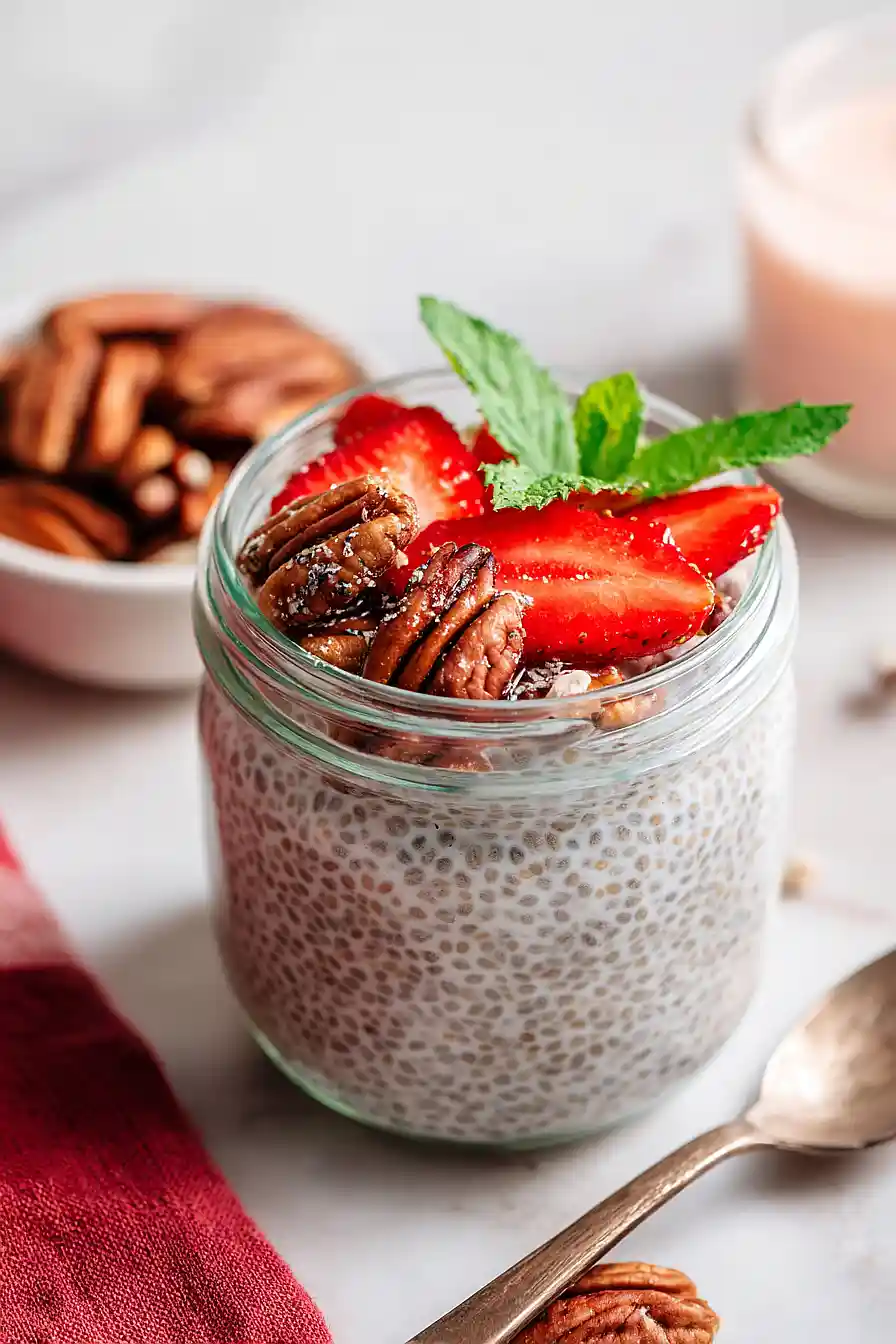
Why You’ll Love This Chia Seed Pudding
- Keto and low-carb friendly – This pudding fits perfectly into your keto lifestyle with almond milk and allulose instead of sugar, so you can enjoy a sweet treat without the guilt.
- Quick and easy – With just 10-15 minutes of prep time, you can have a delicious breakfast or snack ready to go. Just mix everything together and let it set in the fridge.
- Simple ingredients – You only need five basic ingredients that you might already have in your pantry, making this an accessible recipe for anyone.
- Make-ahead convenience – Prepare a batch at the beginning of the week and you’ll have grab-and-go breakfasts or snacks ready whenever you need them.
- Packed with nutrients – Chia seeds are loaded with fiber, protein, and omega-3s, making this pudding a satisfying and nourishing option that keeps you full.
What Kind of Chia Seeds Should I Use?
You’ll find two main types of chia seeds at the store: black and white (sometimes called golden). The good news is that both work equally well in this recipe and have nearly identical nutritional profiles, so it really comes down to personal preference. Black chia seeds are more common and usually a bit cheaper, while white chia seeds have a milder appearance that some people prefer in lighter-colored puddings. Either way, make sure your chia seeds are fresh – they should have a mild, nutty smell and not taste bitter or rancid.
Options for Substitutions
This simple chia pudding recipe works well with a few different swaps if you need them:
- Almond milk: You can use coconut milk, cashew milk, or any other unsweetened plant-based milk you prefer. Each will give the pudding a slightly different flavor – coconut milk makes it creamier and richer.
- Allulose: If you don’t have allulose, try erythritol, monk fruit sweetener, or stevia. Start with 2-3 tablespoons and adjust to taste, as some sweeteners are more concentrated than others.
- Almond extract: Vanilla extract works great here if you don’t have almond extract. You can also try maple extract or just leave it out for a more neutral flavor.
- Coconut oil: You can swap this with MCT oil for similar benefits, or leave it out completely if you prefer. The pudding will still set up nicely without it.
- Chia seeds: Don’t substitute these – chia seeds are what make this pudding work. They absorb the liquid and create that thick, pudding-like texture that’s essential to this recipe.
Watch Out for These Mistakes While Cooking
The biggest mistake people make with chia pudding is not stirring it enough during the first 15-20 minutes, which leads to clumps of chia seeds stuck together instead of a smooth, creamy texture – set a timer to stir every 5 minutes at the start.
Another common error is adding the chia seeds to cold liquid, so make sure your almond milk mixture is at room temperature or slightly warm to help the seeds absorb evenly and expand properly.
If your pudding turns out too thick, you can always thin it out by whisking in a tablespoon or two of almond milk the next day, and if it’s too runny, just add another tablespoon of chia seeds and let it sit for 30 minutes.
Finally, resist the urge to eat it right away – chia pudding needs at least 2 hours in the fridge (or overnight) to reach that perfect pudding-like consistency.
What to Serve With Chia Seed Pudding?
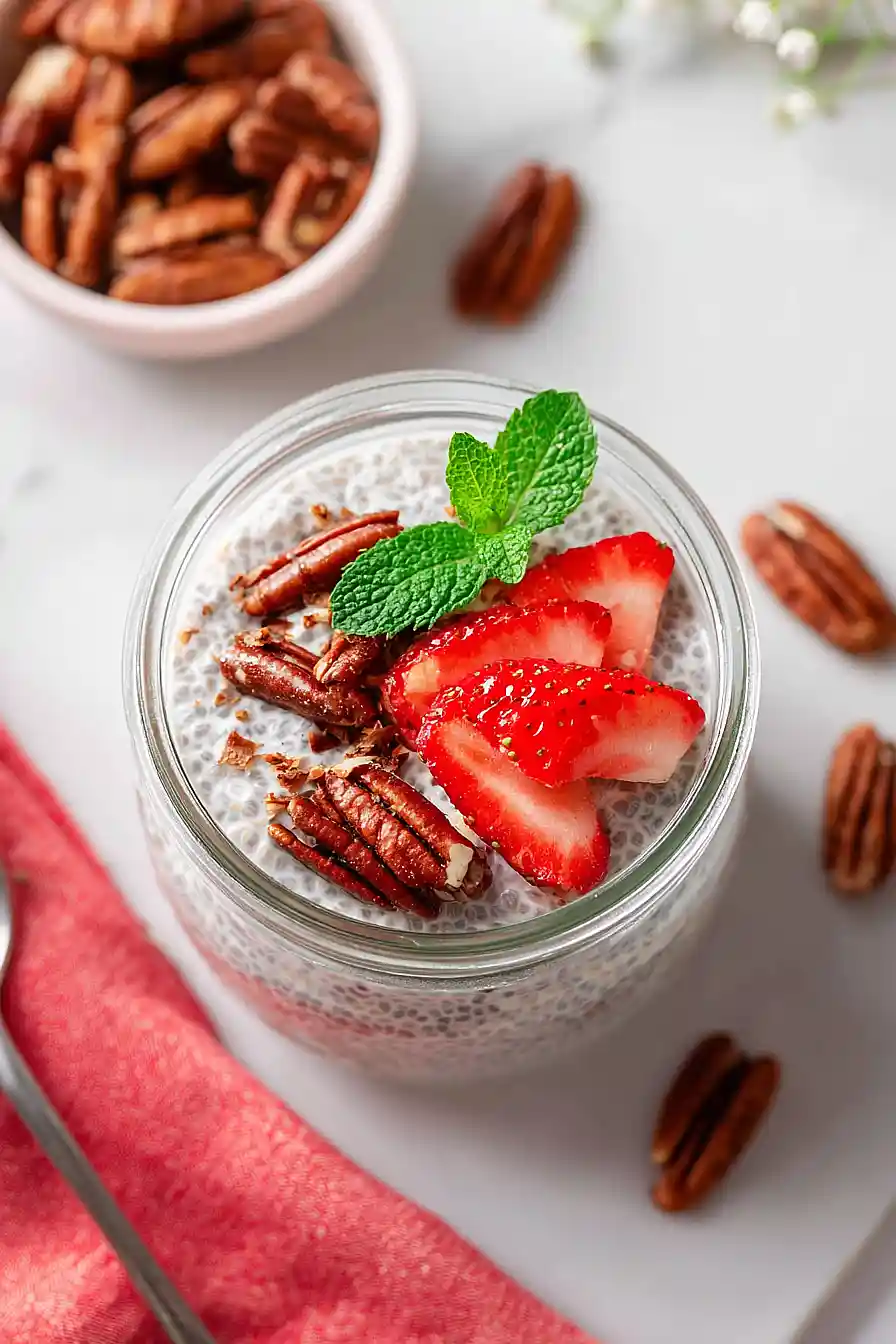
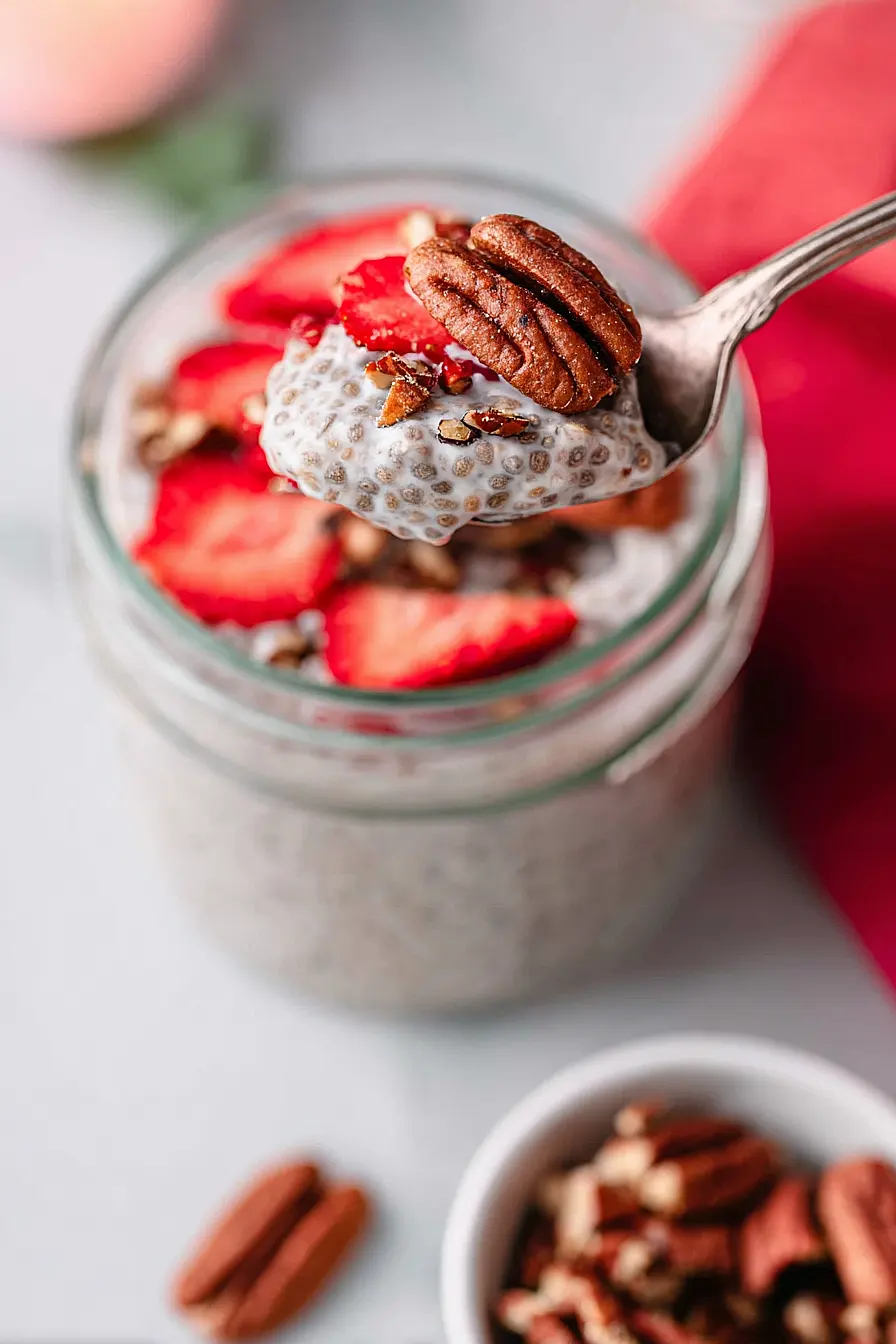
Chia seed pudding is perfect for breakfast or as a snack, and I love topping it with fresh berries like strawberries, blueberries, or raspberries for a little natural sweetness and color. A handful of sliced almonds, chopped walnuts, or unsweetened coconut flakes adds a nice crunch that contrasts with the creamy texture of the pudding. If you want to make it feel more like dessert, try adding a dollop of unsweetened whipped cream or a drizzle of sugar-free chocolate sauce. You can also layer it in a glass with some Greek yogurt and nuts to create a parfait-style breakfast that looks fancy but takes almost no effort.
Storage Instructions
Refrigerate: Chia seed pudding is perfect for meal prep! Store it in individual jars or an airtight container in the fridge for up to 5 days. The pudding actually gets better as it sits, so making a big batch on Sunday for the week ahead is a great idea.
Prep Ahead: I love portioning this into mason jars right after mixing so I can just grab and go in the morning. You can even add your toppings the night before if you’re using nuts or seeds, just wait to add fresh fruit until you’re ready to eat so it stays fresh.
| Preparation Time | 10-15 minutes |
| Cooking Time | 0 minutes |
| Total Time | 10-15 minutes |
| Level of Difficulty | Easy |
| Servings | 4 servings |
Estimated Nutrition
Estimated nutrition for the whole recipe (without optional ingredients):
- Calories: 560-650
- Protein: 13-17 g
- Fat: 40-46 g
- Carbohydrates: 36-44 g
Ingredients
- 3.25 cups almond milk (I use Blue Diamond for a cleaner taste)
- 5 tbsp allulose (favored for its zero-carb profile and clean sweetness)
- 1/4 tsp almond extract
- 2 tbsp coconut oil (melted and slightly cooled to prevent clumping)
- 1/2 cup chia seeds
- Pinch of salt
Step 1: Combine Wet Base with Sweetener and Flavoring
- 3.25 cups almond milk
- 5 tbsp allulose
- 1/4 tsp almond extract
- Pinch of salt
Pour the almond milk into a blender and add the allulose, almond extract, and a pinch of salt.
Blend on medium speed for about 30 seconds until the sweetener is fully dissolved and the mixture is smooth.
This ensures even distribution of sweetness throughout the pudding without any grainy texture.
Step 2: Incorporate Coconut Oil
- 2 tbsp coconut oil
- wet mixture from Step 1
With the blender still running on low speed, slowly drizzle in the melted and slightly cooled coconut oil.
Blend for 15-20 seconds until fully emulsified and no streaks of oil remain.
I find that adding the oil while blending prevents it from clumping and creates a more luxurious, creamy texture in the final pudding.
Step 3: Add Chia Seeds and Begin Thickening Process
- 1/2 cup chia seeds
- wet mixture from Step 2
Pour the blended wet mixture from Step 2 into a bowl and stir in the chia seeds with a spoon or whisk.
The seeds will begin absorbing liquid immediately.
Wait 5 minutes, then stir vigorously to break up any clumps that may have formed and distribute the seeds evenly throughout the mixture.
Step 4: Achieve Final Pudding Consistency
- thickening mixture from Step 3
Stir the mixture again at the 10-minute mark, and once more at the 15-minute mark.
The pudding will gradually thicken as the chia seeds continue to absorb liquid and release their natural gel.
I like to stir at these intervals to ensure even thickness and prevent a dense layer from forming at the bottom.
The pudding should reach a smooth, spoonable consistency by the third stir.
Step 5: Chill and Set
- finished pudding from Step 4
Divide the pudding into serving jars or containers and refrigerate for at least 30 minutes, or up to overnight, until it reaches your desired firmness.
The pudding will continue to thicken slightly as it chills.
Serve cold, and stir before eating if separation occurs.
Quick Keto Low Carb Chia Seed Pudding
Ingredients
- 3.25 cups almond milk (I use Blue Diamond for a cleaner taste)
- 5 tbsp allulose (favored for its zero-carb profile and clean sweetness)
- 1/4 tsp almond extract
- 2 tbsp coconut oil (melted and slightly cooled to prevent clumping)
- 1/2 cup chia seeds
- Pinch of salt
Instructions
- Pour the almond milk into a blender and add the allulose, almond extract, and a pinch of salt. Blend on medium speed for about 30 seconds until the sweetener is fully dissolved and the mixture is smooth. This ensures even distribution of sweetness throughout the pudding without any grainy texture.
- With the blender still running on low speed, slowly drizzle in the melted and slightly cooled coconut oil. Blend for 15-20 seconds until fully emulsified and no streaks of oil remain. I find that adding the oil while blending prevents it from clumping and creates a more luxurious, creamy texture in the final pudding.
- Pour the blended wet mixture from Step 2 into a bowl and stir in the chia seeds with a spoon or whisk. The seeds will begin absorbing liquid immediately. Wait 5 minutes, then stir vigorously to break up any clumps that may have formed and distribute the seeds evenly throughout the mixture.
- Stir the mixture again at the 10-minute mark, and once more at the 15-minute mark. The pudding will gradually thicken as the chia seeds continue to absorb liquid and release their natural gel. I like to stir at these intervals to ensure even thickness and prevent a dense layer from forming at the bottom. The pudding should reach a smooth, spoonable consistency by the third stir.
- Divide the pudding into serving jars or containers and refrigerate for at least 30 minutes, or up to overnight, until it reaches your desired firmness. The pudding will continue to thicken slightly as it chills. Serve cold, and stir before eating if separation occurs.