If you ask me, no-bake cheesecakes are one of the best desserts to make when you want something impressive without turning on the oven.
This rhubarb cheesecake sits on a buttery graham cracker crust and gets its tang from cream cheese and tart rhubarb puree. The filling is creamy and smooth, held together with just a touch of gelatin so it slices perfectly.
Fresh rhubarb gets cooked down into a sweet-tart topping that balances out the rich cheesecake layer. A hint of ginger and lemon brings everything together without overpowering the rhubarb’s natural flavor.
It’s a dessert that tastes fancy but comes together pretty easily, perfect for spring and summer when rhubarb is in season.
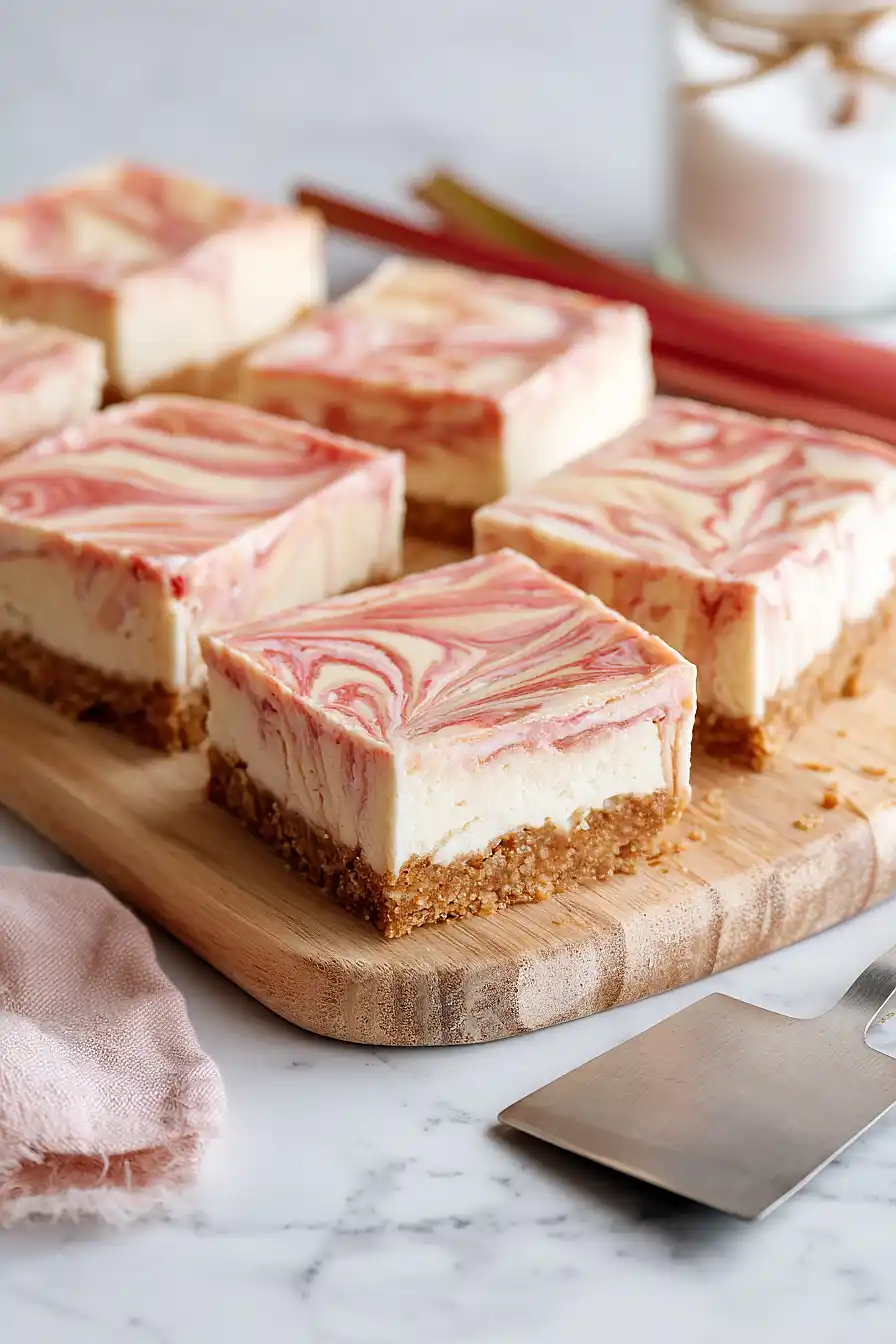
Why You’ll Love This Rhubarb Cheesecake
- No-bake convenience – This cheesecake sets in the fridge without any oven time, so you can make it on a hot day without heating up your kitchen.
- Tangy rhubarb flavor – The tart rhubarb puree cuts through the richness of the cream cheese, creating a perfectly balanced dessert that’s not too sweet.
- Classic graham cracker crust – The buttery, slightly sweet crust provides the perfect base and adds a nice crunch to every bite.
- Make-ahead friendly – You can prepare this cheesecake a day or two in advance, making it ideal for dinner parties or special occasions when you want to get ahead on dessert.
- Impressive presentation – The pretty pink rhubarb topping makes this look like it came from a bakery, even though it’s surprisingly easy to put together at home.
What Kind of Rhubarb Should I Use?
Fresh rhubarb is your best bet for this cheesecake, and you’ll find it at most grocery stores during spring and early summer. The color of the stalks doesn’t really matter for flavor – both red and green rhubarb will work just fine, though the red varieties will give your cheesecake a prettier pink color. Make sure to trim off any leaves if they’re still attached, as those are actually toxic, and look for stalks that are firm and crisp rather than limp or dried out. If fresh rhubarb isn’t available, frozen rhubarb can work in a pinch, just thaw it completely and drain off any excess liquid before using it in your recipe.

Options for Substitutions
This cheesecake recipe has some room for swaps if you need them:
- Rhubarb: Fresh rhubarb is really the star here, so I’d recommend sticking with it if possible. If you absolutely can’t find it, strawberries cooked down the same way could work, though you’ll get a different flavor profile.
- Graham crackers: Digestive biscuits, vanilla wafers, or even gingersnaps make great crust alternatives. Just process them the same way until you have fine crumbs.
- Cream cheese: Make sure to use full-fat brick-style cream cheese for this recipe – spreadable cream cheese or low-fat versions won’t set properly and will make your cheesecake too soft.
- Heavy cream: You really need heavy cream here for the right texture. Whipping cream (35% fat) can work in a pinch, but avoid using half-and-half or milk as they won’t whip properly.
- Powdered gelatine: If you prefer, you can use sheet gelatine instead – you’ll need about 2 sheets. Just bloom them in cold water for 5 minutes, squeeze out excess water, then dissolve in the warm cream.
- Vanilla bean paste: Regular vanilla extract works just fine here – use the same amount. The paste just gives you those pretty vanilla specks.
Watch Out for These Mistakes While Baking
The biggest mistake when making no-bake cheesecake is not bringing your cream cheese to room temperature first, which leads to lumps that won’t smooth out no matter how much you mix – let it sit on the counter for at least an hour before starting.
Another common error is over-whipping the heavy cream, which can make your filling grainy instead of smooth, so stop beating as soon as you see soft peaks form.
Don’t skip dissolving the gelatine completely in the warm cream, as undissolved gelatine will create an uneven texture with weird rubbery bits throughout your cheesecake.
Finally, resist the urge to cut into the cheesecake before it’s fully chilled for at least 3 hours – it needs that time to set properly, or you’ll end up with a runny mess that won’t hold its shape when sliced.
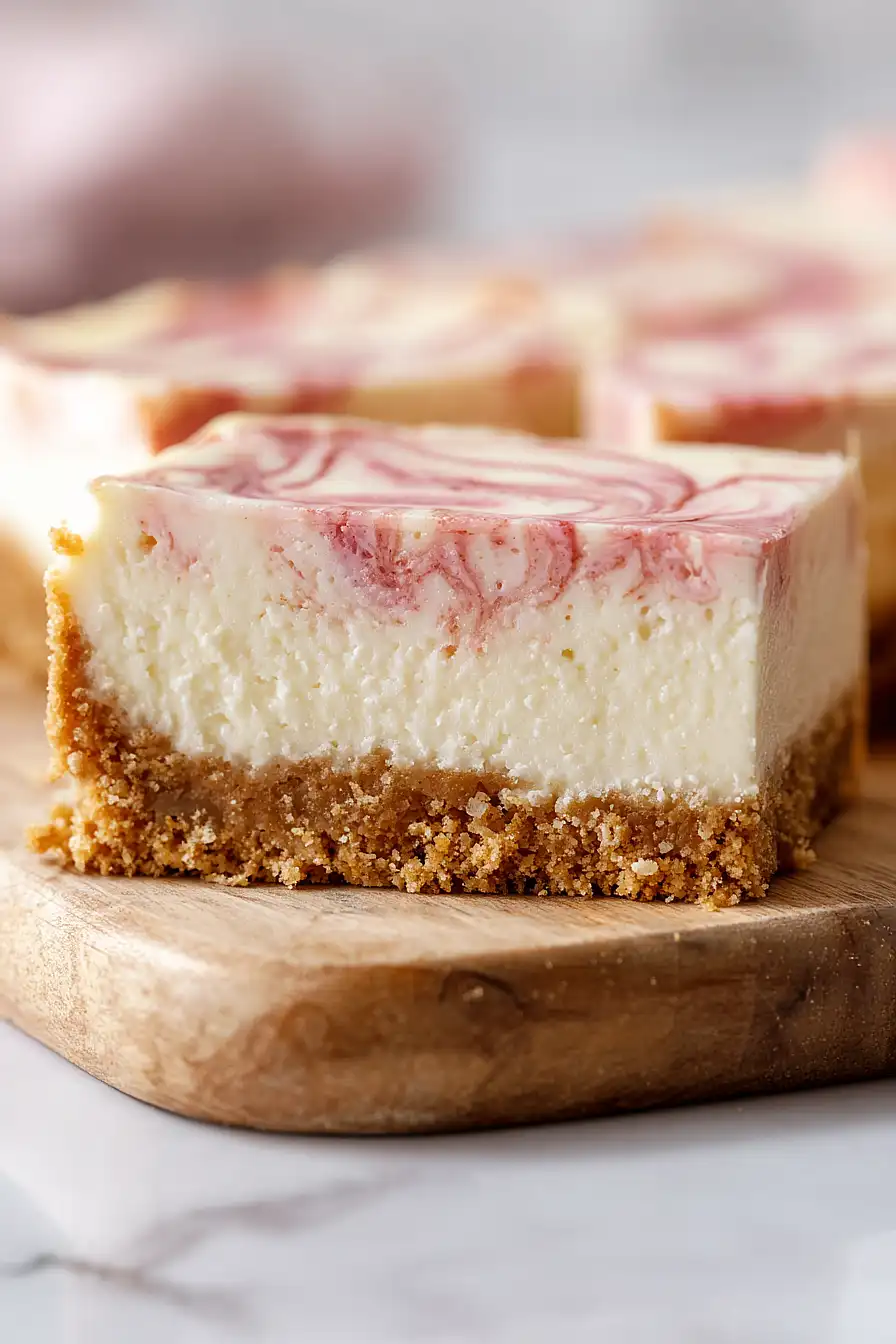
What to Serve With Rhubarb Cheesecake?
This rhubarb cheesecake is pretty rich and creamy on its own, so I like to keep things simple when serving it. A dollop of lightly sweetened whipped cream on top adds a nice airy contrast to the dense cheesecake, and you could even fold in a bit of vanilla or lemon zest for extra flavor. Fresh berries like strawberries or raspberries are a natural pairing with rhubarb and add a pop of freshness to each bite. For something a little different, try serving it with a hot cup of coffee or tea – the tartness of the rhubarb cuts through the richness beautifully and makes for a perfect afternoon treat.
Storage Instructions
Refrigerate: This cheesecake needs to stay cold, so keep it covered in the fridge for up to 4 days. I like to cover mine loosely with plastic wrap or store it in an airtight container to keep it from picking up any fridge odors.
Freeze: You can freeze this cheesecake for up to 2 months if you want to make it ahead for a party. Just wrap it really well in plastic wrap and then foil. Let it thaw overnight in the fridge before serving so the texture stays creamy.
Serve: For the best flavor and texture, let your cheesecake sit at room temperature for about 10-15 minutes before slicing. This makes it easier to cut clean slices and brings out all those delicious rhubarb flavors.
| Preparation Time | 30-40 minutes |
| Cooking Time | 20-30 minutes |
| Total Time | 450-480 minutes |
| Level of Difficulty | Medium |
| Servings | 8 slices |
Estimated Nutrition
Estimated nutrition for the whole recipe (without optional ingredients):
- Calories: 2300-2500
- Protein: 17-21 g
- Fat: 140-155 g
- Carbohydrates: 250-270 g
Ingredients
For the rhubarb compote:
- 14 oz rhubarb, cut into 1-inch lengths
- 0.9 cup sugar
- 1/2 tsp vanilla
- 1/2 tsp lemon juice
- 1 pinch salt
For the graham cracker base:
- 4.7 oz graham cracker crumbs
- 1.5 tbsp sugar
- 1 pinch salt
- 3 oz butter, melted and cooled
For the cheesecake filling:
- 6.5 oz cold heavy cream
- 1.25 tsp gelatine powder
- 8 oz cream cheese, room temperature
- 0.35 cup sugar
- 1/2 tsp vanilla
- 1/4 tsp salt
- 1/8 tsp ground ginger
- 7.4 oz rhubarb puree
Step 1: Prepare the Graham Cracker Crust
- 4.7 oz graham cracker crumbs
- 1.5 tbsp sugar
- 1 pinch salt
- 3 oz butter, melted and cooled
Line a 9×13 inch baking dish with parchment paper for easy removal.
Combine graham cracker crumbs, sugar, and salt in a bowl, then stir in the melted and cooled butter until the mixture resembles wet sand.
Press this mixture firmly and evenly into the bottom of the prepared pan, using the bottom of a measuring cup to create a compact, even layer.
Freeze the crust while you prepare the filling—this helps it stay intact when the filling is added.
Step 2: Make the Rhubarb Puree
- 14 oz rhubarb, cut into 1-inch lengths
- 0.9 cup sugar
- 1/2 tsp vanilla
- 1/2 tsp lemon juice
- 1 pinch salt
In a pot, combine the cut rhubarb, sugar, vanilla, lemon juice, and salt.
Cook over medium heat, stirring occasionally, until the rhubarb completely breaks down and the mixture becomes thick and jam-like, about 15-20 minutes.
The rhubarb will release its juices and gradually reduce into a concentrated puree.
Blend the cooked mixture until completely smooth using an immersion blender or regular blender, then set aside to cool to room temperature.
I like to strain the puree through a fine-mesh sieve if I want a silkier texture without any fibrous bits.
Step 3: Bloom and Dissolve the Gelatin
- 6.5 oz cold heavy cream
- 1.25 tsp gelatine powder
Pour 55g (about 1/4 cup) of the cold heavy cream into a small pot and sprinkle the gelatin powder evenly over it.
Let it sit for 1-2 minutes to bloom, then heat gently over low heat, stirring constantly until the gelatin is completely dissolved and the mixture is smooth.
Do not boil or overheat, as this can damage the gelatin’s setting properties.
Once dissolved, remove from heat and let cool slightly—you want it warm enough to incorporate smoothly but not so hot that it cooks the cream cheese.
Step 4: Whip the Remaining Cream and Make the Cream Cheese Base
- 6.5 oz cold heavy cream
- 8 oz cream cheese, room temperature
- 0.35 cup sugar
- 1/2 tsp vanilla
- 1/4 tsp salt
- 1/8 tsp ground ginger
In one bowl, whip the remaining heavy cream (about 130g) until stiff peaks form—this adds airiness and lightness to the final filling.
In a separate bowl, beat the room-temperature cream cheese with sugar, vanilla, salt, and ground ginger until smooth and fluffy, about 2-3 minutes.
The ginger adds a subtle warmth that complements rhubarb beautifully.
I find that bringing cream cheese to room temperature prevents lumps and ensures a silky-smooth filling.
Step 5: Build the Cheesecake Filling
- gelatin mixture from Step 3
- cream cheese mixture from Step 4
- whipped heavy cream from Step 4
- 7.4 oz rhubarb puree from Step 2
Stir the cooled gelatin mixture from Step 3 into the cream cheese mixture from Step 4 until fully incorporated and smooth.
Gently fold in the whipped cream from Step 4 using a spatula, being careful not to deflate the whipped cream—use a folding motion rather than stirring.
Finally, fold in 150g of the cooled rhubarb puree from Step 2, folding just until streaks of rhubarb remain visible throughout the filling for a beautiful marbled effect.
Step 6: Assemble and Chill the Cheesecake
- frozen crust from Step 1
- filling from Step 5
- 7.4 oz rhubarb puree from Step 2
Remove the frozen crust from the freezer and pour the filling from Step 5 evenly over it, smoothing the top with a spatula.
Dollop the remaining 50g of rhubarb puree in stripes or swirls across the surface, then use a knife or skewer to gently swirl it into the filling for a decorative marbled pattern.
Refrigerate for at least 3 hours, or until the cheesecake is set and firm to the touch—you can also cover and refrigerate overnight for the best flavor development.
Step 7: Cut and Serve
Remove the cheesecake from the refrigerator and carefully lift it from the pan using the parchment paper.
Place on a cutting board and slice into 12-16 bars or squares with a sharp, wet knife, wiping the blade between cuts for clean edges.
Serve chilled, and enjoy the delightful contrast between the crumbly crust, creamy filling, and bright rhubarb flavor.
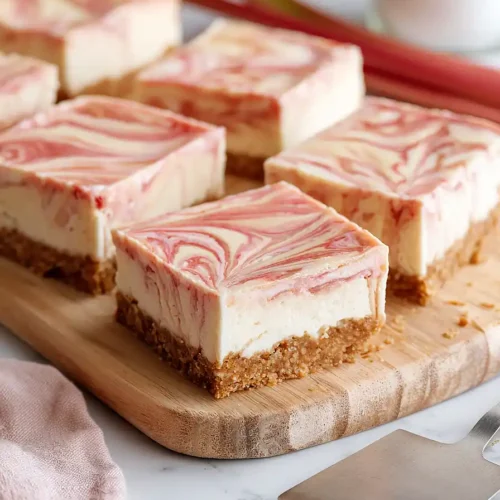
Perfect Rhubarb Cheesecake with Graham Cracker Crust
Ingredients
For the rhubarb compote
- 14 oz rhubarb, cut into 1-inch lengths
- 0.9 cup sugar
- 1/2 tsp vanilla
- 1/2 tsp lemon juice
- 1 pinch salt
For the graham cracker base
- 4.7 oz graham cracker crumbs
- 1.5 tbsp sugar
- 1 pinch salt
- 3 oz butter, melted and cooled
For the cheesecake filling
- 6.5 oz cold heavy cream
- 1.25 tsp gelatine powder
- 8 oz cream cheese, room temperature
- 0.35 cup sugar
- 1/2 tsp vanilla
- 1/4 tsp salt
- 1/8 tsp ground ginger
- 7.4 oz rhubarb puree
Instructions
- Line a 9x13 inch baking dish with parchment paper for easy removal. Combine graham cracker crumbs, sugar, and salt in a bowl, then stir in the melted and cooled butter until the mixture resembles wet sand. Press this mixture firmly and evenly into the bottom of the prepared pan, using the bottom of a measuring cup to create a compact, even layer. Freeze the crust while you prepare the filling—this helps it stay intact when the filling is added.
- In a pot, combine the cut rhubarb, sugar, vanilla, lemon juice, and salt. Cook over medium heat, stirring occasionally, until the rhubarb completely breaks down and the mixture becomes thick and jam-like, about 15-20 minutes. The rhubarb will release its juices and gradually reduce into a concentrated puree. Blend the cooked mixture until completely smooth using an immersion blender or regular blender, then set aside to cool to room temperature. I like to strain the puree through a fine-mesh sieve if I want a silkier texture without any fibrous bits.
- Pour 55g (about 1/4 cup) of the cold heavy cream into a small pot and sprinkle the gelatin powder evenly over it. Let it sit for 1-2 minutes to bloom, then heat gently over low heat, stirring constantly until the gelatin is completely dissolved and the mixture is smooth. Do not boil or overheat, as this can damage the gelatin's setting properties. Once dissolved, remove from heat and let cool slightly—you want it warm enough to incorporate smoothly but not so hot that it cooks the cream cheese.
- In one bowl, whip the remaining heavy cream (about 130g) until stiff peaks form—this adds airiness and lightness to the final filling. In a separate bowl, beat the room-temperature cream cheese with sugar, vanilla, salt, and ground ginger until smooth and fluffy, about 2-3 minutes. The ginger adds a subtle warmth that complements rhubarb beautifully. I find that bringing cream cheese to room temperature prevents lumps and ensures a silky-smooth filling.
- Stir the cooled gelatin mixture from Step 3 into the cream cheese mixture from Step 4 until fully incorporated and smooth. Gently fold in the whipped cream from Step 4 using a spatula, being careful not to deflate the whipped cream—use a folding motion rather than stirring. Finally, fold in 150g of the cooled rhubarb puree from Step 2, folding just until streaks of rhubarb remain visible throughout the filling for a beautiful marbled effect.
- Remove the frozen crust from the freezer and pour the filling from Step 5 evenly over it, smoothing the top with a spatula. Dollop the remaining 50g of rhubarb puree in stripes or swirls across the surface, then use a knife or skewer to gently swirl it into the filling for a decorative marbled pattern. Refrigerate for at least 3 hours, or until the cheesecake is set and firm to the touch—you can also cover and refrigerate overnight for the best flavor development.
- Remove the cheesecake from the refrigerator and carefully lift it from the pan using the parchment paper. Place on a cutting board and slice into 12-16 bars or squares with a sharp, wet knife, wiping the blade between cuts for clean edges. Serve chilled, and enjoy the delightful contrast between the crumbly crust, creamy filling, and bright rhubarb flavor.

