Here is my favorite strawberry rhubarb focaccia recipe, with a soft homemade bread base, a sweet-tart fruit topping, a buttery crumb mixture, and a simple lemon glaze drizzled on top.
This focaccia is what I make when I want to surprise my family with something a little different for breakfast or brunch. The combination of strawberries and rhubarb on fluffy bread is really special, and everyone always asks for seconds.
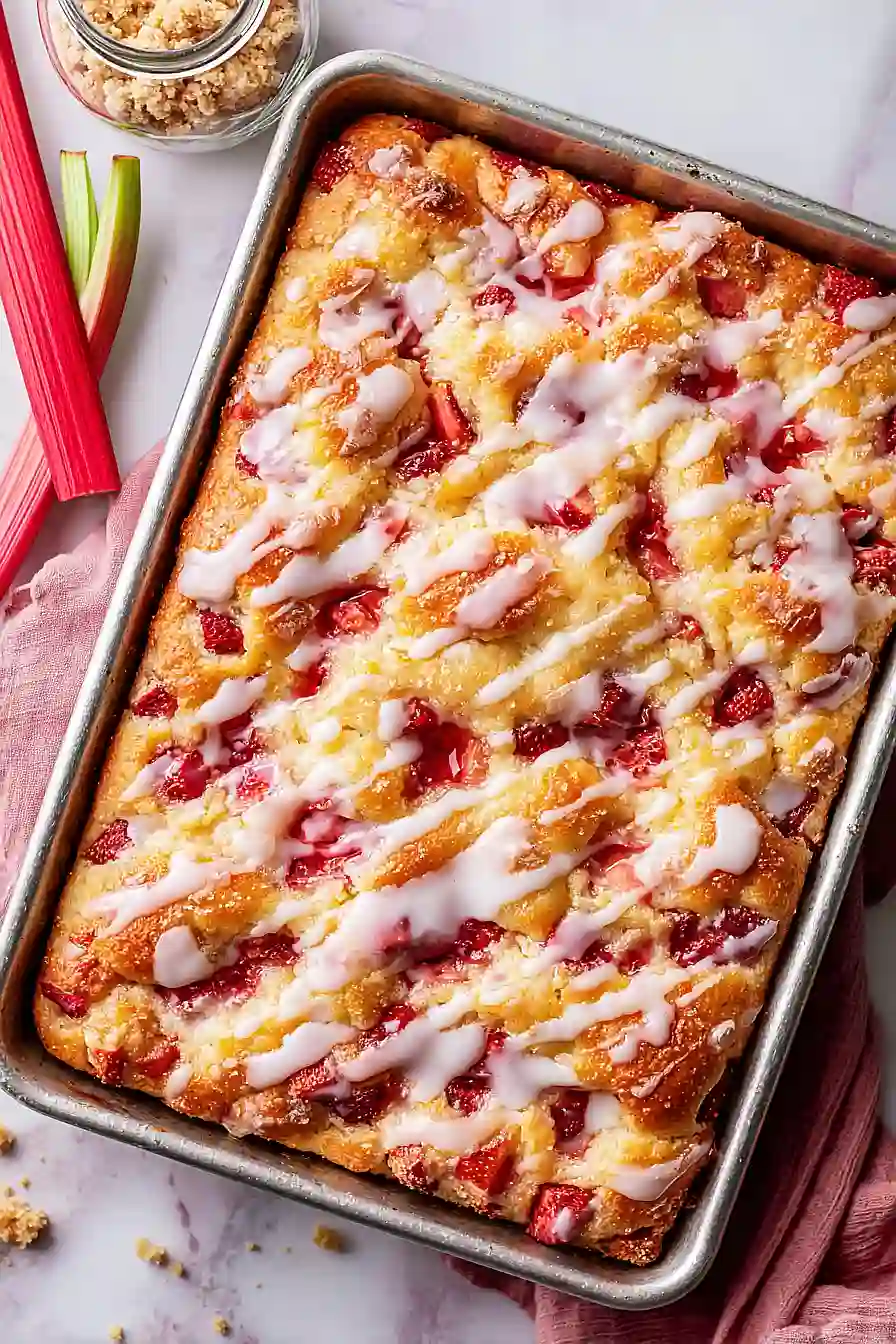
Why You’ll Love This Strawberry Rhubarb Focaccia
- Sweet and savory twist – This isn’t your typical focaccia. The combination of fluffy bread with tangy strawberry rhubarb topping creates a fun dessert-style treat that’s perfect for brunch or a special breakfast.
- Seasonal fruit showcase – When strawberries and rhubarb are in season, this recipe is a delicious way to use them up and impress your family or guests with something a little different.
- Easier than it looks – While it might seem fancy, the dough comes together simply with instant yeast, and the toppings are straightforward to prepare.
- Make-ahead friendly – You can prepare components in advance and bake it fresh when you’re ready, making it great for entertaining without the stress.
What Kind of Rhubarb Should I Use?
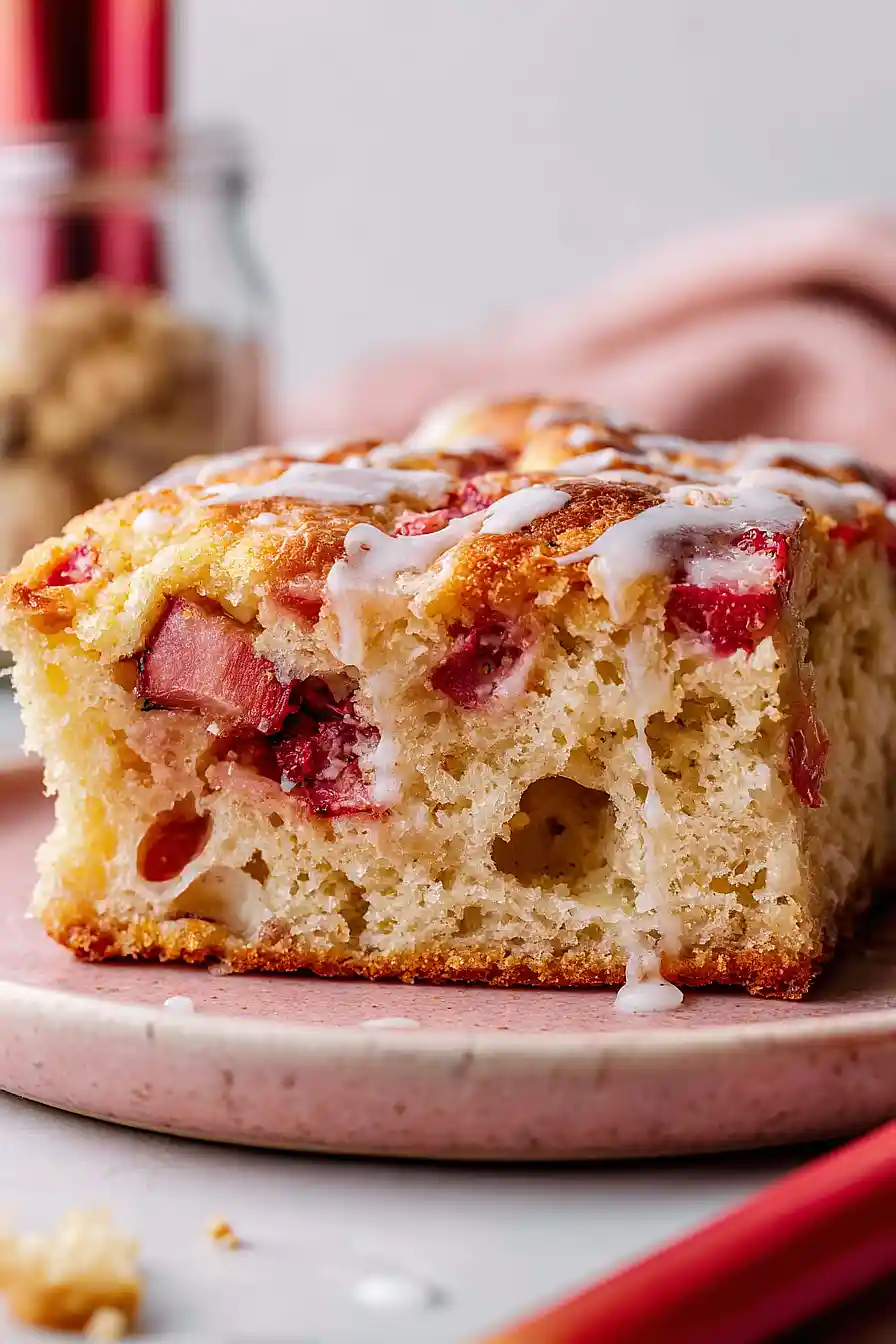
Fresh rhubarb is definitely your best bet for this recipe, and you’ll find it in season from spring through early summer at most grocery stores and farmers markets. The color of the stalks can range from deep red to pale green, and here’s a little secret – the color doesn’t actually affect the flavor, so don’t worry if yours looks more green than red. When selecting rhubarb, look for firm, crisp stalks without any soft spots or wilting, and avoid any that feel rubbery or look dried out. If you can’t find fresh rhubarb, frozen will work in a pinch, but make sure to thaw it completely and drain off any excess liquid before using it in your focaccia.
Options for Substitutions
This recipe is pretty forgiving when it comes to swaps, so here are some options if you need them:
- Rhubarb: If rhubarb isn’t in season or you can’t find it, you can use all strawberries instead (so 4 cups total). You might want to add an extra tablespoon of lemon juice to keep that tart balance.
- Fresh strawberries: Frozen strawberries work in a pinch – just thaw them completely and drain off any excess liquid before using. Fresh is better for texture, but frozen will still taste great.
- All-purpose flour: For the focaccia dough, bread flour can be used instead and will actually give you a chewier texture. Don’t substitute the flour in the crumb topping though – all-purpose is what you need there.
- Instant yeast: You can use active dry yeast instead, but you’ll need to proof it first in the warm water with a pinch of sugar for about 5-10 minutes until it gets foamy.
- Butter: For the crumb topping and melted butter, you can use coconut oil if you prefer, though the flavor will be slightly different.
- Cornstarch: Tapioca starch or arrowroot powder work as thickeners too – use the same amount mixed with water.
Watch Out for These Mistakes While Baking
The biggest mistake when making this focaccia is not letting your fruit filling cool completely before assembling – warm filling will kill the yeast and prevent your dough from rising properly, leaving you with a dense, flat bread.
Another common error is using water that’s too hot for the yeast (anything over 110°F can damage it), so use an instant-read thermometer to check the temperature, or test it on your wrist like baby formula – it should feel warm but not hot.
When stretching the dough into the pan, resist the urge to force it if it keeps shrinking back, which means the gluten needs more time to relax – just let it rest for 5-10 minutes and try again.
Finally, don’t skip the second rise after assembling the focaccia, as this 30-minute rest is what gives the bread its light, airy texture instead of turning out heavy and chewy.
What to Serve With Strawberry Rhubarb Focaccia?
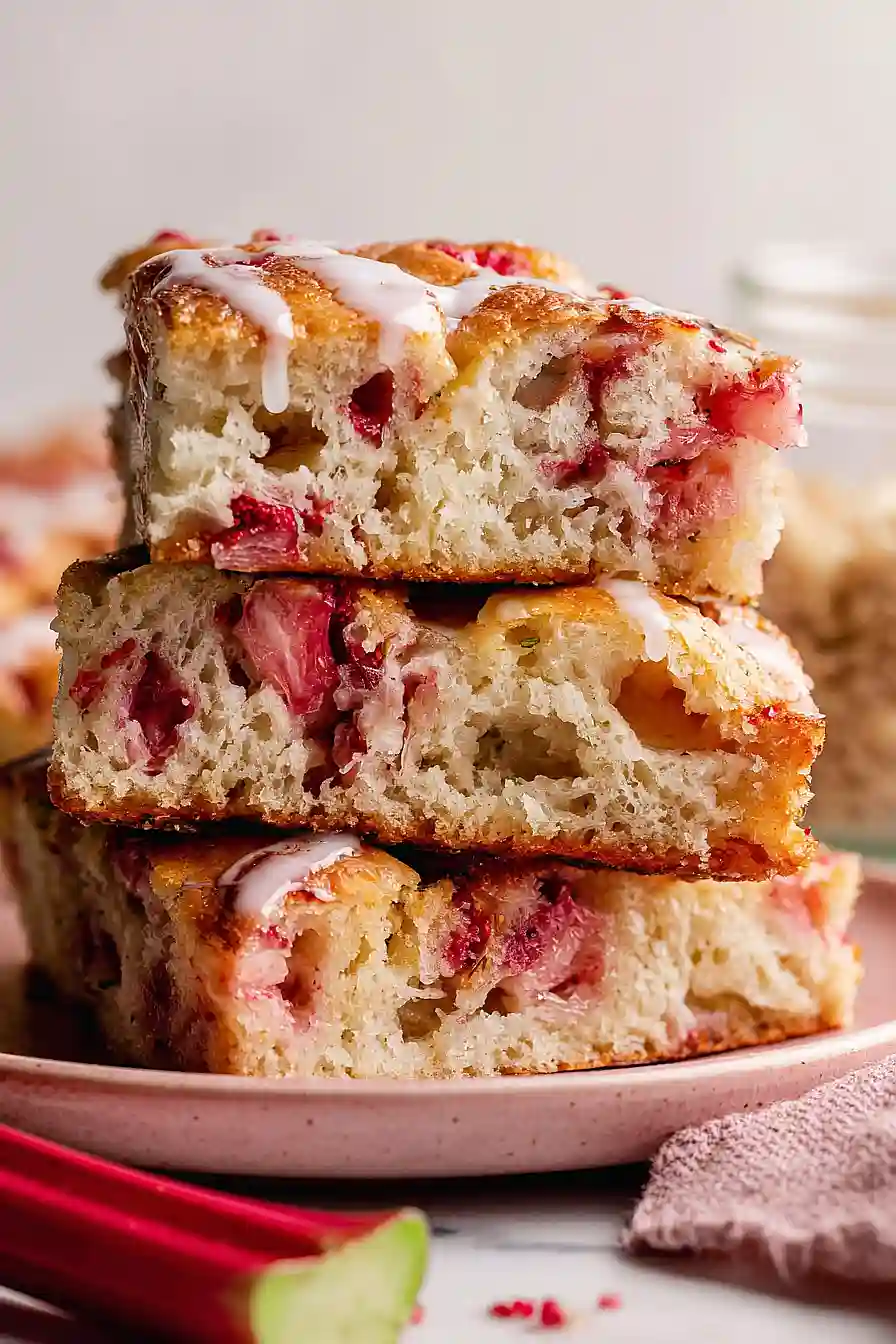
This sweet focaccia is perfect for brunch or an afternoon snack, and it pairs beautifully with a hot cup of coffee or tea. I love serving it alongside a simple fruit salad with fresh berries and mint, or with a dollop of vanilla Greek yogurt for a light breakfast. If you’re hosting a brunch, it goes great with scrambled eggs and crispy bacon to balance out the sweetness. You can also serve it as a dessert with a scoop of vanilla ice cream or fresh whipped cream on the side.
Storage Instructions
Store: This focaccia is best enjoyed the day it’s made, but you can keep leftovers covered at room temperature for up to 2 days. The fruit topping will soften the bread a bit over time, so don’t expect it to stay as fluffy as when it’s fresh from the oven.
Freeze: I don’t recommend freezing this one since the strawberry rhubarb topping doesn’t hold up well after thawing. The fruit releases moisture and can make the bread soggy, so it’s really meant to be enjoyed fresh.
Serve: If your focaccia has been sitting for a day, you can warm individual pieces in the microwave for about 10-15 seconds to bring back some of that fresh-baked feel. Just be gentle since the fruit topping can get quite hot!
| Preparation Time | 45-55 minutes |
| Cooking Time | 40-45 minutes |
| Total Time | 85-100 minutes |
| Level of Difficulty | Medium |
| Servings | 12 pieces |
Estimated Nutrition
Estimated nutrition for the whole recipe (without optional ingredients):
- Calories: 4250-4500
- Protein: 60-70 g
- Fat: 110-125 g
- Carbohydrates: 800-850 g
Ingredients
For the fruit filling:
- 2 cups strawberries (hulled and sliced into 1/4-inch thick pieces)
- 2 cups rhubarb (sliced into 1/2-inch chunks)
- 1/2 cup sugar (I use C&H granulated sugar)
- 3 tbsp lemon juice
- 1 tbsp cornstarch
- 2 tbsp water
- 1 tsp vanilla extract
For the streusel topping:
- 2/3 cup flour
- 2/3 cup sugar
- 5 tbsp butter (cold and cut into 1/2-inch cubes for a crumblier texture)
- 1/2 tsp ground ginger
For the dough:
- 6 cups flour (I always use King Arthur all-purpose flour)
- 1/2 cup sugar
- 1 1/2 tsp salt
- 2 envelopes yeast (Red Star platinum yeast helps this rise perfectly)
- 2 1/3 cups water (warmed to 110°F to 115°F to activate the yeast)
- 5 tbsp butter
For the lemon icing:
- 1 cup confectioners sugar
- 3 tbsp lemon juice (freshly squeezed for best acidity)
Step 1: Prepare the Fruit Filling and Crumble Topping
- 2 cups strawberries
- 2 cups rhubarb
- 1/2 cup sugar
- 3 tbsp lemon juice
- 1 tbsp cornstarch
- 1 tsp vanilla extract
- 2/3 cup flour
- 2/3 cup sugar
- 5 tbsp cold butter
- 1/2 tsp ground ginger
Start by preparing both components that will top your focaccia.
First, combine the sliced rhubarb, strawberries, sugar, cornstarch, lemon juice, and vanilla extract in a saucepan over medium heat.
Simmer for about 5 minutes, stirring occasionally, until the fruit begins to break down and release its juices—this concentrates the flavor and thickens the filling naturally.
Pour the filling into a bowl and let it cool to room temperature while you prepare the crumble.
In a separate bowl, combine the flour, sugar, and ground ginger for the topping.
Cut the cold butter into small cubes and work it into the flour mixture using your fingertips or a pastry cutter until the mixture resembles coarse breadcrumbs—the cold butter creates those desirable crumbly pockets.
I like to refrigerate the crumble mixture for at least 15 minutes while you work on the dough; this keeps the butter cold and ensures better texture.
Step 2: Make and Knead the Focaccia Dough
- 6 cups flour
- 1/2 cup sugar
- 1 1/2 tsp salt
- 2 envelopes yeast
- 2 1/3 cups warm water
In a large mixing bowl, combine the flour, sugar, salt, and yeast.
Pour in the warm water (110°F to 115°F is crucial for proper yeast activation) and mix until a shaggy dough forms.
Once combined, knead the dough for 5 to 8 minutes by hand or in a stand mixer until it becomes smooth and elastic.
The dough should feel soft but not sticky—if it’s too wet, dust with a little flour.
After kneading, let the dough rest in a covered bowl for 20 minutes; this allows the gluten to relax and makes stretching easier later.
Step 3: Prepare the Pan and Shape the Dough
- dough from Step 2
- 5 tbsp butter
Preheat your oven to 375°F.
While it heats, melt the 5 tablespoons of butter in a 9×13-inch baking dish (or use a large baking sheet if you prefer a thinner focaccia).
Tilt the pan to coat the bottom evenly with butter.
Remove the rested dough from Step 2 and place it in the buttered pan.
Begin stretching it gently to fit the pan dimensions, working from the center outward and being patient with the dough—it will resist at first, so let it relax for a minute and stretch again if needed.
Step 4: Layer Fruit, Crumble, and Create the Fold Pattern
- dough from Step 3
- fruit filling from Step 1
- crumble topping from Step 1
Spread one-third of the cooled fruit filling from Step 1 over one-third of the stretched dough (lengthwise).
Sprinkle one-third of the crumble mixture from Step 1 over the fruit.
Fold the opposite third of the dough over the top to cover the filling.
Now spread another third of the fruit and crumble on the exposed center section, then fold the remaining end of dough over it, creating a layered fold pattern.
Rotate the pan 90 degrees and gently stretch the dough to fit the pan again.
Top with the remaining fruit filling and crumble topping, distributing it evenly across the surface.
I find this folding technique creates beautiful ribbon-like layers when the focaccia is cut and sliced, plus it keeps the filling secure during baking.
Step 5: Final Rise and Bake
- focaccia with toppings from Step 4
Cover the pan loosely with a damp towel and let the focaccia rise in a warm spot for 30 minutes—this second rise gives the bread a lighter, airier crumb.
After 30 minutes, transfer the pan to your preheated 375°F oven and bake for 40 to 45 minutes if using a 9×13-inch pan, or 30 to 35 minutes on a baking sheet, until the top is golden brown and a toothpick inserted into the dough (avoiding the fruit) comes out clean.
The edges should pull away slightly from the pan sides.
Step 6: Finish with Lemon Glaze
- 1 cup confectioners sugar
- 3 tbsp lemon juice
While the focaccia bakes, whisk together the confectioners sugar and freshly squeezed lemon juice in a small bowl until smooth—aim for a pourable but not too-thin consistency.
As soon as the focaccia comes out of the oven, drizzle the glaze evenly over the warm bread.
The warmth of the bread helps the glaze set lightly and creates a beautiful finish.
Let it cool for 5 to 10 minutes before slicing and serving.
Lemon Strawberry Rhubarb Focaccia
Ingredients
For the fruit filling
- 2 cups strawberries (hulled and sliced into 1/4-inch thick pieces)
- 2 cups rhubarb (sliced into 1/2-inch chunks)
- 1/2 cup sugar (I use C&H granulated sugar)
- 3 tbsp lemon juice
- 1 tbsp cornstarch
- 2 tbsp water
- 1 tsp vanilla extract
For the streusel topping
- 2/3 cup flour
- 2/3 cup sugar
- 5 tbsp butter (cold and cut into 1/2-inch cubes for a crumblier texture)
- 1/2 tsp ground ginger
For the dough
- 6 cups flour (I always use King Arthur all-purpose flour)
- 1/2 cup sugar
- 1 1/2 tsp salt
- 2 envelopes yeast (Red Star platinum yeast helps this rise perfectly)
- 2 1/3 cups water (warmed to 110°F to 115°F to activate the yeast)
- 5 tbsp butter
For the lemon icing
- 1 cup confectioners sugar
- 3 tbsp lemon juice (freshly squeezed for best acidity)
Instructions
- Start by preparing both components that will top your focaccia. First, combine the sliced rhubarb, strawberries, sugar, cornstarch, lemon juice, and vanilla extract in a saucepan over medium heat. Simmer for about 5 minutes, stirring occasionally, until the fruit begins to break down and release its juices—this concentrates the flavor and thickens the filling naturally. Pour the filling into a bowl and let it cool to room temperature while you prepare the crumble. In a separate bowl, combine the flour, sugar, and ground ginger for the topping. Cut the cold butter into small cubes and work it into the flour mixture using your fingertips or a pastry cutter until the mixture resembles coarse breadcrumbs—the cold butter creates those desirable crumbly pockets. I like to refrigerate the crumble mixture for at least 15 minutes while you work on the dough; this keeps the butter cold and ensures better texture.
- In a large mixing bowl, combine the flour, sugar, salt, and yeast. Pour in the warm water (110°F to 115°F is crucial for proper yeast activation) and mix until a shaggy dough forms. Once combined, knead the dough for 5 to 8 minutes by hand or in a stand mixer until it becomes smooth and elastic. The dough should feel soft but not sticky—if it's too wet, dust with a little flour. After kneading, let the dough rest in a covered bowl for 20 minutes; this allows the gluten to relax and makes stretching easier later.
- Preheat your oven to 375°F. While it heats, melt the 5 tablespoons of butter in a 9x13-inch baking dish (or use a large baking sheet if you prefer a thinner focaccia). Tilt the pan to coat the bottom evenly with butter. Remove the rested dough from Step 2 and place it in the buttered pan. Begin stretching it gently to fit the pan dimensions, working from the center outward and being patient with the dough—it will resist at first, so let it relax for a minute and stretch again if needed.
- Spread one-third of the cooled fruit filling from Step 1 over one-third of the stretched dough (lengthwise). Sprinkle one-third of the crumble mixture from Step 1 over the fruit. Fold the opposite third of the dough over the top to cover the filling. Now spread another third of the fruit and crumble on the exposed center section, then fold the remaining end of dough over it, creating a layered fold pattern. Rotate the pan 90 degrees and gently stretch the dough to fit the pan again. Top with the remaining fruit filling and crumble topping, distributing it evenly across the surface. I find this folding technique creates beautiful ribbon-like layers when the focaccia is cut and sliced, plus it keeps the filling secure during baking.
- Cover the pan loosely with a damp towel and let the focaccia rise in a warm spot for 30 minutes—this second rise gives the bread a lighter, airier crumb. After 30 minutes, transfer the pan to your preheated 375°F oven and bake for 40 to 45 minutes if using a 9x13-inch pan, or 30 to 35 minutes on a baking sheet, until the top is golden brown and a toothpick inserted into the dough (avoiding the fruit) comes out clean. The edges should pull away slightly from the pan sides.
- While the focaccia bakes, whisk together the confectioners sugar and freshly squeezed lemon juice in a small bowl until smooth—aim for a pourable but not too-thin consistency. As soon as the focaccia comes out of the oven, drizzle the glaze evenly over the warm bread. The warmth of the bread helps the glaze set lightly and creates a beautiful finish. Let it cool for 5 to 10 minutes before slicing and serving.