I never understood why people thought chow mein was so hard to make at home until I realized most folks don’t know the secret: you don’t need special noodles. Regular spaghetti works just fine—it’s all about how you cook it and toss it with the sauce.
Growing up, chow mein was something we only got from takeout places. But once I figured out you could use pasta from your pantry and whatever veggies you had in the fridge, it became a weeknight regular at our house. The teriyaki sauce gives it a sweet and savory flavor that even picky eaters will go for.
This version with chicken is pretty straightforward. You get your chicken marinated, cook everything in the right order so nothing gets mushy, and toss it all together at the end. No fancy wok required—just a good skillet and about thirty minutes.

Why You’ll Love This Teriyaki Chicken Chow Mein
- Better than takeout – This homemade version tastes fresher and lets you control the ingredients, plus you’ll save money compared to ordering delivery.
- Packed with vegetables – With broccoli, cabbage, carrots, and celery, you’re getting a rainbow of veggies in every bite, making it a balanced meal all in one dish.
- Simple ingredients – Everything you need is easy to find at your regular grocery store, and you might already have most of these items in your kitchen.
- Great for meal prep – This chow mein reheats beautifully, so you can make a big batch and enjoy it for lunches throughout the week.
What Kind of Chicken Should I Use?
For this teriyaki chow mein, boneless, skinless chicken breast is the go-to option because it cooks quickly and soaks up all that teriyaki flavor. If you prefer dark meat, boneless, skinless chicken thighs work just as well and will give you a juicier, more tender result. Either way, make sure to trim off any excess fat and cut your chicken into thin, even strips so everything cooks at the same rate. If you’re short on time, you can even buy pre-cut chicken stir-fry strips at most grocery stores to make prep even easier.
Options for Substitutions
This chow mein recipe is pretty forgiving when it comes to swapping ingredients:
- Chicken breast: You can easily swap chicken breast for chicken thighs, which stay a bit more tender during cooking. Shrimp, thinly sliced pork, or even tofu work great too – just adjust cooking times accordingly (shrimp cooks faster, tofu needs a bit of crisping).
- Chinese Chow Mein Noodles: If you can’t find traditional chow mein noodles, use lo mein noodles, yakisoba noodles, or even spaghetti in a pinch. Cook them according to package directions, then drain well before adding to the stir-fry.
- Teriyaki sauce: No teriyaki sauce? Mix 1/4 cup soy sauce with 2 tablespoons brown sugar, 1 tablespoon rice vinegar, and a pinch of ground ginger for a quick substitute.
- Vegetables: The veggie mix here is totally flexible. Swap in bell peppers, snap peas, mushrooms, bok choy, or whatever you have on hand. Just keep the total amount of vegetables roughly the same and add harder veggies first, softer ones later.
- Vegetable oil: Any high-heat oil works here – try peanut oil, canola oil, or grapeseed oil. Just avoid olive oil as it doesn’t handle high heat as well.
- Fresh ginger: If you don’t have fresh ginger, use 1 teaspoon of ground ginger instead, though fresh really does make a difference in this dish.
Watch Out for These Mistakes While Cooking
The biggest mistake when making chow mein is overcrowding your pan with vegetables, which causes them to steam instead of getting that nice stir-fry texture – cook them in batches if your pan isn’t large enough, and make sure your heat stays medium-high throughout.
Another common error is adding the noodles too early or letting them sit in liquid, which turns them mushy, so have everything prepped and ready to go before you start cooking since this dish comes together quickly.
Don’t skip marinating the chicken for the full hour, as this step not only adds flavor but also helps the meat stay tender, and when you cook the chicken, resist the urge to stir it constantly – let it sit for a minute or two to get a light sear.
Finally, mix that corn starch thoroughly with the remaining teriyaki sauce before adding it to the pan, because lumpy sauce will ruin an otherwise perfect dish.
What to Serve With Teriyaki Chicken Chow Mein?
This chow mein is pretty filling on its own, but I love serving it with some crispy egg rolls or spring rolls on the side for extra crunch. A simple cucumber salad with rice vinegar and sesame oil makes a nice, refreshing contrast to the savory noodles and helps balance out the meal. If you’re really hungry, you could add some steamed edamame or pot stickers as appetizers, or even a bowl of hot and sour soup to start things off. For a lighter option, just serve the chow mein with a side of steamed bok choy drizzled with a bit of soy sauce and sesame seeds.
Storage Instructions
Store: Keep your leftover chow mein in an airtight container in the fridge for up to 4 days. The noodles might soak up some of the sauce as they sit, so it’s totally fine to add a splash of extra teriyaki sauce when you reheat it.
Freeze: This dish freezes pretty well for up to 2 months in a freezer-safe container. Just know that the veggies might be a bit softer after freezing and thawing, but the flavor will still be great.
Reheat: Warm it up in a skillet over medium heat with a tablespoon of water or broth to help loosen everything up. You can also microwave it, but I find the stovetop method keeps the noodles from getting too mushy and gives you a chance to crisp them up a bit if you like.
| Preparation Time | 90-100 minutes |
| Cooking Time | 10-15 minutes |
| Total Time | 100-115 minutes |
| Level of Difficulty | Medium |
| Servings | 4 servings |
Estimated Nutrition
Estimated nutrition for the whole recipe (without optional ingredients):
- Calories: 800-900
- Protein: 40-50 g
- Fat: 32-38 g
- Carbohydrates: 90-105 g
Ingredients
For the chicken and marinade:
- 12 oz chicken (cut into 1/2-inch bite-sized cubes)
- 1.5 tbsp ginger (finely grated)
- 3 garlic cloves (freshly minced for best flavor)
- 2 tbsp teriyaki sauce
- 0.75 tsp corn starch
For the stir fry and sauce:
- 6 oz pasta (Barilla thin spaghetti recommended)
- 3 tbsp oil (use a high smoke point oil like Wesson vegetable oil)
- 1 tsp toasted sesame oil (for depth of flavor)
- 1/4 tsp red pepper flakes (optional for mild heat)
- 1 medium onion (sliced into 1/4-inch thin strips)
- 1 cup celery (sliced on the bias)
- 1.25 cups carrots (julienned into 2-inch matchsticks)
- 2 cups broccoli florets
- 2.5 cups cabbage (shredded)
- 1/3 cup teriyaki sauce (Kikkoman preferred for glazing)
- 2 tsp corn starch
Step 1: Prepare Mise en Place and Marinate Chicken
- 12 oz chicken, cut into bite-sized cubes
- 1.5 tbsp ginger, finely grated
- 3 garlic cloves, minced
- 2 tbsp teriyaki sauce
- 0.75 tsp corn starch
- 1 medium onion, sliced thin
- 1 cup celery, sliced on bias
- 1.25 cups carrots, julienned
- 2 cups broccoli florets
- 2.5 cups cabbage, shredded
- 1/3 cup teriyaki sauce
- 2 tsp corn starch
- 1 tsp toasted sesame oil
- 1/4 tsp red pepper flakes
Prepare all vegetables by slicing the onion into 1/4-inch thin strips, slicing celery on the bias, julienning carrots into 2-inch matchsticks, and cutting broccoli into florets.
Shred the cabbage and set all vegetables aside.
Cut the chicken into 1/2-inch bite-sized cubes and place in a bowl.
Add the 2 tablespoons teriyaki sauce, grated ginger, minced garlic, and 0.75 teaspoon corn starch to the chicken, mixing well to coat evenly.
Let the chicken marinate while you prepare the remaining components—this brief marination will help infuse flavor even if you skip the full hour chill time.
In a separate small bowl, whisk together the 1/3 cup teriyaki sauce, 2 teaspoons corn starch, sesame oil, and red pepper flakes; set aside.
Step 2: Cook the Pasta
- 6 oz pasta
Bring a large pot of salted water to a boil and add the pasta.
Cook for 3 minutes to achieve a slightly underdone texture—this is important because the noodles will continue cooking when tossed with the hot sauce and chicken in the final step.
Drain the pasta thoroughly and set aside, tossing lightly with a small drizzle of oil to prevent sticking.
Step 3: Sear the Chicken
- marinated chicken from Step 1
- 2 tbsp oil
Heat 2 tablespoons of high-smoke-point oil in a large wok or skillet over medium-high heat until shimmering.
Once the pan is hot, carefully add the marinated chicken from Step 1 in a single layer and let it sear without stirring for about 1-2 minutes to develop color and flavor.
Stir and continue cooking for another 2-3 minutes until the chicken is mostly cooked through but still tender.
Transfer the cooked chicken to a clean plate and set aside.
Step 4: Stir-Fry the Vegetables in Two Stages
- 1 tbsp oil
- prepared vegetables from Step 1
Add the remaining 1 tablespoon of oil to the same wok over medium-high heat.
Add the sliced onion, celery, and carrots from Step 1 and stir-fry for 2-3 minutes until they begin to soften and develop color—I like to keep these vegetables with a little snap rather than cooking them until completely tender, as they’ll continue softening with the sauce.
Add the broccoli florets and shredded cabbage to the wok and stir-fry for another 3-4 minutes until the cabbage begins to wilt and the broccoli is tender-crisp.
Step 5: Combine and Glaze with Teriyaki Sauce
- cooked chicken from Step 3
- cooked pasta from Step 2
- teriyaki sauce mixture from Step 1
Return the cooked chicken from Step 3 to the wok with the vegetables.
Add the cooked pasta from Step 2 and pour in the teriyaki sauce mixture prepared in Step 1.
Toss everything together over medium-high heat for 2-3 minutes, stirring constantly so the sauce coats all components evenly and thickens slightly.
I recommend giving everything a good toss to ensure the noodles aren’t clumped together—the slight undercooking of the pasta is now an asset as it finishes cooking in the residual heat and absorbs the sauce flavor.
Step 6: Plate and Serve
Divide the teriyaki chicken chow mein into bowls or plates.
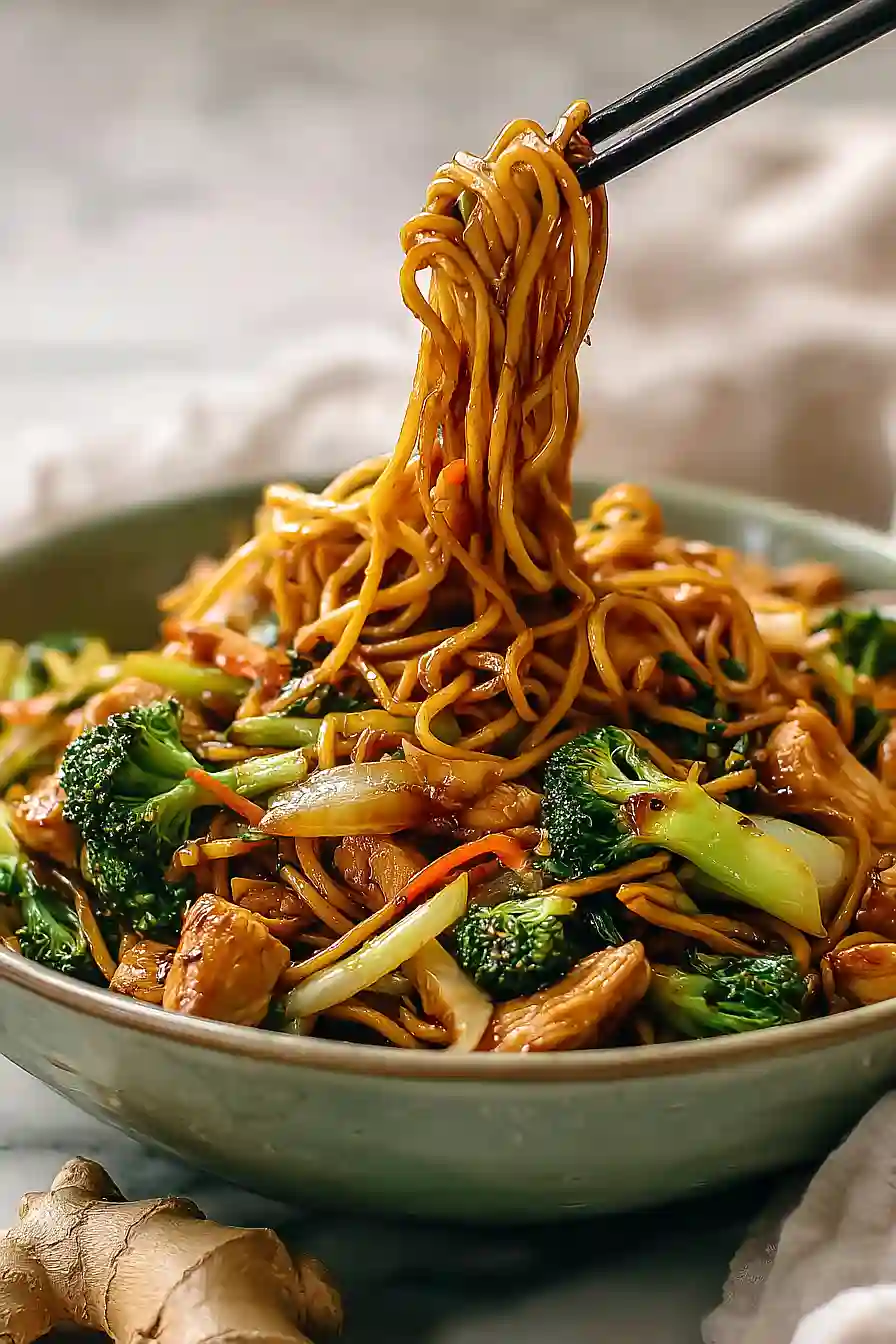
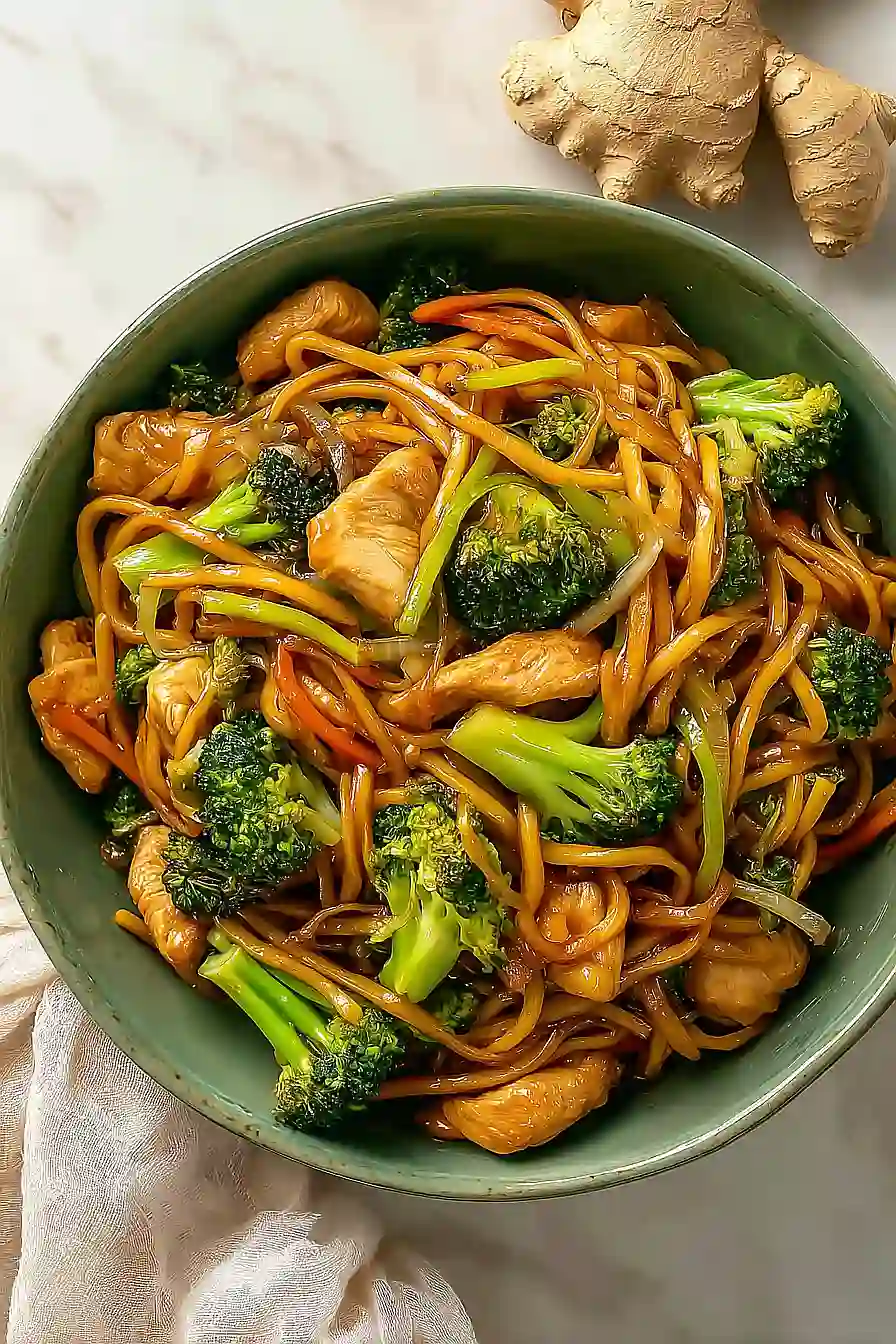
Serve immediately while hot, ensuring each portion has a good mix of noodles, chicken, and vegetables with plenty of the glossy teriyaki glaze.

Juicy Teriyaki Chicken Chow Mein
Ingredients
For the chicken and marinade
- 12 oz chicken (cut into 1/2-inch bite-sized cubes)
- 1.5 tbsp ginger (finely grated)
- 3 garlic cloves (freshly minced for best flavor)
- 2 tbsp teriyaki sauce
- 0.75 tsp corn starch
For the stir fry and sauce
- 6 oz pasta (Barilla thin spaghetti recommended)
- 3 tbsp oil (use a high smoke point oil like Wesson vegetable oil)
- 1 tsp toasted sesame oil (for depth of flavor)
- 1/4 tsp red pepper flakes (optional for mild heat)
- 1 medium onion (sliced into 1/4-inch thin strips)
- 1 cup celery (sliced on the bias)
- 1.25 cups carrots (julienned into 2-inch matchsticks)
- 2 cups broccoli florets
- 2.5 cups cabbage (shredded)
- 1/3 cup teriyaki sauce (Kikkoman preferred for glazing)
- 2 tsp corn starch
Instructions
- Prepare all vegetables by slicing the onion into 1/4-inch thin strips, slicing celery on the bias, julienning carrots into 2-inch matchsticks, and cutting broccoli into florets. Shred the cabbage and set all vegetables aside. Cut the chicken into 1/2-inch bite-sized cubes and place in a bowl. Add the 2 tablespoons teriyaki sauce, grated ginger, minced garlic, and 0.75 teaspoon corn starch to the chicken, mixing well to coat evenly. Let the chicken marinate while you prepare the remaining components—this brief marination will help infuse flavor even if you skip the full hour chill time. In a separate small bowl, whisk together the 1/3 cup teriyaki sauce, 2 teaspoons corn starch, sesame oil, and red pepper flakes; set aside.
- Bring a large pot of salted water to a boil and add the pasta. Cook for 3 minutes to achieve a slightly underdone texture—this is important because the noodles will continue cooking when tossed with the hot sauce and chicken in the final step. Drain the pasta thoroughly and set aside, tossing lightly with a small drizzle of oil to prevent sticking.
- Heat 2 tablespoons of high-smoke-point oil in a large wok or skillet over medium-high heat until shimmering. Once the pan is hot, carefully add the marinated chicken from Step 1 in a single layer and let it sear without stirring for about 1-2 minutes to develop color and flavor. Stir and continue cooking for another 2-3 minutes until the chicken is mostly cooked through but still tender. Transfer the cooked chicken to a clean plate and set aside.
- Add the remaining 1 tablespoon of oil to the same wok over medium-high heat. Add the sliced onion, celery, and carrots from Step 1 and stir-fry for 2-3 minutes until they begin to soften and develop color—I like to keep these vegetables with a little snap rather than cooking them until completely tender, as they'll continue softening with the sauce. Add the broccoli florets and shredded cabbage to the wok and stir-fry for another 3-4 minutes until the cabbage begins to wilt and the broccoli is tender-crisp.
- Return the cooked chicken from Step 3 to the wok with the vegetables. Add the cooked pasta from Step 2 and pour in the teriyaki sauce mixture prepared in Step 1. Toss everything together over medium-high heat for 2-3 minutes, stirring constantly so the sauce coats all components evenly and thickens slightly. I recommend giving everything a good toss to ensure the noodles aren't clumped together—the slight undercooking of the pasta is now an asset as it finishes cooking in the residual heat and absorbs the sauce flavor.
- Divide the teriyaki chicken chow mein into bowls or plates. Serve immediately while hot, ensuring each portion has a good mix of noodles, chicken, and vegetables with plenty of the glossy teriyaki glaze.

