If you ask me, risotto is one of those dishes that sounds fancy but is actually pretty simple to make.
This vegan asparagus risotto is creamy, comforting, and packed with fresh spring flavors. The nutritional yeast gives it that cheesy taste without any dairy, while the asparagus and peas add a nice pop of green.
The key is using good carnaroli rice and keeping your vegetable broth warm on the stove as you stir. A squeeze of lemon at the end brightens everything up and balances out the richness.
It’s the kind of dish that feels special enough for guests but easy enough for a weeknight dinner.
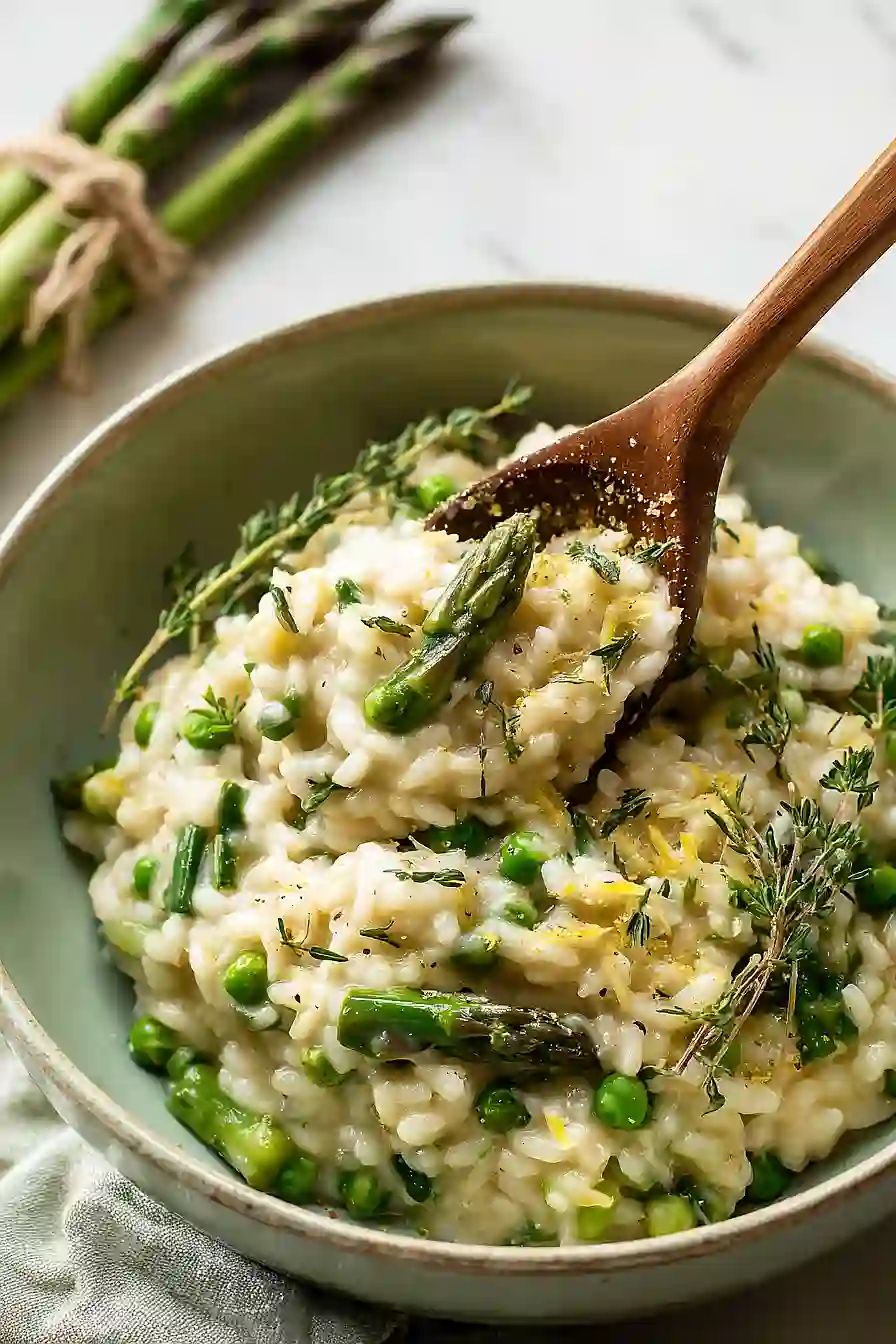
Why You’ll Love This Vegan Asparagus Risotto
- Plant-based and nutritious – This vegan risotto is packed with fresh vegetables and uses nutritional yeast for a cheesy flavor without any dairy, making it perfect for anyone following a plant-based diet.
- Restaurant-quality at home – You can make creamy, impressive risotto in your own kitchen without any fancy ingredients or techniques.
- Fresh spring flavors – The combination of asparagus, peas, lemon, and thyme brings bright, seasonal taste to every bite.
- Simple ingredients – This recipe uses straightforward, wholesome ingredients you can easily find at any grocery store.
What Kind of Rice Should I Use?
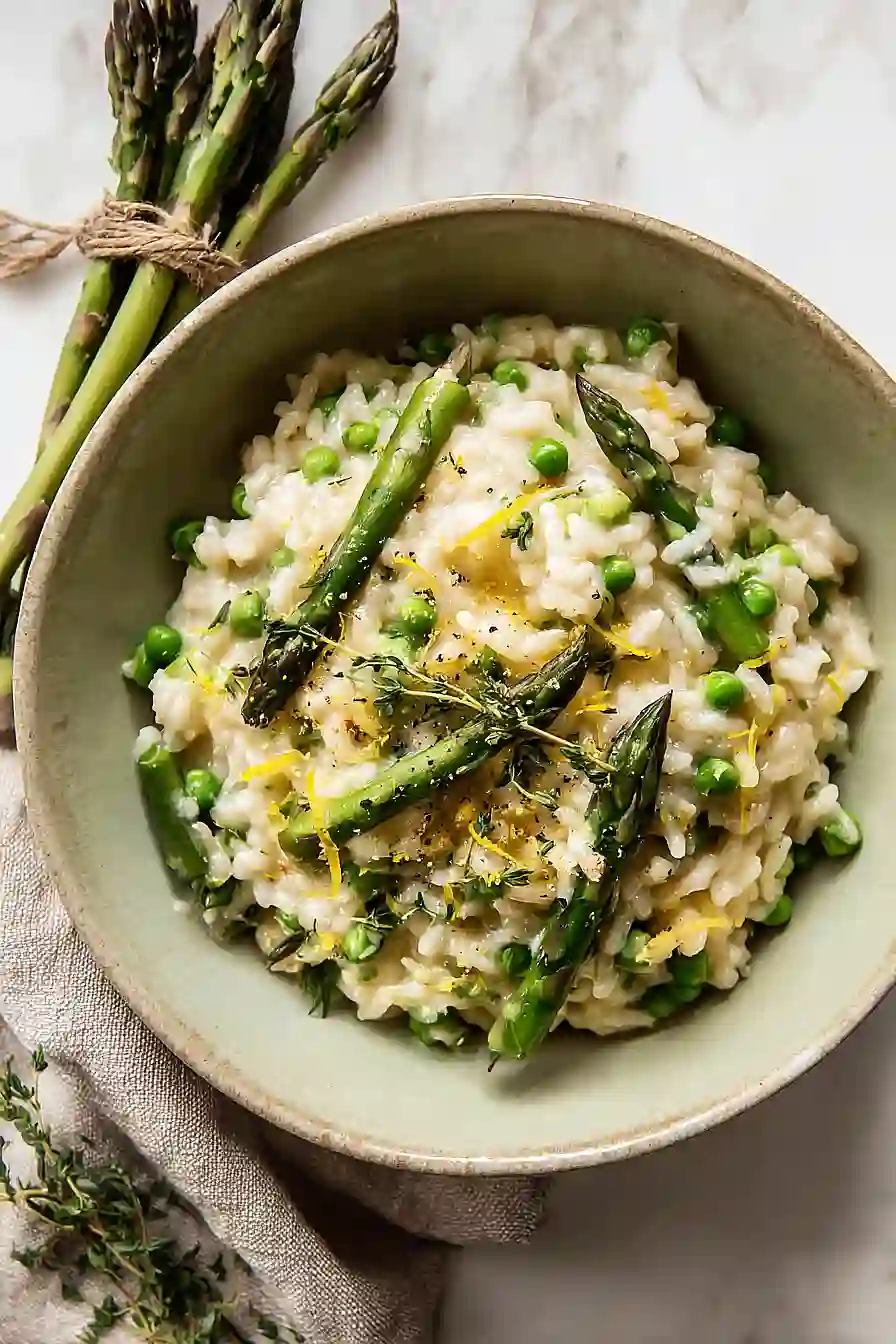
Carnaroli rice is the star of this recipe, and it’s one of the best choices for making risotto. This Italian short-grain rice has a high starch content that creates that creamy, almost velvety texture risotto is known for. If you can’t find carnaroli at your local store, arborio rice is a solid substitute and works nearly as well – you’ll find it in most supermarkets in the pasta or international aisle. Whatever you do, don’t try to swap in long-grain rice like basmati or jasmine, as they won’t release enough starch to give you that signature creaminess. Look for rice that’s labeled specifically for risotto, and you’ll be on the right track.
Options for Substitutions
This recipe has some room for swaps, though a few ingredients are pretty important to keep:
- Carnaroli rice: This is one ingredient you really shouldn’t substitute. Carnaroli (or arborio) rice is what gives risotto its signature creamy texture. Regular long-grain rice won’t work the same way since it doesn’t release enough starch.
- Asparagus: If asparagus isn’t in season or you’re not a fan, try using green beans, broccoli florets, or zucchini instead. Just add them at the same point in cooking and adjust the time slightly based on how tender you want them.
- Peas: Fresh or frozen peas both work great here. You can also swap them for edamame, fava beans, or just use more asparagus if you prefer to keep it simple.
- Nutritional yeast: This adds that cheesy, umami flavor to the vegan risotto. If you don’t have it, you can use vegan parmesan or even miso paste (start with 1 tablespoon and adjust to taste).
- Thyme: Fresh thyme is ideal, but dried thyme works too – just use about 1 teaspoon instead of the fresh sprigs. Rosemary or oregano can also work if that’s what you have on hand.
Watch Out for These Mistakes While Cooking
The biggest mistake people make with risotto is adding too much stock at once, which turns it into soupy rice instead of the creamy texture you’re after – stick to adding about 1/3 cup at a time and wait until it’s almost completely absorbed before adding more.
Stirring constantly might seem like overkill, but skipping this step means your rice won’t release enough starch to create that signature creaminess, so keep your wooden spoon moving.
Another common error is cooking the asparagus and peas for too long, which makes them mushy and dull in color – the asparagus should be golden but still have a slight bite, and the peas only need a few minutes at the end to warm through.
Finally, make sure your vegetable broth stays warm on a separate burner throughout cooking, since adding cold stock will drop the temperature of your rice and mess with the cooking time.
What to Serve With Vegan Asparagus Risotto?
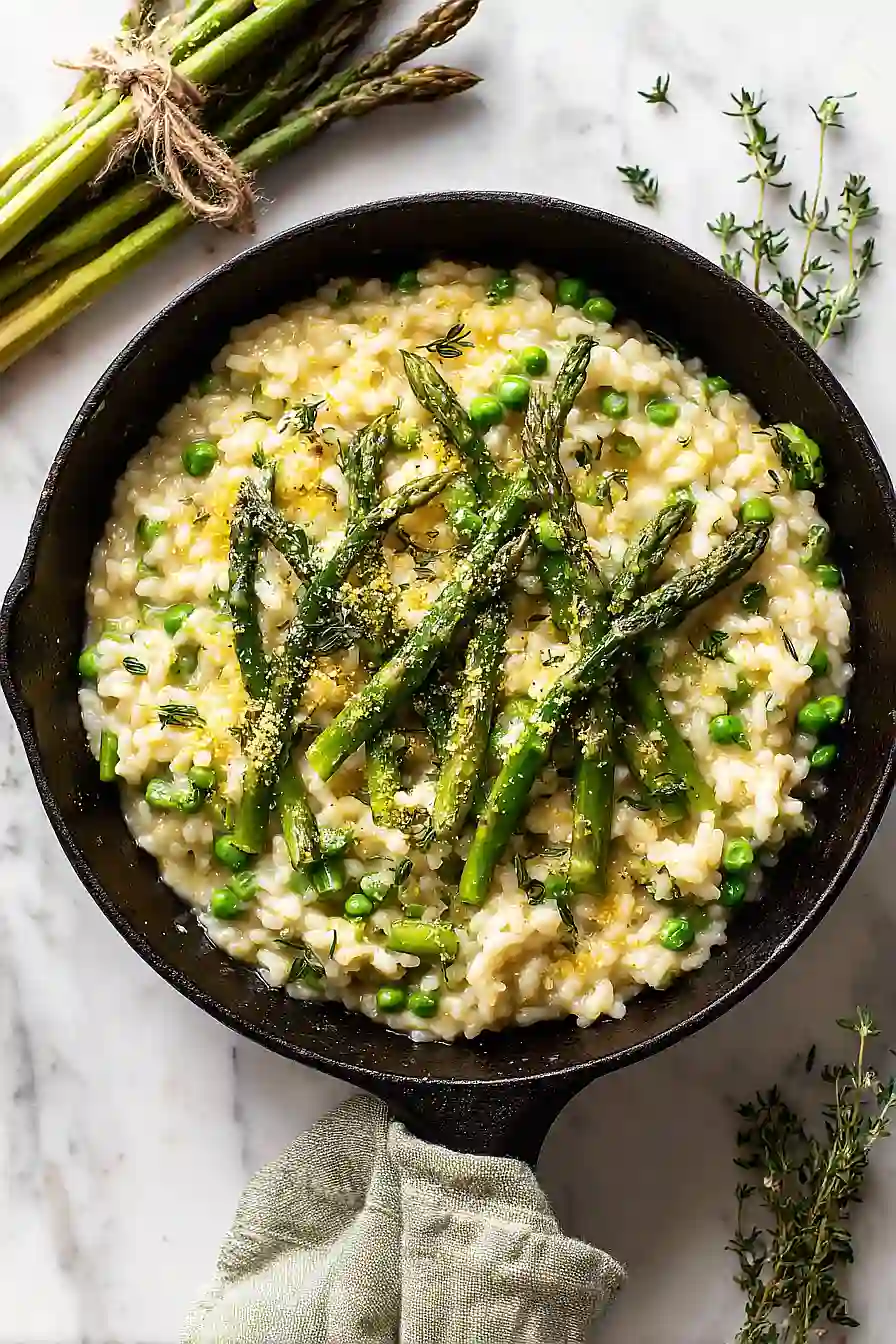
This risotto is pretty filling on its own, but I love serving it with a simple arugula salad dressed with lemon juice and olive oil to keep things fresh and light. A side of roasted vegetables like zucchini, bell peppers, or cherry tomatoes works great too, especially since they pick up on those spring flavors already in the dish. If you want to add some protein, white beans or chickpeas tossed with herbs make a nice addition without weighing everything down. Some crusty bread on the side is always welcome for scooping up any extra risotto from your bowl.
Storage Instructions
Store: Keep your leftover risotto in an airtight container in the fridge for up to 3 days. It’ll thicken up quite a bit as it sits, which is totally normal. The asparagus and peas will soften a little more, but the flavors actually develop nicely overnight.
Reheat: To bring your risotto back to life, warm it gently on the stovetop over medium-low heat with a splash of vegetable broth or water. Stir frequently and add liquid a little at a time until it reaches that creamy consistency again. You can also microwave it, but add some broth first and stir halfway through to keep it from drying out.
Freeze: While risotto can be frozen for up to 2 months in a freezer-safe container, I’ll be honest – the texture won’t be quite the same when you thaw it. The rice tends to get a bit mushy. If you do freeze it, thaw it in the fridge overnight and reheat with extra broth to help improve the consistency.
| Preparation Time | 20-25 minutes |
| Cooking Time | 35-45 minutes |
| Total Time | 60-70 minutes |
| Level of Difficulty | Medium |
| Servings | 4 servings |
Estimated Nutrition
Estimated nutrition for the whole recipe (without optional ingredients):
- Calories: 850-950
- Protein: 20-25 g
- Fat: 22-26 g
- Carbohydrates: 150-165 g
Ingredients
For the risotto base:
- 1 cup carnarolli rice (I always use Gallo for the best al dente texture)
- 5.5 cups vegetable broth (keep at a low simmer to maintain rice temperature)
- 2.5 tbsp olive oil
- 1 onion (finely diced into 1/4-inch pieces)
- 2 garlic cloves
- 4 sprigs thyme
- 5 tbsp nutritional yeast (I prefer Bragg for its savory, cheesy flavor)
- 1/4 teaspoon black pepper
For the vegetables:
- 5 oz asparagus (trimmed and cut into 1-inch bias pieces)
- 1/2 cup peas
- 1 lemon (zested and juiced for a bright finish)
Step 1: Prepare mise en place and start the broth
- 1 onion, finely diced
- 2 garlic cloves, minced
- 5 oz asparagus, trimmed and cut into 1-inch bias pieces
- 1 lemon, zested and juiced
- 5.5 cups vegetable broth
Finely dice the onion into 1/4-inch pieces and mince the garlic cloves.
Trim the asparagus and cut into 1-inch bias pieces—this angled cut exposes more surface area for better caramelization.
Zest the lemon and set aside, then juice it into a small bowl.
Pour the vegetable broth into a pot and bring to a gentle simmer over medium heat; maintaining this steady simmer throughout cooking ensures the rice cooks evenly and the risotto stays creamy.
I like to keep the broth pot right next to my risotto pan so I can add it at a moment’s notice without interrupting my stirring rhythm.
Step 2: Sear the asparagus for depth
- 0.5 tbsp olive oil
- 5 oz asparagus from Step 1
- Lemon juice from Step 1
Heat 0.5 tbsp of olive oil in a large pan over medium-high heat.
Once the oil is shimmering, add the cut asparagus and cook for 3-4 minutes, stirring occasionally, until the edges are golden and caramelized.
Season lightly with salt, then add the lemon juice and toss to coat.
Transfer the asparagus to a plate and set aside.
This early searing builds flavor complexity into the dish before the risotto is even started—the caramelization adds a subtle sweetness that complements the nutritional yeast beautifully.
Step 3: Build the aromatic base and toast the rice
- 2 tbsp olive oil
- 1 onion, finely diced from Step 1
- 2 garlic cloves, minced from Step 1
- 4 sprigs thyme
- 1 cup carnaroli rice
In the same pan, add the remaining 2 tbsp olive oil over medium heat.
Add the diced onion and cook for 4-5 minutes, stirring occasionally, until translucent and softened.
Add the minced garlic and thyme sprigs, stirring constantly for about 1 minute until fragrant—this blooms the garlic’s flavors into the oil.
Pour in the carnaroli rice and stir continuously for 2-3 minutes until each grain is coated with oil and lightly toasted.
You’ll hear a subtle clicking sound as the rice grains rub together; this toasting step is crucial because it seals the outside of each grain and prevents them from becoming mushy.
Step 4: Add broth gradually and stir until creamy
- 5.5 cups vegetable broth from Step 1
- 5 tbsp nutritional yeast
Add the hot vegetable broth to the rice in three stages, using about 1/3 cup at a time.
After each addition, stir frequently (though not constantly—every 30 seconds or so) over medium heat until the liquid is mostly absorbed and you can see the bottom of the pan when you drag your spoon across it, roughly 5-6 minutes per addition.
This gradual addition allows the rice to release its starches slowly, which creates the signature creamy texture of risotto.
After the second addition of broth, stir in the nutritional yeast at around the 10-minute mark total cooking time, which incorporates beautifully and develops the savory, cheesy notes.
Step 5: Finish the risotto with vegetables and bright garnish
- 1/2 cup peas
- Seared asparagus from Step 2
- Lemon zest from Step 1
- 1/4 teaspoon black pepper
Once the final addition of broth has been mostly absorbed and the rice is tender but still has a slight firmness to the bite (al dente), reduce the heat to low.
Gently stir in the peas and the seared asparagus from Step 2, along with most of the lemon zest, reserving a pinch for garnish.
Stir gently for 30 seconds to warm everything through.
Season with 1/4 teaspoon black pepper and taste—add a pinch more salt if needed.
The risotto should flow slightly on the plate; if it seems too thick, stir in a splash more warm broth.
Divide into bowls and top each serving with a few extra pieces of seared asparagus and a sprinkle of the reserved lemon zest.
Irresistible Vegan Asparagus Risotto
Ingredients
For the risotto base::
- 1 cup carnarolli rice (I always use Gallo for the best al dente texture)
- 5.5 cups vegetable broth (keep at a low simmer to maintain rice temperature)
- 2.5 tbsp olive oil
- 1 onion (finely diced into 1/4-inch pieces)
- 2 garlic cloves
- 4 sprigs thyme
- 5 tbsp nutritional yeast (I prefer Bragg for its savory, cheesy flavor)
- 1/4 teaspoon black pepper
For the vegetables::
- 5 oz asparagus (trimmed and cut into 1-inch bias pieces)
- 1/2 cup peas
- 1 lemon (zested and juiced for a bright finish)
Instructions
- Finely dice the onion into 1/4-inch pieces and mince the garlic cloves. Trim the asparagus and cut into 1-inch bias pieces—this angled cut exposes more surface area for better caramelization. Zest the lemon and set aside, then juice it into a small bowl. Pour the vegetable broth into a pot and bring to a gentle simmer over medium heat; maintaining this steady simmer throughout cooking ensures the rice cooks evenly and the risotto stays creamy. I like to keep the broth pot right next to my risotto pan so I can add it at a moment's notice without interrupting my stirring rhythm.
- Heat 0.5 tbsp of olive oil in a large pan over medium-high heat. Once the oil is shimmering, add the cut asparagus and cook for 3-4 minutes, stirring occasionally, until the edges are golden and caramelized. Season lightly with salt, then add the lemon juice and toss to coat. Transfer the asparagus to a plate and set aside. This early searing builds flavor complexity into the dish before the risotto is even started—the caramelization adds a subtle sweetness that complements the nutritional yeast beautifully.
- In the same pan, add the remaining 2 tbsp olive oil over medium heat. Add the diced onion and cook for 4-5 minutes, stirring occasionally, until translucent and softened. Add the minced garlic and thyme sprigs, stirring constantly for about 1 minute until fragrant—this blooms the garlic's flavors into the oil. Pour in the carnaroli rice and stir continuously for 2-3 minutes until each grain is coated with oil and lightly toasted. You'll hear a subtle clicking sound as the rice grains rub together; this toasting step is crucial because it seals the outside of each grain and prevents them from becoming mushy.
- Add the hot vegetable broth to the rice in three stages, using about 1/3 cup at a time. After each addition, stir frequently (though not constantly—every 30 seconds or so) over medium heat until the liquid is mostly absorbed and you can see the bottom of the pan when you drag your spoon across it, roughly 5-6 minutes per addition. This gradual addition allows the rice to release its starches slowly, which creates the signature creamy texture of risotto. After the second addition of broth, stir in the nutritional yeast at around the 10-minute mark total cooking time, which incorporates beautifully and develops the savory, cheesy notes.
- Once the final addition of broth has been mostly absorbed and the rice is tender but still has a slight firmness to the bite (al dente), reduce the heat to low. Gently stir in the peas and the seared asparagus from Step 2, along with most of the lemon zest, reserving a pinch for garnish. Stir gently for 30 seconds to warm everything through. Season with 1/4 teaspoon black pepper and taste—add a pinch more salt if needed. The risotto should flow slightly on the plate; if it seems too thick, stir in a splash more warm broth. Divide into bowls and top each serving with a few extra pieces of seared asparagus and a sprinkle of the reserved lemon zest.