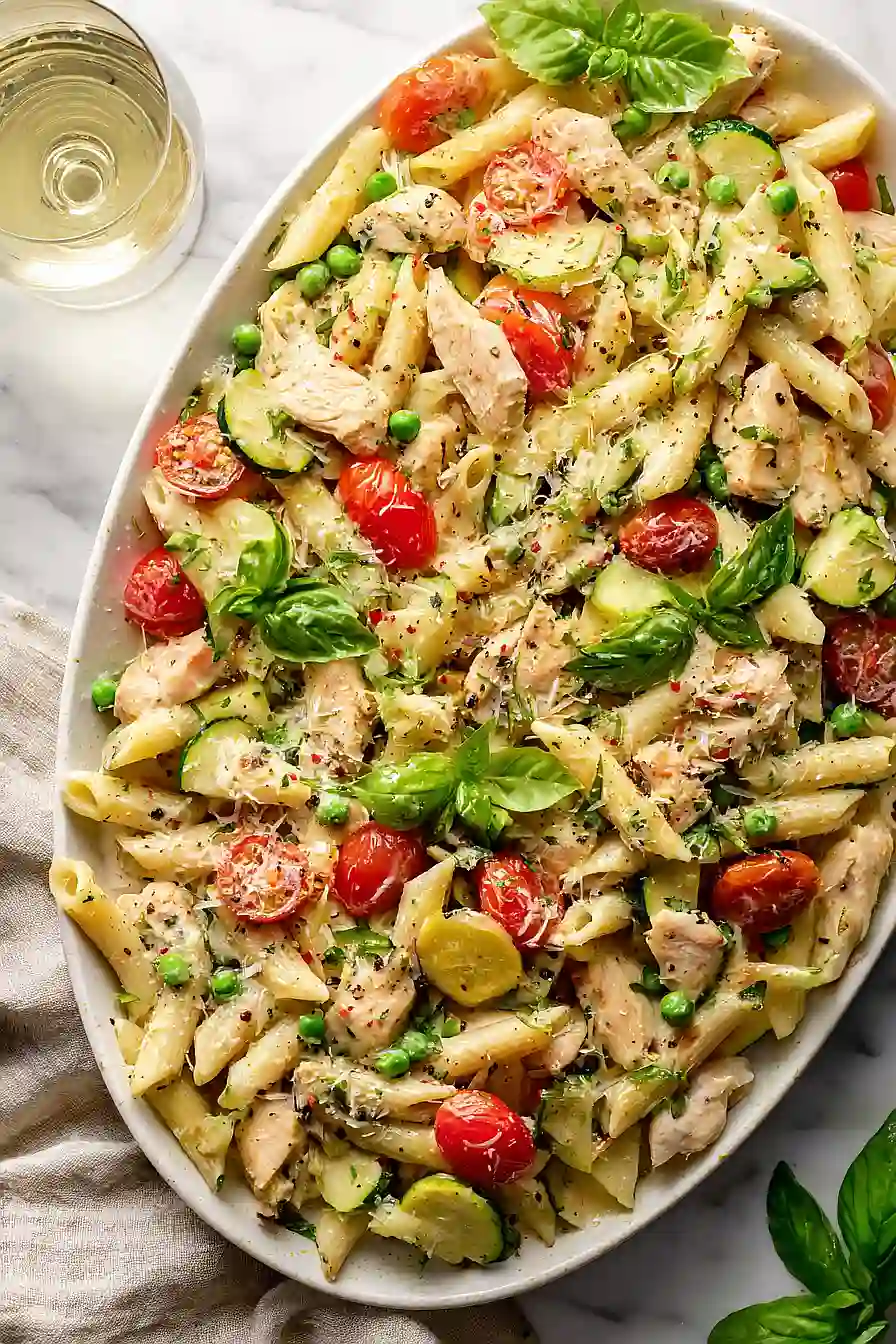
I didn’t grow up eating pasta primavera. My mom’s version of getting vegetables into dinner was opening a can of green beans. But when I had it for the first time at a little Italian place in my twenties, I got it. Fresh vegetables, tender chicken, and pasta all mixed together in a light creamy sauce—it just worked.
The thing about pasta primavera is that it sounds fancy, but it’s really just a one-pan situation that comes together in about thirty minutes. You don’t need any special skills or complicated techniques. If you can boil pasta and sauté some chicken, you’re already halfway there. It’s the kind of dinner that feels like you put in way more effort than you actually did, which is my favorite kind of recipe.
Why You’ll Love This Chicken Pasta Primavera
- Quick weeknight dinner – Ready in just 30-45 minutes, this one-pan pasta is perfect for those busy evenings when you want something homemade without spending hours in the kitchen.
- Packed with vegetables – With zucchini, tomatoes, and peas, you’re getting a good serving of veggies mixed right into your pasta, making it a more balanced meal.
- Simple ingredients – This recipe uses everyday ingredients you probably already have on hand, so no special trips to the grocery store needed.
- Light and fresh – The creamy sauce isn’t too heavy, and the fresh herbs and vegetables keep it feeling light and satisfying without weighing you down.
- Family-friendly – The combination of tender chicken, pasta, and a mild cream sauce makes this a dish that both kids and adults will happily eat.
What Kind of Chicken Should I Use?
For this pasta primavera, boneless, skinless chicken breasts are your best bet since they cook quickly and slice up nicely. If you prefer dark meat, chicken thighs work great too and tend to stay a bit more juicy during cooking. You can buy pre-cut chicken breast strips to save time, or slice whole breasts into bite-sized pieces yourself – just make sure they’re all roughly the same size so they cook evenly. Fresh or thawed frozen chicken both work fine here, just pat the chicken dry with paper towels before cooking to get a better sear.

Options for Substitutions
This pasta dish is pretty forgiving when it comes to swapping ingredients:
- Penne: Any short pasta works great here – try fusilli, rigatoni, or farfalle. They all catch the sauce nicely. You can also use whole wheat or gluten-free pasta if that’s what you have.
- Chicken breast: Chicken thighs are a good swap if you prefer darker meat, or you can use shrimp for a seafood version. Just adjust the cooking time – shrimp only needs about 3-4 minutes per side.
- Zucchini: Feel free to mix up the vegetables based on what’s in your fridge. Yellow squash, bell peppers, broccoli florets, or asparagus all work well. Just keep the cooking times similar.
- White wine: If you don’t cook with wine, substitute with chicken broth plus a squeeze of lemon juice to keep that bright flavor.
- Cream: Half-and-half or whole milk can replace the cream for a lighter sauce. You can also use Greek yogurt stirred in at the end for a tangy twist.
- Parmesan: Pecorino Romano or Asiago cheese make good substitutes, though they have a sharper flavor than parmesan.
Watch Out for These Mistakes While Cooking
The biggest mistake people make with chicken pasta primavera is overcooking the vegetables, which turns them mushy instead of crisp-tender – add harder vegetables like zucchini first and save delicate ones like peas for the last few minutes of cooking.
Another common error is not properly seasoning the chicken before cooking, so make sure to generously salt and pepper both sides of the breast to build flavor from the start.
Don’t skip deglazing the pan with white wine after cooking the vegetables, as this step picks up all those tasty browned bits stuck to the bottom and adds depth to your sauce.
Finally, avoid adding the pasta directly from the pot without draining it well first, since excess water will dilute your creamy sauce and leave you with a watery dish instead of a nicely coated pasta.
What to Serve With Chicken Pasta Primavera?
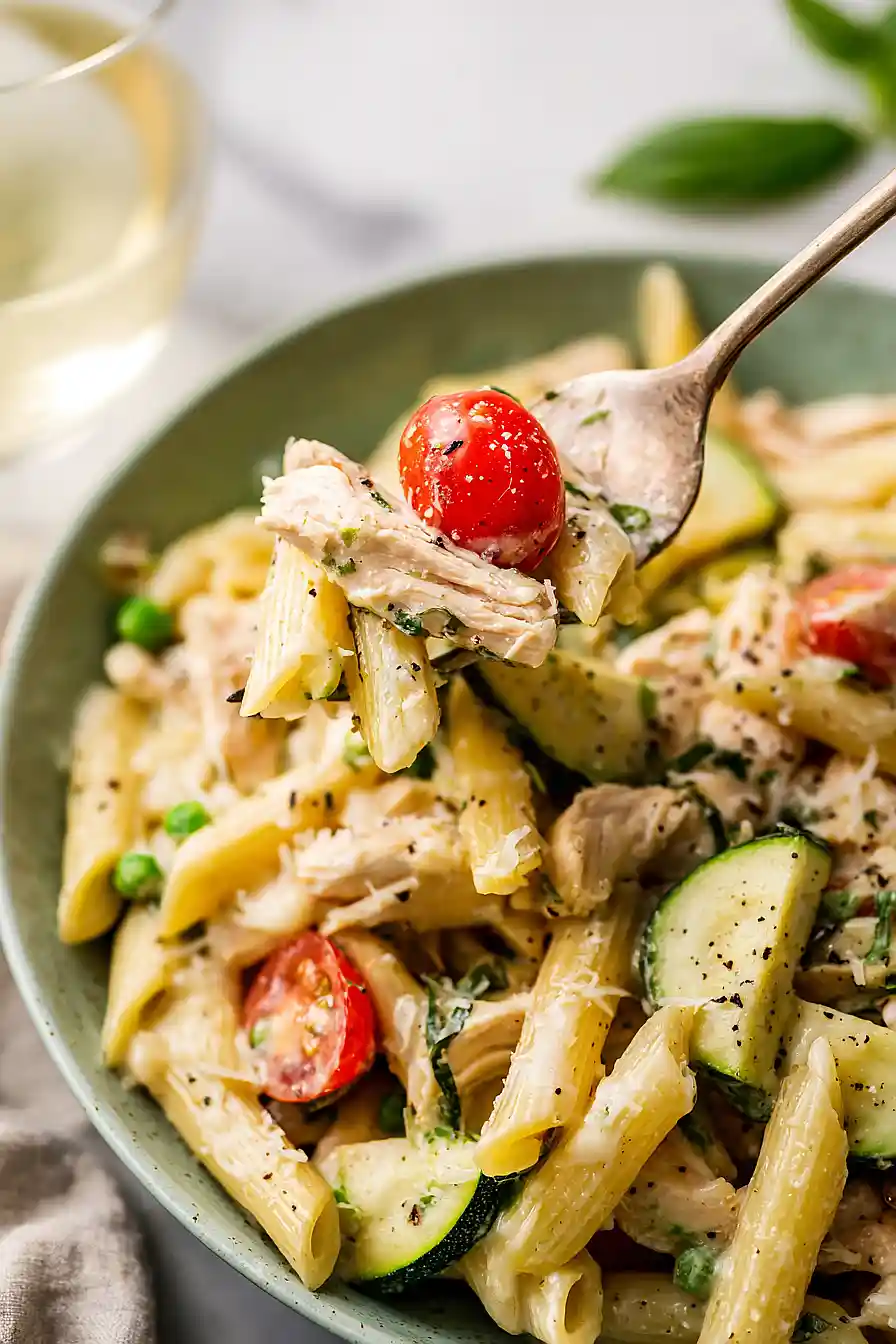
Since this pasta is already loaded with veggies and chicken, I like to keep the sides simple and let the primavera shine. A warm piece of garlic bread or some crusty Italian bread is perfect for soaking up that creamy sauce at the bottom of your bowl. If you want to add a fresh element to the meal, a light arugula salad with lemon vinaigrette cuts through the richness of the cream sauce nicely. You could also serve it with a simple Caesar salad or just some extra parmesan cheese on the side for people to add as they please.
Storage Instructions
Store: Keep your chicken pasta primavera in an airtight container in the fridge for up to 4 days. The veggies might soften a bit over time, but it still tastes great. I usually portion it out into individual containers for easy grab-and-go lunches throughout the week.
Freeze: This pasta freezes pretty well for up to 2 months, though the cream sauce might separate slightly when thawed. Let it cool completely before transferring to freezer-safe containers, leaving a little space at the top for expansion.
Reheat: Warm it up in the microwave with a splash of cream or milk to help bring the sauce back together, stirring halfway through. You can also reheat it on the stovetop over medium-low heat, adding a bit of liquid if needed to loosen the sauce.
| Preparation Time | 10-15 minutes |
| Cooking Time | 20-30 minutes |
| Total Time | 30-45 minutes |
| Level of Difficulty | Medium |
| Servings | 6 servings |
Estimated Nutrition
Estimated nutrition for the whole recipe (without optional ingredients):
- Calories: 1600-1800
- Protein: 95-110 g
- Fat: 55-65 g
- Carbohydrates: 180-200 g
Ingredients
For the pasta:
- 12 oz penne (I always use Barilla for a perfect al dente bite)
For the chicken and vegetables:
- 2 tbsp olive oil
- 1.25 lb chicken breast (cut into 1-inch bite-sized pieces)
- salt
- black pepper
- 1 zucchini (sliced into 1/2-inch thick half moons)
- 2 cups grape tomatoes (halved lengthwise for better juice extraction)
- 1 cup peas
- 3/4 tbsp basil
- 1.5 tsp rosemary
- 1.5 tsp parsley
- 5 garlic cloves (freshly minced to unlock aromatic oils)
- 1/4 tsp red pepper flakes
For the sauce and garnish:
- 1/4 cup white wine (use a dry Pinot Grigio for best acidity balance)
- 1/3 cup cream
- 1/4 cup parmesan (I prefer Kraft Finely Shredded for even melting)
- fresh basil
Step 1: Prepare Mise en Place and Start the Pasta
- 12 oz penne
- 1.25 lb chicken breast
- 1 zucchini
- 2 cups grape tomatoes
- 1 cup peas
- 5 garlic cloves
- 3/4 tbsp basil
- 1.5 tsp rosemary
- 1.5 tsp parsley
- 1/4 cup white wine
- 1/3 cup cream
- salt
While you’re preparing ingredients, bring a large pot of salted water to a boil and add the penne, cooking according to package directions.
As the pasta cooks, prepare all your components: cut the chicken breast into 1-inch bite-sized pieces, slice the zucchini into 1/2-inch thick half moons, halve the grape tomatoes lengthwise (this exposes more surface area for better juice extraction), mince the garlic cloves fresh, and measure out your herbs, peas, wine, and cream.
Having everything prepped and ready is crucial for this quick-cooking dish—it prevents the chicken from overcooking while you chop.
Step 2: Sear the Chicken Until Golden
- 2 tbsp olive oil
- 1.25 lb chicken breast
- salt
- black pepper
Heat the olive oil in a large skillet over medium-high heat until it shimmers.
Season the chicken pieces generously with salt and black pepper, then add them to the hot skillet in a single layer.
Sear for about 5 minutes, stirring occasionally, until the chicken is golden brown on the outside and cooked through.
Don’t move the chicken too much in the first few minutes—let it develop color and flavor before stirring.
The chicken will finish cooking when it comes into contact with the acidic wine and vegetables.
Step 3: Add Vegetables and Herbs, Build the Flavor Base
- 1 zucchini
- 2 cups grape tomatoes
- 1 cup peas
- 3/4 tbsp basil
- 1.5 tsp rosemary
- 1.5 tsp parsley
Add the sliced zucchini, halved tomatoes, peas, and all the dried herbs (basil, rosemary, and parsley) directly to the skillet with the seared chicken.
Stir everything together and let it cook for about 2 minutes so the vegetables begin to soften and the herbs release their aromatics into the oil.
The heat will warm the delicate peas and start to soften the zucchini and tomatoes, while the dried herbs infuse the entire dish with flavor.
Step 4: Add Garlic and Deglaze with Wine
- 5 garlic cloves
- 1/4 tsp red pepper flakes
- 1/4 cup white wine
Add the freshly minced garlic and red pepper flakes to the skillet and cook for about 1 minute, stirring constantly, until fragrant—this brief cooking time keeps the garlic from burning while allowing its aromatic oils to bloom into the dish.
Pour in the white wine and use a wooden spoon to scrape up any browned bits stuck to the pan (this is called deglazing, and those bits are pure flavor).
Let the wine reduce for about 2 minutes until it reduces by half, concentrating the acidity and alcohol flavor.
Step 5: Finish the Sauce and Combine with Pasta
- 1/3 cup cream
- 12 oz penne
Add the cream to the skillet and stir gently to combine, cooking for about 1 minute until the sauce is warmed through and takes on a silky texture.
At the same time, drain the pasta (which should be al dente by now) and immediately add it to the skillet, tossing everything together until the pasta is evenly coated with the creamy vegetable sauce.
I like to save a splash of pasta water before draining—if the sauce seems too thick, add a tablespoon or two of that starchy water to loosen it and help the sauce cling to the pasta.
Step 6: Season, Plate, and Garnish
- salt
- black pepper
- 1/4 cup parmesan
- fresh basil
Taste the pasta and adjust seasoning with additional salt and black pepper as needed.
Remove the skillet from heat and divide the pasta primavera among serving plates or bowls.
Top each portion with a generous sprinkle of shredded Parmesan cheese and a few leaves of fresh basil to add a bright, herbaceous finish that contrasts beautifully with the creamy sauce.

Irresistible Chicken Pasta Primavera
Ingredients
For the pasta::
- 12 oz penne (I always use Barilla for a perfect al dente bite)
For the chicken and vegetables::
- 2 tbsp olive oil
- 1.25 lb chicken breast (cut into 1-inch bite-sized pieces)
- salt
- black pepper
- 1 zucchini (sliced into 1/2-inch thick half moons)
- 2 cups grape tomatoes (halved lengthwise for better juice extraction)
- 1 cup peas
- 3/4 tbsp basil
- 1.5 tsp rosemary
- 1.5 tsp parsley
- 5 garlic cloves (freshly minced to unlock aromatic oils)
- 1/4 tsp red pepper flakes
For the sauce and garnish::
- 1/4 cup white wine (use a dry Pinot Grigio for best acidity balance)
- 1/3 cup cream
- 1/4 cup parmesan (I prefer Kraft Finely Shredded for even melting)
- fresh basil
Instructions
- While you're preparing ingredients, bring a large pot of salted water to a boil and add the penne, cooking according to package directions. As the pasta cooks, prepare all your components: cut the chicken breast into 1-inch bite-sized pieces, slice the zucchini into 1/2-inch thick half moons, halve the grape tomatoes lengthwise (this exposes more surface area for better juice extraction), mince the garlic cloves fresh, and measure out your herbs, peas, wine, and cream. Having everything prepped and ready is crucial for this quick-cooking dish—it prevents the chicken from overcooking while you chop.
- Heat the olive oil in a large skillet over medium-high heat until it shimmers. Season the chicken pieces generously with salt and black pepper, then add them to the hot skillet in a single layer. Sear for about 5 minutes, stirring occasionally, until the chicken is golden brown on the outside and cooked through. Don't move the chicken too much in the first few minutes—let it develop color and flavor before stirring. The chicken will finish cooking when it comes into contact with the acidic wine and vegetables.
- Add the sliced zucchini, halved tomatoes, peas, and all the dried herbs (basil, rosemary, and parsley) directly to the skillet with the seared chicken. Stir everything together and let it cook for about 2 minutes so the vegetables begin to soften and the herbs release their aromatics into the oil. The heat will warm the delicate peas and start to soften the zucchini and tomatoes, while the dried herbs infuse the entire dish with flavor.
- Add the freshly minced garlic and red pepper flakes to the skillet and cook for about 1 minute, stirring constantly, until fragrant—this brief cooking time keeps the garlic from burning while allowing its aromatic oils to bloom into the dish. Pour in the white wine and use a wooden spoon to scrape up any browned bits stuck to the pan (this is called deglazing, and those bits are pure flavor). Let the wine reduce for about 2 minutes until it reduces by half, concentrating the acidity and alcohol flavor.
- Add the cream to the skillet and stir gently to combine, cooking for about 1 minute until the sauce is warmed through and takes on a silky texture. At the same time, drain the pasta (which should be al dente by now) and immediately add it to the skillet, tossing everything together until the pasta is evenly coated with the creamy vegetable sauce. I like to save a splash of pasta water before draining—if the sauce seems too thick, add a tablespoon or two of that starchy water to loosen it and help the sauce cling to the pasta.
- Taste the pasta and adjust seasoning with additional salt and black pepper as needed. Remove the skillet from heat and divide the pasta primavera among serving plates or bowls. Top each portion with a generous sprinkle of shredded Parmesan cheese and a few leaves of fresh basil to add a bright, herbaceous finish that contrasts beautifully with the creamy sauce.