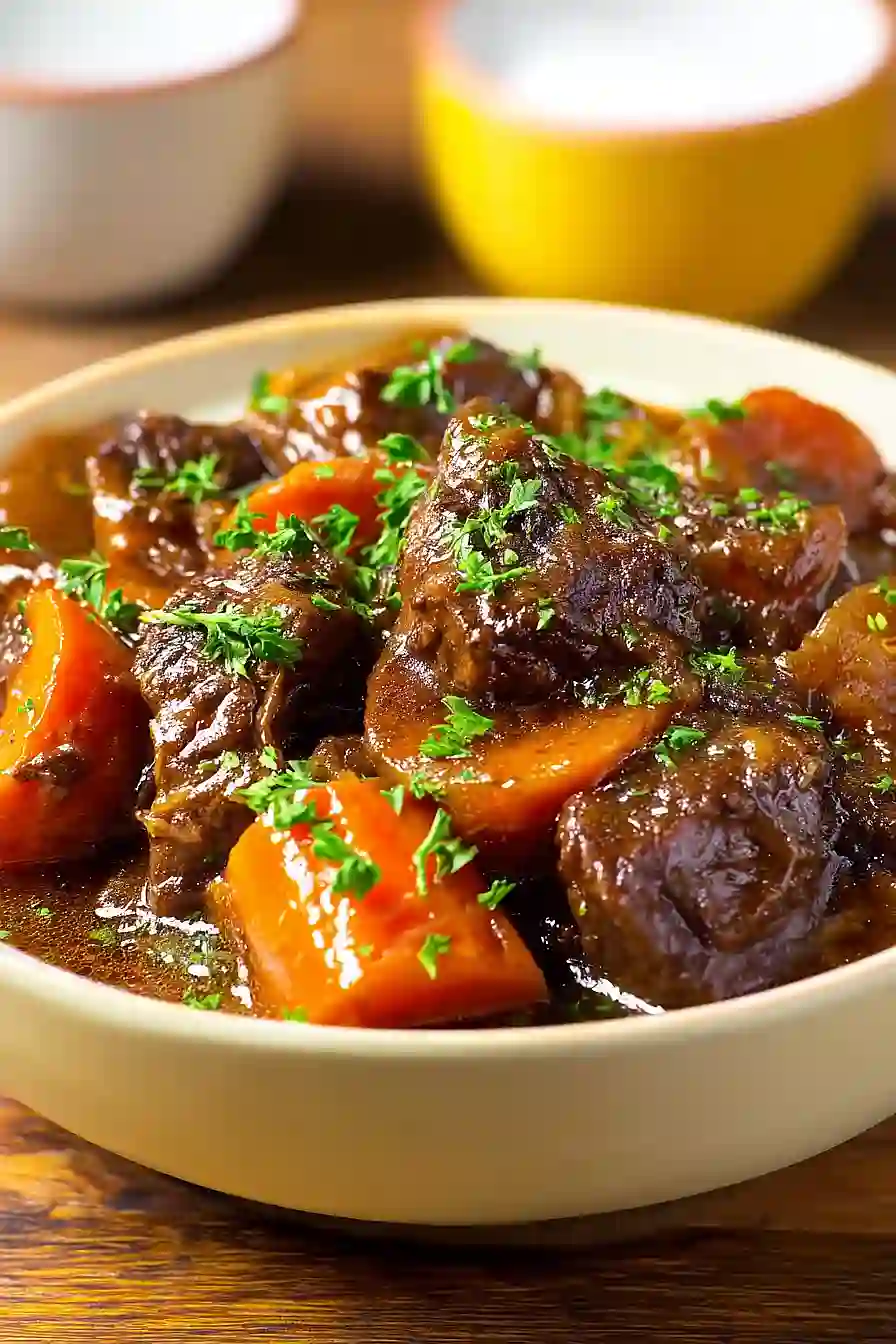
Here is my take on Anthony Bourdain’s beef stew, with tender chunks of beef, red wine, carrots, onions, and herbs that all simmer together into a rich, comforting dish.
This beef stew has become my go-to recipe on cold evenings when we want something warm and hearty. I love that it tastes even better the next day, which means easy lunches for the rest of the week.

Why You’ll Love This Beef Stew
- Restaurant-quality results at home – This recipe comes from the legendary Anthony Bourdain himself, bringing professional techniques into your kitchen without any fancy equipment.
- Rich, deep flavors – The combination of red burgundy wine and slow-braised beef creates a sauce that’s way more flavorful than your average stew.
- Simple ingredient list – You don’t need a long list of spices or hard-to-find ingredients—just quality basics that let the beef shine.
- Perfect for meal prep – This stew actually tastes better the next day, making it ideal for Sunday cooking and easy weeknight dinners throughout the week.
- Impressive yet approachable – It looks and tastes like you spent all day in the kitchen, but the steps are straightforward enough for any home cook to master.
What Kind of Beef Should I Use?
For this stew, you’ll want to stick with either beef chuck or beef shoulder, as these cuts have enough marbling and connective tissue to become really tender during the long cooking process. Chuck roast is usually the easiest to find at most grocery stores and it’s often a bit more affordable than shoulder. When you’re at the butcher counter, look for pieces that have some visible fat running through them – that’s what’s going to give your stew great flavor and keep the meat from drying out. If the beef isn’t already cut into pieces, ask your butcher to cube it for you, or you can do it yourself at home with a sharp knife.

Options for Substitutions
This classic stew has room for a few practical swaps if you need them:
- Beef shoulder or chuck: These cuts are really best for this recipe since they become tender during the long cooking process. You could try short ribs or brisket, but stick with well-marbled cuts that can handle slow cooking.
- Red burgundy wine: Any dry red wine works here – try cabernet sauvignon, merlot, or even a côtes du rhône. In a pinch, replace with beef stock plus 2 tablespoons of red wine vinegar for that acidic balance.
- Bouquet garni: If you don’t have fresh herbs to bundle, use 2 bay leaves, 4-5 sprigs of fresh thyme, and a few parsley stems tied together with kitchen twine. Or substitute with 1 teaspoon dried thyme and 2 bay leaves.
- Demi-glace: This is totally optional and just adds extra richness. If you have it, great – if not, the stew will still be delicious. You can add a tablespoon of tomato paste for depth instead.
- Carrots: Parsnips or turnips can stand in for some of the carrots if you want to mix things up, though carrots are traditional for good reason.
Watch Out for These Mistakes While Cooking
The biggest mistake when making beef stew is crowding the pan when browning the meat, which causes the beef to steam instead of developing that deep, caramelized crust that adds flavor – work in batches and make sure each piece has space to breathe.
Skipping the step of properly seasoning the beef with salt and pepper before browning is another common error that results in bland stew, so be generous with your seasoning at this stage.
Rushing the cooking process by turning up the heat will give you tough, chewy meat, so keep the stew at a gentle simmer and plan for at least 2-3 hours of cooking time until the beef is fork-tender.
Finally, don’t forget to taste and adjust the seasoning at the end – the stew often needs an extra pinch of salt and pepper after the long cooking time to really make the flavors pop.
What to Serve With Beef Stew?
This hearty beef stew is practically begging for something to soak up all that rich, wine-infused gravy. Crusty French bread or a warm baguette is my go-to choice – there’s something so satisfying about tearing off a piece and mopping up every bit of sauce from your bowl. If you want something more substantial, serve it over creamy mashed potatoes, buttered egg noodles, or even polenta for a cozy meal. A simple side salad with a tangy vinaigrette helps cut through the richness of the stew, or you could go with roasted green beans or Brussels sprouts for a nice veggie addition.
Storage Instructions
Store: This beef stew actually gets better after a day or two in the fridge. Let it cool completely, then transfer to an airtight container and refrigerate for up to 4 days. The flavors really meld together overnight, making it perfect for meal prep or Sunday dinner leftovers throughout the week.
Freeze: Beef stew is one of those dishes that freezes like a dream. Once cooled, portion it into freezer-safe containers or heavy-duty freezer bags, leaving a bit of room at the top for expansion. It’ll keep well for up to 3 months, so you can have a hearty meal ready whenever you need it.
Reheat: Gently reheat the stew on the stovetop over medium-low heat, stirring occasionally until warmed through. You can also microwave individual portions, but I find the stovetop gives you better control. If it seems a bit thick after storing, just add a splash of water or beef broth to loosen it up.
| Preparation Time | 20-30 minutes |
| Cooking Time | 120-150 minutes |
| Total Time | 140-180 minutes |
| Level of Difficulty | Medium |
Estimated Nutrition
Estimated nutrition for the whole recipe (without optional ingredients):
- Calories: 2400-2700
- Protein: 170-190 g
- Fat: 140-160 g
- Carbohydrates: 85-100 g
Ingredients
For the stew:
- 2 lb boneless beef chuck or shoulder, sliced into 1-1/2 inch cubes
- Kosher salt, as needed
- Black pepper, freshly ground, as needed
- 1/4 cup olive oil, split
- 4 medium yellow onions, halved, thinly cut
- 2 tbsp all-purpose flour
- 1 cup red burgundy wine (such as pinot noir)
- 6 medium carrots, peeled, chopped into 1-inch pieces
- 1 garlic clove
- 1 bouquet garni (bundle of thyme, parsley, bay leaf)
- Up to 3 cups water (add as needed)
- 2 tbsp demi-glace (optional)
For serving:
- Chopped fresh flat-leaf parsley
Step 1: Prepare and Season the Beef
- 2 lb boneless beef chuck or shoulder, sliced into 1-1/2 inch cubes
- kosher salt, as needed
- black pepper, freshly ground, as needed
Pat the beef cubes thoroughly dry using paper towels.
Generously season the beef pieces all over with kosher salt and freshly ground black pepper.
This step is crucial, as seasoning at this early stage helps to develop flavor throughout the entire stew.
Step 2: Sear the Beef
- seasoned beef from Step 1
- 1/4 cup olive oil, split
Heat half of the olive oil in a Dutch oven over high heat until shimmering.
Working in batches and avoiding overcrowding, sear the seasoned beef cubes on all sides until they are well browned.
Refrain from moving the meat too often to promote even browning.
Add more oil as needed for additional batches.
As the beef finishes searing, transfer the browned pieces to a plate.
I always let the beef get a really dark crust at this stage—it makes the stew extra rich.
Step 3: Cook the Onions and Build the Sauce Base
- remaining olive oil from Step 2
- 4 medium yellow onions, halved, thinly cut
- 2 tbsp all-purpose flour
- 1 cup red Burgundy wine (such as Pinot Noir)
Reduce the heat to medium-high and add the onions and any remaining olive oil to the Dutch oven.
Cook, stirring occasionally, until the onions are softened and just turning golden, about 10 minutes.
Sprinkle the flour over the onions and stir well, letting it cook and thicken the onions for 4 to 5 minutes.
Pour in the Burgundy wine and use a wooden spoon to scrape up all the flavorful browned bits (fond) stuck to the bottom of the pot.
Step 4: Simmer the Stew
- beef and juices from Step 2
- carrots from ingredient list
- 1 garlic clove
- 1 bouquet garni (bundle of thyme, parsley, bay leaf)
- 1 1/2 to 3 cups water, as needed
- 2 tbsp demi-glace (optional)
Once the wine comes to a boil, return the seared beef and any accumulated juices to the pot.
Add the carrots, garlic clove, and the bouquet garni.
Pour in 1 1/2 cups of water (and demi-glace if using) and bring the mixture to a boil.
Reduce the heat to medium-low and simmer uncovered, skimming off any foam or oil that rises to the surface.
Continue cooking for 2 to 2 1/2 hours, stirring every 15–20 minutes and scraping the pot bottom to prevent scorching.
As the stew simmers, add more water in 1/4 to 1/2 cup increments as needed, up to a total of 2 1/2 to 3 cups, to keep the liquid level sufficient and create a rich sauce as the onions break down.
Step 5: Finish and Serve the Stew
- chopped fresh flat-leaf parsley
When the beef is perfectly tender and the onions have melted into a thick, savory sauce, remove and discard the bouquet garni.
Taste and adjust the seasoning with additional salt if desired.
Transfer the stew to serving dishes and garnish with the chopped fresh parsley.
I like to add the parsley just before serving for a fresh burst of flavor and color.

Irresistible Anthony Bourdain's Beef Stew
Ingredients
For the stew:
- 2 lb boneless beef chuck or shoulder, sliced into 1-1/2 inch cubes
- kosher salt, as needed
- black pepper, freshly ground, as needed
- 1/4 cup olive oil, split
- 4 medium yellow onions, halved, thinly cut
- 2 tbsp all-purpose flour
- 1 cup red Burgundy wine (such as Pinot Noir)
- 6 medium carrots, peeled, chopped into 1-inch pieces
- 1 garlic clove
- 1 bouquet garni (bundle of thyme, parsley, bay leaf)
- up to 3 cups water (add as needed)
- 2 tbsp demi-glace (optional)
For serving:
- chopped fresh flat-leaf parsley
Instructions
- Pat the beef cubes thoroughly dry using paper towels. Generously season the beef pieces all over with kosher salt and freshly ground black pepper. This step is crucial, as seasoning at this early stage helps to develop flavor throughout the entire stew.
- Heat half of the olive oil in a Dutch oven over high heat until shimmering. Working in batches and avoiding overcrowding, sear the seasoned beef cubes on all sides until they are well browned. Refrain from moving the meat too often to promote even browning. Add more oil as needed for additional batches. As the beef finishes searing, transfer the browned pieces to a plate. I always let the beef get a really dark crust at this stage—it makes the stew extra rich.
- Reduce the heat to medium-high and add the onions and any remaining olive oil to the Dutch oven. Cook, stirring occasionally, until the onions are softened and just turning golden, about 10 minutes. Sprinkle the flour over the onions and stir well, letting it cook and thicken the onions for 4 to 5 minutes. Pour in the Burgundy wine and use a wooden spoon to scrape up all the flavorful browned bits (fond) stuck to the bottom of the pot.
- Once the wine comes to a boil, return the seared beef and any accumulated juices to the pot. Add the carrots, garlic clove, and the bouquet garni. Pour in 1 1/2 cups of water (and demi-glace if using) and bring the mixture to a boil. Reduce the heat to medium-low and simmer uncovered, skimming off any foam or oil that rises to the surface. Continue cooking for 2 to 2 1/2 hours, stirring every 15–20 minutes and scraping the pot bottom to prevent scorching. As the stew simmers, add more water in 1/4 to 1/2 cup increments as needed, up to a total of 2 1/2 to 3 cups, to keep the liquid level sufficient and create a rich sauce as the onions break down.
- When the beef is perfectly tender and the onions have melted into a thick, savory sauce, remove and discard the bouquet garni. Taste and adjust the seasoning with additional salt if desired. Transfer the stew to serving dishes and garnish with the chopped fresh parsley. I like to add the parsley just before serving for a fresh burst of flavor and color.

