Finding a comforting one-pot meal that brings together savory flavors and satisfying textures isn’t always easy, especially when you’re craving something a little different from the usual weeknight rotation. Hawaiian comfort food often gets overlooked, but it deserves a spot in your regular meal planning.
Enter chicken hekka, a local Hawaiian favorite that’s basically a sweet-savory stir-fry packed with tender chicken, noodles, and vegetables all simmered together in a soy-based sauce. It’s the kind of dish that feeds a crowd, comes together in one pan, and tastes even better the next day as leftoads.
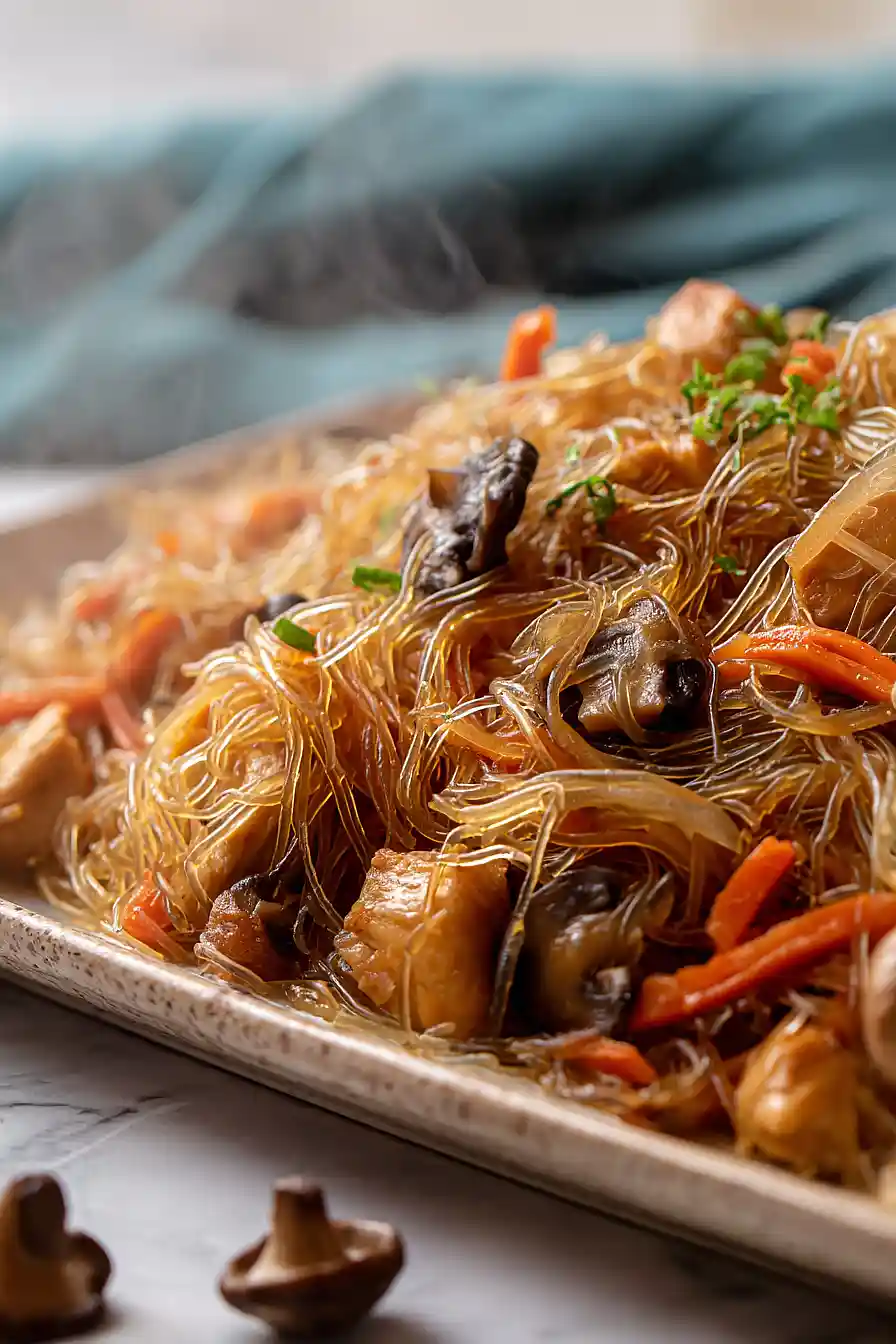
Why You’ll Love This Hawaiian Chicken Hekka
- One-pot wonder – Everything cooks together in one pan, which means less cleanup and more time to relax after dinner.
- Ready in under an hour – This flavorful dish comes together in just 50-70 minutes, making it perfect for busy weeknights when you want something special without spending hours in the kitchen.
- Packed with vegetables – With mushrooms, bamboo shoots, water chestnuts, carrots, and celery, you’re getting a nutritious meal that doesn’t skimp on flavor or texture.
- Sweet and savory flavors – The combination of soy sauce, sugar, and sake creates a delicious sauce that coats the tender chicken and noodles perfectly.
- Authentic Hawaiian comfort food – This traditional dish brings a taste of the islands to your table with simple ingredients you can find at most grocery stores.
What Kind of Chicken Should I Use?
This recipe gives you the flexibility to use either boneless, skinless chicken thighs or chicken breasts, depending on what you prefer. Thighs tend to stay juicier and more tender during cooking, plus they have a bit more flavor, which is why I usually reach for them first. Breasts work great too if that’s what you have on hand or if you prefer leaner meat – just keep an eye on them so they don’t dry out. Either way, you’ll want to slice your chicken into bite-sized pieces before cooking so it absorbs all those delicious flavors from the sauce and cooks evenly with the vegetables.
Options for Substitutions
This Hawaiian classic is pretty forgiving when it comes to swapping ingredients:
- Chicken thighs or breast: You can use either thighs or breasts depending on what you prefer. Thighs stay juicier, but breasts work fine too. You could even try thinly sliced pork or beef if you want to switch things up.
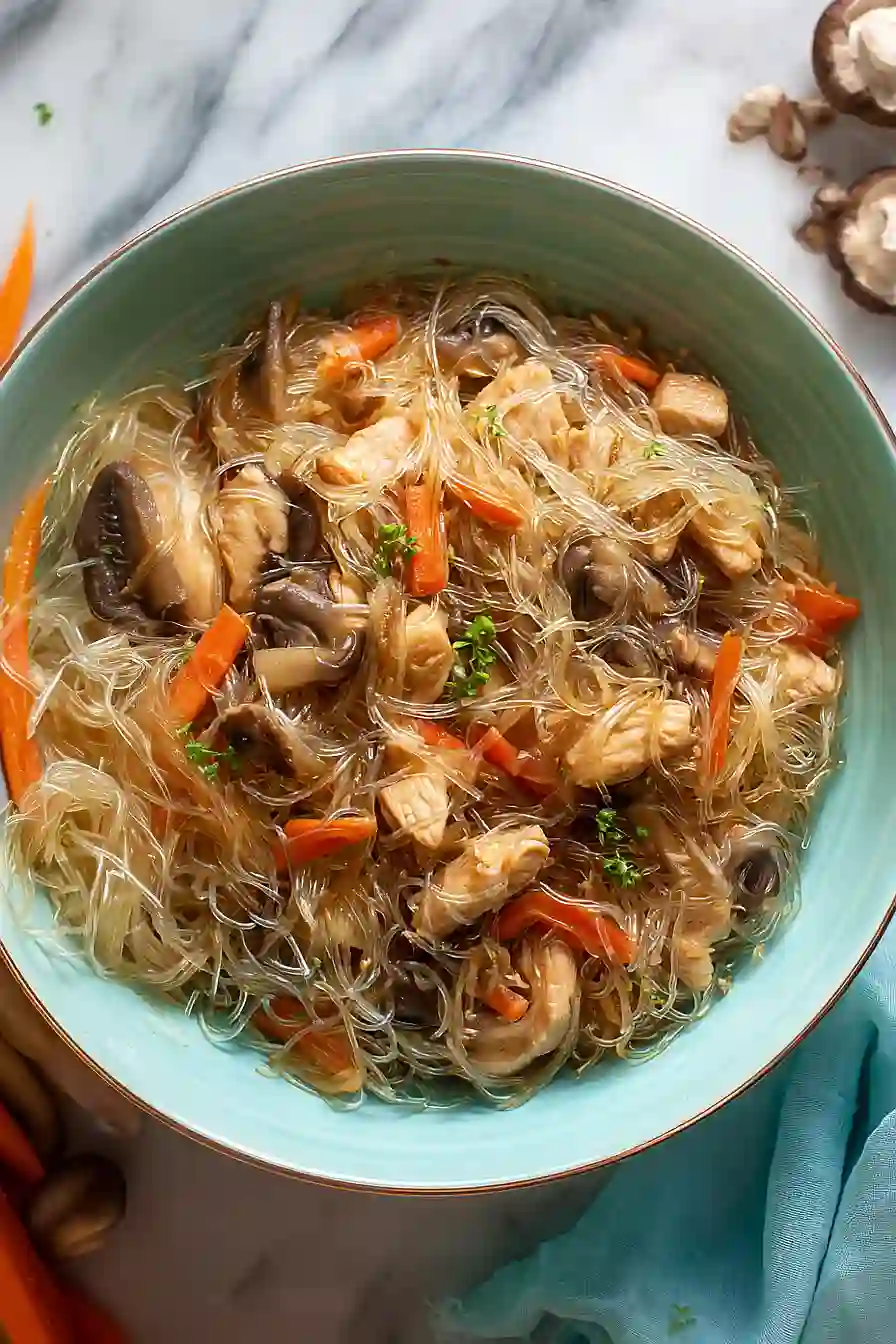
- Shiitake mushrooms: If shiitake mushrooms aren’t available, button mushrooms or cremini mushrooms work just fine. You can also use a mix of whatever mushrooms you have on hand.
- Bean thread noodles: Can’t find bean thread noodles? Try using rice vermicelli or even ramen noodles instead. Just adjust the cooking time based on the package directions for whatever noodle you choose.
- Sake: As noted in the recipe, you can substitute sake with additional chicken stock. Dry sherry or mirin also work well if you have them.
- Shoyu: Regular soy sauce is perfectly fine if you don’t have shoyu specifically. You can use low-sodium soy sauce if you’re watching your salt intake – just taste and adjust as needed.
- Fresh ginger: In a pinch, you can use 1 teaspoon of ground ginger, though fresh really does make a difference in this dish.
- Water chestnuts: These add a nice crunch, but you can leave them out or substitute with jicama if you happen to have it.
Watch Out for These Mistakes While Cooking
The biggest mistake when making chicken hekka is overcrowding the pan, which steams the chicken instead of browning it – cook in batches if needed to get that nice sear that adds flavor to the whole dish.
Another common error is adding all the vegetables at once, but timing matters here: harder vegetables like carrots and celery need more cooking time than mushrooms and bamboo shoots, so stick to the order in the recipe for the best texture.
Don’t skip marinating the chicken for at least 30 minutes, as this step infuses the meat with flavor and helps it stay tender during cooking, and if you’re short on time, even 30 minutes makes a difference.
Finally, add the bean thread noodles at the very end and don’t overcook them – they should be soft but still have a little bite, and they’ll continue absorbing liquid even after you turn off the heat.
What to Serve With Chicken Hekka?
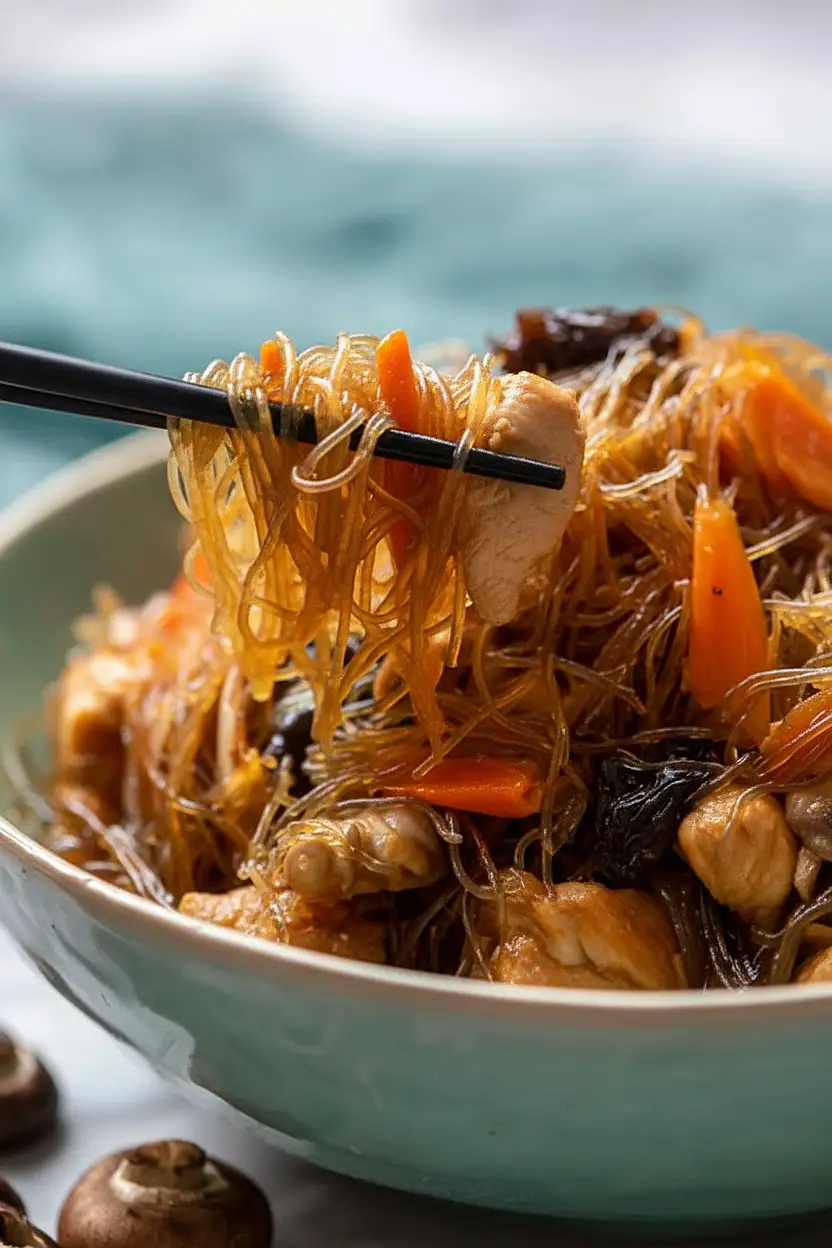
Chicken hekka is traditionally served over steamed white rice or brown rice, which soaks up all that delicious sweet-savory sauce. Since this dish already has plenty of vegetables and noodles built right in, you really don’t need much else to make it a complete meal. If you want to add a little something extra, a simple cucumber salad with rice vinegar makes a nice, refreshing side that cuts through the richness of the dish. Some people also like to serve it with a bowl of miso soup on the side for a more traditional Japanese-style meal.
Storage Instructions
Store: Hawaiian chicken hekka keeps really well in the fridge, making it perfect for meal prep. Just let it cool down, then transfer to an airtight container and refrigerate for up to 4 days. The flavors actually get even better the next day as everything soaks in that delicious sauce!
Freeze: You can freeze this for up to 3 months in a freezer-safe container. Just keep in mind that the bean thread noodles and some of the veggies might get a bit softer when thawed, but the flavor will still be great.
Reheat: Warm it up in a skillet over medium heat with a splash of chicken stock or water to loosen the sauce, stirring occasionally. You can also microwave individual portions, but I find the stovetop method keeps everything from drying out and brings back that fresh-cooked texture.
| Preparation Time | 30-40 minutes |
| Cooking Time | 20-30 minutes |
| Total Time | 50-70 minutes |
| Level of Difficulty | Medium |
| Servings | 6 servings |
Estimated Nutrition
Estimated nutrition for the whole recipe (without optional ingredients):
- Calories: 1800-2000
- Protein: 160-180 g
- Fat: 60-75 g
- Carbohydrates: 170-190 g
Ingredients
For the marinated chicken:
- 2.5 lb chicken thighs (cut into 1-inch pieces)
- 3/4 cup soy sauce (preferably Kikkoman)
- 1/2 cup chicken stock
- 1/2 cup sake
- 1/4 cup mirin
- 1/3 cup sugar
For the stir fry:
- 3 tbsp vegetable or peanut oil
- 1 tsp toasted sesame oil
- 4 oz bean thread noodles (long-rice)
- 2.5 cups bamboo shoots
- 10 green onions (cut into 2-inch lengths)
- 1 large onion (sliced into 1/4-inch wedges)
- 1 large carrot (thinly sliced into rounds)
- 1/2 lb shiitake mushrooms (sliced)
- 2 stalks celery (diagonal cut)
- 8 oz water chestnuts (sliced)
- 1 full finger ginger (crushed and minced)
Step 1: Prepare the Mise en Place and Build the Braising Liquid
- 2.5 lb chicken thighs, cut into 1-inch pieces
- 1 large onion, sliced into 1/4-inch wedges
- 1 large carrot, thinly sliced into rounds
- 2 stalks celery, diagonal cut
- 1/2 lb shiitake mushrooms, sliced
- 2.5 cups bamboo shoots
- 8 oz water chestnuts, sliced
- 10 green onions, cut into 2-inch lengths
- 1 full finger ginger, crushed and minced
- 3/4 cup soy sauce
- 1/2 cup chicken stock
- 1/2 cup sake
- 1/4 cup mirin
- 1/3 cup sugar
Start by preparing all your ingredients so cooking moves smoothly.
Cut the chicken thighs into 1-inch pieces and set aside.
Slice the large onion into 1/4-inch wedges, thinly slice the carrot into rounds, cut the celery on the diagonal, slice the shiitake mushrooms, and have the bamboo shoots and water chestnuts ready.
Cut the green onions into 2-inch lengths and mince the ginger.
In a bowl, whisk together the soy sauce, chicken stock, sake, mirin, and sugar—this is your braising liquid that will become the sauce for the entire dish.
Step 2: Sear the Chicken to Develop Color and Flavor
- 2.5 lb chicken thighs
- 3 tbsp vegetable or peanut oil
Heat the vegetable oil in a large, heavy-bottomed pot or wok over medium-high heat.
Working in batches if needed to avoid overcrowding, sear the chicken pieces until they develop a golden-brown color on all sides, about 5-7 minutes total.
This browning step builds deep flavor through the Maillard reaction—don’t skip it even though the chicken will finish cooking in the braising liquid.
Once browned, set the chicken aside on a plate.
Step 3: Infuse the Oil with Ginger and Build the Aromatics
- 1 tsp toasted sesame oil
- 1 full finger ginger, minced
- 1 large onion, sliced
- 1 large carrot, sliced
- 2 stalks celery, diagonal cut
In the same pot, add the toasted sesame oil and minced ginger, stirring constantly for about 30 seconds until fragrant.
This blooming technique releases the essential oils from the ginger and perfumes the entire dish.
Immediately add the sliced onion, carrot, and celery, stirring frequently for 2 minutes to soften the vegetables slightly and allow them to absorb the ginger-infused oil.
I like to keep these vegetables with a little bite—they’ll continue cooking in the braising liquid, so you want them just starting to soften here.
Step 4: Build the Braise with Second Wave of Vegetables
- 2.5 cups bamboo shoots
- 1/2 lb shiitake mushrooms, sliced
- 8 oz water chestnuts, sliced
Add the bamboo shoots, shiitake mushrooms, and water chestnuts to the pot, stirring to combine with the aromatics.
Cook for another 2 minutes, allowing these vegetables to warm through and begin releasing their flavors into the oil.
The combination of quick-cooking and slower-cooking vegetables creates layers of texture in the final dish.
Step 5: Simmer the Chicken in the Braising Liquid
- 2.5 lb chicken thighs
- braising liquid mixture from Step 1
- 4 oz bean thread noodles
Return the seared chicken to the pot and pour in the braising liquid from Step 1, stirring gently to distribute everything evenly.
Bring the mixture to a simmer over medium heat and let it cook uncovered for 8-10 minutes, allowing the flavors to meld and the chicken to finish cooking through.
The braising liquid will reduce slightly and coat everything with a glossy glaze.
Meanwhile, prepare the bean thread noodles by boiling them in a separate pot of water for 5 minutes, then drain thoroughly—you want them tender but not mushy.
Step 6: Finish and Serve the Hekka
- 4 oz bean thread noodles
- 10 green onions, cut into 2-inch lengths
- chicken and braised vegetables from Step 5
Add the cooked bean thread noodles from Step 5 and the green onions to the pot, stirring gently to combine everything without breaking apart the delicate noodles.
Cook for just 1-2 minutes more to warm the noodles through and let the green onions wilt slightly.
Taste the dish and adjust seasoning if needed—Hawaiian hekka should have a balance of salty, sweet, and savory flavors.
Serve immediately in bowls with plenty of the braising liquid, as this stew-like dish is meant to be eaten with broth.
I find that letting everything meld for those final 1-2 minutes brings all the flavors together beautifully—don’t rush this step.

Gluten-Free Hawaiian Chicken Hekka
Ingredients
For the marinated chicken
- 2.5 lb chicken thighs (cut into 1-inch pieces)
- 3/4 cup soy sauce (preferably Kikkoman)
- 1/2 cup chicken stock
- 1/2 cup sake
- 1/4 cup mirin
- 1/3 cup sugar
For the stir fry
- 3 tbsp vegetable or peanut oil
- 1 tsp toasted sesame oil
- 4 oz bean thread noodles (long-rice)
- 2.5 cups bamboo shoots
- 10 green onions (cut into 2-inch lengths)
- 1 large onion (sliced into 1/4-inch wedges)
- 1 large carrot (thinly sliced into rounds)
- 1/2 lb shiitake mushrooms (sliced)
- 2 stalks celery (diagonal cut)
- 8 oz water chestnuts (sliced)
- 1 full finger ginger (crushed and minced)
Instructions
- Start by preparing all your ingredients so cooking moves smoothly. Cut the chicken thighs into 1-inch pieces and set aside. Slice the large onion into 1/4-inch wedges, thinly slice the carrot into rounds, cut the celery on the diagonal, slice the shiitake mushrooms, and have the bamboo shoots and water chestnuts ready. Cut the green onions into 2-inch lengths and mince the ginger. In a bowl, whisk together the soy sauce, chicken stock, sake, mirin, and sugar—this is your braising liquid that will become the sauce for the entire dish.
- Heat the vegetable oil in a large, heavy-bottomed pot or wok over medium-high heat. Working in batches if needed to avoid overcrowding, sear the chicken pieces until they develop a golden-brown color on all sides, about 5-7 minutes total. This browning step builds deep flavor through the Maillard reaction—don't skip it even though the chicken will finish cooking in the braising liquid. Once browned, set the chicken aside on a plate.
- In the same pot, add the toasted sesame oil and minced ginger, stirring constantly for about 30 seconds until fragrant. This blooming technique releases the essential oils from the ginger and perfumes the entire dish. Immediately add the sliced onion, carrot, and celery, stirring frequently for 2 minutes to soften the vegetables slightly and allow them to absorb the ginger-infused oil. I like to keep these vegetables with a little bite—they'll continue cooking in the braising liquid, so you want them just starting to soften here.
- Add the bamboo shoots, shiitake mushrooms, and water chestnuts to the pot, stirring to combine with the aromatics. Cook for another 2 minutes, allowing these vegetables to warm through and begin releasing their flavors into the oil. The combination of quick-cooking and slower-cooking vegetables creates layers of texture in the final dish.
- Return the seared chicken to the pot and pour in the braising liquid from Step 1, stirring gently to distribute everything evenly. Bring the mixture to a simmer over medium heat and let it cook uncovered for 8-10 minutes, allowing the flavors to meld and the chicken to finish cooking through. The braising liquid will reduce slightly and coat everything with a glossy glaze. Meanwhile, prepare the bean thread noodles by boiling them in a separate pot of water for 5 minutes, then drain thoroughly—you want them tender but not mushy.
- Add the cooked bean thread noodles from Step 5 and the green onions to the pot, stirring gently to combine everything without breaking apart the delicate noodles. Cook for just 1-2 minutes more to warm the noodles through and let the green onions wilt slightly. Taste the dish and adjust seasoning if needed—Hawaiian hekka should have a balance of salty, sweet, and savory flavors. Serve immediately in bowls with plenty of the braising liquid, as this stew-like dish is meant to be eaten with broth. I find that letting everything meld for those final 1-2 minutes brings all the flavors together beautifully—don't rush this step.