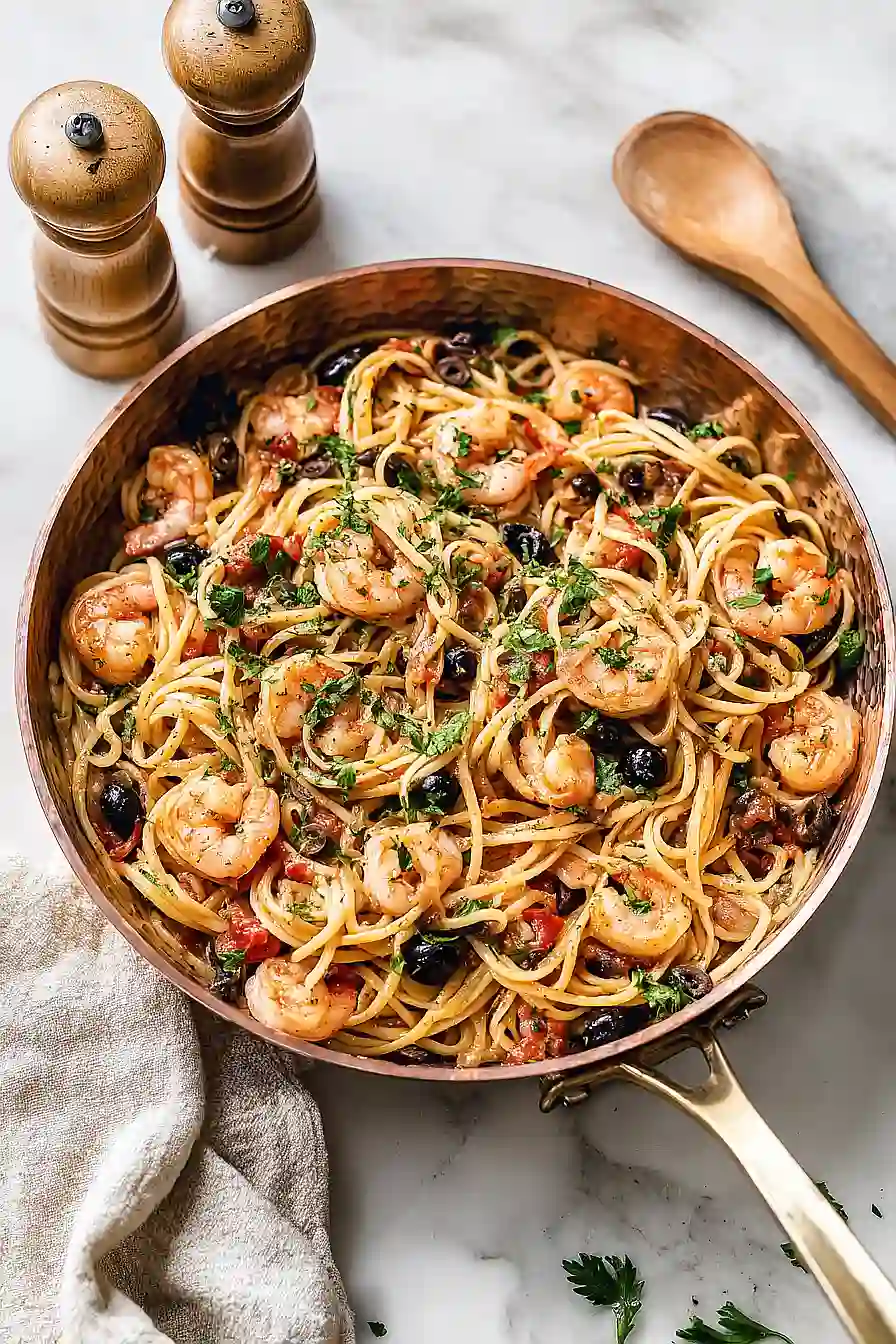
If you ask me, pasta puttanesca is one of those dishes that sounds fancy but comes together fast.
This Italian classic gets a protein boost with plump shrimp cooked in butter and olive oil. The sauce is briny and bold, packed with kalamata olives, capers, and tomato paste that simmer together with white wine and garlic.
It’s tossed with linguine and finished with a splash of starchy pasta water to help everything cling to the noodles. A sprinkle of parmesan and fresh parsley rounds out the whole thing.
It’s a weeknight-friendly dinner that feels special, perfect for when you want something satisfying without spending hours in the kitchen.
Why You’ll Love This Pasta Puttanesca with Shrimp
- Ready in under an hour – This restaurant-quality pasta comes together in just 35-50 minutes, making it perfect for busy weeknights when you want something special without spending hours in the kitchen.
- Bold, briny flavors – The combination of kalamata olives, capers, and white wine creates a savory sauce that’s packed with flavor in every bite.
- Simple ingredients – You probably have most of these pantry staples on hand already, and the shrimp adds a touch of elegance without any fuss.
- One-pot friendly – With minimal dishes to clean up, this recipe keeps your kitchen mess to a minimum while delivering maximum taste.
What Kind of Shrimp Should I Use?
For this puttanesca, you’ll want to grab medium to large shrimp, somewhere in the 26-30 or 31-40 count per pound range. You can use either fresh or frozen shrimp – just make sure frozen shrimp is fully thawed and patted dry before cooking so they get a nice sear instead of steaming. I recommend buying shrimp that’s already peeled and deveined to save yourself some prep time, though leaving the tails on is totally up to you and your personal preference. If you’re at the seafood counter and can smell a strong fishy odor, skip it and look for shrimp that smells clean and slightly briny like the ocean.

Options for Substitutions
This pasta dish is pretty forgiving when it comes to swaps, so here are some options if you need to make changes:
- Shrimp: You can easily swap shrimp for other seafood like scallops, chunks of white fish, or even canned tuna (add it at the end just to warm through). If you want to skip seafood altogether, this dish works great as a vegetarian pasta too.
- White wine: No white wine on hand? Use chicken or vegetable broth with a splash of lemon juice (about 1 tablespoon) to mimic that acidic brightness.
- Linguine: Any long pasta works here – spaghetti, fettuccine, or bucatini are all good choices. Short pasta like penne will work too, though it’s less traditional.
- Kalamata olives: Green olives or even black olives from a can will do the trick if kalamata aren’t available. Just adjust the salt since different olives have varying saltiness levels.
- Parmesan: Pecorino Romano makes a great substitute and actually adds a sharper, saltier flavor that pairs nicely with the briny ingredients.
- Fresh parsley: Dried parsley works in a pinch (use about 1 tablespoon), or try fresh basil for a different but equally tasty finish.
Watch Out for These Mistakes While Cooking
Overcooking shrimp is the biggest mistake you can make with this dish – they only need 1-2 minutes per side and will continue cooking from residual heat, so pull them from the pan as soon as they turn pink and opaque.
Don’t skip deglazing the pan with white wine after cooking the tomato paste, as this step helps scrape up all those flavorful brown bits from the bottom and adds depth to your sauce.
A common error is adding the shrimp back too early, which makes them rubbery – wait until the very end when you toss everything together so they just warm through.
Make sure to reserve that pasta water before draining, since the starchy liquid helps the sauce cling to the noodles and brings everything together, and always undercook your pasta by a minute since it’ll finish cooking in the skillet with the sauce.

What to Serve With Pasta Puttanesca?
Since pasta puttanesca with shrimp is already a pretty complete meal on its own, I like to keep the sides simple and let the bold flavors of the olives and capers shine. A crusty baguette or garlic bread is perfect for soaking up that garlicky, briny sauce at the bottom of your bowl. A light arugula salad with lemon vinaigrette cuts through the richness of the dish and adds a fresh, peppery bite. If you’re feeding a crowd, roasted asparagus or broccolini with a squeeze of lemon makes a great veggie side that doesn’t compete with the pasta’s strong flavors.
Storage Instructions
Store: Keep your leftover pasta puttanesca in an airtight container in the fridge for up to 3 days. The shrimp stays good, but I find the pasta tastes best within the first couple days. If you want to store it longer, I’d recommend keeping the shrimp and pasta separate if possible.
Freeze: I usually don’t recommend freezing this dish since shrimp can get a bit rubbery when frozen and reheated. But if you need to, freeze it in a freezer-safe container for up to 1 month. Just know the texture won’t be quite the same as fresh.
Warm Up: Reheat gently in a skillet over medium-low heat with a splash of pasta water or broth to loosen the sauce. You can also microwave it, but add a bit of liquid and stir halfway through to keep it from drying out. Be careful not to overcook the shrimp or it’ll get tough.
| Preparation Time | 15-20 minutes |
| Cooking Time | 20-30 minutes |
| Total Time | 35-50 minutes |
| Level of Difficulty | Medium |
| Servings | 4 servings |
Estimated Nutrition
Estimated nutrition for the whole recipe (without optional ingredients):
- Calories: 1700-1900
- Protein: 75-85 g
- Fat: 45-55 g
- Carbohydrates: 240-260 g
Ingredients
For the shrimp:
- 1 lb shrimp (peeled and deveined, 21-25 count for best size)
- 1.5 tbsp olive oil
- 3 tsp butter (I use Kerrygold unsalted butter for rich flavor)
- 1/4 tsp salt
- 1/8 tsp pepper
For the pasta and sauce:
- 1 lb linguine (I always use Barilla for a consistent al dente texture)
- 1/2 cup red onion (finely diced into 1/4-inch pieces)
- 4 garlic cloves (freshly minced for best aroma)
- 3 tbsp tomato paste
- 3/4 cup white wine (use a dry Pinot Grigio for crisp acidity)
- 1 tsp salt
- 1/2 tsp pepper
- 1/2 cup kalamata olives (pitted and sliced into halves)
- 3 tbsp capers
- 2 tsp butter
- 1/2 cup pasta water (starchy water helps emulsify the sauce)
- 1/3 cup parmesan
- 1/4 cup parsley
- 1/4 tsp red pepper flakes
Step 1: Start the Pasta Water and Prepare Mise en Place
- Water and salt for boiling
- 1/2 cup red onion, finely diced
- 4 garlic cloves, freshly minced
- 1/2 cup kalamata olives, pitted and halved
- 3 tbsp capers
- 1/4 cup parsley, chopped
- 1/3 cup parmesan, grated
Bring a large pot of salted water to a boil—this takes time, so start it first.
While waiting, prepare your mise en place: finely dice the red onion into 1/4-inch pieces, mince the garlic cloves, pit and halve the kalamata olives, measure out the capers, and have your pasta water reserved nearby.
Chop the parsley and grate the parmesan cheese.
This prep work ensures smooth cooking once you begin searing the shrimp.
Step 2: Sear the Shrimp and Set Aside
- 1 lb shrimp, peeled and deveined
- 1.5 tbsp olive oil
- 1 tsp butter
- 1/4 tsp salt
- 1/8 tsp pepper
Heat 1.5 tablespoons olive oil and 1 teaspoon butter in a large skillet over medium-high heat.
Season the shrimp with 1/4 teaspoon salt and 1/8 teaspoon pepper.
Once the butter foams, add the shrimp and cook for 1-2 minutes per side until they turn opaque and just cooked through—they’ll continue cooking slightly when we add them back later, so don’t overcook them.
Transfer the cooked shrimp to a plate and set aside.
Step 3: Build the Sauce Base with Aromatics and Tomato Paste
- 1/2 cup red onion, finely diced
- Salt to taste
- 4 garlic cloves, freshly minced
- 3 tbsp tomato paste
In the same skillet, add the diced red onion with a pinch of salt and sauté for 1-2 minutes until softened.
Add the minced garlic and cook for 1 minute until fragrant.
Stir in the tomato paste and cook for 1 minute, allowing it to caramelize slightly and deepen in flavor.
This technique of cooking tomato paste develops its rich, concentrated taste that forms the foundation of the sauce.
Step 4: Deglaze and Reduce the Wine
- 3/4 cup dry white wine
- 1 tsp salt
- 1/2 tsp pepper
Pour in the dry white wine (Pinot Grigio adds crisp acidity) and scrape up any browned bits from the bottom of the skillet.
Add 1 teaspoon salt and 1/2 teaspoon pepper, then simmer uncovered for 4-5 minutes until the wine reduces by about half.
This reduction concentrates the flavors and cooks off the alcohol, leaving a bright, savory base for the puttanesca sauce.
Step 5: Cook the Pasta While Finishing the Sauce
- 1/2 cup kalamata olives, pitted and halved
- 3 tbsp capers
- 2 tsp butter
- 1 lb linguine
- Water for cooking pasta
Once the wine has reduced, add the olives, capers, and remaining 2 teaspoons butter to the sauce, stirring to combine and melt the butter.
Meanwhile, add the linguine to the boiling water and cook according to package directions until al dente—about 9-10 minutes.
I always use Barilla because it consistently hits that perfect firm texture.
Reserve about 1/2 cup of the starchy pasta water before draining.
Step 6: Emulsify and Finish the Dish
- cooked linguine from Step 5
- sauce base from Step 4
- 1/2 cup pasta water
- cooked shrimp from Step 2
- 1/8 cup parsley
- 1/6 cup parmesan
- 1/4 tsp red pepper flakes
Transfer the cooked linguine directly to the skillet with the puttanesca sauce.
Add the reserved pasta water (the starch in this water helps emulsify and thicken the sauce naturally), the shrimp from Step 2, half of the chopped parsley, and half of the grated parmesan.
Toss everything together over low heat for 1-2 minutes until the pasta is well coated and the shrimp is heated through.
Taste and adjust seasoning as needed—I often add a small pinch of red pepper flakes here for subtle heat.
Step 7: Plate and Serve
- 1/8 cup parsley, remaining
- 1/6 cup parmesan, remaining
Divide the pasta puttanesca among serving bowls or plates.
Top each portion with the remaining fresh parsley and parmesan cheese for brightness and texture.
Serve immediately while the pasta is hot and the shrimp is tender.
Garlic Pasta Puttanesca with Shrimp
Ingredients
For the shrimp::
- 1 lb shrimp (peeled and deveined, 21-25 count for best size)
- 1.5 tbsp olive oil
- 3 tsp butter (I use Kerrygold unsalted butter for rich flavor)
- 1/4 tsp salt
- 1/8 tsp pepper
For the pasta and sauce::
- 1 lb linguine (I always use Barilla for a consistent al dente texture)
- 1/2 cup red onion (finely diced into 1/4-inch pieces)
- 4 garlic cloves (freshly minced for best aroma)
- 3 tbsp tomato paste
- 3/4 cup white wine (use a dry Pinot Grigio for crisp acidity)
- 1 tsp salt
- 1/2 tsp pepper
- 1/2 cup kalamata olives (pitted and sliced into halves)
- 3 tbsp capers
- 2 tsp butter
- 1/2 cup pasta water (starchy water helps emulsify the sauce)
- 1/3 cup parmesan
- 1/4 cup parsley
- 1/4 tsp red pepper flakes
Instructions
- Bring a large pot of salted water to a boil—this takes time, so start it first. While waiting, prepare your mise en place: finely dice the red onion into 1/4-inch pieces, mince the garlic cloves, pit and halve the kalamata olives, measure out the capers, and have your pasta water reserved nearby. Chop the parsley and grate the parmesan cheese. This prep work ensures smooth cooking once you begin searing the shrimp.
- Heat 1.5 tablespoons olive oil and 1 teaspoon butter in a large skillet over medium-high heat. Season the shrimp with 1/4 teaspoon salt and 1/8 teaspoon pepper. Once the butter foams, add the shrimp and cook for 1-2 minutes per side until they turn opaque and just cooked through—they'll continue cooking slightly when we add them back later, so don't overcook them. Transfer the cooked shrimp to a plate and set aside.
- In the same skillet, add the diced red onion with a pinch of salt and sauté for 1-2 minutes until softened. Add the minced garlic and cook for 1 minute until fragrant. Stir in the tomato paste and cook for 1 minute, allowing it to caramelize slightly and deepen in flavor. This technique of cooking tomato paste develops its rich, concentrated taste that forms the foundation of the sauce.
- Pour in the dry white wine (Pinot Grigio adds crisp acidity) and scrape up any browned bits from the bottom of the skillet. Add 1 teaspoon salt and 1/2 teaspoon pepper, then simmer uncovered for 4-5 minutes until the wine reduces by about half. This reduction concentrates the flavors and cooks off the alcohol, leaving a bright, savory base for the puttanesca sauce.
- Once the wine has reduced, add the olives, capers, and remaining 2 teaspoons butter to the sauce, stirring to combine and melt the butter. Meanwhile, add the linguine to the boiling water and cook according to package directions until al dente—about 9-10 minutes. I always use Barilla because it consistently hits that perfect firm texture. Reserve about 1/2 cup of the starchy pasta water before draining.
- Transfer the cooked linguine directly to the skillet with the puttanesca sauce. Add the reserved pasta water (the starch in this water helps emulsify and thicken the sauce naturally), the shrimp from Step 2, half of the chopped parsley, and half of the grated parmesan. Toss everything together over low heat for 1-2 minutes until the pasta is well coated and the shrimp is heated through. Taste and adjust seasoning as needed—I often add a small pinch of red pepper flakes here for subtle heat.
- Divide the pasta puttanesca among serving bowls or plates. Top each portion with the remaining fresh parsley and parmesan cheese for brightness and texture. Serve immediately while the pasta is hot and the shrimp is tender.