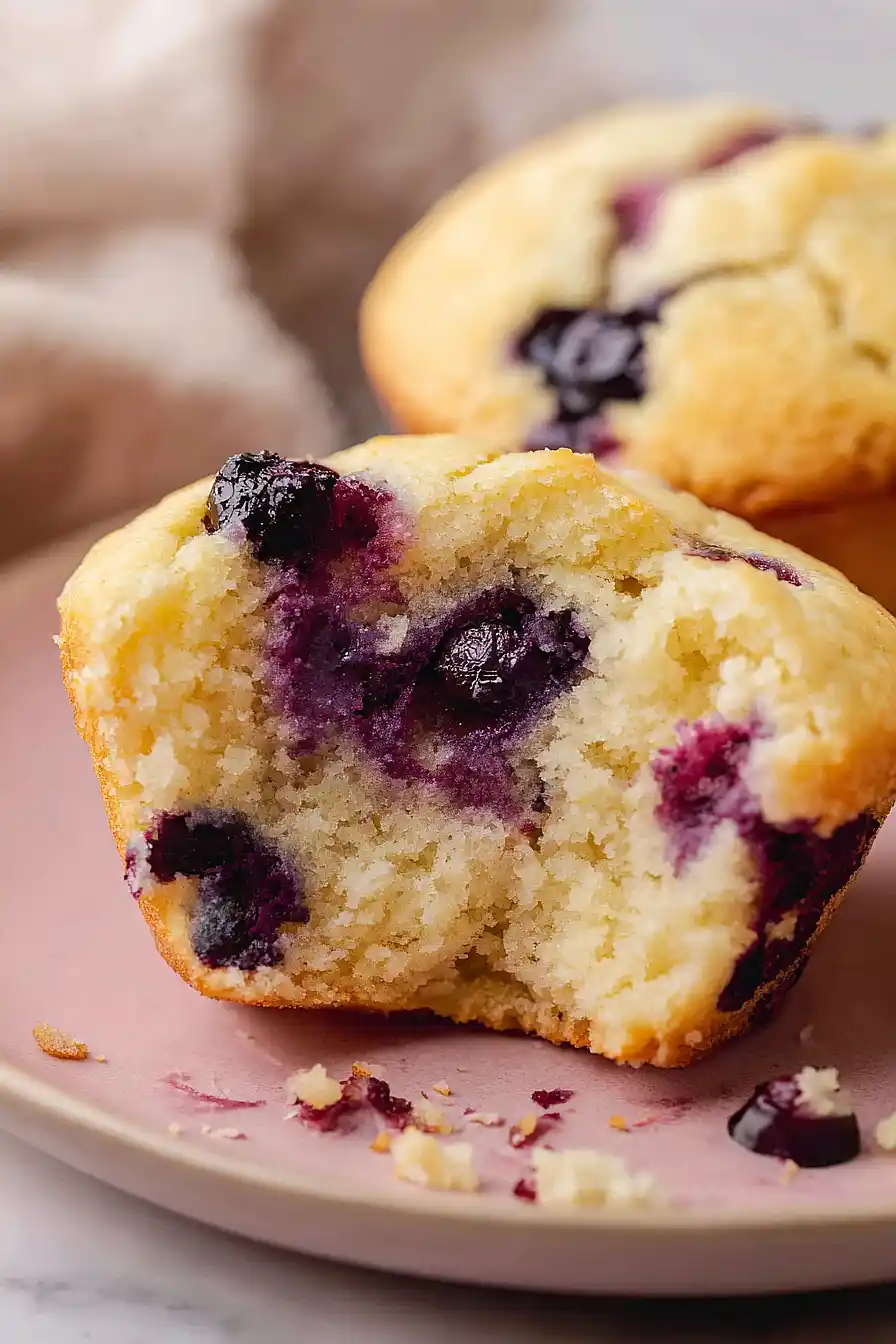
Here are my keto greek yogurt muffins, made with almond flour, protein powder, and a touch of cinnamon, with fresh blueberries folded in for a little burst of flavor in every bite.
These muffins have become my go-to breakfast when I want something filling that keeps me satisfied all morning. I love that they’re low-carb but don’t taste like they’re missing anything – they’re just as fluffy and moist as regular muffins.

Why You’ll Love These Greek Yogurt Muffins
- Keto-friendly – Made with almond flour and sugar-free sweetener, these muffins fit perfectly into your low-carb lifestyle without sacrificing taste.
- High in protein – With greek yogurt, eggs, and whey protein powder, each muffin packs a protein punch that’ll keep you satisfied between meals.
- Quick and easy – These come together in under 45 minutes, making them perfect for meal prep or a last-minute breakfast option.
- Simple ingredients – You probably already have most of these staples in your pantry, so no need for a special shopping trip.
- Naturally gluten-free – The almond flour base makes these a great option if you’re avoiding gluten, and they’re moist and fluffy just like traditional muffins.
What Kind of Greek Yogurt Should I Use?
For keto muffins, you’ll want to stick with full-fat Greek yogurt to keep the carb count low and get the best texture. Plain, unsweetened Greek yogurt is your best bet here – avoid the flavored varieties since they’re loaded with added sugars that’ll kick you out of ketosis. The thickness of Greek yogurt is what makes these muffins so moist and tender, so don’t substitute it with regular yogurt or you’ll end up with a different consistency. If your Greek yogurt seems extra thick, you can thin it out slightly with a splash of water to make it easier to mix into your batter.
Options for Substitutions
These keto muffins are pretty forgiving when it comes to swaps, though a few ingredients are key to keeping them low-carb:
- Greek yogurt: You can use sour cream or plain full-fat yogurt instead. Just make sure it’s unsweetened to keep the carb count low.
- Almond flour: This is pretty essential for the keto aspect, but if you’re not strictly keto, you could use all-purpose flour (though this will change the nutritional profile completely). Coconut flour won’t work as a 1:1 swap since it absorbs way more liquid.
- Swerve sweetener: Any granulated sugar substitute works here – try erythritol, monk fruit sweetener, or Stevia. If you’re not doing keto, regular sugar will work fine too.
- Whey protein powder: You can swap this with any unflavored or vanilla protein powder you have on hand. Plant-based protein powder works too, though it might change the texture slightly.
- Blueberries: Feel free to use raspberries, chopped strawberries, or even sugar-free chocolate chips. You can also leave them out for plain muffins or add lemon zest instead.
- Baking powder: Make sure not to skip this – it’s what makes your muffins rise and get that nice fluffy texture.
Watch Out for These Mistakes While Baking
The biggest mistake with keto muffins is overmixing the batter once you add the almond flour, which can make your muffins dense and gummy instead of light and fluffy – mix just until the ingredients are combined and no more.
Since almond flour behaves differently than regular flour, you’ll want to check for doneness a few minutes early by inserting a toothpick in the center, as keto muffins can go from perfectly moist to dry pretty quickly.
Another common issue is skipping the cooling time – these muffins need at least 10 minutes to set up in the pan before you try to remove them, or they’ll fall apart.
If your batter seems too thick, add water one tablespoon at a time until it reaches a scoopable consistency, and like with the French toast casserole, toss your blueberries in a bit of almond flour to keep them from sinking to the bottom.

What to Serve With Keto Greek Yogurt Muffins?
These muffins are perfect for breakfast or as a snack throughout the day, and they pair really well with a hot cup of coffee or tea. I like to spread a little butter or cream cheese on top while they’re still warm, which adds extra richness without kicking you out of ketosis. They also work great alongside scrambled eggs and bacon for a complete keto breakfast, or you can enjoy them with a handful of fresh berries and some whipped cream for a light dessert. If you’re meal prepping for the week, these muffins are easy to grab on busy mornings with a protein shake or a smoothie made with unsweetened almond milk.
Storage Instructions
Store: These muffins stay moist and delicious in an airtight container at room temperature for about 2 days, or in the fridge for up to a week. I actually think they taste even better the next day once the flavors have had time to settle in!
Freeze: Muffins are one of my favorite things to freeze because they thaw so quickly. Just wrap each one individually in plastic wrap or store them in a freezer bag, and they’ll keep for up to 3 months. Perfect for grabbing a quick breakfast on busy mornings.
Enjoy: Let frozen muffins thaw at room temperature for about 30 minutes, or pop them in the microwave for 20-30 seconds if you’re in a hurry. You can also warm refrigerated muffins in the microwave for 10-15 seconds to bring back that fresh-baked feel.
| Preparation Time | 10-15 minutes |
| Cooking Time | 25-30 minutes |
| Total Time | 35-45 minutes |
| Level of Difficulty | Easy |
| Servings | 12 muffins |
Estimated Nutrition
Estimated nutrition for the whole recipe (without optional ingredients):
- Calories: 1150-1300
- Protein: 65-75 g
- Fat: 70-80 g
- Carbohydrates: 50-60 g
Ingredients
- 6 oz greek yogurt (I prefer Fage Total 5% for a richer texture)
- 4 eggs (room temperature, about 70°F, helps the batter emulsify)
- 1/2 tsp vanilla
- 1/4 tsp salt
- 2.75 cups almond flour (I always use Blue Diamond super-fine ground)
- 1/2 cup sweetener
- 1/3 cup whey protein powder (unflavored works best to avoid over-sweetening)
- 2.5 tsp baking powder
- 1 tbsp water
- 1/2 cup blueberries (toss in 1 tsp of almond flour first to prevent sinking)
- 1/4 tsp ground cinnamon
Step 1: Prepare Equipment and Mise en Place
- 2.75 cups almond flour
- 1/2 cup sweetener
- 1/3 cup whey protein powder
- 2.5 tsp baking powder
- 1/4 tsp salt
- 1/4 tsp ground cinnamon
- 1/2 cup blueberries
- 1 tsp almond flour
Preheat your oven to 325°F and line a muffin pan with paper liners or grease it well.
While the oven heats, measure out all your dry ingredients (almond flour, sweetener, whey protein powder, baking powder, cinnamon, and salt) into a small bowl and set aside.
Toss the blueberries with 1 teaspoon of almond flour in a separate small bowl—this coating prevents them from sinking to the bottom during baking.
Having everything prepped and ready ensures a smooth mixing process.
Step 2: Create the Wet Base
- 6 oz greek yogurt
- 4 eggs
- 1/2 tsp vanilla
- 1 tbsp water
Add the room-temperature eggs, Greek yogurt, vanilla, and water to a blender.
Blend on medium speed for 1-2 minutes until the mixture is completely smooth and well combined.
The room-temperature eggs are crucial here—they help the batter emulsify properly and create a lighter, more tender crumb.
I find this wet base comes together beautifully when blended rather than whisked by hand, which can incorporate too much air and create an uneven texture.
Step 3: Combine Wet and Dry Ingredients
- wet mixture from Step 2
- dry ingredient mixture from Step 1
Pour the blended wet mixture from Step 2 into a large mixing bowl.
Add the dry ingredient mixture from Step 1 and fold together gently with a spatula until just combined.
Don’t overmix—a few lumps are fine and will disappear during baking.
Overmixing can develop gluten in the almond flour, making the muffins dense instead of tender.
I like to fold just until I can’t see any streaks of dry ingredient, then stop.
Step 4: Fold in Blueberries and Fill Muffin Pan
- batter from Step 3
- blueberries with almond flour coating from Step 1
Gently fold the flour-coated blueberries from Step 1 into the batter until evenly distributed.
Divide the batter evenly among the muffin cups, filling each about three-quarters full.
The batter should be thick but still scoopable.
If using a standard 12-cup muffin pan, you should have enough batter for all 12 muffins with a small amount left over.
Step 5: Bake and Cool
Place the muffin pan in your preheated 325°F oven and bake for 25-30 minutes, until a toothpick inserted into the center of a muffin comes out clean or with just a few moist crumbs.
The tops should be golden brown.
Remove from the oven and let the muffins cool in the pan for 5-10 minutes before turning them out onto a wire rack to cool completely.
This resting time in the pan helps them set and makes them easier to remove without breaking.

Easy Keto Greek Yogurt Muffins
Ingredients
- 6 oz greek yogurt (I prefer Fage Total 5% for a richer texture)
- 4 eggs (room temperature, about 70°F, helps the batter emulsify)
- 1/2 tsp vanilla
- 1/4 tsp salt
- 2.75 cups almond flour (I always use Blue Diamond super-fine ground)
- 1/2 cup sweetener
- 1/3 cup whey protein powder (unflavored works best to avoid over-sweetening)
- 2.5 tsp baking powder
- 1 tbsp water
- 1/2 cup blueberries (toss in 1 tsp of almond flour first to prevent sinking)
- 1/4 tsp ground cinnamon
Instructions
- Preheat your oven to 325°F and line a muffin pan with paper liners or grease it well. While the oven heats, measure out all your dry ingredients (almond flour, sweetener, whey protein powder, baking powder, cinnamon, and salt) into a small bowl and set aside. Toss the blueberries with 1 teaspoon of almond flour in a separate small bowl—this coating prevents them from sinking to the bottom during baking. Having everything prepped and ready ensures a smooth mixing process.
- Add the room-temperature eggs, Greek yogurt, vanilla, and water to a blender. Blend on medium speed for 1-2 minutes until the mixture is completely smooth and well combined. The room-temperature eggs are crucial here—they help the batter emulsify properly and create a lighter, more tender crumb. I find this wet base comes together beautifully when blended rather than whisked by hand, which can incorporate too much air and create an uneven texture.
- Pour the blended wet mixture from Step 2 into a large mixing bowl. Add the dry ingredient mixture from Step 1 and fold together gently with a spatula until just combined. Don't overmix—a few lumps are fine and will disappear during baking. Overmixing can develop gluten in the almond flour, making the muffins dense instead of tender. I like to fold just until I can't see any streaks of dry ingredient, then stop.
- Gently fold the flour-coated blueberries from Step 1 into the batter until evenly distributed. Divide the batter evenly among the muffin cups, filling each about three-quarters full. The batter should be thick but still scoopable. If using a standard 12-cup muffin pan, you should have enough batter for all 12 muffins with a small amount left over.
- Place the muffin pan in your preheated 325°F oven and bake for 25-30 minutes, until a toothpick inserted into the center of a muffin comes out clean or with just a few moist crumbs. The tops should be golden brown. Remove from the oven and let the muffins cool in the pan for 5-10 minutes before turning them out onto a wire rack to cool completely. This resting time in the pan helps them set and makes them easier to remove without breaking.