I’ll be honest—I used to think risotto was one of those fancy restaurant dishes that was way too complicated for a weeknight dinner. All that stirring! The special rice! It seemed like something only professional chefs could pull off without messing up.
Then I actually tried making it, and I realized risotto is basically just rice that needs a little attention. Sure, you have to stir it more than regular rice, but it’s not like you’re standing there whisking non-stop for an hour. This asparagus version is perfect for spring when asparagus is everywhere at the farmers market, and it comes together in about 30 minutes. The trick is keeping your stock warm and adding it slowly—that’s really all there is to it.
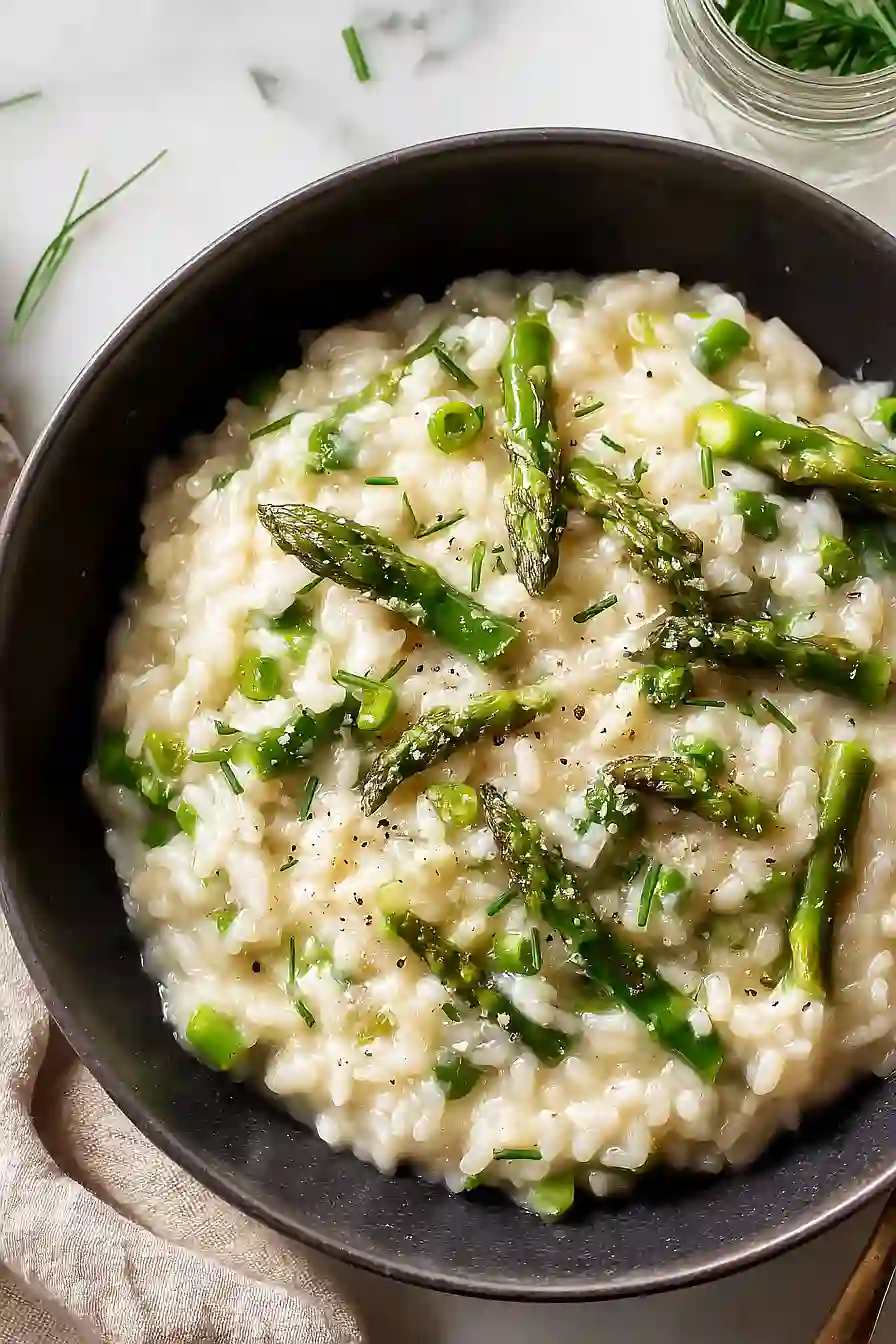
Why You’ll Love This Asparagus Risotto
- Restaurant-quality at home – This creamy, flavorful risotto tastes like something you’d order at an Italian restaurant, but you can make it right in your own kitchen.
- Ready in under 45 minutes – Despite its fancy reputation, this risotto comes together quickly enough for a weeknight dinner.
- Simple ingredients – You only need a handful of basic ingredients to create this impressive dish—no specialty items required.
- Fresh and seasonal – The asparagus adds a nice pop of color and freshness that makes this feel like a lighter, spring-inspired meal.
What Kind of Asparagus Should I Use?
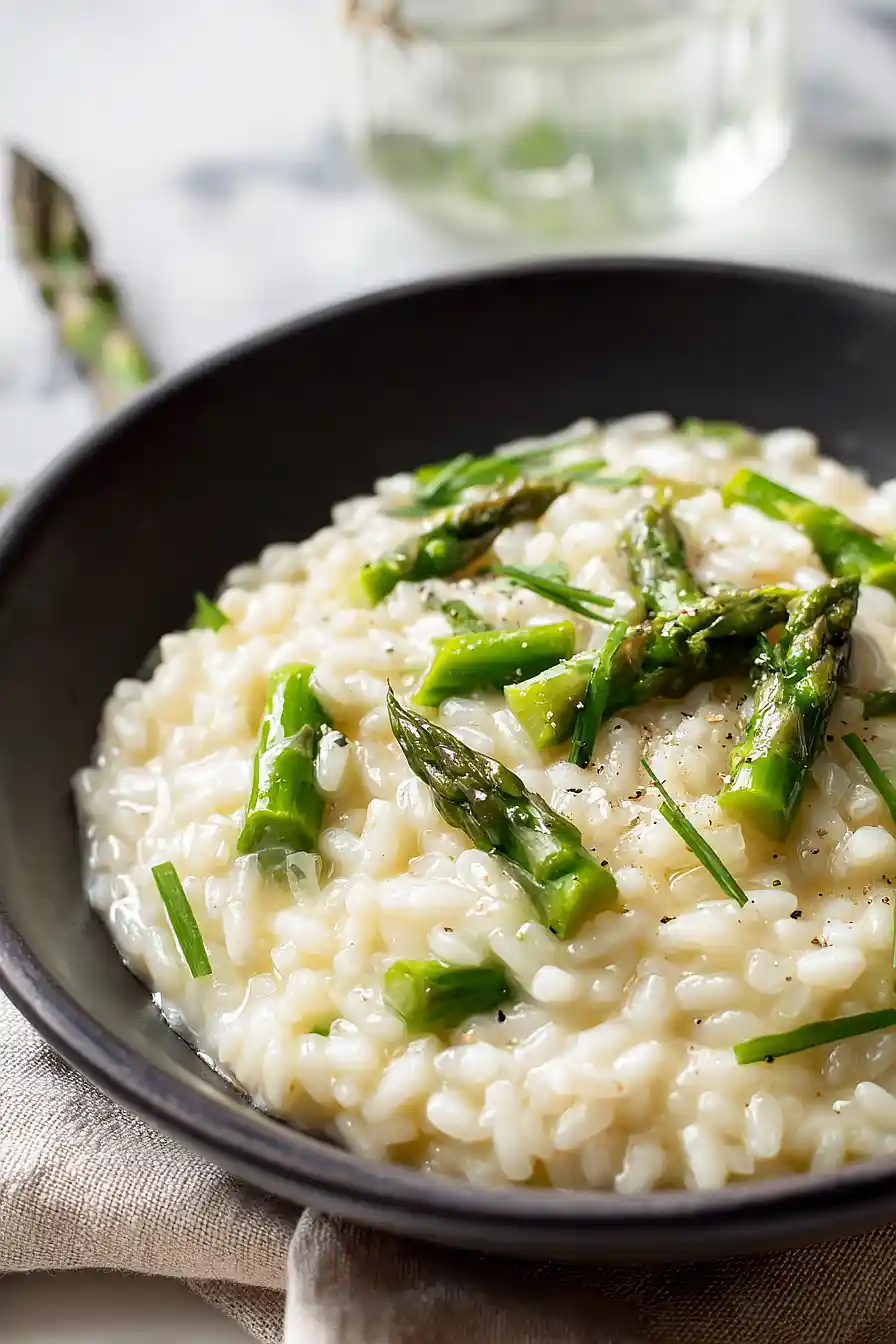
When shopping for asparagus, look for firm stalks with tight, compact tips and a bright green color from top to bottom. Thinner asparagus tends to be more tender and cooks faster, which works great in risotto since you want it to blend seamlessly with the creamy rice. If you can only find thicker stalks, don’t worry – just trim off the woody ends by bending each spear until it naturally snaps, and consider slicing them into smaller pieces so they cook evenly. Fresh asparagus is always best, but if you’re in a pinch during the off-season, frozen asparagus can work too, though you’ll want to thaw and drain it well before adding it to your risotto.
Options for Substitutions
This risotto recipe has some room for flexibility, though a few ingredients are non-negotiable:
- Arborio rice: Don’t substitute this one! Arborio rice is what gives risotto its signature creamy texture. You can use carnaroli or vialone nano rice if you find them, but regular long-grain rice won’t work for authentic risotto.
- Chicken stock: Vegetable stock works great here if you want to keep things vegetarian. Just make sure whatever stock you use is low-sodium so you can control the salt level yourself.
- Shallots: If you don’t have shallots, use half a medium yellow onion instead. It’ll give you a similar mild, sweet flavor.
- White wine: You can skip the wine and use extra stock plus a squeeze of lemon juice to add that bright, acidic note. Or try a splash of dry vermouth if you have it.
- Asparagus: Feel free to swap in other green vegetables like peas, green beans, or broccoli. Just adjust cooking times – peas only need a few minutes while broccoli might need a bit longer.
- Parmesan: Pecorino Romano or Grana Padano work well as substitutes. Avoid pre-shredded cheese though – freshly grated melts much better into the risotto.
Watch Out for These Mistakes While Cooking
The biggest mistake people make with risotto is adding cold stock, which stops the cooking process and results in unevenly cooked rice – keep your chicken stock at a steady simmer the entire time so each addition maintains the temperature.
Stirring too much or too little can ruin your risotto’s creamy texture, so aim for frequent but gentle stirring (every minute or so) rather than constant stirring, which releases too much starch and makes it gummy.
Adding the asparagus too early is another common error that leads to mushy, overcooked vegetables – wait until the last addition of stock so the asparagus stays bright green and slightly crisp.
Finally, don’t skip letting the risotto rest for a minute after adding the parmesan and butter, as this allows the cheese to melt properly and creates that signature creamy consistency without clumping.
What to Serve With Asparagus Risotto?
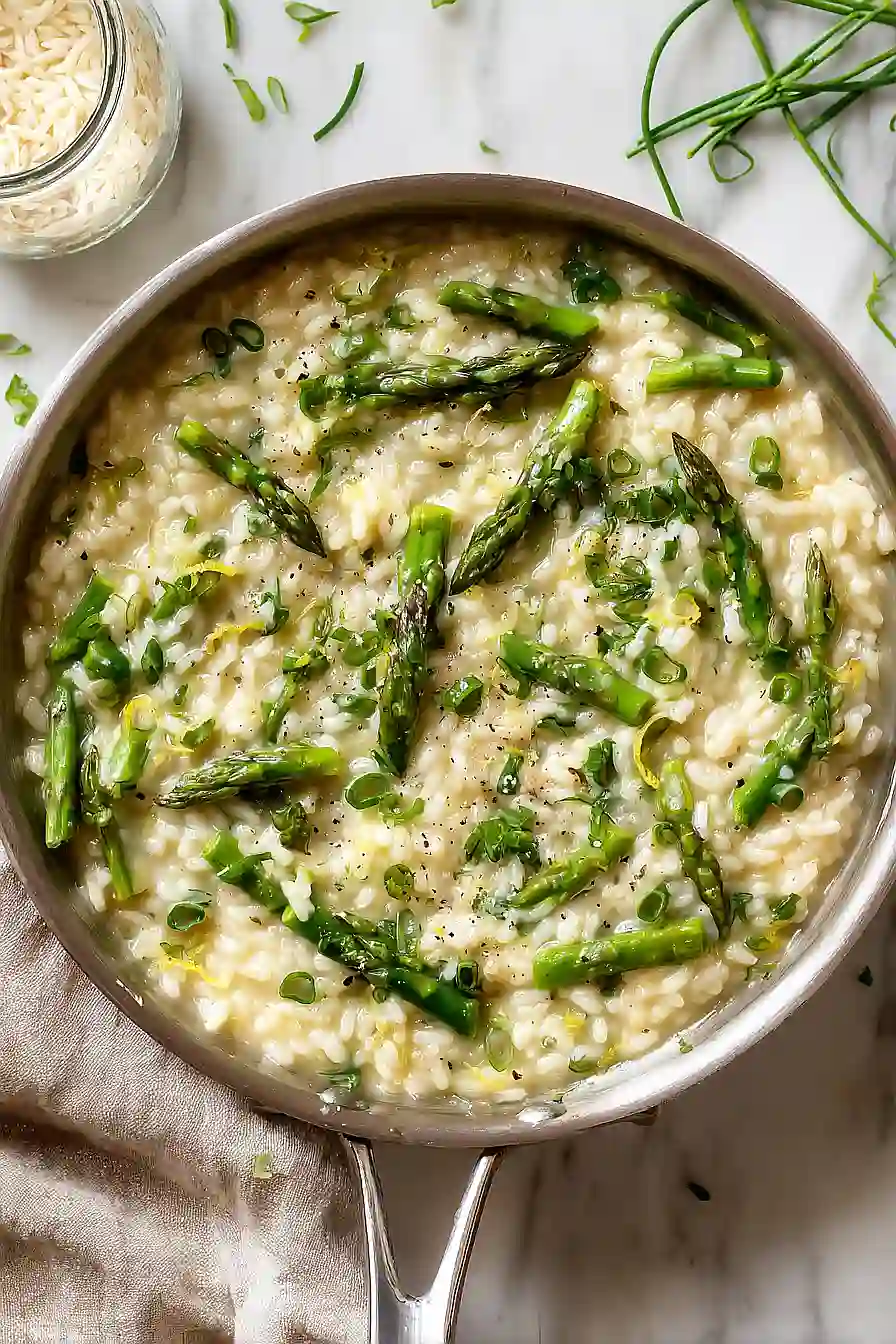
Asparagus risotto is pretty filling on its own, but I love pairing it with a simple protein like grilled chicken, pan-seared salmon, or even some sautéed shrimp on top. A light arugula salad with lemon vinaigrette cuts through the creaminess of the risotto really nicely and adds a fresh, peppery bite to your meal. If you want to keep things simple, just serve it with some crusty bread and a glass of the same white wine you used in the risotto. For a fancier dinner, roasted vegetables like cherry tomatoes or mushrooms make a great side that complements the spring flavors of the asparagus.
Storage Instructions
Store: Keep leftover asparagus risotto in an airtight container in the fridge for up to 3 days. It’ll thicken up as it sits, which is totally normal since the rice keeps absorbing liquid even when cold.
Freeze: You can freeze risotto for up to 2 months in a freezer-safe container, though the texture won’t be quite as creamy when you reheat it. I usually only freeze it if I have a lot left over and don’t want it to go to waste.
Reheat: Warm it up on the stovetop over medium-low heat with a splash of chicken stock or water to bring back that creamy consistency. Stir frequently and add liquid a little at a time until it loosens up. You can also microwave it, but add some liquid first and stir halfway through.
| Preparation Time | 10-15 minutes |
| Cooking Time | 20-25 minutes |
| Total Time | 35-45 minutes |
| Level of Difficulty | Medium |
| Servings | 4 servings |
Estimated Nutrition
Estimated nutrition for the whole recipe (without optional ingredients):
- Calories: 950-1050
- Protein: 30-35 g
- Fat: 32-38 g
- Carbohydrates: 130-140 g
Ingredients
- 5 cups chicken stock (I prefer Swanson or a low-sodium version to control saltiness)
- 2 1/2 tbsp unsalted butter (I like Kerrygold unsalted butter for this)
- 3/4 cup shallots
- 1 cup arborio rice
- 1/4 cup white wine
- 1/2 lb asparagus (tender tips and stalks cut into 1-inch pieces)
- 1/2 cup parmesan (freshly grated for better melting and texture)
- 1/2 teaspoon lemon zest
- salt
- pepper
Step 1: Prepare Mise en Place and Heat Stock
- 5 cups chicken stock
- 3/4 cup shallots
- 1/2 lb asparagus
- 1/2 cup parmesan
- 1/4 cup white wine
- 1/2 teaspoon lemon zest
Measure out the chicken stock and bring it to a gentle simmer in a saucepan over medium heat—keeping it warm throughout cooking ensures the rice absorbs it properly and cooks evenly.
While the stock heats, dice the shallots finely, cut the asparagus into 1-inch pieces, grate the parmesan cheese fresh, and measure out the white wine and lemon zest.
Having everything prepped and ready is essential for risotto since the cooking process moves quickly once you start.
Step 2: Toast the Rice with Aromatics
- 1 tablespoon unsalted butter
- 3/4 cup shallots
- 1 cup arborio rice
Melt 1 tablespoon of butter in a large, heavy-bottomed pot over medium heat.
Add the diced shallots and cook for 1-2 minutes, stirring occasionally, until they become translucent and fragrant.
Add the arborio rice and stir constantly for about 2 minutes—this toasting step is crucial as it creates a subtle nutty flavor and helps the rice maintain its shape during cooking rather than becoming mushy.
Step 3: Deglaze and Begin Liquid Absorption
- 1/4 cup white wine
- 1/2 cup chicken stock from Step 1
Pour in the white wine and stir continuously until it’s completely absorbed by the rice, about 1-2 minutes.
This step adds acidity and flavor depth.
Then add the first 1/2 cup of warm stock from Step 1, stirring frequently until the liquid is mostly absorbed before adding more.
I like to keep the heat at a steady medium so the rice cooks evenly—too high and the edges cook too fast; too low and it becomes gummy.
Step 4: Build the Risotto with Gradual Stock Addition
- remaining chicken stock from Step 1
Continue adding the remaining warm stock from Step 1 in 1/2-cup additions, stirring frequently (every 30 seconds or so) and waiting until each addition is mostly absorbed before adding the next.
This process takes about 18-22 minutes and is what creates risotto’s signature creamy texture—the constant stirring releases starch from the rice that acts as a natural thickener.
The rice should always look slightly wet, never dry.
Step 5: Add Asparagus and Final Stock
- 1/2 lb asparagus from Step 1
- final 1/2 cup chicken stock from Step 1
When you have about 1/2 cup of stock remaining and the rice is almost tender (it should still have a slight bite to it), add the cut asparagus pieces along with that final 1/2 cup of stock.
Stir gently and cook for 2-3 minutes until the asparagus is bright green and just tender-crisp.
The asparagus should maintain some texture rather than becoming mushy—this is why we add it at the end rather than the beginning.
Step 6: Finish and Serve
- 1 1/2 tablespoons unsalted butter
- 1/2 cup parmesan from Step 1
- 1/2 teaspoon lemon zest from Step 1
- salt
- pepper
Remove the pot from heat and immediately stir in the freshly grated parmesan, the remaining 1 1/2 tablespoons of butter, lemon zest, and a pinch of salt and pepper to taste.
The residual heat will melt everything into a silky, creamy sauce.
Let it rest for about 30 seconds, then divide among warm bowls and serve immediately—risotto waits for no one!
I always taste and adjust seasoning just before serving since the stock’s saltiness can vary.
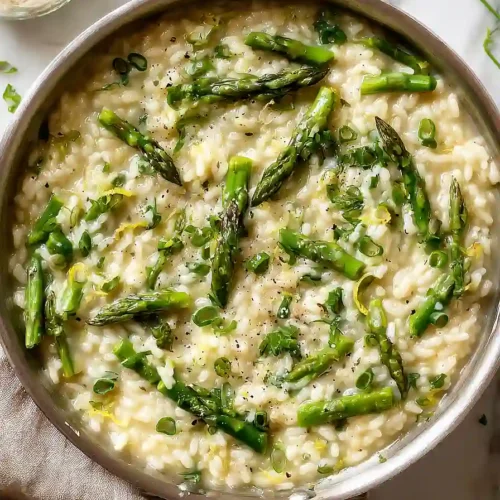
Easy Asparagus Risotto
Ingredients
- 5 cups chicken stock (I prefer Swanson or a low-sodium version to control saltiness)
- 2 1/2 tbsp unsalted butter (I like Kerrygold unsalted butter for this)
- 3/4 cup shallots
- 1 cup arborio rice
- 1/4 cup white wine
- 1/2 lb asparagus (tender tips and stalks cut into 1-inch pieces)
- 1/2 cup parmesan (freshly grated for better melting and texture)
- 1/2 teaspoon lemon zest
- salt
- pepper
Instructions
- Measure out the chicken stock and bring it to a gentle simmer in a saucepan over medium heat—keeping it warm throughout cooking ensures the rice absorbs it properly and cooks evenly. While the stock heats, dice the shallots finely, cut the asparagus into 1-inch pieces, grate the parmesan cheese fresh, and measure out the white wine and lemon zest. Having everything prepped and ready is essential for risotto since the cooking process moves quickly once you start.
- Melt 1 tablespoon of butter in a large, heavy-bottomed pot over medium heat. Add the diced shallots and cook for 1-2 minutes, stirring occasionally, until they become translucent and fragrant. Add the arborio rice and stir constantly for about 2 minutes—this toasting step is crucial as it creates a subtle nutty flavor and helps the rice maintain its shape during cooking rather than becoming mushy.
- Pour in the white wine and stir continuously until it's completely absorbed by the rice, about 1-2 minutes. This step adds acidity and flavor depth. Then add the first 1/2 cup of warm stock from Step 1, stirring frequently until the liquid is mostly absorbed before adding more. I like to keep the heat at a steady medium so the rice cooks evenly—too high and the edges cook too fast; too low and it becomes gummy.
- Continue adding the remaining warm stock from Step 1 in 1/2-cup additions, stirring frequently (every 30 seconds or so) and waiting until each addition is mostly absorbed before adding the next. This process takes about 18-22 minutes and is what creates risotto's signature creamy texture—the constant stirring releases starch from the rice that acts as a natural thickener. The rice should always look slightly wet, never dry.
- When you have about 1/2 cup of stock remaining and the rice is almost tender (it should still have a slight bite to it), add the cut asparagus pieces along with that final 1/2 cup of stock. Stir gently and cook for 2-3 minutes until the asparagus is bright green and just tender-crisp. The asparagus should maintain some texture rather than becoming mushy—this is why we add it at the end rather than the beginning.
- Remove the pot from heat and immediately stir in the freshly grated parmesan, the remaining 1 1/2 tablespoons of butter, lemon zest, and a pinch of salt and pepper to taste. The residual heat will melt everything into a silky, creamy sauce. Let it rest for about 30 seconds, then divide among warm bowls and serve immediately—risotto waits for no one! I always taste and adjust seasoning just before serving since the stock's saltiness can vary.