Finding a breakfast that’s both impressive enough for weekend brunch and easy enough for a busy weekday morning isn’t always simple. You want something that feels special without spending an hour in the kitchen, and it needs to work whether you’re feeding your family or hosting friends for a lazy Sunday gathering.
That’s exactly why this baked asparagus frittata has become one of my favorite go-to recipes. It comes together in about 30 minutes, uses ingredients you probably already have in your fridge, and the combination of tangy goat cheese with fresh asparagus makes it feel like something you’d order at a cafe—except you’re making it at home in your pajamas.
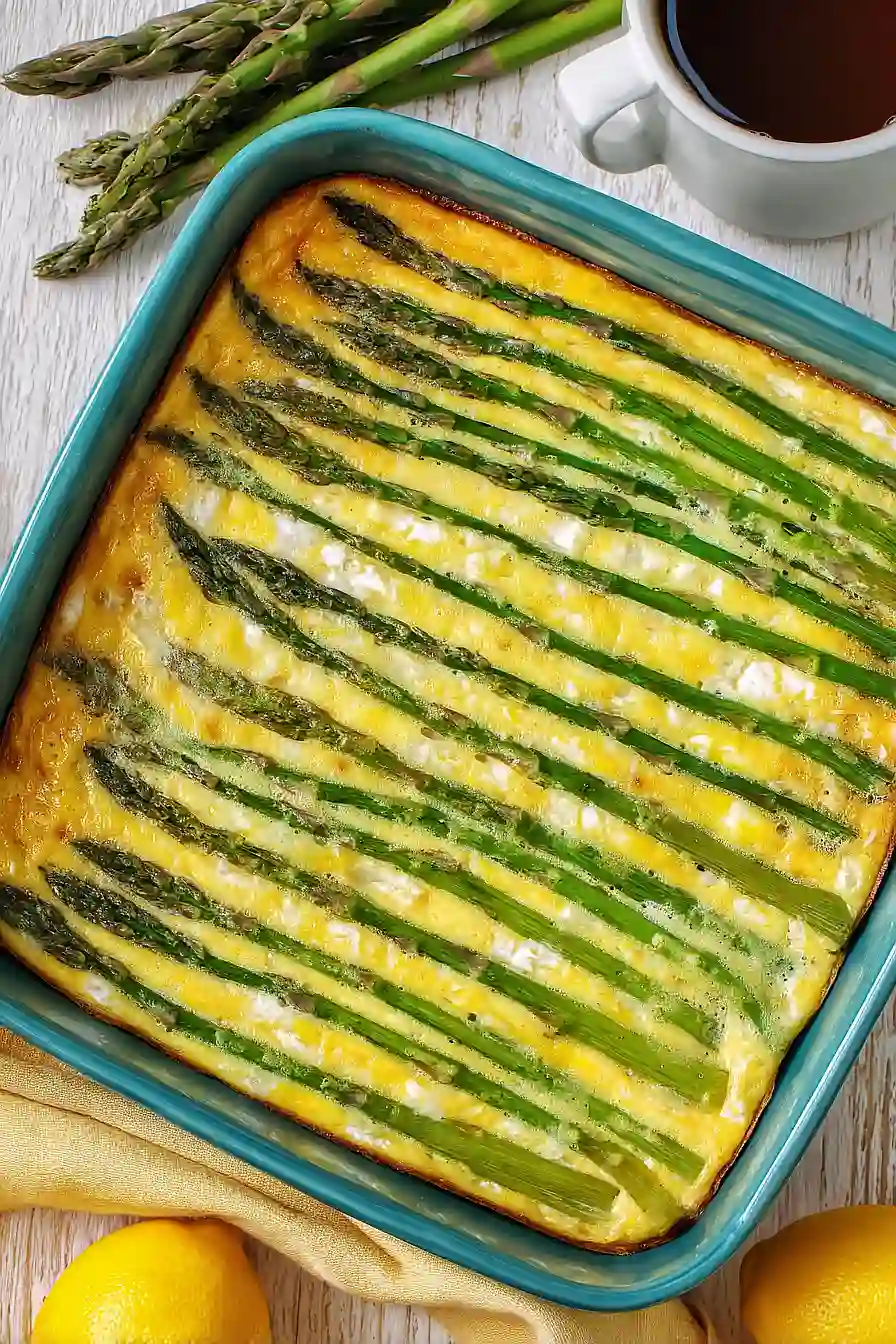
Why You’ll Love This Baked Asparagus Frittata
- Quick and easy – Ready in just 30-40 minutes, this frittata is perfect for busy mornings or when you need a last-minute brunch dish.
- High-protein breakfast – Packed with eggs and goat cheese, this frittata keeps you full and satisfied throughout the morning without weighing you down.
- Simple ingredients – You probably have most of these items in your fridge already, and the ingredient list is short and straightforward.
- Works for any meal – This frittata is great for breakfast, brunch, lunch, or even a light dinner paired with a simple salad.
- Fresh spring flavors – The combination of tender asparagus, tangy goat cheese, and bright lemon juice makes every bite feel light and fresh.
What Kind of Asparagus Should I Use?
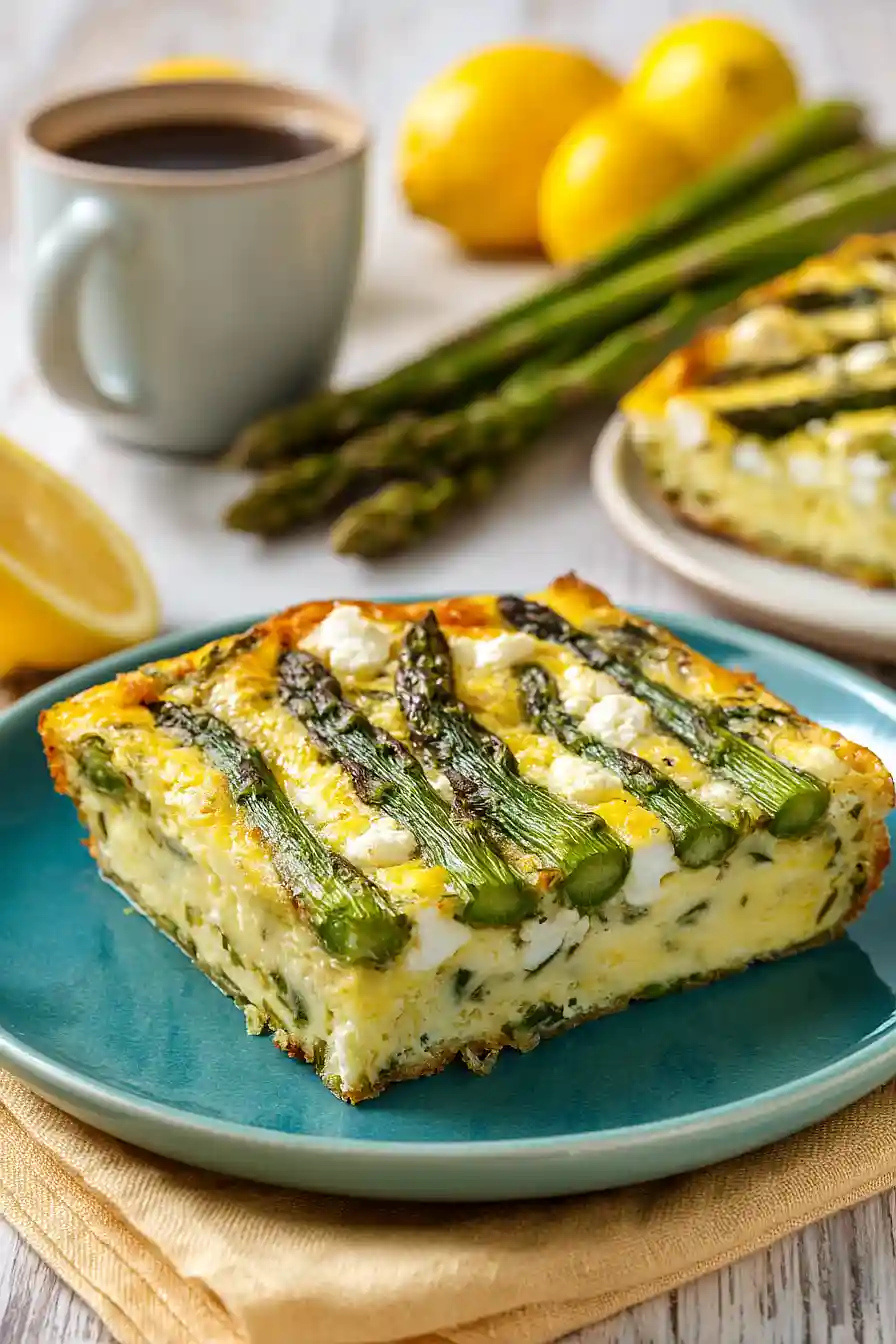
Fresh asparagus is definitely the way to go for this frittata, and you’ll want to look for spears that are firm with tight, closed tips. Medium-thickness asparagus tends to work best since thin spears can get a bit mushy when baked, while really thick ones might not cook through evenly. When you’re at the store, give the bunch a gentle squeeze near the tips – if they feel squishy or look dried out, keep looking. Don’t forget to snap off the woody ends before cooking, which usually happens naturally about an inch or two from the bottom when you bend the spear.
Options for Substitutions
This frittata is pretty forgiving when it comes to swaps, so feel free to work with what you have:
- Goat cheese: Not a fan of goat cheese’s tangy flavor? Swap it for feta, ricotta, or even shredded gruyere or cheddar. Each will give you a different taste, but all work great in a frittata.
- Cream: You can use milk, half-and-half, or even sour cream instead. The frittata will still turn out nice and creamy, though heavy cream gives the richest texture.
- Shallot: If you don’t have shallots, use about 1/4 cup of diced yellow or white onion. You could also try green onions for a milder flavor.
- Asparagus: Feel free to swap in other vegetables like broccoli florets, zucchini slices, or bell peppers. Just make sure to chop them into similar-sized pieces so they cook evenly.
- Dijon mustard: Regular yellow mustard works in a pinch, though you might want to use a bit less since it’s sharper. Whole grain mustard is another good option.
- Eggs: This is one ingredient you really can’t substitute – eggs are the base of any frittata and what holds everything together.
Watch Out for These Mistakes While Baking
The biggest mistake when making frittata is overbaking, which turns your eggs rubbery and dry – pull it from the oven when the center still has a slight jiggle, as it will continue cooking while it rests.
Another common error is skipping the parchment paper, which makes removing the frittata from the pan nearly impossible and can ruin your presentation.
To avoid watery asparagus that steams your frittata, make sure to thoroughly dry the spears after cleaning them, and don’t add them until after the initial 10-minute bake so they stay tender-crisp rather than mushy.
For extra flavor, try roasting your asparagus separately for 5 minutes before adding it to the frittata, which brings out a deeper, slightly caramelized taste that pairs perfectly with the tangy goat cheese.

What to Serve With Baked Asparagus Frittata?
A frittata is perfect for any meal of the day, so I like to serve it with a simple mixed greens salad dressed with olive oil and lemon juice to keep things light and fresh. If you’re having it for brunch, some crispy bacon or breakfast sausage on the side makes it feel more filling, and don’t forget a basket of warm crusty bread or buttery croissants for soaking up the creamy egg. For a lighter option, fresh fruit like berries or melon slices work great alongside the savory flavors of the goat cheese and asparagus. You can also serve it with roasted potatoes or hash browns if you want something more hearty.
Storage Instructions
Store: Keep leftover frittata in an airtight container in the fridge for up to 4 days. It’s great for easy breakfasts throughout the week, and honestly tastes pretty good cold straight from the fridge if you’re in a hurry.
Freeze: You can freeze individual slices wrapped in plastic wrap and then placed in a freezer bag for up to 2 months. Just know that the asparagus might release a bit more moisture when thawed, but it still works well for a quick meal.
Serve: Reheat slices in the microwave for about 30-45 seconds, or warm them in a 300°F oven for 10-15 minutes if you want to keep that nice texture. I actually love eating this at room temperature too, especially for lunch with a simple side salad.
| Preparation Time | 10-15 minutes |
| Cooking Time | 20-25 minutes |
| Total Time | 30-40 minutes |
| Level of Difficulty | Medium |
| Servings | 4 servings |
Estimated Nutrition
Estimated nutrition for the whole recipe (without optional ingredients):
- Calories: 600-700
- Protein: 38-44 g
- Fat: 44-52 g
- Carbohydrates: 13-17 g
Ingredients
For the egg mixture:
- 7 large eggs
- 3 tbsp cream (I use Horizon Organic heavy cream)
- 3 tbsp shallot (finely minced, about 1/8-inch pieces)
- 1.5 tsp dijon mustard (I prefer Grey Poupon for the sharpest flavor)
- 0.5 tsp salt
- 0.25 tsp black pepper
- 5 oz goat cheese
For the asparagus topping:
- 0.5 lb asparagus (trimmed and cut into 2-inch angled pieces)
- 2 tsp olive oil
- 1.5 tsp lemon juice
- black pepper
Step 1: Prepare the Oven and Pan
Preheat your oven to 400°F.
While it heats, line a 9×13 inch baking dish (or similar size) with parchment paper, allowing it to hang slightly over the edges for easy removal later.
This setup ensures even heat distribution and makes plating effortless.
Step 2: Prepare the Asparagus
- 0.5 lb asparagus, trimmed
- 2 tsp olive oil
- 1.5 tsp lemon juice
- 0.5 tsp salt
- black pepper to taste
While the oven preheats, trim the woody ends from the asparagus (about 1-2 inches from the bottom).
Cut the spears into 2-inch angled pieces on a slight bias—this creates more surface area and looks more elegant.
In a small bowl, toss the asparagus pieces with the olive oil, lemon juice, salt, and black pepper until evenly coated.
Set aside at room temperature.
Step 3: Build the Egg Mixture
- 7 large eggs
- 3 tbsp cream
- 3 tbsp shallot, finely minced
- 1.5 tsp Dijon mustard
- 0.5 tsp salt
- 0.25 tsp black pepper
- 5 oz goat cheese
In a large bowl, whisk together the eggs and cream until fully combined and slightly frothy.
Add the finely minced shallot, Dijon mustard, salt, and black pepper, whisking until well incorporated.
Crumble the goat cheese into rough pieces and fold it gently into the mixture—I like to leave some small chunks visible rather than fully incorporating it, as this creates pockets of creamy, tangy flavor throughout the frittata.
Step 4: Partially Bake the Egg Base
- egg mixture from Step 3
Pour the egg mixture from Step 3 into the prepared pan, spreading it evenly.
Place in the preheated 400°F oven and bake for 10 minutes.
At this point, the eggs will be partially set around the edges but still quite wet in the center—this is exactly what you want before adding the asparagus.
Step 5: Add Asparagus and Finish Baking
- asparagus mixture from Step 2
Remove the pan from the oven and carefully arrange the seasoned asparagus pieces from Step 2 on top of the partially set eggs, distributing them evenly across the surface.
Return the pan to the oven and bake for 7-8 minutes more, until the center of the frittata feels springy and set when lightly pressed with your finger—the eggs should no longer jiggle when you gently shake the pan.
Step 6: Rest and Serve
Remove the frittata from the oven and let it rest in the pan for 5 minutes—this allows the residual heat to finish cooking the very center and makes slicing much cleaner.
Using the parchment paper overhang as handles, lift the entire frittata onto a cutting board.
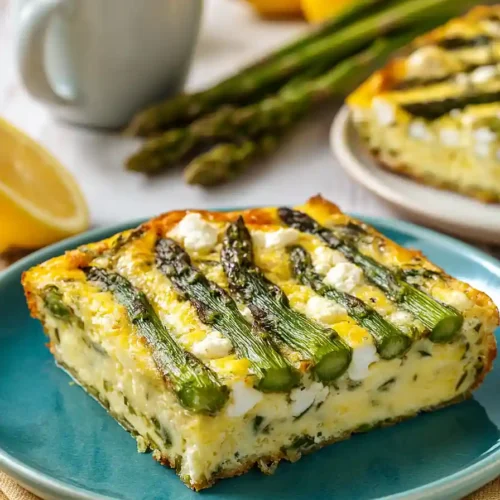
Slice into squares or rectangles and serve warm or at room temperature.
Best Baked Asparagus Frittata
Ingredients
For the egg mixture::
- 7 large eggs
- 3 tbsp cream (I use Horizon Organic heavy cream)
- 3 tbsp shallot (finely minced, about 1/8-inch pieces)
- 1.5 tsp dijon mustard (I prefer Grey Poupon for the sharpest flavor)
- 0.5 tsp salt
- 0.25 tsp black pepper
- 5 oz goat cheese
For the asparagus topping::
- 0.5 lb asparagus (trimmed and cut into 2-inch angled pieces)
- 2 tsp olive oil
- 1.5 tsp lemon juice
- black pepper
Instructions
- Preheat your oven to 400°F. While it heats, line a 9x13 inch baking dish (or similar size) with parchment paper, allowing it to hang slightly over the edges for easy removal later. This setup ensures even heat distribution and makes plating effortless.
- While the oven preheats, trim the woody ends from the asparagus (about 1-2 inches from the bottom). Cut the spears into 2-inch angled pieces on a slight bias—this creates more surface area and looks more elegant. In a small bowl, toss the asparagus pieces with the olive oil, lemon juice, salt, and black pepper until evenly coated. Set aside at room temperature.
- In a large bowl, whisk together the eggs and cream until fully combined and slightly frothy. Add the finely minced shallot, Dijon mustard, salt, and black pepper, whisking until well incorporated. Crumble the goat cheese into rough pieces and fold it gently into the mixture—I like to leave some small chunks visible rather than fully incorporating it, as this creates pockets of creamy, tangy flavor throughout the frittata.
- Pour the egg mixture from Step 3 into the prepared pan, spreading it evenly. Place in the preheated 400°F oven and bake for 10 minutes. At this point, the eggs will be partially set around the edges but still quite wet in the center—this is exactly what you want before adding the asparagus.
- Remove the pan from the oven and carefully arrange the seasoned asparagus pieces from Step 2 on top of the partially set eggs, distributing them evenly across the surface. Return the pan to the oven and bake for 7-8 minutes more, until the center of the frittata feels springy and set when lightly pressed with your finger—the eggs should no longer jiggle when you gently shake the pan.
- Remove the frittata from the oven and let it rest in the pan for 5 minutes—this allows the residual heat to finish cooking the very center and makes slicing much cleaner. Using the parchment paper overhang as handles, lift the entire frittata onto a cutting board. Slice into squares or rectangles and serve warm or at room temperature.

