If you ask me, German rhubarb pie is one of those desserts that sounds fancy but is actually pretty straightforward to make.
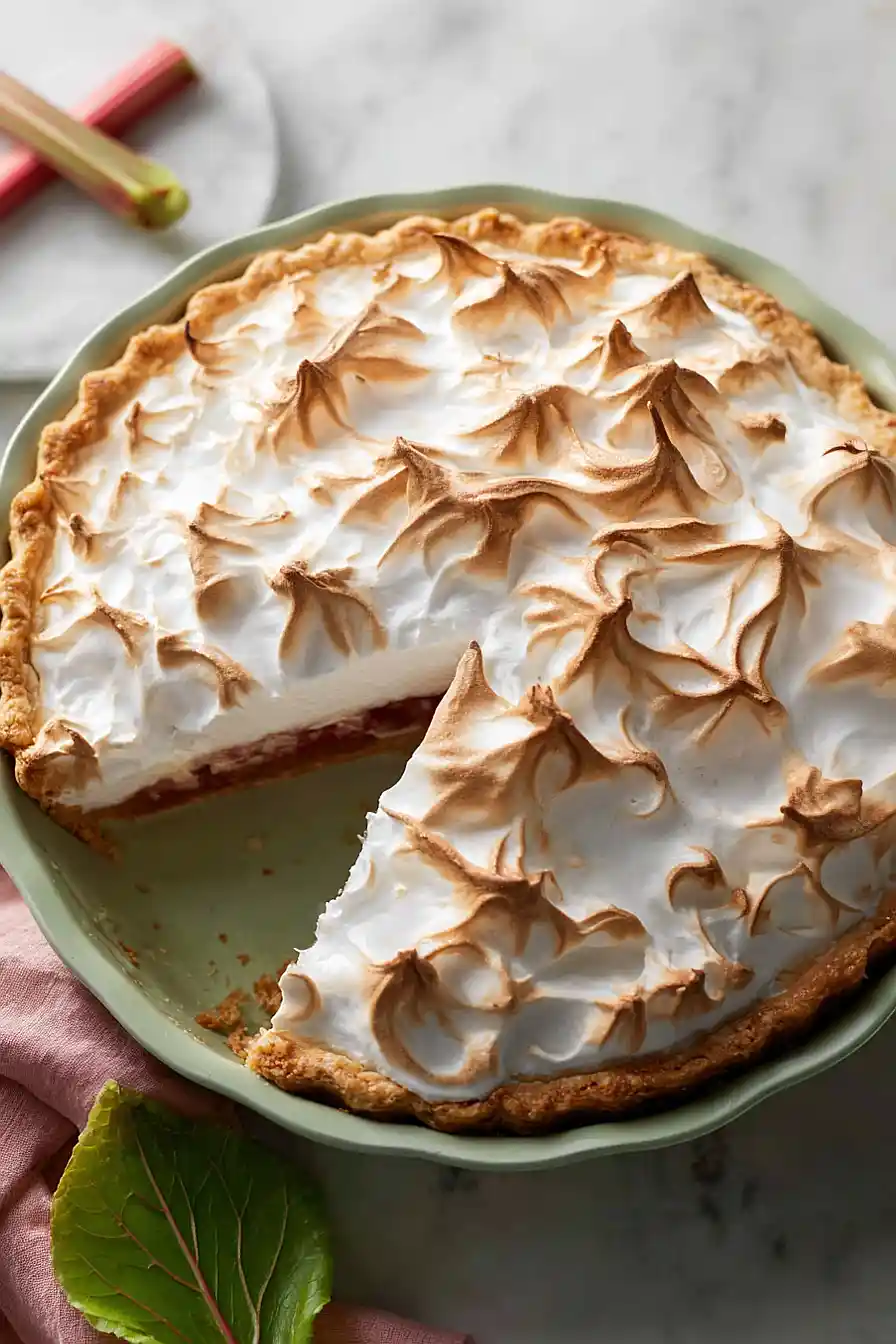
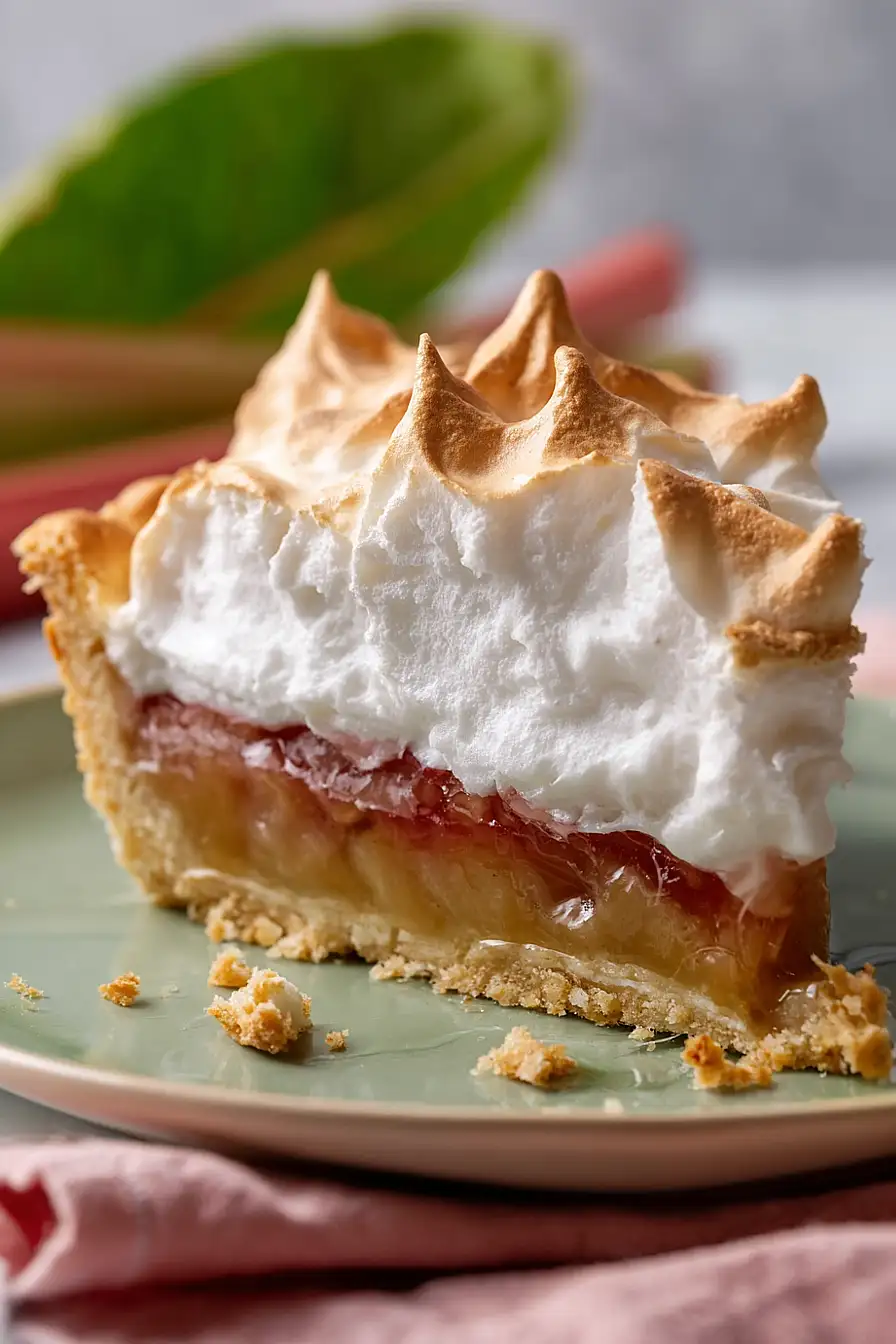
This traditional European treat features three distinct layers that work together beautifully. Tender rhubarb sits on a buttery shortbread crust, while sweet vanilla pudding brings everything together.
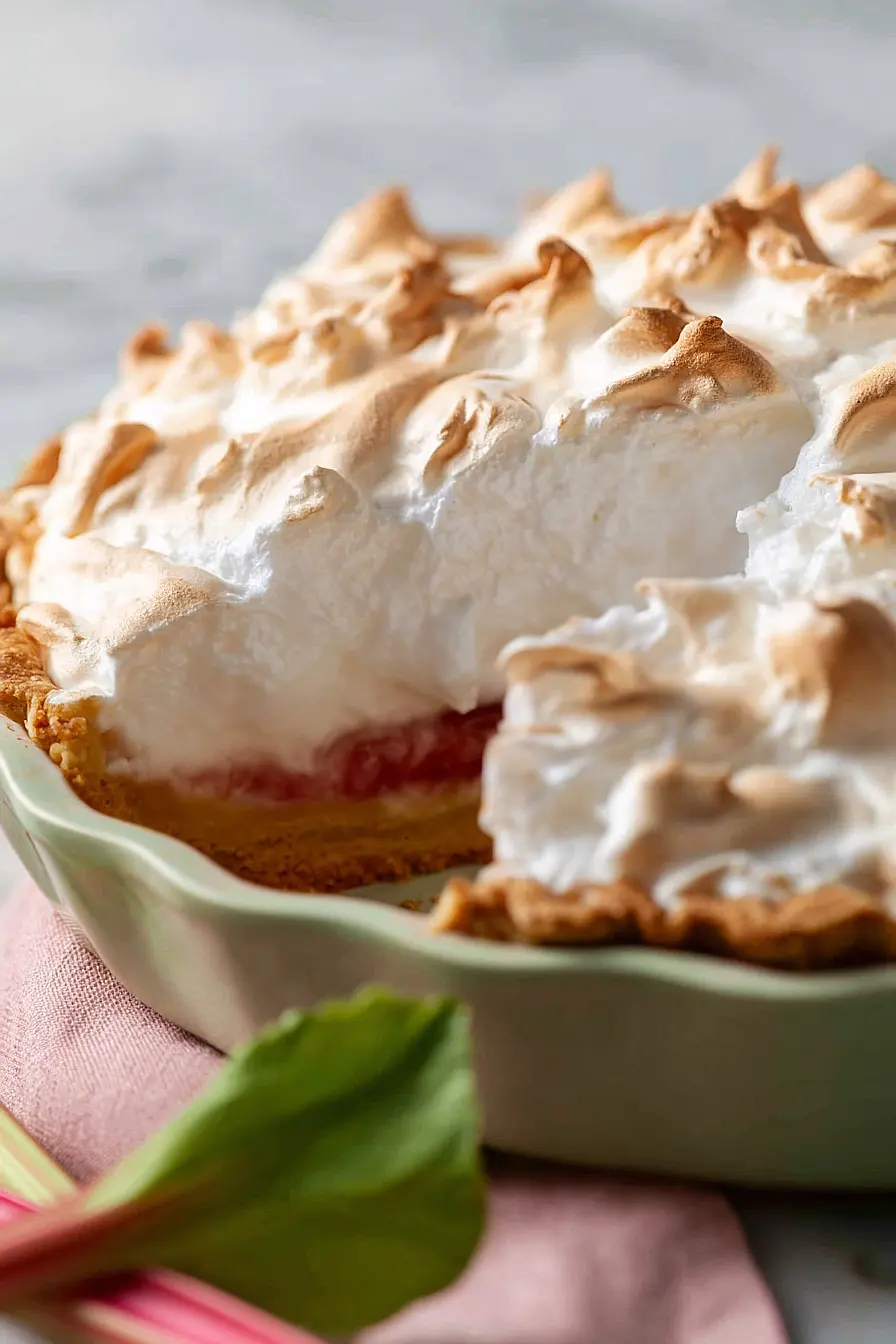
It’s topped with fluffy meringue that gets golden in the oven. The tart rhubarb plays off the sweet meringue and creamy pudding filling in a way that just works.
It’s a springtime dessert that feels special enough for company but easy enough for a weekend baking project.
Why You’ll Love This German Rhubarb Pie
- Perfect balance of sweet and tart – The tangy rhubarb paired with the sweet meringue topping creates a flavor combination that’s absolutely delicious without being too heavy.
- Impressive presentation – This pie looks like it came straight from a German bakery with its fluffy meringue top, making it perfect for special occasions or when you want to wow your guests.
- Traditional European recipe – If you’re looking to try authentic German baking, this classic rhubarb pie is a great place to start and brings a taste of Europe to your kitchen.
- Great use for fresh rhubarb – When rhubarb is in season, this recipe is one of the best ways to use it up, especially if you have a garden full of it.
What Kind of Rhubarb Should I Use?
Fresh rhubarb is always your best bet for this pie, and you’ll want to look for stalks that are firm and crisp when you’re at the store or farmer’s market. The color can range from pale green to deep red, and while the red varieties look prettier, the green ones are just as tasty and work perfectly fine in this recipe. If fresh rhubarb isn’t in season, frozen rhubarb is a solid backup option – just make sure to thaw it completely and drain off any excess liquid before using it. When prepping your rhubarb, trim off the leaves (they’re actually toxic!) and the dry ends, then cut the stalks into pieces about half an inch to one inch long for even cooking.
Options for Substitutions
This German rhubarb pie has some room for flexibility, though a few ingredients are pretty important to keep:
- Rhubarb: Rhubarb is really the star here, so I’d stick with it for an authentic German pie. If you absolutely need a swap, try using tart cherries or a mix of strawberries and cranberries, but the flavor will be quite different.
- Pudding powder: If you can’t find pudding powder (common in German baking), you can use instant vanilla pudding mix or cornstarch. Use about 4-5 tablespoons of cornstarch mixed with the sugar and juice instead.
- Vanilla sugar: Not common in all kitchens, but easy to make your own! Mix 1 tablespoon regular sugar with ½ teaspoon vanilla extract, or just use an extra ½ teaspoon of vanilla extract in your dough.
- Juice: The recipe doesn’t specify, but apple juice or white grape juice work great. You could also use orange juice for a citrus twist with the rhubarb.
- Butter: You can substitute with margarine or coconut oil if needed, though butter gives the best flavor and texture for the crust.
- Egg whites: These are likely for a meringue topping, which is traditional for this pie. You really need the egg whites here – there’s no good substitute that will give you that light, fluffy meringue.
Watch Out for These Mistakes While Baking
The biggest mistake people make with rhubarb pie is skipping the 2-hour resting time for the rhubarb and sugar mixture, which draws out the juice you’ll need for the pudding layer – without it, your filling won’t have enough liquid and the texture will be off.
When pressing the dough into your pan, make sure it’s evenly distributed and comes up the sides at least 1.5 inches, otherwise the filling might overflow during baking and create a mess in your oven.
Don’t rush the meringue topping by adding the sugar too quickly to the egg whites – gradually beat it in to create stiff, glossy peaks that won’t weep or collapse.
Finally, resist the urge to slice into the pie right away, as the 30-minute cooling period in the pan allows everything to set properly so your slices come out clean instead of runny.
What to Serve With German Rhubarb Pie?
This pie is pretty sweet and rich on its own, so I like to serve it with something that balances out those flavors. A dollop of unsweetened whipped cream or a scoop of vanilla ice cream works perfectly – the creaminess cuts through the tartness of the rhubarb without making things too sugary. If you’re serving it for dessert after a meal, a simple cup of coffee or black tea is all you really need alongside it. For a weekend brunch situation, this pie pairs nicely with some fresh berries on the side or even a light yogurt parfait to round out the spread.
Storage Instructions
Store: Keep your rhubarb pie covered in the fridge for up to 3 days. The meringue topping might soften a bit over time, but it’ll still taste great. I like to cover it loosely with plastic wrap or aluminum foil so the meringue doesn’t stick.
Freeze: This pie doesn’t freeze well once it’s baked because the meringue and pudding layer can get watery when thawed. If you want to prep ahead, you can freeze the unbaked crust wrapped tightly for up to a month, then add the filling and meringue fresh when you’re ready to bake.
Serve: This pie is best enjoyed cold or at room temperature straight from the fridge. The flavors really come together after it’s had a chance to chill for a few hours, so it’s actually perfect for making a day ahead of serving.
| Preparation Time | 135-150 minutes |
| Cooking Time | 45-60 minutes |
| Total Time | 180-210 minutes |
| Level of Difficulty | Medium |
| Servings | 8 slices |
Estimated Nutrition
Estimated nutrition for the whole recipe (without optional ingredients):
- Calories: 2100-2300
- Protein: 30-36 g
- Fat: 40-48 g
- Carbohydrates: 440-480 g
Ingredients
For the crust:
- 1 3/4 cups flour (I always use King Arthur all-purpose flour)
- 1/4 cup sugar
- 0.3 cup butter (cold and cut into 1/2-inch cubes)
- 1 egg
- 1/2 tsp baking powder
- 1 tbsp vanilla sugar
For the rhubarb filling:
- 27 oz rhubarb (trimmed and cut into 1-inch pieces)
- 2/3 cup sugar
- 1/2 teaspoon lemon zest
- 2 packets pudding powder (I prefer Dr. Oetker vanilla flavor)
- 5 tbsp sugar
- 2 cups juice (apple or white grape juice adds great sweetness)
For the meringue:
- 3 egg whites (room temperature, about 70°F for better volume)
- 2/3 cup sugar
- 1/4 teaspoon cream of tartar
Step 1: Prepare the Rhubarb and Extract Its Juice
- 27 oz rhubarb, trimmed and cut into 1-inch pieces
- 2/3 cup sugar
Trim the rhubarb and cut it into 1-inch pieces, then toss with 2/3 cup sugar in a bowl.
Let this mixture sit at room temperature for 2 hours—the sugar will draw out the rhubarb’s natural juices.
After 2 hours, strain the rhubarb through a fine-mesh sieve, collecting the liquid in a measuring cup.
You should have approximately 2 cups of juice; if you’re a bit short, top it up with apple or white grape juice to reach 2 cups.
Set the drained rhubarb aside and keep the juice nearby for the pudding step.
Step 2: Make and Blind Bake the Pie Crust
- 1 3/4 cups flour
- 1/4 cup sugar
- 0.3 cup butter, cold and cut into 1/2-inch cubes
- 1 egg
- 1/2 tsp baking powder
- 1 tbsp vanilla sugar
Preheat your oven to 400°F.
In a food processor, combine the flour, 1/4 cup sugar, cold butter cubes, egg, baking powder, and vanilla sugar, pulsing until the mixture resembles coarse breadcrumbs and just comes together.
Press this dough firmly into the bottom and 1.5 inches up the sides of a 9-inch pie pan, creating an even thickness.
Blind bake the crust for 10-12 minutes at 400°F until it’s set but not yet golden—this gives you a head start on cooking and prevents a soggy bottom.
I always use an all-purpose flour like King Arthur because it gives me consistent, reliable results every time.
Step 3: Build the Pudding-Rhubarb Filling
- rhubarb juice from Step 1
- 2 packets pudding powder
- 5 tbsp sugar
- 1/2 teaspoon lemon zest
- drained rhubarb from Step 1
While the crust bakes, pour the 2 cups of rhubarb juice into a saucepan and bring it to a gentle boil over medium heat.
In a small bowl, whisk together the pudding powder, 5 tablespoons sugar, and lemon zest to combine evenly.
Once the juice is boiling, whisk in the pudding mixture to create a smooth paste, then continue cooking for 2-3 minutes, stirring constantly, until the pudding thickens and coats the back of a spoon.
Remove from heat and let cool for 2 minutes, then fold in the drained rhubarb from Step 1 until evenly combined.
I find that letting the pudding cool slightly before mixing in the rhubarb helps prevent the fruit from breaking apart.
Step 4: Fill and Partially Bake the Pie
- blind-baked crust from Step 2
- pudding-rhubarb filling from Step 3
Remove the pre-baked crust from the oven and immediately pour the pudding-rhubarb filling from Step 3 into it, spreading it evenly.
Return the pie to the 400°F oven and bake for 30-35 minutes until the filling is set but still slightly jiggly in the very center.
The crust should be golden and the filling should look set around the edges.
Step 5: Prepare and Apply the Meringue Topping
- 3 egg whites, room temperature
- 2/3 cup sugar
- 1/4 teaspoon cream of tartar
About 10 minutes before the pie finishes baking, place the room-temperature egg whites and cream of tartar in a clean, grease-free bowl.
Using an electric mixer on medium-high speed, beat the egg whites until soft peaks form, then gradually add 2/3 cup sugar one tablespoon at a time while continuing to beat.
Continue beating until stiff, glossy peaks form—this takes about 5-7 minutes total.
When the pie comes out of the oven, immediately spread or dollop the meringue evenly over the hot filling, making sure it touches the crust edges to seal it (this prevents the meringue from shrinking).
Return the pie to the oven and bake for 10 minutes until the meringue is golden brown on the peaks.
Step 6: Cool and Set
Remove the pie from the oven and let it rest in the pan for at least 30 minutes at room temperature.
This cooling time allows the meringue to set properly and the filling to firm up, making slicing cleaner and easier.
The pie can be served warm or at room temperature, though I prefer to let it cool completely for the best texture and flavor.
Best German Rhubarb Pie
Ingredients
For the crust::
- 1 3/4 cups flour (I always use King Arthur all-purpose flour)
- 1/4 cup sugar
- 0.3 cup butter (cold and cut into 1/2-inch cubes)
- 1 egg
- 1/2 tsp baking powder
- 1 tbsp vanilla sugar
For the rhubarb filling::
- 27 oz rhubarb (trimmed and cut into 1-inch pieces)
- 2/3 cup sugar
- 1/2 teaspoon lemon zest
- 2 packets pudding powder (I prefer Dr. Oetker vanilla flavor)
- 5 tbsp sugar
- 2 cups juice (apple or white grape juice adds great sweetness)
For the meringue::
- 3 egg whites (room temperature, about 70°F for better volume)
- 2/3 cup sugar
- 1/4 teaspoon cream of tartar
Instructions
- Trim the rhubarb and cut it into 1-inch pieces, then toss with 2/3 cup sugar in a bowl. Let this mixture sit at room temperature for 2 hours—the sugar will draw out the rhubarb's natural juices. After 2 hours, strain the rhubarb through a fine-mesh sieve, collecting the liquid in a measuring cup. You should have approximately 2 cups of juice; if you're a bit short, top it up with apple or white grape juice to reach 2 cups. Set the drained rhubarb aside and keep the juice nearby for the pudding step.
- Preheat your oven to 400°F. In a food processor, combine the flour, 1/4 cup sugar, cold butter cubes, egg, baking powder, and vanilla sugar, pulsing until the mixture resembles coarse breadcrumbs and just comes together. Press this dough firmly into the bottom and 1.5 inches up the sides of a 9-inch pie pan, creating an even thickness. Blind bake the crust for 10-12 minutes at 400°F until it's set but not yet golden—this gives you a head start on cooking and prevents a soggy bottom. I always use an all-purpose flour like King Arthur because it gives me consistent, reliable results every time.
- While the crust bakes, pour the 2 cups of rhubarb juice into a saucepan and bring it to a gentle boil over medium heat. In a small bowl, whisk together the pudding powder, 5 tablespoons sugar, and lemon zest to combine evenly. Once the juice is boiling, whisk in the pudding mixture to create a smooth paste, then continue cooking for 2-3 minutes, stirring constantly, until the pudding thickens and coats the back of a spoon. Remove from heat and let cool for 2 minutes, then fold in the drained rhubarb from Step 1 until evenly combined. I find that letting the pudding cool slightly before mixing in the rhubarb helps prevent the fruit from breaking apart.
- Remove the pre-baked crust from the oven and immediately pour the pudding-rhubarb filling from Step 3 into it, spreading it evenly. Return the pie to the 400°F oven and bake for 30-35 minutes until the filling is set but still slightly jiggly in the very center. The crust should be golden and the filling should look set around the edges.
- About 10 minutes before the pie finishes baking, place the room-temperature egg whites and cream of tartar in a clean, grease-free bowl. Using an electric mixer on medium-high speed, beat the egg whites until soft peaks form, then gradually add 2/3 cup sugar one tablespoon at a time while continuing to beat. Continue beating until stiff, glossy peaks form—this takes about 5-7 minutes total. When the pie comes out of the oven, immediately spread or dollop the meringue evenly over the hot filling, making sure it touches the crust edges to seal it (this prevents the meringue from shrinking). Return the pie to the oven and bake for 10 minutes until the meringue is golden brown on the peaks.
- Remove the pie from the oven and let it rest in the pan for at least 30 minutes at room temperature. This cooling time allows the meringue to set properly and the filling to firm up, making slicing cleaner and easier. The pie can be served warm or at room temperature, though I prefer to let it cool completely for the best texture and flavor.