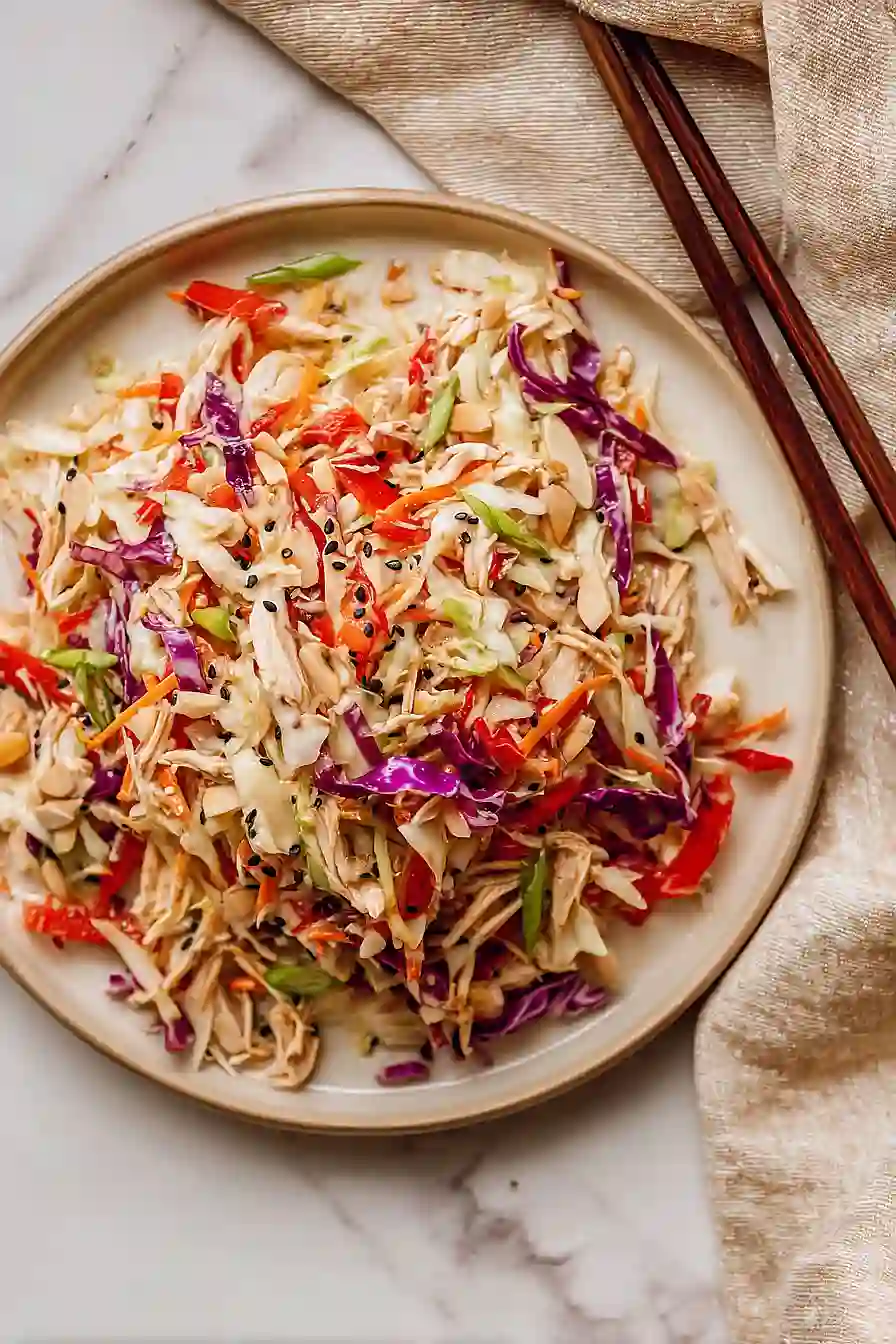
If you ask me, coleslaw gets way better when you add juicy grilled chicken and a punchy ginger dressing.
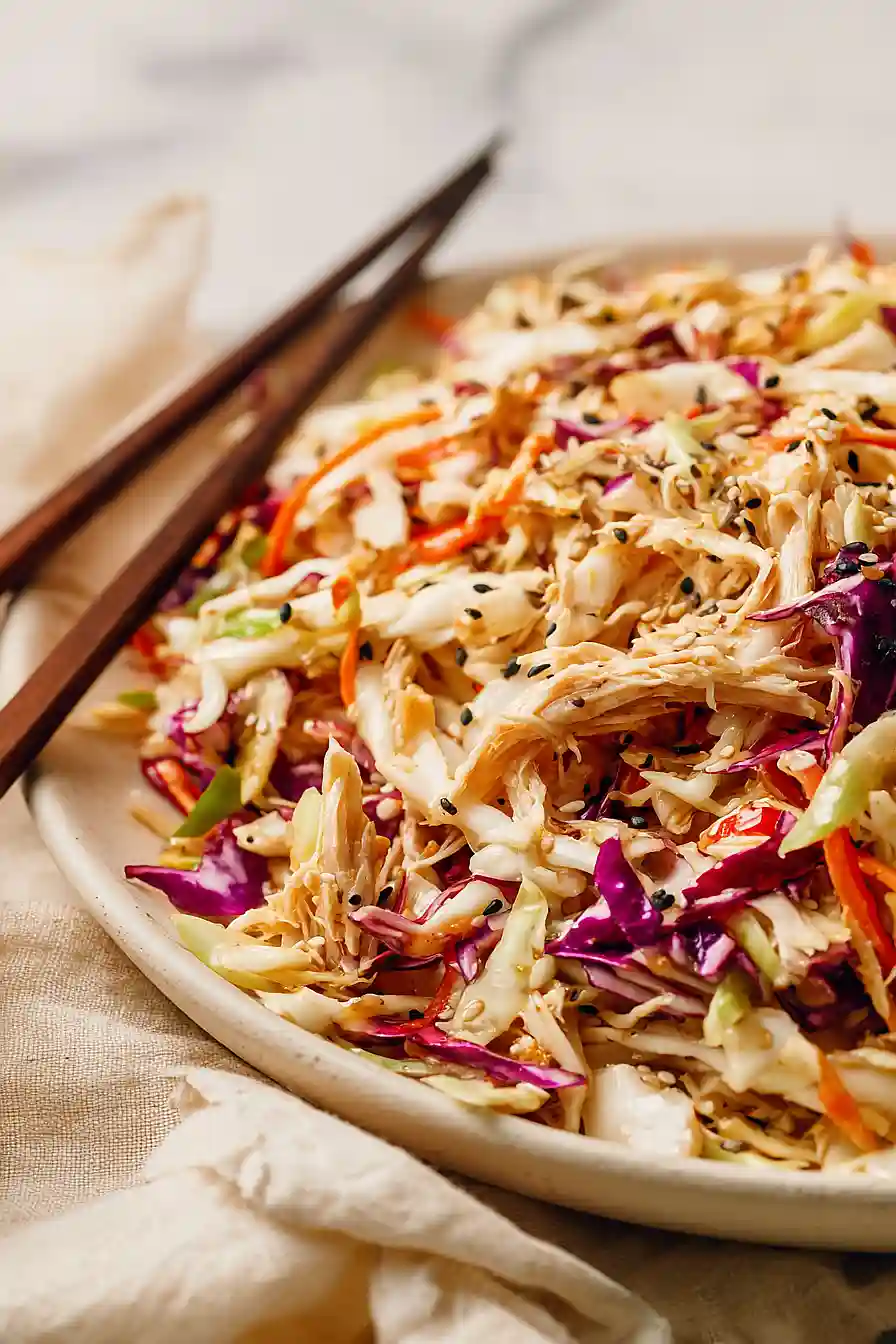
This Asian-inspired salad brings together crunchy napa and red cabbage with tender chicken breasts and a tangy-sweet dressing. Toasted sesame seeds and slivered almonds add a nice crunch, while fresh ginger and garlic give the whole thing a kick.
The dressing uses coconut aminos instead of soy sauce, making it a great option if you’re watching your sodium or avoiding soy. A touch of maple syrup balances out the rice vinegar and lime juice.
It’s a light but filling meal that works great for lunch prep or a quick weeknight dinner when you want something fresh and satisfying.
Why You’ll Love This Chicken Coleslaw Salad
- Quick and easy weeknight meal – Ready in under an hour, this salad comes together fast enough for busy weeknights but tastes like you spent way more time on it.
- Healthy and nutritious – Packed with lean protein, crunchy vegetables, and a homemade ginger dressing, this salad gives you a balanced meal without any guilt.
- Fresh, bold flavors – The tangy ginger dressing with sesame oil and maple syrup brings all the ingredients together in a way that’s both refreshing and satisfying.
- Great for meal prep – Make the components ahead of time and store them separately, then toss everything together when you’re ready to eat for an instant lunch or dinner.
- Simple, wholesome ingredients – No fancy or hard-to-find items here—just straightforward ingredients that create something really special.
What Kind of Cabbage Should I Use?
This recipe calls for both napa cabbage and red cabbage, which gives you a nice mix of textures and colors in your coleslaw. Napa cabbage has a milder, slightly sweeter flavor and softer leaves compared to regular green cabbage, making it perfect for salads where you want something a bit more tender. If you can’t find napa cabbage at your store, you can substitute regular green cabbage – just slice it extra thin since it’s a bit tougher. The red cabbage adds a nice crunch and a pop of color, but if you only have one type of cabbage on hand, you can use 5 cups of whichever variety you have and the salad will still turn out great.
Options for Substitutions
This salad is pretty forgiving when it comes to swaps, so feel free to work with what you have:
- Chicken breasts: You can easily use chicken thighs instead, or even rotisserie chicken to save time. For a vegetarian option, try baked tofu or tempeh.
- Napa cabbage: If you can’t find napa cabbage, regular green cabbage works fine. You can also use a pre-made coleslaw mix to make things easier – just adjust the amount to get about 5 cups total.
- Coconut aminos: Soy sauce or tamari are good substitutes here. Use the same amount, but keep in mind they’re a bit saltier than coconut aminos, so you might want to go easy on the added salt.
- Rice vinegar: Apple cider vinegar or white wine vinegar will work in a pinch. Start with 2 tablespoons and add more to taste since they can be a bit stronger.
- Maple syrup: Honey or agave nectar are easy swaps. You could also use brown sugar – just dissolve it in the dressing by mixing well.
- Slivered almonds: Cashews, peanuts, or sunflower seeds all add a nice crunch. Toast them lightly for extra flavor.
Watch Out for These Mistakes While Cooking
Boiling chicken breasts for exactly 10 minutes might leave them undercooked if they’re thick, so use an instant-read thermometer to check that the internal temperature reaches 165°F before shredding.
The biggest mistake with the ginger dressing is not mixing it well enough – shake that jar vigorously for at least 30 seconds to make sure the sesame oil emulsifies with the other ingredients instead of pooling on top of your salad.
When toasting the sesame seeds and almonds, watch them closely because they can burn in seconds, and give the pan a shake every minute or so to ensure even toasting.
Finally, don’t dress the entire salad if you’re planning to have leftovers – dressed cabbage gets soggy quickly, so store the dressing separately and add it just before serving to keep everything crisp.
What to Serve With Chicken Coleslaw Salad?
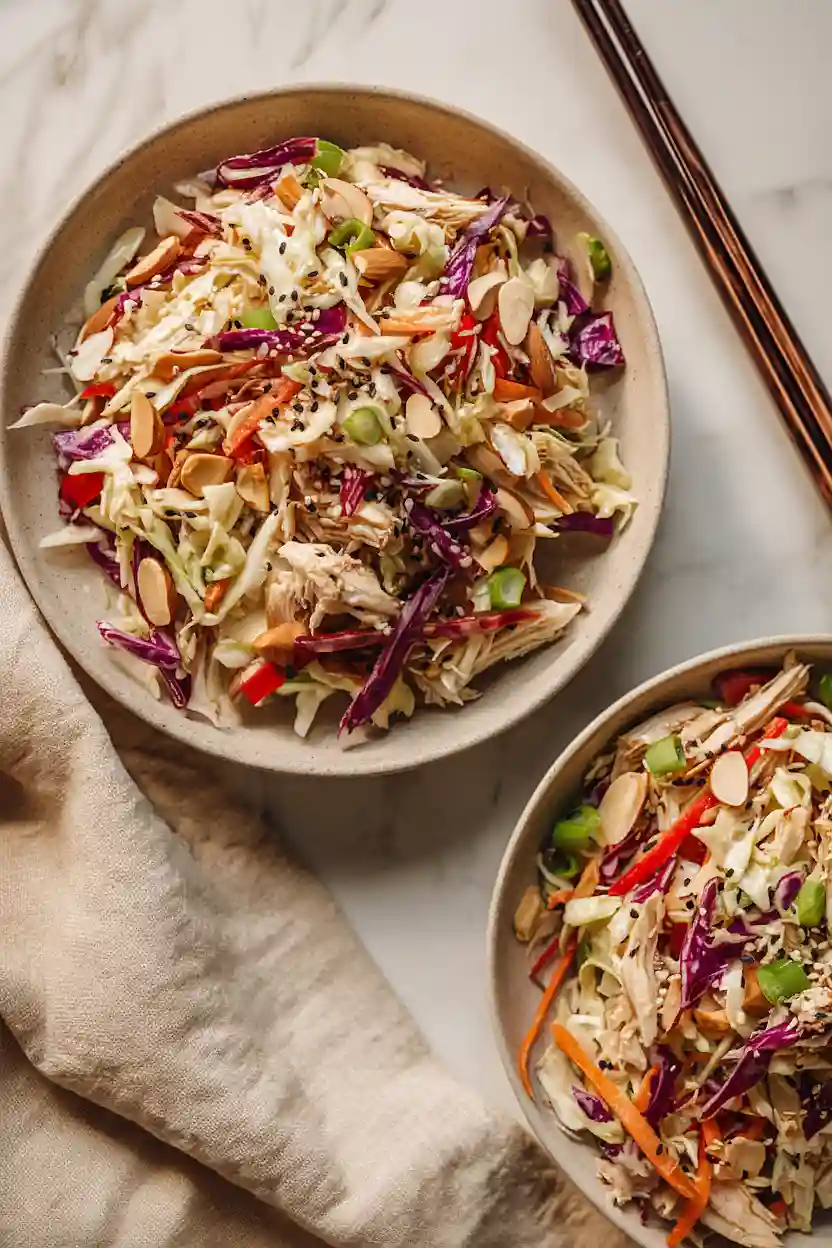
This chicken coleslaw salad is pretty filling on its own, but I love serving it with some crispy wonton strips or rice crackers on the side for extra crunch. If you want to make it more of a complete meal, try pairing it with some steamed edamame or a cup of miso soup to keep with the Asian-inspired flavors. For a heartier option, serve it alongside some brown rice or quinoa, or even stuff it into lettuce wraps for a fun, hands-on dinner. The ginger dressing is so good that you might want to make extra to drizzle over whatever you’re serving on the side!
Storage Instructions
Store: This salad keeps really well in the fridge for up to 3 days in an airtight container. I like to store the dressing separately if I’m meal prepping, so the cabbage stays nice and crunchy. Just toss everything together when you’re ready to eat!
Make Ahead: You can prep all the components ahead of time to make weeknight dinners super easy. Cook the chicken and shred it, chop all your veggies, and whisk up the ginger dressing up to 2 days in advance. Keep everything in separate containers in the fridge, then just assemble when you’re hungry.
Serve: This salad is best served cold or at room temperature. If you stored the dressing separately, give it a quick shake or whisk before pouring it over the salad, since the sesame oil might separate a bit in the fridge.
| Preparation Time | 20-30 minutes |
| Cooking Time | 15-20 minutes |
| Total Time | 35-50 minutes |
| Level of Difficulty | Easy |
| Servings | 6 servings |
Estimated Nutrition
Estimated nutrition for the whole recipe (without optional ingredients):
- Calories: 650-750
- Protein: 50-60 g
- Fat: 32-38 g
- Carbohydrates: 48-56 g
Ingredients
For the salad:
- 3 chicken breasts (I like using Mary’s Free-Range chicken for better flavor)
- 4 cups napa cabbage (finely shredded into 1/8-inch strips)
- 2.5 cups red cabbage
- 1 large carrot (julienned into thin 2-inch matchsticks)
- 1 bundle green onions
- 3 tbsp sesame seeds (toasted in a dry pan until fragrant)
- 1/3 cup slivered almonds
- 1/2 tsp sea salt
- 1/2 tsp black pepper
- 1/4 cup fresh cilantro, chopped
For the dressing:
- 5 tbsp coconut aminos (I always use Coconut Secret brand)
- 3 tbsp rice vinegar
- 3 tbsp sesame oil (toasted variety gives a deeper, nuttier aroma)
- 2 tbsp maple syrup
- 1.5 tbsp ginger (grated into a fine paste to distribute flavor)
- 5 garlic cloves
- 1 tbsp fresh lime juice
Step 1: Prepare the Mise en Place and Toast the Nuts
- 4 cups napa cabbage
- 2.5 cups red cabbage
- 1 large carrot
- 1 bundle green onions
- 1/4 cup fresh cilantro
- 5 garlic cloves
- 3 tbsp sesame seeds
- 1/3 cup slivered almonds
Start by preparing all your ingredients so cooking flows smoothly.
Finely shred the napa cabbage and red cabbage into 1/8-inch strips, julienne the carrot into thin 2-inch matchsticks, slice the green onions (separating white and green parts), chop the cilantro, and mince the garlic cloves.
While you’re prepping, toast the sesame seeds and slivered almonds in a dry pan over medium heat for about 5 minutes, stirring frequently until fragrant and lightly golden.
Transfer to a plate and set aside—this toasting step brings out their nutty flavors and adds crucial texture to the final dish.
Step 2: Cook and Shred the Chicken
- 3 chicken breasts
- 1/2 tsp sea salt
Bring a pot of salted water to a boil and add the chicken breasts.
Simmer for 10-12 minutes until the internal temperature reaches 165°F and the chicken is cooked through (timing depends on thickness).
Remove the chicken to a cutting board and let it cool for 2-3 minutes until it’s easy to handle.
Using two forks, shred the chicken into bite-sized pieces, discarding any bones or excess fat.
Step 3: Build the Ginger Dressing
- 5 tbsp coconut aminos
- 3 tbsp rice vinegar
- 3 tbsp sesame oil
- 2 tbsp maple syrup
- 1.5 tbsp ginger
- 5 garlic cloves
- 1 tbsp fresh lime juice
In a jar or bowl, combine the coconut aminos, rice vinegar, toasted sesame oil, maple syrup, grated ginger, minced garlic, and fresh lime juice.
Shake or whisk vigorously until the ingredients are well emulsified and the maple syrup fully dissolves.
I always use toasted sesame oil rather than plain because it adds a deeper, nuttier complexity that really elevates the dish.
Taste and adjust seasoning as needed—the dressing should be balanced between savory, slightly sweet, and tangy.
Step 4: Assemble and Dress the Salad
- shredded cabbage and carrot mixture
- green onions
- cilantro from Step 1
- ginger dressing from Step 3
- shredded chicken from Step 2
- toasted sesame seeds and almonds from Step 1
In a large bowl, combine the shredded napa cabbage, red cabbage, julienned carrots, white parts of the green onions, and chopped cilantro.
Pour the ginger dressing over the vegetables and toss thoroughly to coat everything evenly.
Add the shredded chicken from Step 2, toasted sesame seeds and almonds from Step 1, and the green parts of the green onions.
Toss everything together gently but thoroughly to distribute all components.
Step 5: Season and Serve
- 1/2 tsp sea salt
- 1/2 tsp black pepper
Taste the assembled salad and season with sea salt and black pepper to your preference.
I like to add the salt and pepper at the end rather than earlier because you can better judge how much seasoning is needed once all the components are combined.
Serve immediately while the vegetables are still crisp and the salad has a nice textural contrast.
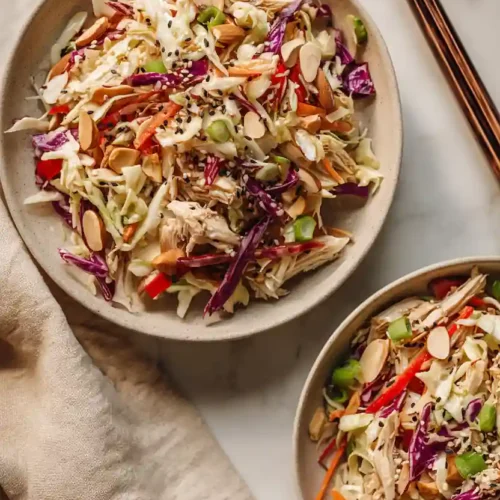
Healthy Chicken Coleslaw Salad with Ginger Dressing
Ingredients
For the salad::
- 3 chicken breasts (I like using Mary's Free-Range chicken for better flavor)
- 4 cups napa cabbage (finely shredded into 1/8-inch strips)
- 2.5 cups red cabbage
- 1 large carrot (julienned into thin 2-inch matchsticks)
- 1 bundle green onions
- 3 tbsp sesame seeds (toasted in a dry pan until fragrant)
- 1/3 cup slivered almonds
- 1/2 tsp sea salt
- 1/2 tsp black pepper
- 1/4 cup fresh cilantro, chopped
For the dressing::
- 5 tbsp coconut aminos (I always use Coconut Secret brand)
- 3 tbsp rice vinegar
- 3 tbsp sesame oil (toasted variety gives a deeper, nuttier aroma)
- 2 tbsp maple syrup
- 1.5 tbsp ginger (grated into a fine paste to distribute flavor)
- 5 garlic cloves
- 1 tbsp fresh lime juice
Instructions
- Start by preparing all your ingredients so cooking flows smoothly. Finely shred the napa cabbage and red cabbage into 1/8-inch strips, julienne the carrot into thin 2-inch matchsticks, slice the green onions (separating white and green parts), chop the cilantro, and mince the garlic cloves. While you're prepping, toast the sesame seeds and slivered almonds in a dry pan over medium heat for about 5 minutes, stirring frequently until fragrant and lightly golden. Transfer to a plate and set aside—this toasting step brings out their nutty flavors and adds crucial texture to the final dish.
- Bring a pot of salted water to a boil and add the chicken breasts. Simmer for 10-12 minutes until the internal temperature reaches 165°F and the chicken is cooked through (timing depends on thickness). Remove the chicken to a cutting board and let it cool for 2-3 minutes until it's easy to handle. Using two forks, shred the chicken into bite-sized pieces, discarding any bones or excess fat.
- In a jar or bowl, combine the coconut aminos, rice vinegar, toasted sesame oil, maple syrup, grated ginger, minced garlic, and fresh lime juice. Shake or whisk vigorously until the ingredients are well emulsified and the maple syrup fully dissolves. I always use toasted sesame oil rather than plain because it adds a deeper, nuttier complexity that really elevates the dish. Taste and adjust seasoning as needed—the dressing should be balanced between savory, slightly sweet, and tangy.
- In a large bowl, combine the shredded napa cabbage, red cabbage, julienned carrots, white parts of the green onions, and chopped cilantro. Pour the ginger dressing over the vegetables and toss thoroughly to coat everything evenly. Add the shredded chicken from Step 2, toasted sesame seeds and almonds from Step 1, and the green parts of the green onions. Toss everything together gently but thoroughly to distribute all components.
- Taste the assembled salad and season with sea salt and black pepper to your preference. I like to add the salt and pepper at the end rather than earlier because you can better judge how much seasoning is needed once all the components are combined. Serve immediately while the vegetables are still crisp and the salad has a nice textural contrast.