I grew up thinking carrot cake was completely off-limits once my daughter was diagnosed with celiac disease and my son developed his dairy sensitivity. Every birthday party felt like a minefield of foods they couldn’t eat, and carrot cake—with all that cream cheese frosting—seemed impossible to recreate.
Turns out, I was wrong. You don’t need regular flour or dairy to make a carrot cake that actually tastes good. The trick is using the right substitutes and not overthinking it. This gluten-free, dairy-free version uses sunflower oil for moisture, muscovado sugar for that deep, caramel-like sweetness, and dairy-free cream cheese that actually pipes and tastes like the real thing. No one at our last family gathering could tell the difference, and my kids finally got to enjoy what everyone else was eating.
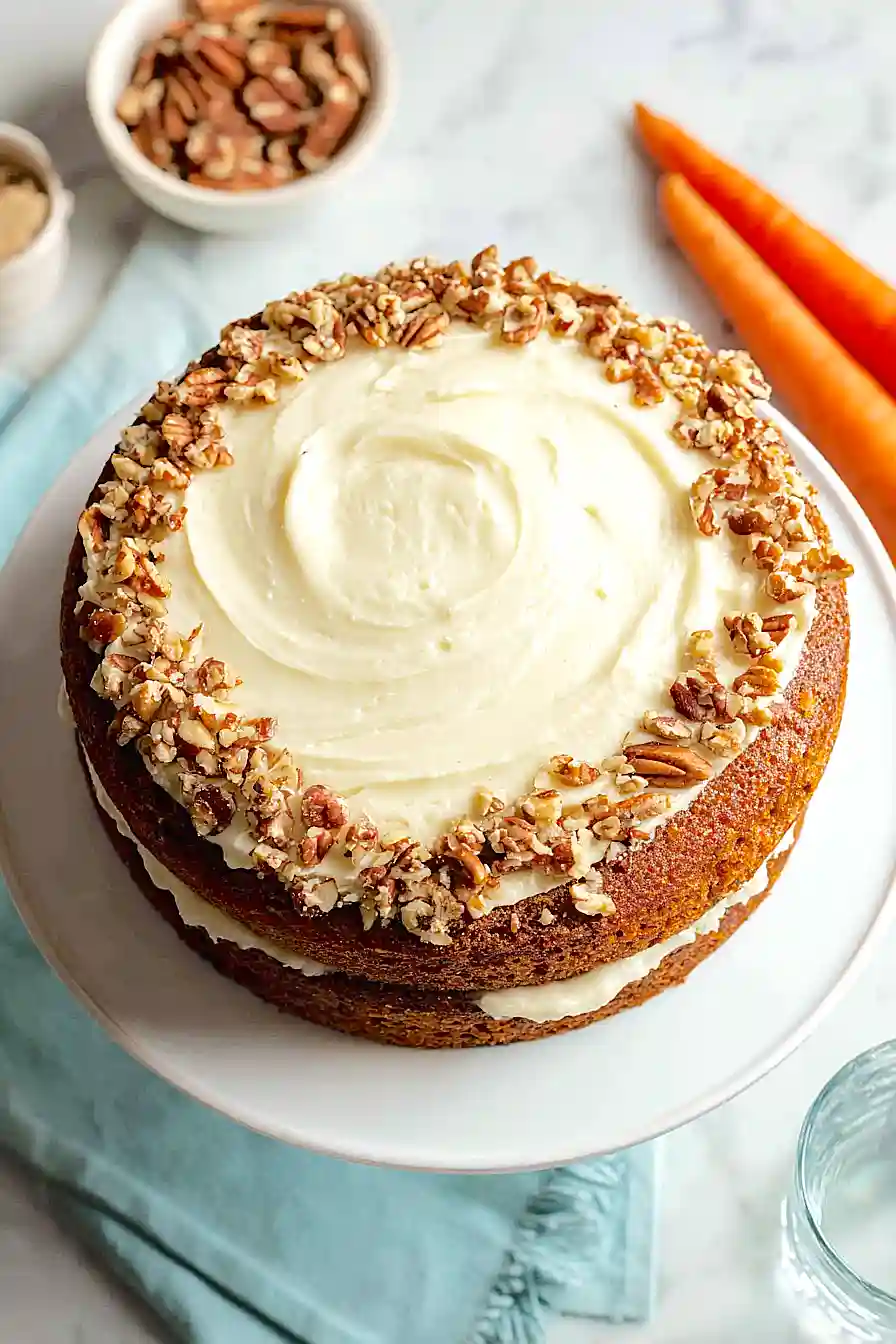
Why You’ll Love This Carrot Cake
- Allergy-friendly without compromise – This gluten-free and dairy-free carrot cake tastes just as moist and delicious as traditional versions, so everyone at the table can enjoy a slice.
- Warm spices throughout – The combination of cinnamon, ginger, and allspice gives this cake that classic cozy flavor we all love in carrot cake.
- Ready in about an hour – From mixing the batter to frosting the cooled cake, you can have this homemade dessert ready in just over an hour.
- Perfect for special occasions – Whether it’s a birthday, holiday gathering, or weekend treat, this cake looks and tastes impressive enough for any celebration.
What Kind of Carrots Should I Use?
Fresh carrots are definitely the way to go for this recipe – pre-shredded bagged carrots tend to be dry and won’t give you the same moist texture. Regular orange carrots work perfectly fine, though you can also use rainbow carrots if you want to mix things up a bit. Make sure to peel your carrots before grating them, and aim for a medium-fine grate so they distribute evenly throughout the cake and bake through properly. If your carrots seem particularly dry or woody, you might want to add an extra carrot or two to keep your cake nice and moist.
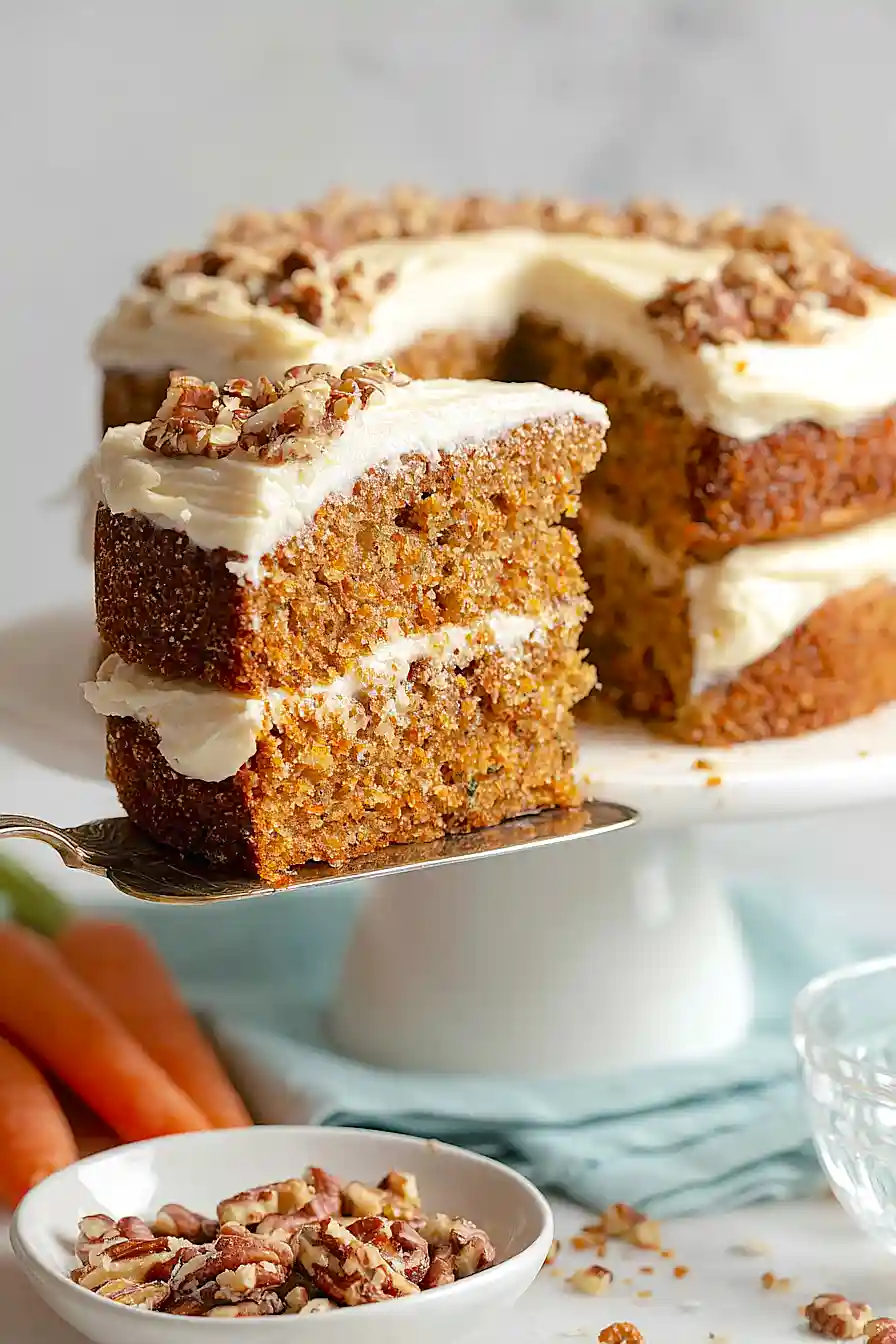
Options for Substitutions
This carrot cake recipe works well with a few simple swaps if you need them:
- Plain flour: Since this is labeled as gluten-free, make sure to use a gluten-free flour blend (not regular plain flour). Bob’s Red Mill 1-to-1 or King Arthur Measure for Measure work great here. Don’t skip the xanthan gum if your blend doesn’t include it.
- Cream cheese and dairy spread: For a truly dairy-free version, use dairy-free cream cheese (like Kite Hill or Violife) and dairy-free butter or margarine. The frosting will be slightly softer but still tastes good.
- Sunflower oil: You can swap this with vegetable oil, melted coconut oil, or light olive oil without any changes to the recipe.
- Muscovado sugar: Regular brown sugar works fine if you can’t find muscovado. You’ll lose a bit of the molasses depth, but the cake will still turn out moist and tasty.
- Walnuts: Pecans are a natural substitute here, or you can use chopped almonds. If you have a nut allergy, just leave them out completely – the cake will still be delicious.
- Spices: If you’re missing one of the spices, you can use 2-3 teaspoons of pumpkin pie spice or apple pie spice instead of the individual spices.
Watch Out for These Mistakes While Baking
The biggest mistake when making carrot cake is using large carrot chunks instead of finely grated carrots, which can create uneven texture and prevent the cake from cooking through properly – aim for the smallest shred setting on your grater for the best results.
Overmixing the batter after adding the flour is another common error that leads to a dense, tough cake, so fold in the dry ingredients just until combined and no streaks of flour remain.
Since this recipe calls for muscovado sugar, which has more moisture than regular sugar, be careful not to underbake the cake – test with a toothpick in the center, and if it comes out with wet batter (not just moist crumbs), give it another 5 minutes.
For the frosting, make sure your dairy-free cream cheese and spread are at room temperature before mixing, otherwise you’ll end up with lumps, and don’t skip the chilling time as it helps the frosting firm up enough to spread without sliding off the cake.
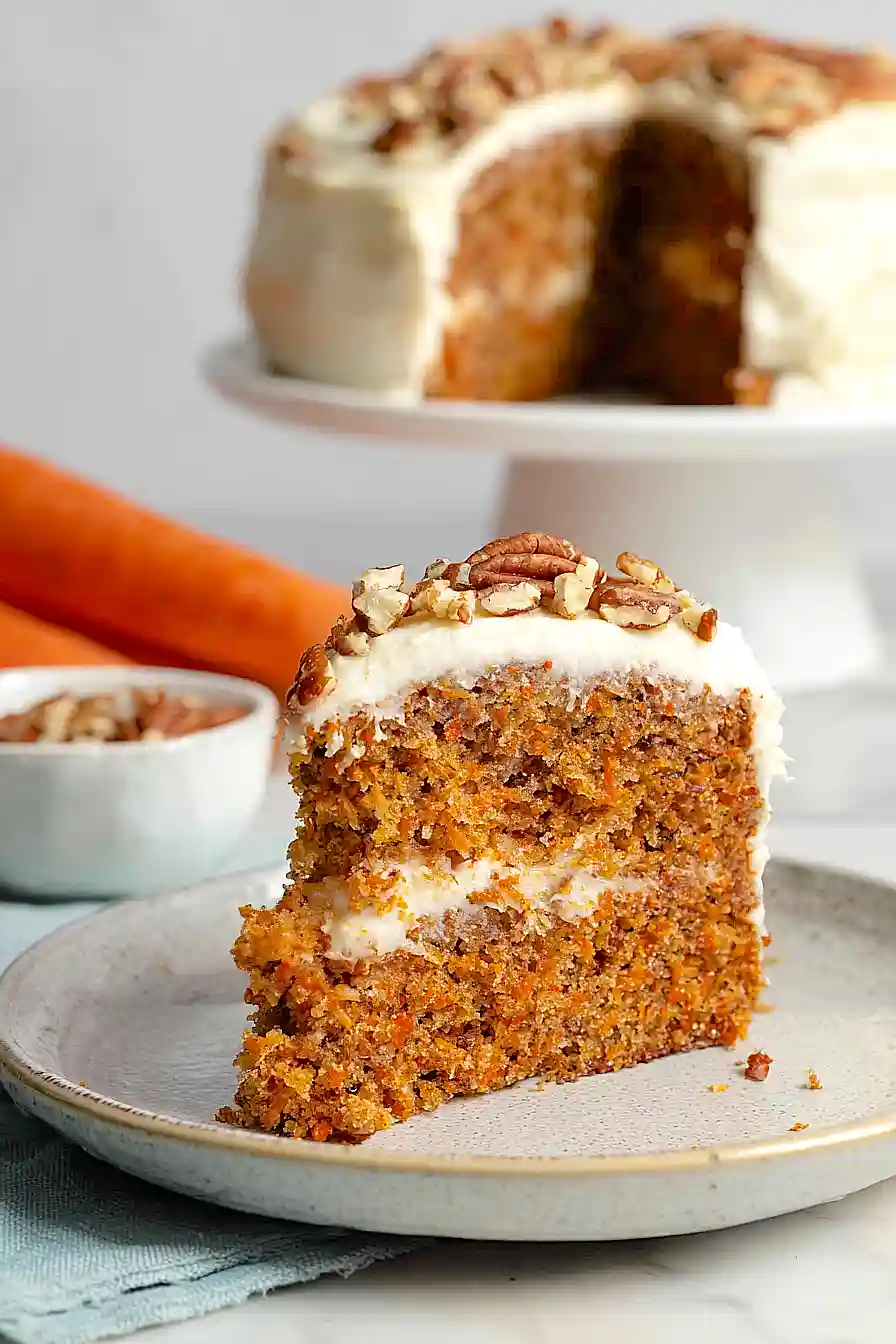
What to Serve With Carrot Cake?
Carrot cake is pretty rich and sweet on its own, so I like to keep things simple and serve it with a hot cup of coffee or tea – the bitterness balances out the sweetness perfectly. If you’re serving it for dessert after a meal, a scoop of vanilla ice cream on the side is always a crowd-pleaser, especially if the cake is still slightly warm. For a brunch setting, carrot cake pairs beautifully with fresh fruit like berries or sliced oranges, which add a refreshing contrast to the spiced cake. You could also serve it alongside some whipped coconut cream if you want to keep the dairy-free theme going.
Storage Instructions
Store: Keep your carrot cake in an airtight container in the fridge since it has cream cheese frosting. It’ll stay moist and delicious for up to 5 days. If you haven’t frosted it yet, you can leave unfrosted cake at room temperature for 2-3 days, which actually makes it easier to frost later.
Freeze: This cake freezes really well, especially if you wrap individual slices in plastic wrap and then pop them in a freezer bag. It’ll keep for up to 3 months. I usually freeze it unfrosted and add the cream cheese frosting after thawing for the best texture.
Serve: Let frozen slices thaw in the fridge overnight or at room temperature for about an hour. The cake tastes best when it’s not super cold, so I like to take it out of the fridge about 30 minutes before serving to let the flavors come through.
| Preparation Time | 30-40 minutes |
| Cooking Time | 30-35 minutes |
| Total Time | 60-75 minutes |
| Level of Difficulty | Medium |
| Servings | 8 slices |
Estimated Nutrition
Estimated nutrition for the whole recipe (without optional ingredients):
- Calories: 4450-4800
- Protein: 60-70 g
- Fat: 290-320 g
- Carbohydrates: 420-470 g
Ingredients
For the cake:
- 1 1/4 cups sunflower oil (I use La Tourangelle for a neutral taste)
- 4 eggs (room temperature, about 70°F)
- 1 1/4 cups muscovado sugar
- 2 1/2 cups carrots (finely grated, about 1/8-inch shreds)
- 2 cups plain flour (I always use King Arthur Measure for Measure for gluten-free cakes)
- 2 1/4 tsp baking powder
- 1 1/4 tsp allspice
- 1 1/4 tsp ginger
- 1 1/4 tsp cinnamon
- 1 cup walnuts (crushed into 1/4-inch pieces)
- 350 °F
For the frosting:
- 1 cup cream cheese (I prefer Kite Hill for the best dairy-free texture)
- 1/4 cup dairy spread
- 3/4 cup icing sugar (sifted to remove lumps)
- 1 tsp vanilla essence
- 1/4 cup walnuts
Step 1: Prepare Mise en Place and Preheat Oven
- 2 cups plain gluten-free flour
- 2 1/4 tsp baking powder
- 1 1/4 tsp allspice
- 1 1/4 tsp ginger
- 1 1/4 tsp cinnamon
- 2 1/2 cups carrots, finely grated
- 1 cup walnuts, crushed into 1/4-inch pieces
Preheat your oven to 350°F and position a rack in the center.
Grease two 8-inch round cake tins (or similar size) and line the bottoms with parchment paper for easy removal.
Finely grate your carrots into approximately 1/8-inch shreds and set aside.
Crush the walnuts for the batter into roughly 1/4-inch pieces.
Measure out your dry ingredients (flour, baking powder, allspice, ginger, and cinnamon) into a small bowl and whisk together to distribute the leavening and spices evenly.
Step 2: Create the Cake Batter Base
- 1 1/4 cups sunflower oil
- 4 eggs, room temperature
- 1 1/4 cups muscovado sugar
In a large mixing bowl, combine the room-temperature eggs, sunflower oil, and muscovado sugar.
Using an electric mixer on medium-high speed, beat for 2-3 minutes until the mixture becomes thick, pale, and noticeably increased in volume—this aeration is crucial for a light, tender crumb.
I like to use room-temperature eggs here because they incorporate more air and create a better texture in gluten-free cakes, which can otherwise feel dense.
Step 3: Fold in Dry Ingredients and Mix-ins
- dry ingredient mixture from Step 1
- grated carrots from Step 1
- crushed walnuts from Step 1
Add the dry ingredient mixture from Step 1 to the batter and fold gently with a spatula until just combined—do not overmix, as this can develop gluten-like structure and toughen the cake.
Fold in the grated carrots until evenly distributed, then gently fold in the crushed walnuts.
The batter should come together with no visible streaks of flour.
Step 4: Bake the Cake Layers
- cake batter from Step 3
Divide the batter evenly between the two prepared tins, smoothing the tops with a spatula.
Bake for 30-35 minutes, or until a toothpick inserted into the center comes out with just a few moist crumbs (not completely dry).
The cakes are done when the edges are pulling away slightly from the sides of the tin.
Remove from the oven and let cool in the tins for 20 minutes before turning out onto a wire rack to cool completely—this resting time allows the structure to set properly before unmolding.
Step 5: Prepare the Dairy-Free Frosting
- 1 cup dairy-free cream cheese
- 1/4 cup dairy spread
- 3/4 cup icing sugar, sifted
- 1 tsp vanilla essence
While the cakes cool, make the frosting by combining the dairy-free cream cheese and dairy spread in a bowl.
Using an electric mixer on medium speed, beat until smooth and creamy, about 1 minute.
Add the sifted icing sugar gradually, mixing on low speed to avoid creating clouds of sugar dust.
Add the vanilla essence and mix until fully incorporated and the frosting is smooth and spreadable.
I prefer Kite Hill cream cheese here because it whips to a better texture without the graininess that some dairy-free alternatives can have.
Refrigerate the frosting for 30-60 minutes until it reaches a firm, spreadable consistency.
Step 6: Assemble and Frost the Cake
- baked cake layers from Step 4
- frosting from Step 5
- 1/4 cup walnuts, for garnish
Place the first cooled cake layer on a serving plate or cake board.
Spread approximately half of the frosting from Step 5 evenly over the top using an offset spatula or the back of a spoon.
Place the second cake layer on top, pressing gently to secure.
Spread the remaining frosting over the top and sides of the cake, creating an even crumb coat.
Sprinkle the toasted walnuts over the top for garnish.
Let the cake sit at room temperature for 15-20 minutes before serving so the frosting softens slightly.
Tasty Gluten Free Dairy Free Carrot Cake
Ingredients
For the cake::
- 1 1/4 cups sunflower oil (I use La Tourangelle for a neutral taste)
- 4 eggs (room temperature, about 70°F)
- 1 1/4 cups muscovado sugar
- 2 1/2 cups carrots (finely grated, about 1/8-inch shreds)
- 2 cups plain flour (I always use King Arthur Measure for Measure for gluten-free cakes)
- 2 1/4 tsp baking powder
- 1 1/4 tsp allspice
- 1 1/4 tsp ginger
- 1 1/4 tsp cinnamon
- 1 cup walnuts (crushed into 1/4-inch pieces)
- 350 °F
For the frosting::
- 1 cup cream cheese (I prefer Kite Hill for the best dairy-free texture)
- 1/4 cup dairy spread
- 3/4 cup icing sugar (sifted to remove lumps)
- 1 tsp vanilla essence
- 1/4 cup walnuts
Instructions
- Preheat your oven to 350°F and position a rack in the center. Grease two 8-inch round cake tins (or similar size) and line the bottoms with parchment paper for easy removal. Finely grate your carrots into approximately 1/8-inch shreds and set aside. Crush the walnuts for the batter into roughly 1/4-inch pieces. Measure out your dry ingredients (flour, baking powder, allspice, ginger, and cinnamon) into a small bowl and whisk together to distribute the leavening and spices evenly.
- In a large mixing bowl, combine the room-temperature eggs, sunflower oil, and muscovado sugar. Using an electric mixer on medium-high speed, beat for 2-3 minutes until the mixture becomes thick, pale, and noticeably increased in volume—this aeration is crucial for a light, tender crumb. I like to use room-temperature eggs here because they incorporate more air and create a better texture in gluten-free cakes, which can otherwise feel dense.
- Add the dry ingredient mixture from Step 1 to the batter and fold gently with a spatula until just combined—do not overmix, as this can develop gluten-like structure and toughen the cake. Fold in the grated carrots until evenly distributed, then gently fold in the crushed walnuts. The batter should come together with no visible streaks of flour.
- Divide the batter evenly between the two prepared tins, smoothing the tops with a spatula. Bake for 30-35 minutes, or until a toothpick inserted into the center comes out with just a few moist crumbs (not completely dry). The cakes are done when the edges are pulling away slightly from the sides of the tin. Remove from the oven and let cool in the tins for 20 minutes before turning out onto a wire rack to cool completely—this resting time allows the structure to set properly before unmolding.
- While the cakes cool, make the frosting by combining the dairy-free cream cheese and dairy spread in a bowl. Using an electric mixer on medium speed, beat until smooth and creamy, about 1 minute. Add the sifted icing sugar gradually, mixing on low speed to avoid creating clouds of sugar dust. Add the vanilla essence and mix until fully incorporated and the frosting is smooth and spreadable. I prefer Kite Hill cream cheese here because it whips to a better texture without the graininess that some dairy-free alternatives can have. Refrigerate the frosting for 30-60 minutes until it reaches a firm, spreadable consistency.
- Place the first cooled cake layer on a serving plate or cake board. Spread approximately half of the frosting from Step 5 evenly over the top using an offset spatula or the back of a spoon. Place the second cake layer on top, pressing gently to secure. Spread the remaining frosting over the top and sides of the cake, creating an even crumb coat. Sprinkle the toasted walnuts over the top for garnish. Let the cake sit at room temperature for 15-20 minutes before serving so the frosting softens slightly.