I’ll be honest – rhubarb used to intimidate me. It looks like celery, tastes nothing like celery, and for the longest time I had no idea what to do with it. Then one spring, my neighbor dropped off a bundle from her garden, and I figured it was time to get over my rhubarb fear.
That’s when I discovered rhubarb nut bread. It’s easier than pie (literally), tastes like a coffee cake, and uses up a decent amount of rhubarb in one go. The tartness from the rhubarb plays really well with the brown sugar and crunchy pecans. Plus, there’s a cinnamon-sugar topping that makes the whole thing feel a little fancy without any extra effort.
Now I actually look forward to rhubarb season. This bread makes a great breakfast with coffee or a simple dessert after dinner. And if you’re looking to use up that rhubarb sitting in your fridge, this is your answer.
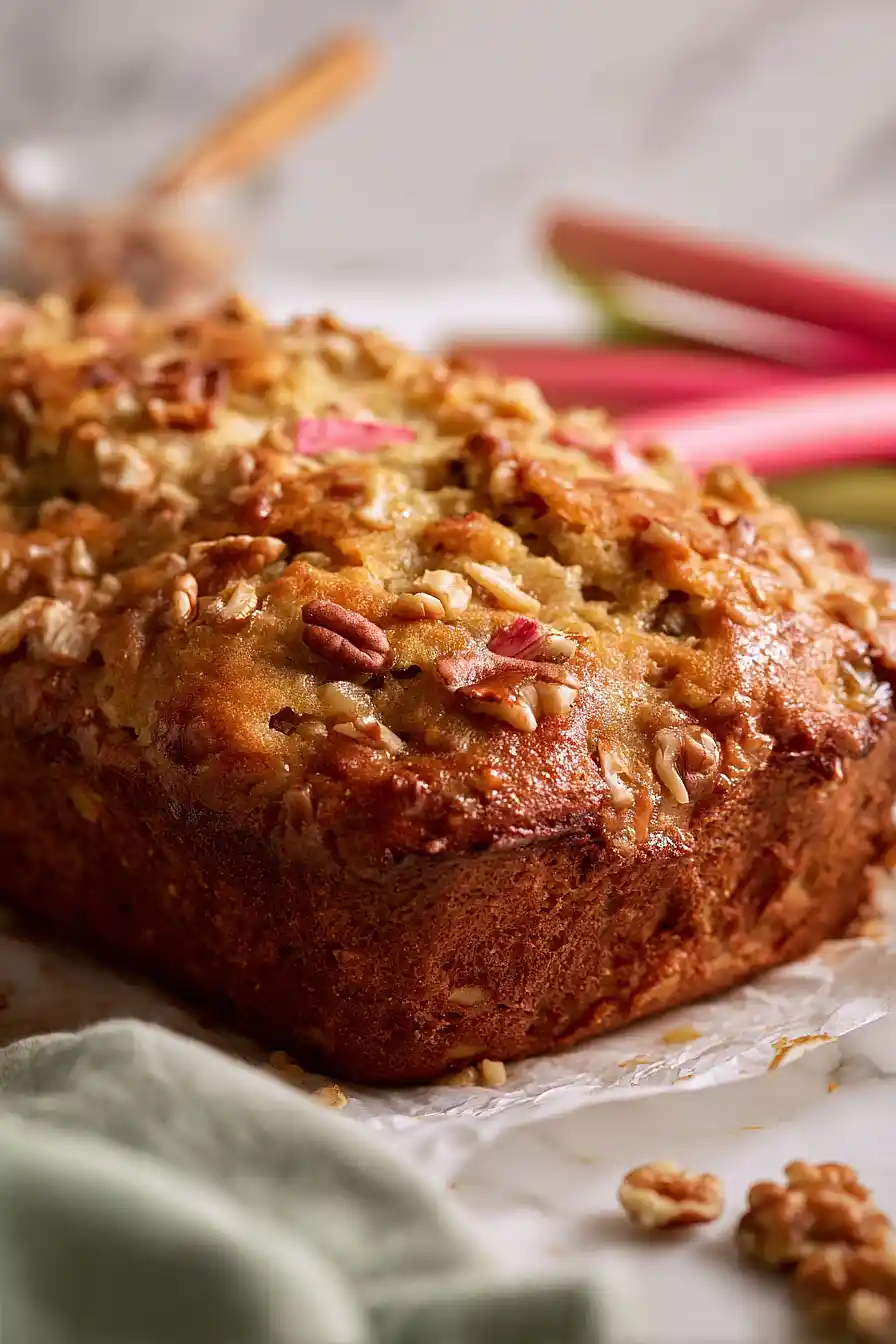
Why You’ll Love This Rhubarb Nut Bread
- Perfect use for fresh rhubarb – If you’ve got rhubarb growing in your garden or found some at the farmer’s market, this bread is a delicious way to use it up beyond the usual pies.
- Simple mixing method – No fancy equipment needed here—just mix your wet and dry ingredients together, fold in the rhubarb and pecans, and you’re ready to bake.
- Sweet and tangy flavor – The brown sugar balances out the tart rhubarb perfectly, creating a moist, flavorful bread that’s great for breakfast or an afternoon snack with coffee.
- Makes your kitchen smell amazing – There’s nothing quite like the aroma of freshly baked quick bread filling your home, and this one delivers that cozy bakery smell.
What Kind of Rhubarb Should I Use?
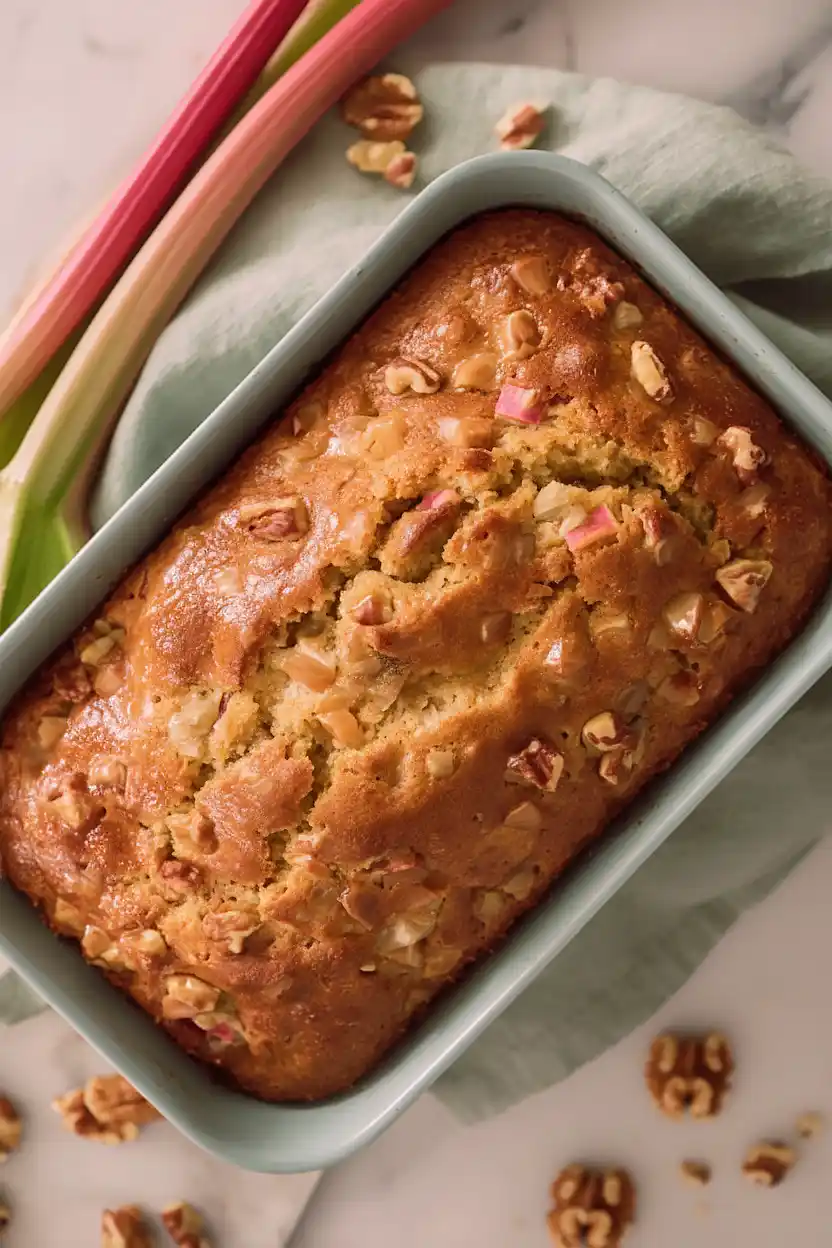
Fresh rhubarb is always your best bet for this bread, and you’ll want to look for stalks that are firm and crisp with a bright color. Both red and green rhubarb will work just fine – the red variety might look prettier, but the green is just as tasty and sometimes even a bit sweeter. If fresh rhubarb isn’t in season, frozen rhubarb is a solid backup option, just make sure to thaw it completely and drain off any excess liquid before adding it to your batter. When prepping your rhubarb, chop it into small pieces about half an inch in size so it distributes evenly throughout the bread and bakes up nice and tender.
Options for Substitutions
This recipe is pretty forgiving when it comes to swaps, so here are some options if you need them:
- Buttermilk: Don’t have buttermilk? Make your own by adding 1 tablespoon of lemon juice or white vinegar to regular milk and letting it sit for 5 minutes before using.
- Brown sugar: You can use white sugar instead, though you’ll lose some of that molasses-y depth. Or mix 1 1/2 cups white sugar with 1 tablespoon molasses if you have it.
- Vegetable oil: Canola oil, melted coconut oil, or even melted butter work just fine here. The texture will be slightly different with butter, but still tasty.
- Rhubarb: Fresh rhubarb is best for this recipe, but if you’re using frozen, thaw it first and drain off any excess liquid to avoid a soggy loaf.
- Pecans: Walnuts are an easy swap, or you can use chopped almonds. Not a nut fan? Just leave them out or replace with the same amount of extra rhubarb.
- All-purpose flour: You can substitute up to half the flour with whole wheat flour for a heartier loaf, but I wouldn’t recommend going beyond that or the bread might turn out dense.
Watch Out for These Mistakes While Baking
The biggest mistake when baking with rhubarb is forgetting that it releases a lot of moisture during baking, which can make your bread dense and gummy – to avoid this, pat your chopped rhubarb dry with paper towels and toss it with a tablespoon of flour before folding it into the batter.
Another common error is overmixing the batter once you add the flour, which develops too much gluten and creates a tough, chewy texture instead of a tender crumb – stir just until the flour disappears and you still see a few streaks.
Don’t skip greasing your pans well, especially in the corners, because the sugar topping can cause the bread to stick like glue, and make sure to let the loaves cool in the pans for about 10 minutes before turning them out.
Finally, resist the urge to slice into the bread while it’s still warm, as rhubarb bread needs time to set up properly or it’ll crumble apart when you cut it.
What to Serve With Rhubarb Nut Bread?
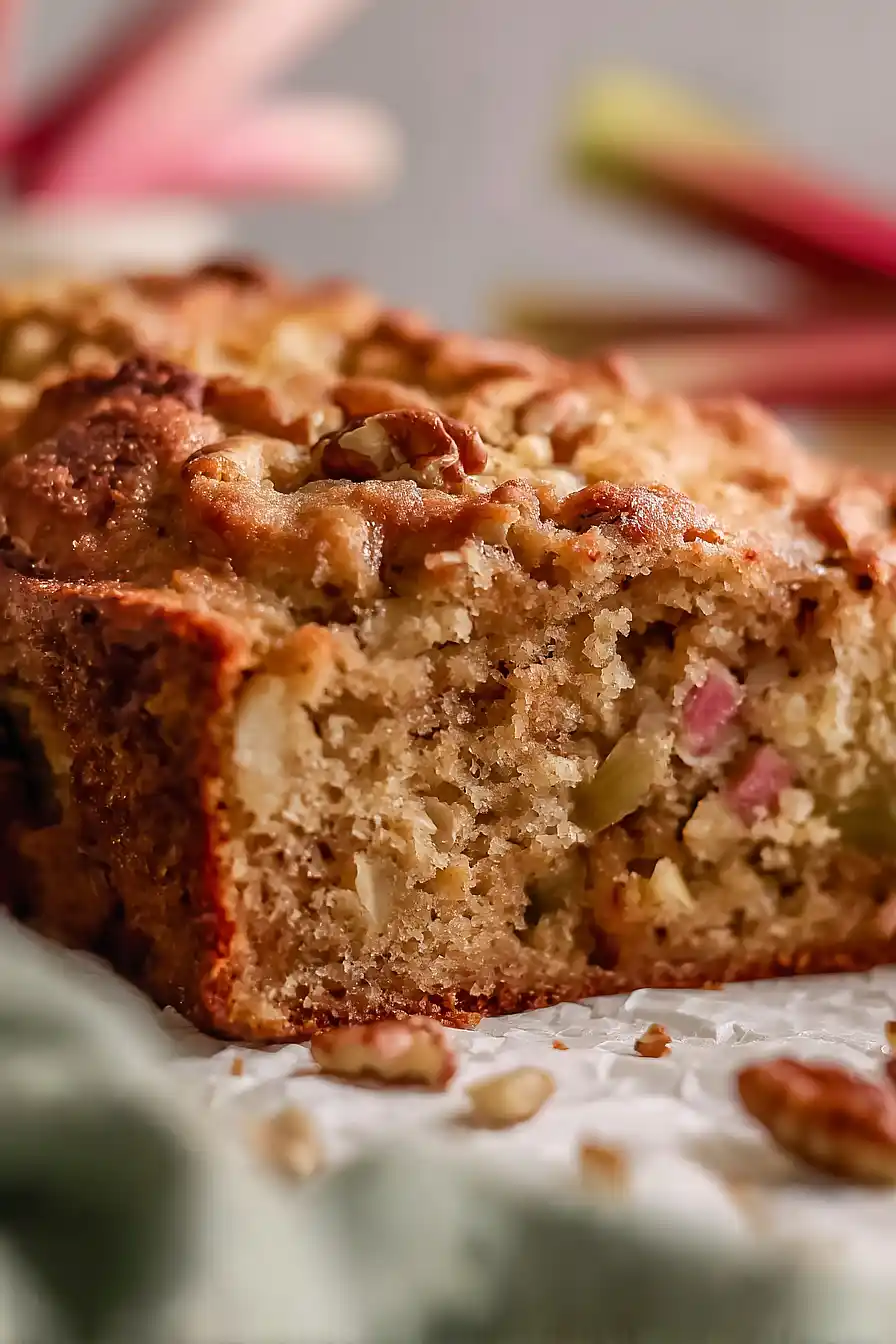
This bread is perfect for breakfast or an afternoon snack with a hot cup of coffee or tea. I love slicing it thick and spreading softened butter or cream cheese on top, which balances out the tartness of the rhubarb nicely. It also pairs well with fresh strawberries or a dollop of whipped cream if you want to serve it as a dessert. For a complete brunch spread, set it out alongside scrambled eggs, fresh fruit, and yogurt so everyone can help themselves to a slice or two.
Storage Instructions
Store: This rhubarb nut bread stays moist and delicious for several days. Wrap it tightly in plastic wrap or aluminum foil and keep it at room temperature for up to 3 days. If you want it to last longer, store it in the fridge for up to a week.
Freeze: Rhubarb bread freezes really well, which makes it great for baking ahead. Wrap the cooled loaf tightly in plastic wrap, then again in foil, and freeze for up to 3 months. You can also slice it first and freeze individual pieces for easy grab-and-go snacks.
Thaw: When you’re ready to enjoy your frozen bread, just let it sit at room temperature for a few hours until it’s completely thawed. If you froze individual slices, you can pop them in the toaster straight from the freezer for a quick warm treat.
| Preparation Time | 15-20 minutes |
| Cooking Time | 45-60 minutes |
| Total Time | 60-80 minutes |
| Level of Difficulty | Easy |
| Servings | 16 slices |
Estimated Nutrition
Estimated nutrition for the whole recipe (without optional ingredients):
- Calories: 3050-3250
- Protein: 35-40 g
- Fat: 110-120 g
- Carbohydrates: 470-490 g
Ingredients
For the batter:
- 1 3/4 cups brown sugar (I prefer C&H Light Brown Sugar for this)
- 3/4 cup vegetable oil
- 1 egg (room temperature, about 70°F)
- 1 cup buttermilk
- 1 tsp baking soda
- 1 1/4 tsp salt
- 1 tsp vanilla
- 2 1/2 cups flour (I always use King Arthur all-purpose flour)
- 1 1/2 cups rhubarb (chopped into 1/2-inch pieces)
- 3/4 cup pecans (chopped into 1/4-inch pieces)
For the topping:
- 1/2 cup sugar
- 2 tbsp butter (melted and cooled to room temperature)
- 1/4 tsp ground cinnamon
Step 1: Prepare Your Equipment and Mise en Place
- 2 loaf pans
Preheat your oven to 325°F and grease two loaf pans (approximately 8×4 inches each) with butter or cooking spray, paying special attention to the corners and bottom seams.
While the oven heats, chop your rhubarb into 1/2-inch pieces and your pecans into 1/4-inch pieces, keeping them in separate bowls.
This prep work ensures you’re ready to move quickly through the mixing stages without interruption.
Step 2: Create the Wet Batter Base
- 1 3/4 cups brown sugar
- 3/4 cup vegetable oil
- 1 egg
- 1 cup buttermilk
- 1 tsp baking soda
- 1 1/4 tsp salt
- 1 tsp vanilla
In a large mixing bowl, whisk together the brown sugar, vegetable oil, and room temperature egg until the mixture is smooth and well combined—this should take about 1-2 minutes of whisking.
In a separate bowl, combine the buttermilk, baking soda, salt, and vanilla, stirring gently until the baking soda is fully dissolved and the mixture is uniform.
The room temperature egg will blend more smoothly with the oil, creating a better emulsion than a cold egg would.
Step 3: Build the Batter with Flour
- wet ingredient mixture from Step 2
- 2 1/2 cups flour
Pour the buttermilk mixture from Step 2 into the sugar mixture from Step 2, stirring gently to combine.
Add the flour and mix with a spatula or wooden spoon until just combined—the batter should be slightly lumpy at this point.
Overmixing at this stage will develop gluten and make the bread tough, so stop as soon you don’t see dry flour streaks.
Step 4: Fold in the Rhubarb and Pecans
- batter from Step 3
- 1 1/2 cups rhubarb
- 3/4 cup pecans
Gently fold the chopped rhubarb and pecans into the batter from Step 3 using a spatula, stirring just until they’re evenly distributed throughout.
I like to reserve a few small pecan pieces to sprinkle on top later—they add a nice visual appeal and extra crunch to the finished loaves.
Be gentle during this folding to avoid crushing the rhubarb pieces, which will help them stay distinct in texture.
Step 5: Fill Pans and Prepare the Topping
- batter from Step 4
- prepared pans from Step 1
- 1/2 cup sugar
- 2 tbsp butter
- 1/4 tsp ground cinnamon
Divide the batter evenly between the two prepared pans from Step 1, smoothing the tops gently with a spatula.
In a small bowl, stir together the sugar, melted butter that has cooled to room temperature, and cinnamon until you have a crumbly mixture.
Sprinkle this topping evenly over both loaves, dividing it equally between them.
Step 6: Bake Until Golden and Cool
- filled pans from Step 5
Place both pans in the preheated 325°F oven and bake for 45 minutes, until a toothpick inserted in the center comes out with just a few moist crumbs (not wet batter).
The loaves should be golden brown on top.
Remove from the oven and let the loaves cool in their pans for 10 minutes before running a thin knife around the edges and turning them out onto a wire rack to cool completely.
Sweet Rhubarb Nut Bread
Ingredients
For the batter
- 1 3/4 cups brown sugar (I prefer C&H Light Brown Sugar for this)
- 3/4 cup vegetable oil
- 1 egg (room temperature, about 70°F)
- 1 cup buttermilk
- 1 tsp baking soda
- 1 1/4 tsp salt
- 1 tsp vanilla
- 2 1/2 cups flour (I always use King Arthur all-purpose flour)
- 1 1/2 cups rhubarb (chopped into 1/2-inch pieces)
- 3/4 cup pecans (chopped into 1/4-inch pieces)
For the topping
- 1/2 cup sugar
- 2 tbsp butter (melted and cooled to room temperature)
- 1/4 tsp ground cinnamon
Instructions
- Preheat your oven to 325°F and grease two loaf pans (approximately 8x4 inches each) with butter or cooking spray, paying special attention to the corners and bottom seams. While the oven heats, chop your rhubarb into 1/2-inch pieces and your pecans into 1/4-inch pieces, keeping them in separate bowls. This prep work ensures you're ready to move quickly through the mixing stages without interruption.
- In a large mixing bowl, whisk together the brown sugar, vegetable oil, and room temperature egg until the mixture is smooth and well combined—this should take about 1-2 minutes of whisking. In a separate bowl, combine the buttermilk, baking soda, salt, and vanilla, stirring gently until the baking soda is fully dissolved and the mixture is uniform. The room temperature egg will blend more smoothly with the oil, creating a better emulsion than a cold egg would.
- Pour the buttermilk mixture from Step 2 into the sugar mixture from Step 2, stirring gently to combine. Add the flour and mix with a spatula or wooden spoon until just combined—the batter should be slightly lumpy at this point. Overmixing at this stage will develop gluten and make the bread tough, so stop as soon you don't see dry flour streaks.
- Gently fold the chopped rhubarb and pecans into the batter from Step 3 using a spatula, stirring just until they're evenly distributed throughout. I like to reserve a few small pecan pieces to sprinkle on top later—they add a nice visual appeal and extra crunch to the finished loaves. Be gentle during this folding to avoid crushing the rhubarb pieces, which will help them stay distinct in texture.
- Divide the batter evenly between the two prepared pans from Step 1, smoothing the tops gently with a spatula. In a small bowl, stir together the sugar, melted butter that has cooled to room temperature, and cinnamon until you have a crumbly mixture. Sprinkle this topping evenly over both loaves, dividing it equally between them.
- Place both pans in the preheated 325°F oven and bake for 45 minutes, until a toothpick inserted in the center comes out with just a few moist crumbs (not wet batter). The loaves should be golden brown on top. Remove from the oven and let the loaves cool in their pans for 10 minutes before running a thin knife around the edges and turning them out onto a wire rack to cool completely.