Here is my favorite vegan pasta puttanesca recipe, with briny olives and capers, a rich tomato sauce, and shredded nori that gives you that salty, ocean-y flavor without the anchovies.
This pasta is my go-to weeknight dinner when I’m craving something bold and satisfying. It comes together in about 30 minutes, and I always make extra because it tastes even better the next day. Plus, you probably have most of these ingredients in your pantry already!
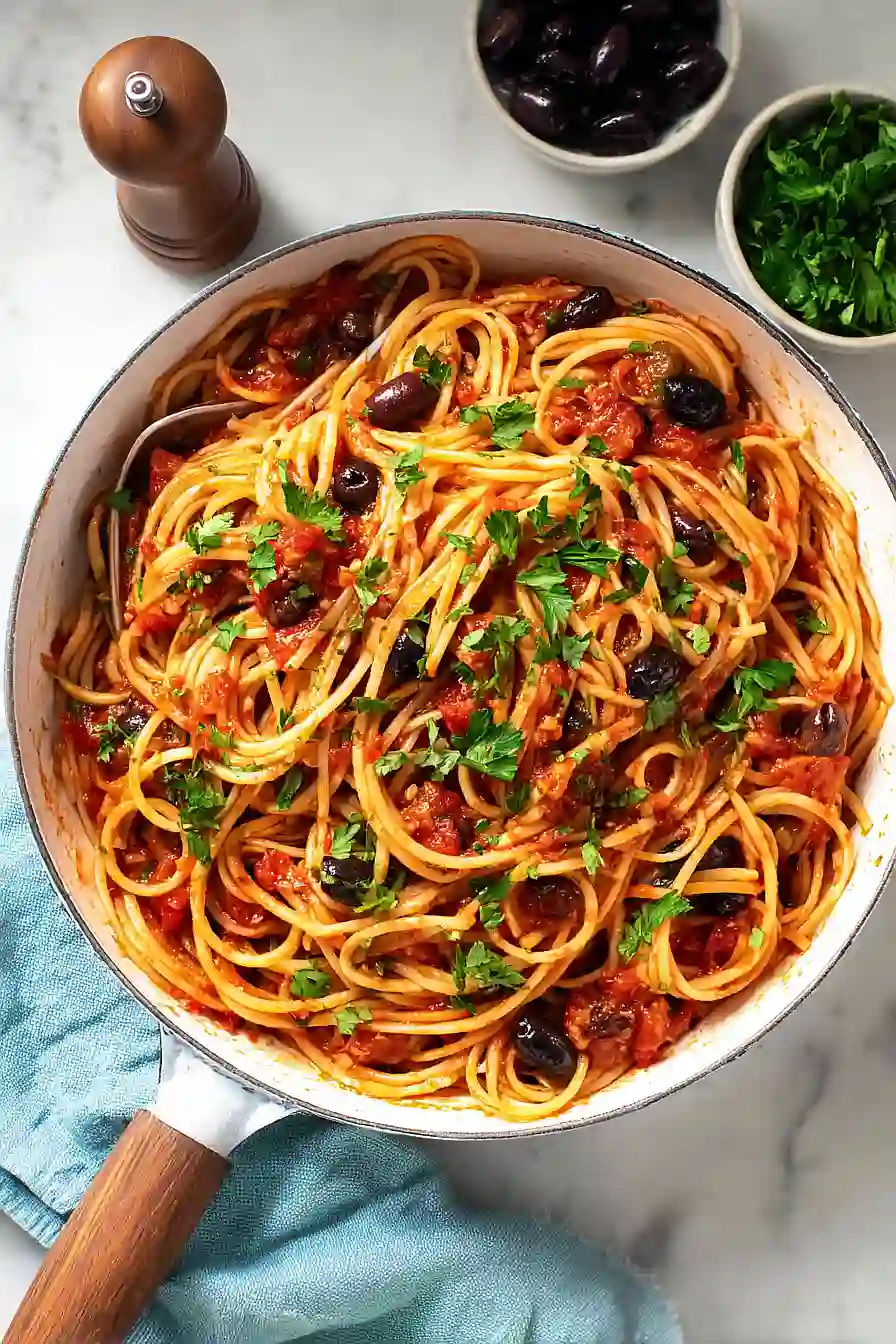
Why You’ll Love This Vegan Pasta Puttanesca
- Ready in 30-45 minutes – This recipe comes together quickly, making it perfect for busy weeknights when you need dinner on the table fast.
- Plant-based and satisfying – It’s completely vegan but packed with bold, savory flavors from olives, capers, and nori that’ll make you forget there’s no anchovies.
- Pantry-friendly ingredients – Most of these items are shelf-stable staples you probably already have in your kitchen, so you can whip this up without a special grocery run.
- Bold Mediterranean flavors – The briny olives and capers combined with garlic and tomatoes create a punchy, restaurant-quality sauce that tastes way more impressive than the effort required.
What Kind of Tomatoes Should I Use?
For puttanesca, you’ll want to use canned whole or crushed tomatoes rather than fresh ones. Canned tomatoes are picked and processed at peak ripeness, which means they’re actually more flavorful and consistent than most fresh tomatoes you’ll find at the store, especially if they’re out of season. San Marzano tomatoes are a popular choice if you want to splurge a bit, but any good quality canned tomatoes will work great. If you’re using whole canned tomatoes, just crush them with your hands or a wooden spoon as they cook down – this gives you a nice chunky texture that clings well to the pasta.
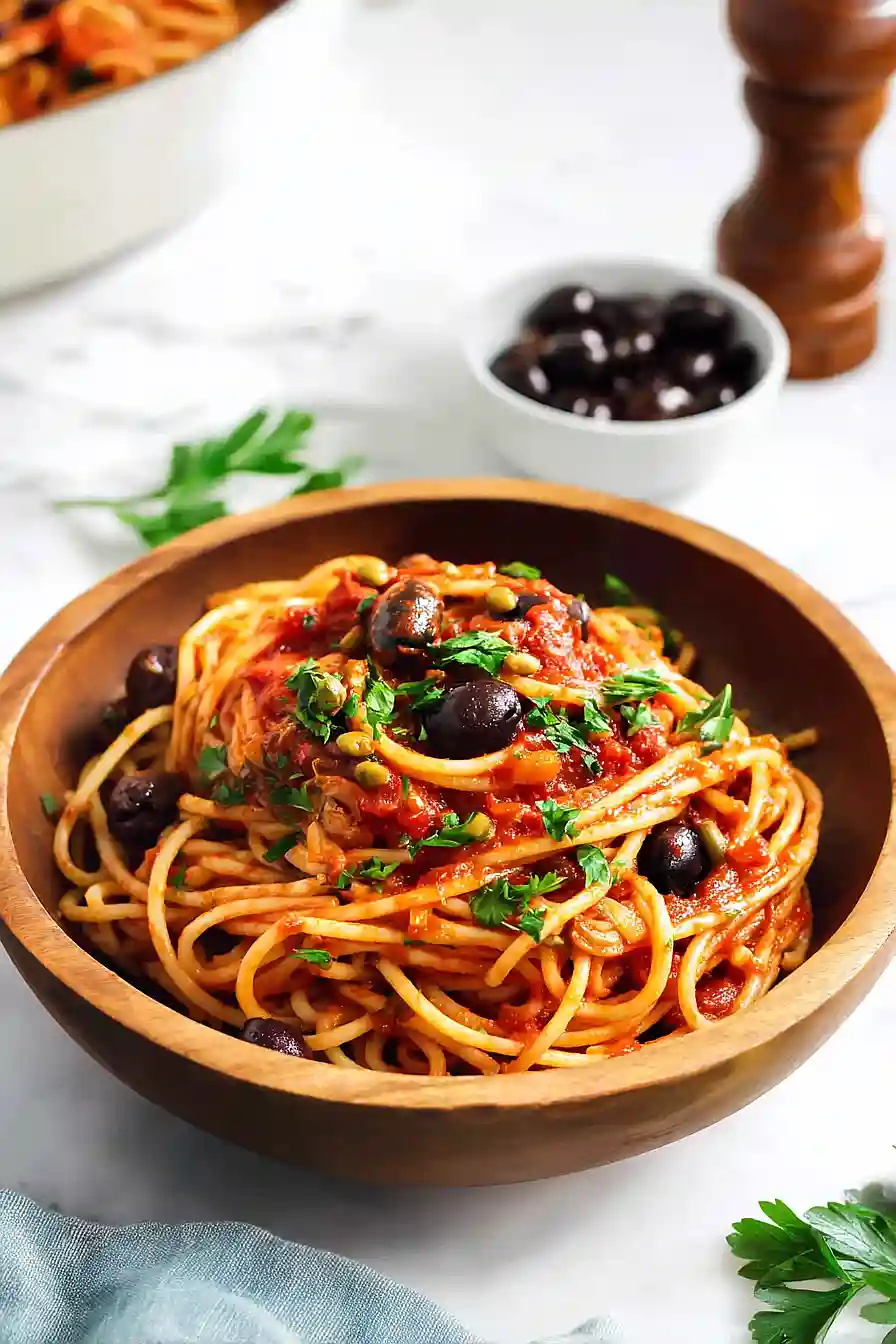
Options for Substitutions
This classic pasta dish is pretty forgiving when it comes to swaps:
- Spaghetti: Any long pasta works great here – try linguine, bucatini, or fettuccine. You can also use whole wheat or gluten-free pasta if that’s your preference.
- Nori: If you don’t have nori sheets, you can skip them or use a pinch of dulse flakes instead. The nori adds a briny, ocean-like flavor, but the dish will still taste good without it.
- Tamari: Regular soy sauce works just fine as a substitute. If you’re avoiding soy altogether, try coconut aminos, though you might want to add a bit more salt to taste.
- Kalamata olives: Any brined black olives will do the trick – try Niçoise or even regular canned black olives. Just keep in mind that Kalamatas have a stronger, more distinct flavor.
- Capers: Capers are pretty important for that signature puttanesca tang, but if you’re really in a bind, you can add a splash of caper brine or extra olives plus a squeeze of lemon juice.
- Fresh parsley: Dried parsley works in a pinch (use about 2 tablespoons), or swap in fresh basil for a different but equally tasty flavor profile.
Watch Out for These Mistakes While Cooking
The biggest mistake you can make with pasta puttanesca is overcooking your spaghetti – aim for al dente (firm to the bite) since it will continue cooking slightly when you toss it with the hot sauce.
Another common error is burning the garlic, which happens fast and turns bitter, so keep your heat at medium and watch it closely until it’s just golden, not brown.
Don’t skip draining your olives and capers well, as excess brine can make your sauce too salty and watery instead of thick and flavorful.
For the best results, save about a cup of pasta water before draining – adding a splash to your sauce helps it cling to the noodles better and brings everything together nicely.
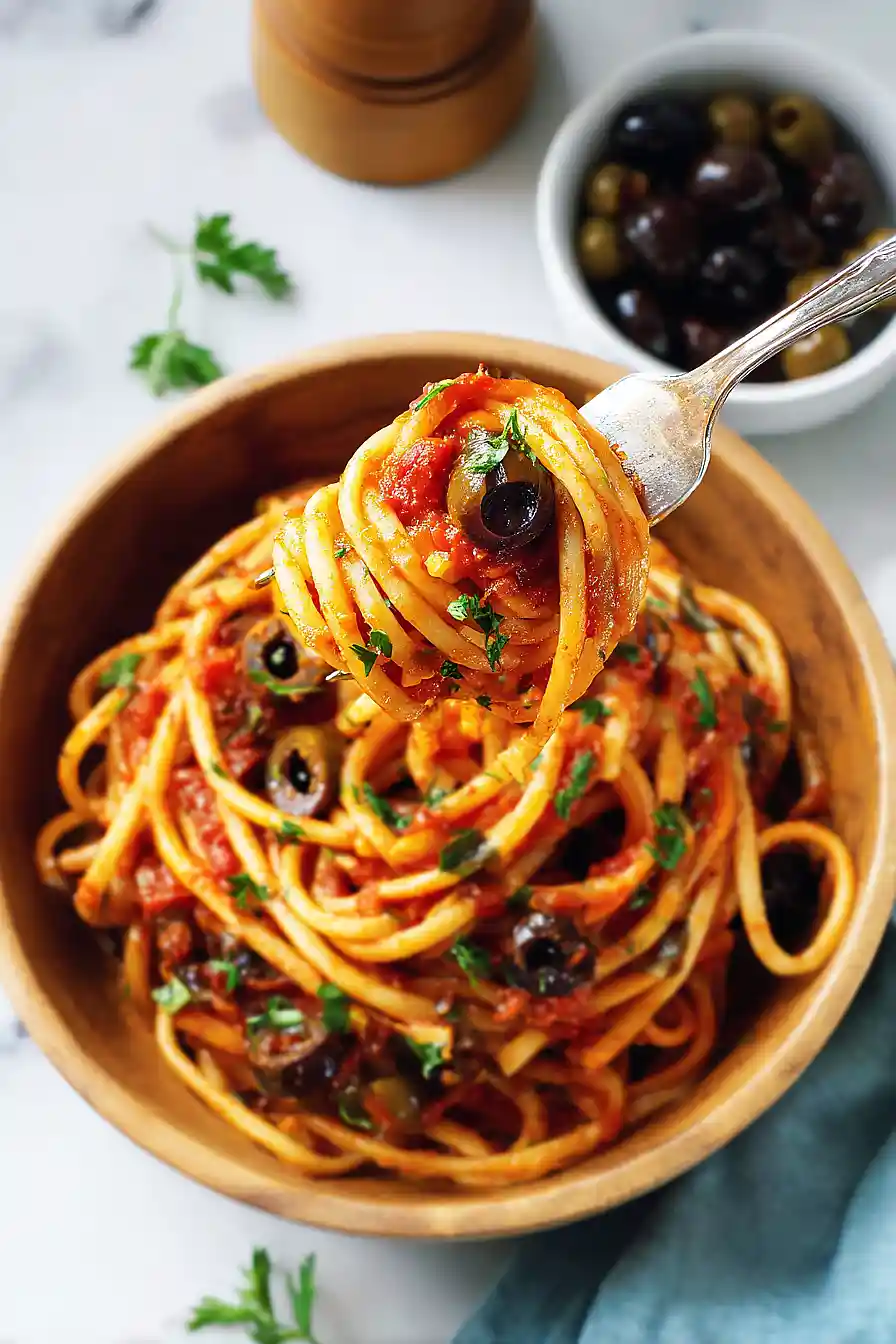
What to Serve With Pasta Puttanesca?
Since pasta puttanesca is already packed with bold, briny flavors from the olives and capers, I like to keep the sides simple and let the pasta shine. A crisp green salad with a light lemon vinaigrette is perfect for balancing out the richness of the dish, and some crusty bread on the side is great for mopping up that delicious sauce. If you want to add more substance to the meal, roasted vegetables like zucchini, eggplant, or bell peppers work really well alongside the pasta. For a lighter option, steamed or sautéed greens like spinach or broccolini make a nice contrast to the salty, tangy sauce.
Storage Instructions
Store: Keep your leftover puttanesca in an airtight container in the fridge for up to 4 days. I like to store the pasta and sauce together since the flavors get even better as they sit. Just know that the pasta will absorb some of the sauce, so it might be a bit less saucy when you reheat it.
Freeze: This pasta freezes pretty well for up to 2 months in a freezer-safe container. The olives and capers hold up nicely, though the pasta texture might be slightly softer after thawing. I usually freeze it in individual portions so I can grab just what I need for a quick meal.
Reheat: Warm it up in a skillet over medium heat with a splash of water or olive oil to loosen the sauce. You can also microwave it, but add a tablespoon or two of water and stir halfway through to keep it from drying out.
| Preparation Time | 10-15 minutes |
| Cooking Time | 20-30 minutes |
| Total Time | 30-45 minutes |
| Level of Difficulty | Easy |
| Servings | 6 servings |
Estimated Nutrition
Estimated nutrition for the whole recipe (without optional ingredients):
- Calories: 1650-1850
- Protein: 45-55 g
- Fat: 45-55 g
- Carbohydrates: 295-320 g
Ingredients
For the pasta:
- 14 oz spaghetti (I always use Barilla for the perfect al dente texture)
For the sauce:
- 2 tbsp olive oil
- 4 garlic cloves (freshly minced for best flavor)
- 1.5 tsp red pepper flakes
- 2 tbsp nori (finely shredded to mimic the briny taste of anchovies)
- 28 oz tomatoes (I use Cento San Marzano peeled tomatoes)
- 1 cup kalamata olives (pitted and roughly chopped)
- 1 tsp oregano
- 1/2 cup fresh parsley, chopped
- 3 tbsp capers
- 1 tbsp tamari
- 2 tbsp nutritional yeast
- 1 tsp lemon juice
- salt to taste
- freshly ground black pepper to taste
Step 1: Prepare the Mise en Place and Start the Pasta Water
- 4 garlic cloves, minced
- 2 tbsp nori, finely shredded
- 1 cup kalamata olives, pitted and roughly chopped
- 1/2 cup fresh parsley, chopped
- salt for pasta water
Mince the garlic cloves finely and shred the nori into thin pieces—this prep work ensures you can work quickly once the oil is hot.
Fill a large pot with salted water and bring it to a rolling boil; this will be ready for the pasta in the next step.
Chop the kalamata olives and fresh parsley, and measure out all remaining ingredients so everything is within arm’s reach.
Step 2: Build the Flavor Base with Oil, Garlic, and Aromatics
- 2 tbsp olive oil
- 4 garlic cloves, minced
- 1.5 tsp red pepper flakes
- 2 tbsp nori, finely shredded
Heat the olive oil in a large sauce pan over medium heat.
Add the minced garlic and red pepper flakes, stirring constantly for about 1-2 minutes until the garlic turns golden and fragrant—this infuses the oil with flavor without burning the garlic, which would make it bitter.
Immediately add the shredded nori and stir for 1 minute to release its umami-rich, briny character that replaces the anchovies in traditional puttanesca.
Step 3: Cook the Pasta and Build the Tomato Sauce Simultaneously
- 14 oz spaghetti
- 28 oz tomatoes
- 1 tsp oregano
While the aromatic base develops, add the spaghetti to the boiling water and cook according to package directions until al dente (usually 9-11 minutes for Barilla).
Meanwhile, pour the canned tomatoes into the sauce pan with the garlic mixture, crushing them slightly with a wooden spoon to break them down.
Add the oregano and stir well to combine.
Let the sauce simmer uncovered for about 12-15 minutes, stirring occasionally, until it thickens slightly and the flavors meld.
I like to taste the sauce at the 10-minute mark to see if it needs more simmering time—canned tomatoes vary in liquid content, so adjust accordingly.
Step 4: Finish the Sauce with Briny and Umami Elements
- 1 cup kalamata olives, pitted and chopped
- 3 tbsp capers
- 1 tbsp tamari
- 2 tbsp nutritional yeast
- 1 tsp lemon juice
- salt to taste
- freshly ground black pepper to taste
When the sauce has thickened, stir in the chopped kalamata olives and capers.
Add the tamari, nutritional yeast, and lemon juice, stirring to combine evenly.
Taste and adjust the seasoning with salt and freshly ground black pepper—remember that olives and capers are already quite salty, so add salt gradually.
I find that the nutritional yeast adds a subtle savory depth that ties everything together beautifully.
Step 5: Combine and Serve
- cooked pasta from Step 3
- sauce from Step 4
- 1/2 cup fresh parsley, chopped
When the pasta is al dente, reserve 1/2 cup of the starchy pasta water, then drain the spaghetti in a colander.
Add the cooked pasta directly to the sauce pan and toss gently to coat, adding a splash of the reserved pasta water if needed to create a silky consistency.
Divide into serving bowls and top with the fresh chopped parsley for brightness and color.

Spicy Vegan Pasta Puttanesca
Ingredients
For the pasta
- 14 oz spaghetti (I always use Barilla for the perfect al dente texture)
For the sauce
- 2 tbsp olive oil
- 4 garlic cloves (freshly minced for best flavor)
- 1.5 tsp red pepper flakes
- 2 tbsp nori (finely shredded to mimic the briny taste of anchovies)
- 28 oz tomatoes (I use Cento San Marzano peeled tomatoes)
- 1 cup kalamata olives (pitted and roughly chopped)
- 1 tsp oregano
- 1/2 cup fresh parsley, chopped
- 3 tbsp capers
- 1 tbsp tamari
- 2 tbsp nutritional yeast
- 1 tsp lemon juice
- salt to taste
- freshly ground black pepper to taste
Instructions
- Mince the garlic cloves finely and shred the nori into thin pieces—this prep work ensures you can work quickly once the oil is hot. Fill a large pot with salted water and bring it to a rolling boil; this will be ready for the pasta in the next step. Chop the kalamata olives and fresh parsley, and measure out all remaining ingredients so everything is within arm's reach.
- Heat the olive oil in a large sauce pan over medium heat. Add the minced garlic and red pepper flakes, stirring constantly for about 1-2 minutes until the garlic turns golden and fragrant—this infuses the oil with flavor without burning the garlic, which would make it bitter. Immediately add the shredded nori and stir for 1 minute to release its umami-rich, briny character that replaces the anchovies in traditional puttanesca.
- While the aromatic base develops, add the spaghetti to the boiling water and cook according to package directions until al dente (usually 9-11 minutes for Barilla). Meanwhile, pour the canned tomatoes into the sauce pan with the garlic mixture, crushing them slightly with a wooden spoon to break them down. Add the oregano and stir well to combine. Let the sauce simmer uncovered for about 12-15 minutes, stirring occasionally, until it thickens slightly and the flavors meld. I like to taste the sauce at the 10-minute mark to see if it needs more simmering time—canned tomatoes vary in liquid content, so adjust accordingly.
- When the sauce has thickened, stir in the chopped kalamata olives and capers. Add the tamari, nutritional yeast, and lemon juice, stirring to combine evenly. Taste and adjust the seasoning with salt and freshly ground black pepper—remember that olives and capers are already quite salty, so add salt gradually. I find that the nutritional yeast adds a subtle savory depth that ties everything together beautifully.
- When the pasta is al dente, reserve 1/2 cup of the starchy pasta water, then drain the spaghetti in a colander. Add the cooked pasta directly to the sauce pan and toss gently to coat, adding a splash of the reserved pasta water if needed to create a silky consistency. Divide into serving bowls and top with the fresh chopped parsley for brightness and color.