I never thought I’d be the person who gets excited about pasta salad, but here we are. For years, I associated it with those sad, mayo-heavy dishes at potlucks that nobody really wanted to eat. Then I tried Ina Garten’s Greek orzo version at a friend’s backyard barbecue, and I actually went back for seconds.
The thing that makes this different is that it tastes fresh instead of heavy. There’s no mayo weighing it down—just good olive oil, lemon juice, and a bunch of Mediterranean ingredients that actually taste like something. The orzo soaks up all that lemony dressing, and you get these little bursts of flavor from the olives, feta, and herbs in every bite. It’s the kind of side dish that people ask you for the recipe for, which is always a good sign.
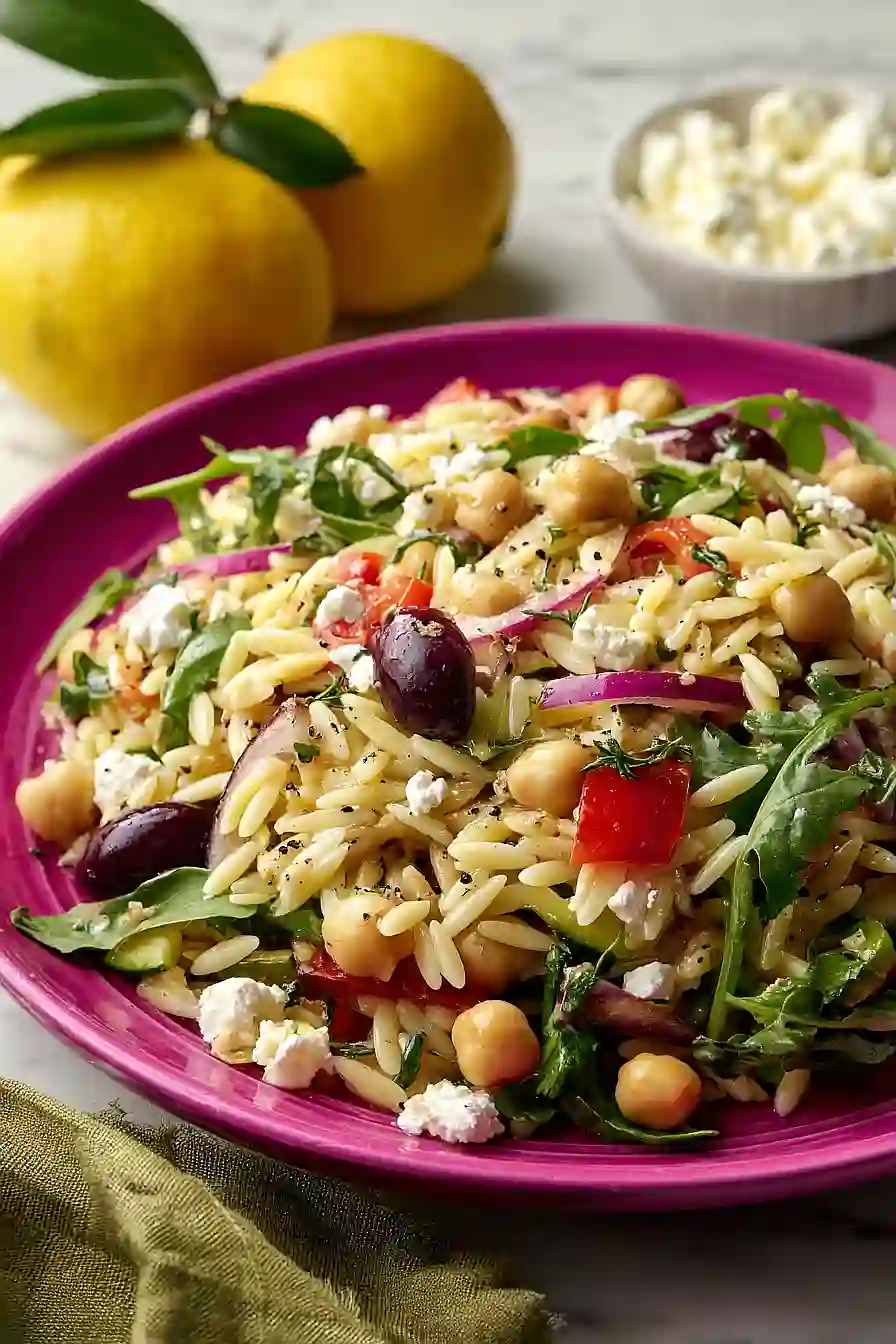
Why You’ll Love This Greek Orzo Pasta Salad
- Perfect for meal prep – This salad actually tastes better after sitting in the fridge for a few hours, making it ideal for preparing ahead of time for lunches or gatherings throughout the week.
- Fresh and flavorful – The combination of crisp cucumbers, juicy tomatoes, tangy feta, and bright herbs creates a refreshing dish that’s perfect for warm weather or anytime you’re craving something light.
- Simple ingredients – Everything you need is easy to find at any grocery store, and you might already have most of these Mediterranean staples in your kitchen.
- Great for potlucks and picnics – Since it’s served at room temperature or chilled, you don’t have to worry about keeping it hot, and it travels really well to any gathering.
- Versatile side or main – Enjoy it as a light lunch on its own or serve it alongside grilled chicken or fish for a complete dinner.
What Kind of Orzo Should I Use?
Regular white orzo is what you’ll typically find at most grocery stores, and it works perfectly for this Greek pasta salad. If you want to add a bit more nutrition and a nuttier flavor, whole wheat orzo is a great option that holds up well with the bold Mediterranean flavors. You can also find orzo made from chickpeas or lentils if you’re looking for a gluten-free alternative, though these tend to have a slightly different texture. When cooking your orzo, make sure to salt the water generously and cook it just until al dente – you don’t want mushy pasta in your salad.
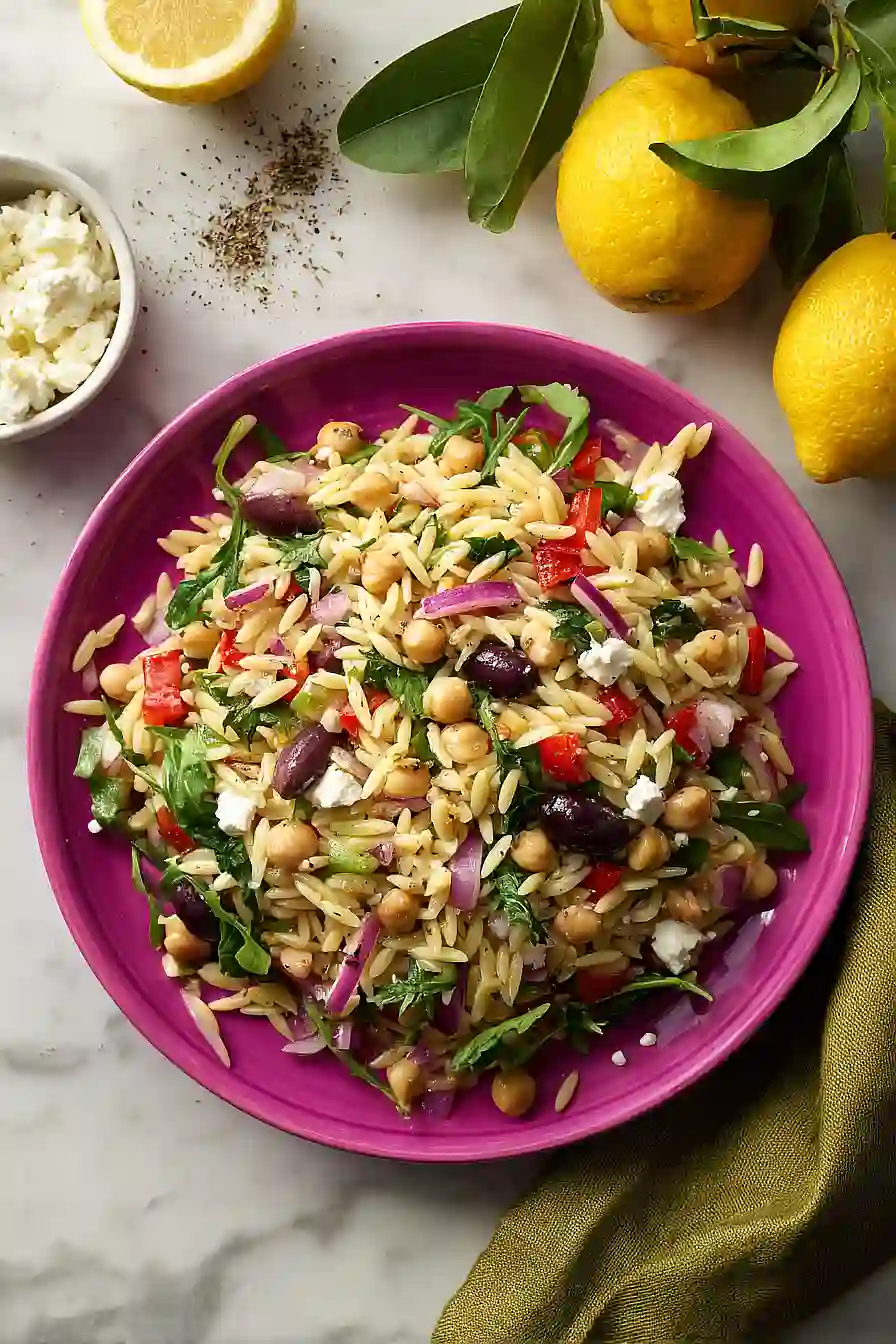
Options for Substitutions
This Greek-inspired salad is pretty forgiving when it comes to swaps:
- Orzo: You can swap orzo for other small pasta shapes like ditalini, pearl couscous, or even quinoa if you want to go gluten-free. Just cook according to package directions and cool completely before mixing.
- Feta cheese: If you’re not a feta fan, try crumbled goat cheese for a milder tang, or use diced fresh mozzarella for something less sharp. For a dairy-free version, simply leave it out – the salad still tastes great.
- Olives: Kalamata olives are traditional, but any type works – green olives, Castelvetrano, or even sliced black olives from a can will do the job.
- Fresh herbs: Don’t have fresh mint or parsley? You can use all parsley or add fresh dill instead. In a pinch, use 1 teaspoon of dried herbs for every tablespoon of fresh, but add them to the dressing so they can rehydrate.
- Red wine vinegar: White wine vinegar or apple cider vinegar work just as well here. You could also add an extra tablespoon of lemon juice for more citrus brightness.
- Red onion: Green onions or shallots make a nice substitute if you want something a bit milder.
Watch Out for These Mistakes While Cooking
The biggest mistake people make with orzo pasta salad is overcooking the orzo, which turns it mushy and unappetizing – cook it until it’s al dente (firm to the bite) since it will continue to soften as it sits in the dressing. Rinsing the cooked orzo under cold water is actually important here, as it stops the cooking process and removes excess starch that would make your salad gummy. Don’t add the feta cheese too early or stir it too vigorously, because it will break apart and turn your beautiful salad into a crumbly mess – gently fold it in at the very end. For the best flavor, make sure to let the salad chill for at least 30 minutes so the orzo can soak up all that lemony dressing, and if you’re making it ahead, you might need to add a splash more olive oil and lemon juice before serving since the pasta absorbs the dressing over time.
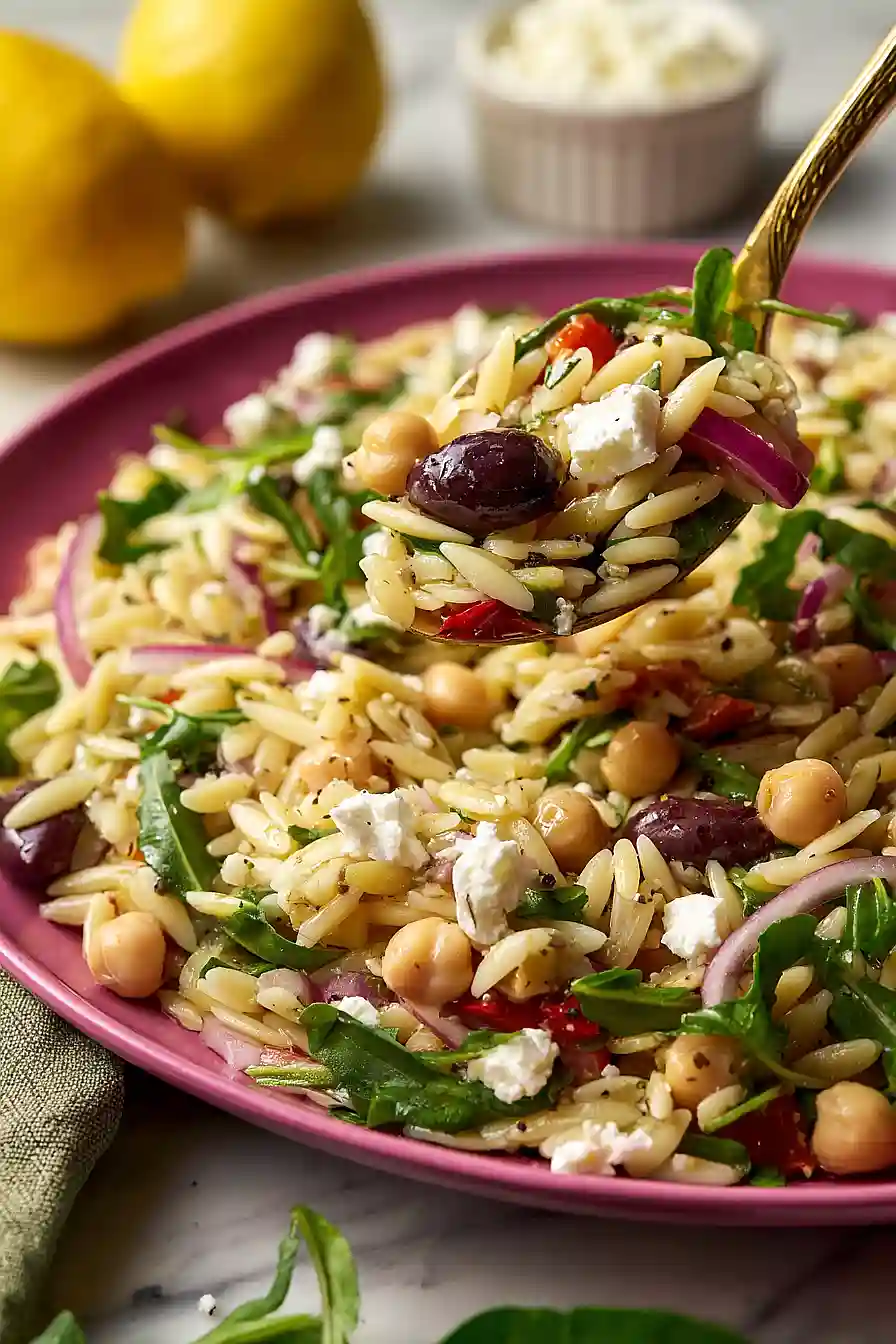
What to Serve With Greek Orzo Pasta Salad?
This Greek orzo salad is perfect as a side dish for grilled chicken, lamb kebabs, or even simple grilled shrimp since the fresh Mediterranean flavors complement any protein really well. I love serving it at summer cookouts alongside burgers or hot dogs because it’s a nice change from the usual potato salad or coleslaw. If you want to make it a complete meal on its own, just add some rotisserie chicken or grilled halloumi cheese right into the salad. It’s also great for meal prep since the flavors actually get better after sitting in the fridge for a day or two.
Storage Instructions
Store: This Greek orzo salad actually gets better after sitting in the fridge for a few hours as the flavors meld together. Keep it in an airtight container in the refrigerator for up to 4 days. You might need to add a splash of olive oil or lemon juice before serving since the orzo tends to soak up the dressing as it sits.
Make Ahead: This is a great make-ahead dish for parties or meal prep. You can prepare everything up to 2 days in advance, but I’d recommend adding the feta cheese and fresh herbs right before serving to keep them fresh and bright. The salad is perfect for picnics and potlucks since it’s served cold or at room temperature.
| Preparation Time | 20-30 minutes |
| Cooking Time | 10-15 minutes |
| Total Time | 60-70 minutes |
| Level of Difficulty | Easy |
| Servings | 6 servings |
Estimated Nutrition
Estimated nutrition for the whole recipe (without optional ingredients):
- Calories: 1100-1250
- Protein: 25-30 g
- Fat: 65-75 g
- Carbohydrates: 105-120 g
Ingredients
For the pasta salad:
- 2 cups orzo (I always use RiceSelect brand for the best texture)
- 1.5 cucumbers (unpeeled, seeded and sliced into 1/4-inch thick hothouse chunks)
- 1.5 cups tomatoes (halved through the stem)
- 0.75 cup olives
- 0.75 cup feta cheese (I prefer Valbreso for a creamier, less salty finish)
- 0.33 cup red onion
- 0.33 cup parsley
- 2 tbsp mint
- 1 tbsp fresh dill, chopped
For the dressing:
- 0.33 cup olive oil
- 3 tbsp lemon juice (freshly squeezed for the brightest acidity)
- 1 tbsp red wine vinegar
- 1.5 tsp oregano
- 0.75 tsp salt
- 0.33 tsp black pepper
Step 1: Cook the Orzo Pasta
- 2 cups orzo
Bring a large pot of salted water to a boil and add the orzo.
Cook until the pasta is al dente and still has a slight firmness to it—usually about 9-10 minutes, though check the package instructions as timing can vary by brand.
Drain the orzo in a colander and rinse briefly under cool water to stop the cooking process and prevent it from becoming mushy.
Set aside to cool completely while you prepare the vegetables.
Step 2: Prepare the Vegetables and Aromatics
- 1.5 cucumbers
- 1.5 cups tomatoes
- 0.75 cup olives
- 0.33 cup red onion
- 0.33 cup parsley
- 2 tbsp mint
- 1 tbsp fresh dill, chopped
While the orzo cooks, prepare all your vegetables for a smooth assembly.
Seed and slice the cucumbers into 1/4-inch thick chunks, halve the tomatoes through the stem, slice the olives, mince the red onion finely, and chop the parsley and fresh dill.
I like to keep the cucumber unpeeled for both texture and visual appeal—it gives the salad a more rustic, fresh quality.
Measure out the mint as well.
Having everything prepped and ready means the assembly will be quick and efficient.
Step 3: Build the Dressing
- 0.33 cup olive oil
- 3 tbsp lemon juice
- 1 tbsp red wine vinegar
- 1.5 tsp oregano
- 0.75 tsp salt
- 0.33 tsp black pepper
In a small bowl, whisk together the olive oil, fresh lemon juice, red wine vinegar, dried oregano, salt, and black pepper.
The acidity from the lemon juice and vinegar will brighten all the flavors, while the oregano adds that essential Mediterranean character.
I always use freshly squeezed lemon juice here because it makes a noticeable difference in the final flavor—bottled juice just can’t compete.
Let the dressing sit for a minute so the oregano can bloom slightly in the liquid.
Step 4: Combine Orzo, Vegetables, and Herbs
- cooled orzo from Step 1
- prepared vegetables and herbs from Step 2
In a large mixing bowl, combine the cooled orzo with the sliced cucumbers, halved tomatoes, olives, minced red onion, chopped parsley, mint, and dill.
Toss everything together gently to distribute the vegetables and herbs evenly throughout the pasta.
This is when you want to be gentle—you’re looking to coat everything together, not to break down the delicate vegetables.
Step 5: Dress and Finish with Feta
- dressing from Step 3
- dressed pasta and vegetable mixture from Step 4
- 0.75 cup feta cheese
Pour the dressing from Step 3 over the orzo mixture and toss everything together until the orzo and vegetables are well coated.
The orzo will absorb the dressing beautifully as it sits.
Now crumble the feta cheese over the top and fold it in gently—I prefer Valbreso feta because it has a creamier texture and less aggressive saltiness than some other varieties, which means it won’t overpower the fresh flavors of the salad.
Toss one final time to incorporate.
Step 6: Chill and Serve
Transfer the salad to a serving bowl or container and refrigerate for at least 30 minutes before serving.
This chilling time allows all the flavors to meld together and gives the orzo time to fully absorb the dressing.
The salad can be made several hours ahead and will actually taste better as the flavors continue to develop.
Give it a quick stir before serving to redistribute any dressing that may have settled.
Mediterranean Ina Garten's Greek Orzo Pasta Salad
Ingredients
For the pasta salad::
- 2 cups orzo (I always use RiceSelect brand for the best texture)
- 1.5 cucumbers (unpeeled, seeded and sliced into 1/4-inch thick hothouse chunks)
- 1.5 cups tomatoes (halved through the stem)
- 0.75 cup olives
- 0.75 cup feta cheese (I prefer Valbreso for a creamier, less salty finish)
- 0.33 cup red onion
- 0.33 cup parsley
- 2 tbsp mint
- 1 tbsp fresh dill, chopped
For the dressing::
- 0.33 cup olive oil
- 3 tbsp lemon juice (freshly squeezed for the brightest acidity)
- 1 tbsp red wine vinegar
- 1.5 tsp oregano
- 0.75 tsp salt
- 0.33 tsp black pepper
Instructions
- Bring a large pot of salted water to a boil and add the orzo. Cook until the pasta is al dente and still has a slight firmness to it—usually about 9-10 minutes, though check the package instructions as timing can vary by brand. Drain the orzo in a colander and rinse briefly under cool water to stop the cooking process and prevent it from becoming mushy. Set aside to cool completely while you prepare the vegetables.
- While the orzo cooks, prepare all your vegetables for a smooth assembly. Seed and slice the cucumbers into 1/4-inch thick chunks, halve the tomatoes through the stem, slice the olives, mince the red onion finely, and chop the parsley and fresh dill. I like to keep the cucumber unpeeled for both texture and visual appeal—it gives the salad a more rustic, fresh quality. Measure out the mint as well. Having everything prepped and ready means the assembly will be quick and efficient.
- In a small bowl, whisk together the olive oil, fresh lemon juice, red wine vinegar, dried oregano, salt, and black pepper. The acidity from the lemon juice and vinegar will brighten all the flavors, while the oregano adds that essential Mediterranean character. I always use freshly squeezed lemon juice here because it makes a noticeable difference in the final flavor—bottled juice just can't compete. Let the dressing sit for a minute so the oregano can bloom slightly in the liquid.
- In a large mixing bowl, combine the cooled orzo with the sliced cucumbers, halved tomatoes, olives, minced red onion, chopped parsley, mint, and dill. Toss everything together gently to distribute the vegetables and herbs evenly throughout the pasta. This is when you want to be gentle—you're looking to coat everything together, not to break down the delicate vegetables.
- Pour the dressing from Step 3 over the orzo mixture and toss everything together until the orzo and vegetables are well coated. The orzo will absorb the dressing beautifully as it sits. Now crumble the feta cheese over the top and fold it in gently—I prefer Valbreso feta because it has a creamier texture and less aggressive saltiness than some other varieties, which means it won't overpower the fresh flavors of the salad. Toss one final time to incorporate.
- Transfer the salad to a serving bowl or container and refrigerate for at least 30 minutes before serving. This chilling time allows all the flavors to meld together and gives the orzo time to fully absorb the dressing. The salad can be made several hours ahead and will actually taste better as the flavors continue to develop. Give it a quick stir before serving to redistribute any dressing that may have settled.