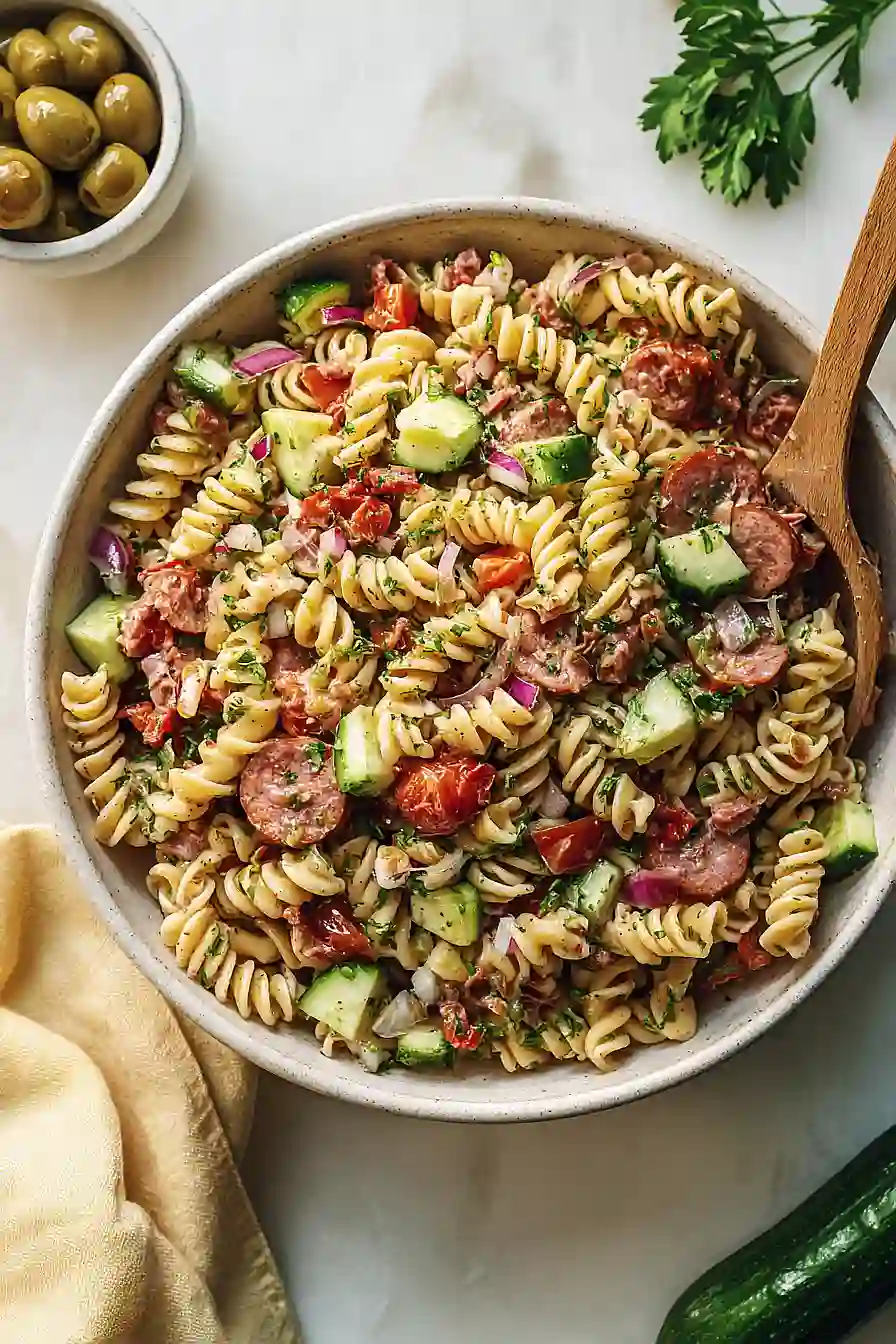
Finding a pasta salad that’s both packed with protein and actually tastes good can feel like an impossible task, especially when you’re trying to avoid gluten. Most gluten-free pastas turn mushy and bland, and traditional pasta salads are often heavy on the carbs but light on the nutrition your body actually needs.
That’s where this gluten-free high protein pasta salad comes in. Made with lupin pasta that delivers serious protein without sacrificing texture, and loaded with Italian-inspired ingredients like salami, mozzarella, and sun-dried tomatoes, this recipe proves you don’t have to choose between eating healthy and enjoying your food. Plus, it’s perfect for meal prep, potlucks, or those busy weeknights when you need dinner ready in a flash.
Why You’ll Love This Pasta Salad
- High-protein and gluten-free – Lupin pasta packs way more protein than regular pasta, making this a filling meal that fits perfectly into a gluten-free lifestyle.
- Quick and easy – You can have this colorful pasta salad ready in under 30 minutes, perfect for busy weeknights or last-minute gatherings.
- Make-ahead friendly – This salad actually tastes better after sitting in the fridge for a few hours, so you can prep it the night before and have one less thing to worry about.
- Packed with flavor – The tangy homemade Italian dressing combined with salami, olives, and pepperoncini gives you all those classic Italian sub flavors in pasta form.
- Great for meal prep – This pasta salad holds up well in the fridge for several days, making it an easy grab-and-go lunch option throughout the week.
What Kind of Lupin Pasta Should I Use?
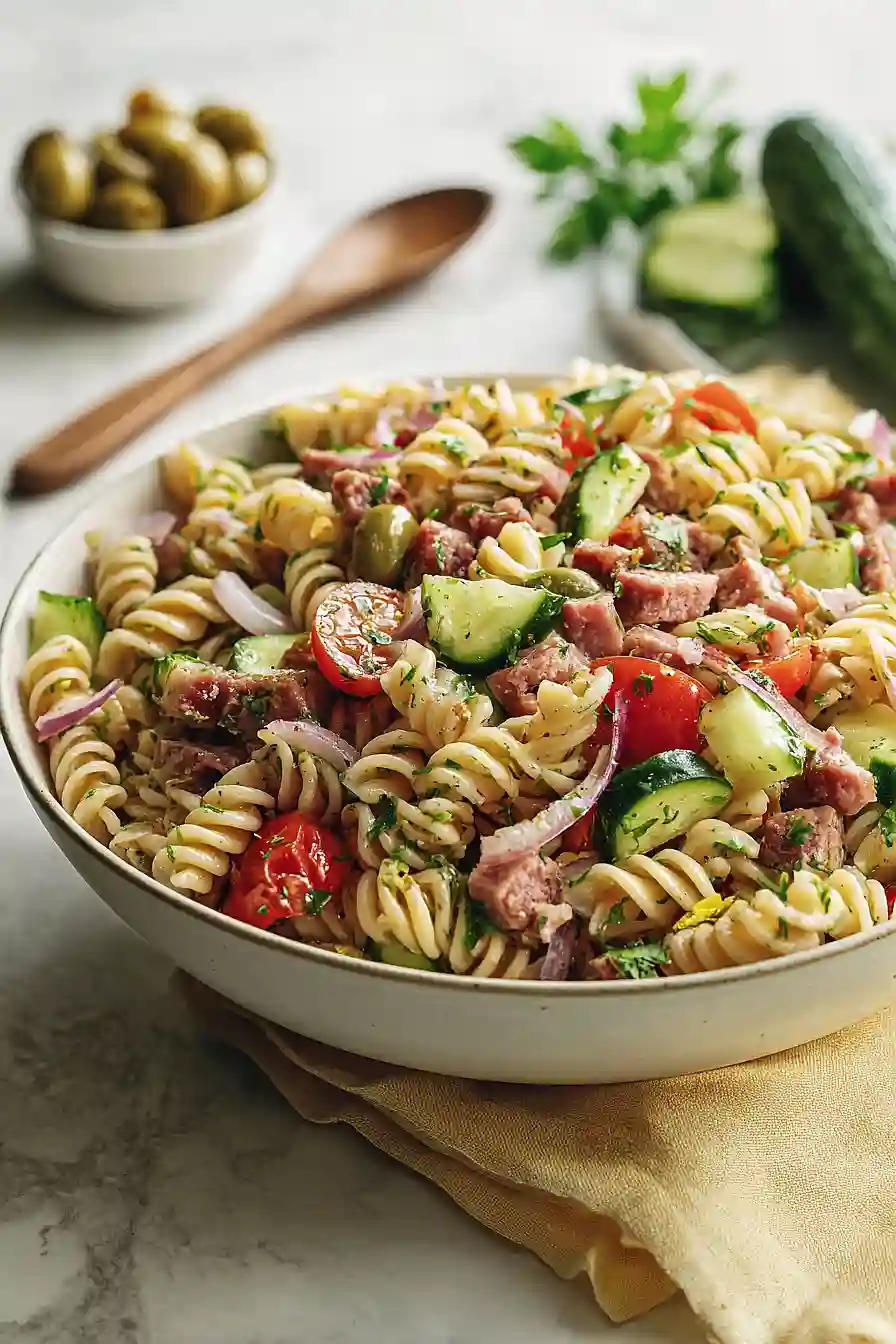
Lupin pasta is a fantastic high-protein, gluten-free option that’s made from lupin beans, and it works great in pasta salads because it holds up well when chilled. You can find lupin pasta in various shapes like penne, fusilli, or rotini – any of these will work perfectly for this recipe since they all have nooks and crannies that catch the dressing. Most brands cook in about 7-9 minutes, but keep an eye on it because lupin pasta can go from perfectly al dente to mushy pretty quickly. If you can’t find lupin pasta at your local store, check online retailers or health food stores, and make sure to rinse it well with cold water after cooking to stop the cooking process and cool it down for your salad.
Options for Substitutions
This pasta salad is pretty forgiving when it comes to swaps, so feel free to work with what you have:
- Lupin pasta: If you can’t find lupin pasta, chickpea or lentil pasta are great high-protein alternatives that are also gluten-free. Regular gluten-free pasta works too, though it won’t have quite as much protein.
- Salami: Swap this with pepperoni, turkey, grilled chicken, or even chickpeas if you want to keep it vegetarian. The protein content will vary, but the salad will still be tasty.
- Mozzarella: Feta, provolone, or cubed cheddar all work well here. Just pick a cheese that holds its shape when cubed.
- Allulose: Regular sugar, honey, or maple syrup can replace allulose in the dressing. You might want to start with a bit less since they’re sweeter than allulose.
- Tamari: Regular soy sauce works fine if you’re not worried about gluten. If you are, coconut aminos make a good substitute, though they’re slightly sweeter.
- Vegetables: The veggie mix is totally flexible. Try artichoke hearts, roasted red peppers, zucchini, or whatever looks good at the store. Just keep the total amount similar so your dressing ratio stays balanced.
Watch Out for These Mistakes While Cooking
Lupin pasta can go from perfectly cooked to mushy in under a minute, so stay close to the stove and start checking for doneness at the 5-minute mark – it should be firm with a slight bite, not soft. Rinsing the pasta with cold water immediately after draining is crucial to stop the cooking process and prevent it from turning into a gummy mess in your salad. Don’t skip chopping your vegetables into similar-sized pieces, as this ensures every bite has a good mix of flavors and textures. Make your dressing ahead of time and let it sit for 10-15 minutes so the garlic and Italian seasoning can blend together, and remember that pasta salad tastes better after chilling for at least an hour, which gives the noodles time to soak up all that dressing.

What to Serve With Pasta Salad?
This pasta salad is pretty hearty on its own with all the salami, cheese, and veggies, so it works great as a main dish for lunch or a light dinner. If you’re serving it at a cookout or potluck, it pairs really well with grilled chicken, burgers, or hot dogs since it’s got that classic picnic vibe. You could also add some garlic bread on the side if you want something to round out the meal, or keep it simple with some fresh fruit like watermelon or grapes for a refreshing contrast. Since this salad is already packed with protein from the pasta and salami, you don’t need much else to make it a complete meal.
Storage Instructions
Store: This pasta salad actually gets better after sitting in the fridge for a few hours because all those flavors really meld together. Keep it in an airtight container in the refrigerator for up to 4 days. You might need to give it a good stir before serving since the dressing can settle at the bottom.
Make Ahead: This is a great recipe to prep the night before a gathering or for meal prep Sunday. The lupin pasta holds up really well and doesn’t get mushy like regular pasta can. Just wait to add the mozzarella until a few hours before serving so it stays fresh and doesn’t get too soft.
Serve: I like to pull this out of the fridge about 20 minutes before eating so it’s not ice cold. Cold pasta salad is fine, but letting it come closer to room temperature really brings out all those Italian flavors. Give it another toss and taste for seasoning before serving.
| Preparation Time | 10-15 minutes |
| Cooking Time | 5-10 minutes |
| Total Time | 15-30 minutes |
| Level of Difficulty | Easy |
| Servings | 6 servings |
Estimated Nutrition
Estimated nutrition for the whole recipe (without optional ingredients):
- Calories: 1850-2050
- Protein: 60-70 g
- Fat: 145-160 g
- Carbohydrates: 60-72 g
Ingredients
For the pasta salad:
- 9 oz lupin pasta (I use Kaizen brand for the best texture and high protein)
- 1/2 red onion
- 3/4 cup sun-dried tomatoes (chopped into 1/2-inch pieces)
- 1/2 cup pepperoncini
- 3/4 cup olives
- 1/2 cup cucumber (diced into 1/2-inch cubes)
- 1/2 cup bell pepper
- 1 cup cherry tomatoes
- 4 oz salami (cut into 1/4-inch thick strips)
- 3 oz mozzarella
- 1/4 cup fresh parsley (chopped)
- 1/4 cup fresh cilantro (chopped)
For the dressing:
- 1/2 cup olive oil
- 1/4 cup red wine vinegar
- 1.5 tbsp italian seasoning
- 2 tbsp mayonnaise (I prefer Hellmann’s to make the dressing extra creamy)
- 1 tbsp monk fruit powder
- 1 tsp tamari
- 1 tbsp pepperoncini brine
- 1/2 tsp dijon mustard (I like Grey Poupon for a sharper flavor profile)
- 1 garlic clove
- salt
- pepper
Step 1: Prepare the Mise en Place and Cook the Pasta
- 9 oz lupin pasta
- 1/2 red onion
- 3/4 cup sun-dried tomatoes
- 1/2 cup cucumber
- 1/2 cup bell pepper
- 1 cup cherry tomatoes
- 1 garlic clove
- salt for pasta water
Start by bringing a large pot of salted water to a boil for the pasta.
While waiting, prepare all your vegetables: dice the red onion into thin half-moons, chop the sun-dried tomatoes into 1/2-inch pieces, dice the cucumber into 1/2-inch cubes, dice the bell pepper into similar-sized pieces, halve the cherry tomatoes, and mince the garlic clove.
Once the water boils, add the lupin pasta and cook for 5-6 minutes until al dente—lupin pasta tends to get mushy quickly, so don’t overcook it.
Drain the pasta and rinse thoroughly with cold water to stop the cooking and prevent it from sticking together.
Step 2: Create the Dressing
- 1/2 cup olive oil
- 1/4 cup red wine vinegar
- 2 tbsp mayonnaise
- 1 tbsp monk fruit powder
- 1 tsp tamari
- 1 tbsp pepperoncini brine
- 1/2 tsp dijon mustard
- 1.5 tbsp italian seasoning
- garlic clove
- salt
- pepper
Combine all dressing ingredients in a blender or mixing bowl: olive oil, red wine vinegar, mayonnaise, monk fruit powder, tamari, pepperoncini brine, Dijon mustard, Italian seasoning, minced garlic clove, and a pinch of salt and pepper.
If using a blender, pulse until the dressing is smooth and creamy.
If whisking by hand, whisk vigorously until all ingredients are well emulsified and the dressing reaches a consistent, creamy texture.
I prefer using a blender here because it creates a more cohesive dressing with better flavor distribution throughout the salad.
Step 3: Build the Salad Base with Marinated Elements
- cooked and cooled pasta from Step 1
- 1/2 red onion
- 3/4 cup sun-dried tomatoes
- 1/2 cup pepperoncini
- 3/4 cup olives
In a large mixing bowl, combine the cooled pasta with the chopped red onion, sun-dried tomatoes from Step 1, pepperoncini, and olives.
These ingredients benefit from marinating together to develop deeper flavors.
Gently toss this mixture to distribute the flavors evenly, then let it sit for 2-3 minutes while you prepare the remaining fresh ingredients.
This rest period allows the pasta to absorb some of the briny flavors from the olives and pepperoncini.
Step 4: Add Fresh Vegetables, Proteins, and Herbs
- pasta mixture from Step 3
- 1/2 cup cucumber
- 1/2 cup bell pepper
- 1 cup cherry tomatoes
- 4 oz salami
- 3 oz mozzarella
- 1/4 cup fresh parsley
- 1/4 cup fresh cilantro
Add the diced cucumber, bell pepper, and cherry tomatoes (all from Step 1) to the pasta bowl along with the salami cut into 1/4-inch thick strips.
Tear or cut the mozzarella into bite-sized pieces and add to the bowl.
Finally, sprinkle in the fresh chopped parsley and cilantro.
Gently fold all ingredients together to combine without crushing the vegetables or breaking apart the cheese.
Step 5: Dress and Finish the Salad
- salad mixture from Step 4
- creamy dressing from Step 2
Pour about 1/4 cup of the creamy dressing from Step 2 over the salad and toss gently but thoroughly to coat all ingredients.
Reserve any remaining dressing for drizzling at serving time or for additional servings.
I recommend adding the dressing in stages rather than all at once—this way you can control the creaminess level and prevent the salad from becoming overly wet.
Taste and adjust seasonings with a pinch of salt and pepper if needed.
Serve immediately or refrigerate until ready to eat.
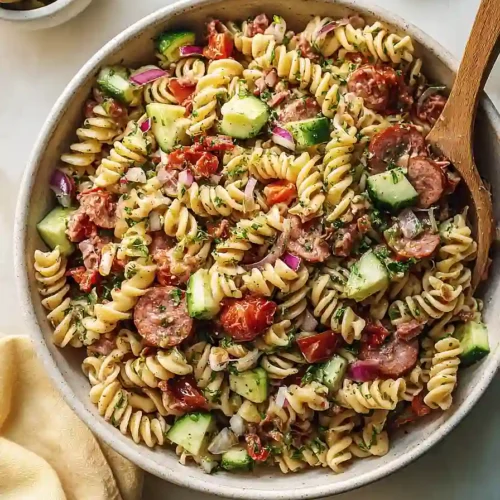
Lupin Pasta Salad High Protein
Ingredients
For the pasta salad::
- 9 oz lupin pasta (I use Kaizen brand for the best texture and high protein)
- 1/2 red onion
- 3/4 cup sun-dried tomatoes (chopped into 1/2-inch pieces)
- 1/2 cup pepperoncini
- 3/4 cup olives
- 1/2 cup cucumber (diced into 1/2-inch cubes)
- 1/2 cup bell pepper
- 1 cup cherry tomatoes
- 4 oz salami (cut into 1/4-inch thick strips)
- 3 oz mozzarella
- 1/4 cup fresh parsley (chopped)
- 1/4 cup fresh cilantro (chopped)
For the dressing::
- 1/2 cup olive oil
- 1/4 cup red wine vinegar
- 1.5 tbsp italian seasoning
- 2 tbsp mayonnaise (I prefer Hellmann's to make the dressing extra creamy)
- 1 tbsp monk fruit powder
- 1 tsp tamari
- 1 tbsp pepperoncini brine
- 1/2 tsp dijon mustard (I like Grey Poupon for a sharper flavor profile)
- 1 garlic clove
- salt
- pepper
Instructions
- Start by bringing a large pot of salted water to a boil for the pasta. While waiting, prepare all your vegetables: dice the red onion into thin half-moons, chop the sun-dried tomatoes into 1/2-inch pieces, dice the cucumber into 1/2-inch cubes, dice the bell pepper into similar-sized pieces, halve the cherry tomatoes, and mince the garlic clove. Once the water boils, add the lupin pasta and cook for 5-6 minutes until al dente—lupin pasta tends to get mushy quickly, so don't overcook it. Drain the pasta and rinse thoroughly with cold water to stop the cooking and prevent it from sticking together.
- Combine all dressing ingredients in a blender or mixing bowl: olive oil, red wine vinegar, mayonnaise, monk fruit powder, tamari, pepperoncini brine, Dijon mustard, Italian seasoning, minced garlic clove, and a pinch of salt and pepper. If using a blender, pulse until the dressing is smooth and creamy. If whisking by hand, whisk vigorously until all ingredients are well emulsified and the dressing reaches a consistent, creamy texture. I prefer using a blender here because it creates a more cohesive dressing with better flavor distribution throughout the salad.
- In a large mixing bowl, combine the cooled pasta with the chopped red onion, sun-dried tomatoes from Step 1, pepperoncini, and olives. These ingredients benefit from marinating together to develop deeper flavors. Gently toss this mixture to distribute the flavors evenly, then let it sit for 2-3 minutes while you prepare the remaining fresh ingredients. This rest period allows the pasta to absorb some of the briny flavors from the olives and pepperoncini.
- Add the diced cucumber, bell pepper, and cherry tomatoes (all from Step 1) to the pasta bowl along with the salami cut into 1/4-inch thick strips. Tear or cut the mozzarella into bite-sized pieces and add to the bowl. Finally, sprinkle in the fresh chopped parsley and cilantro. Gently fold all ingredients together to combine without crushing the vegetables or breaking apart the cheese.
- Pour about 1/4 cup of the creamy dressing from Step 2 over the salad and toss gently but thoroughly to coat all ingredients. Reserve any remaining dressing for drizzling at serving time or for additional servings. I recommend adding the dressing in stages rather than all at once—this way you can control the creaminess level and prevent the salad from becoming overly wet. Taste and adjust seasonings with a pinch of salt and pepper if needed. Serve immediately or refrigerate until ready to eat.