Here is my favorite asparagus frittata recipe, with sautéed shallots, tender asparagus pieces, cottage cheese for extra creaminess, and a sprinkle of feta and dill on top.
This frittata is perfect for weekend brunch or a quick weeknight dinner at our house. I love that it’s packed with protein and veggies, plus it tastes just as good the next day served cold or reheated. Easy cleanup is always a win in my book!
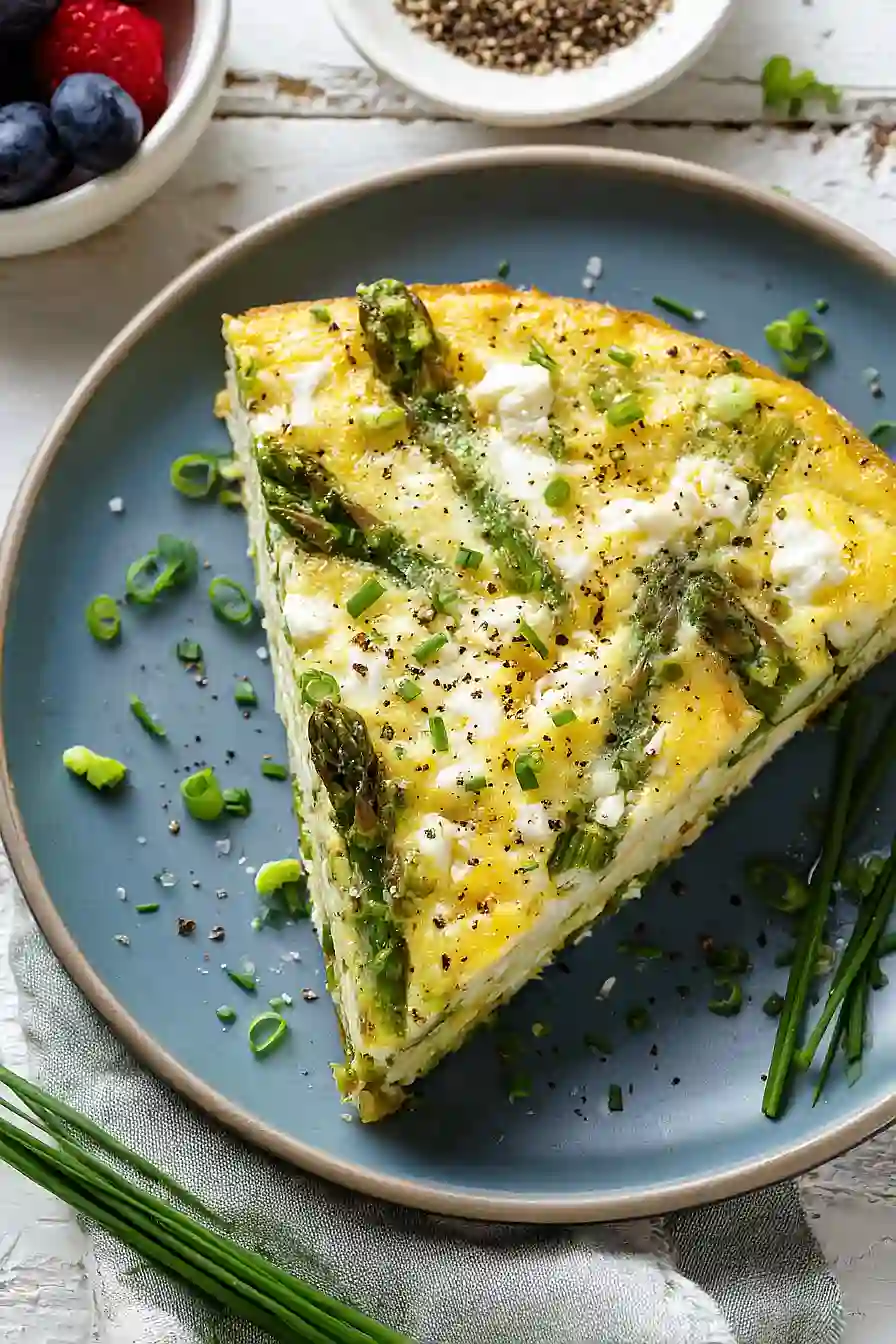
Why You’ll Love This Asparagus Frittata
- High-protein breakfast or brunch – With eggs, egg whites, cottage cheese, and feta, this frittata packs a serious protein punch to keep you full and energized throughout the morning.
- Quick and easy – Ready in under 45 minutes, this recipe is perfect for lazy weekend mornings or even a fast weeknight dinner.
- Simple ingredients – You probably have most of these staples in your fridge already, making it an easy go-to recipe.
- Naturally gluten-free – This frittata is a great option if you’re watching your carbs or following a gluten-free diet without sacrificing flavor.
- Great for meal prep – Make it ahead and enjoy slices throughout the week for breakfast, lunch, or a light dinner.
What Kind of Cottage Cheese Should I Use?
For this frittata, you’ll want to grab a good quality cottage cheese that’s creamy and not too watery. Small curd cottage cheese tends to blend better into egg dishes and creates a smoother texture throughout the frittata, but medium curd works just fine too. Full-fat cottage cheese will give you the richest flavor and creamiest results, though 2% or low-fat versions can work if that’s what you have on hand. If your cottage cheese seems really watery when you open the container, give it a quick drain in a fine mesh strainer for a minute or two before adding it to your eggs.
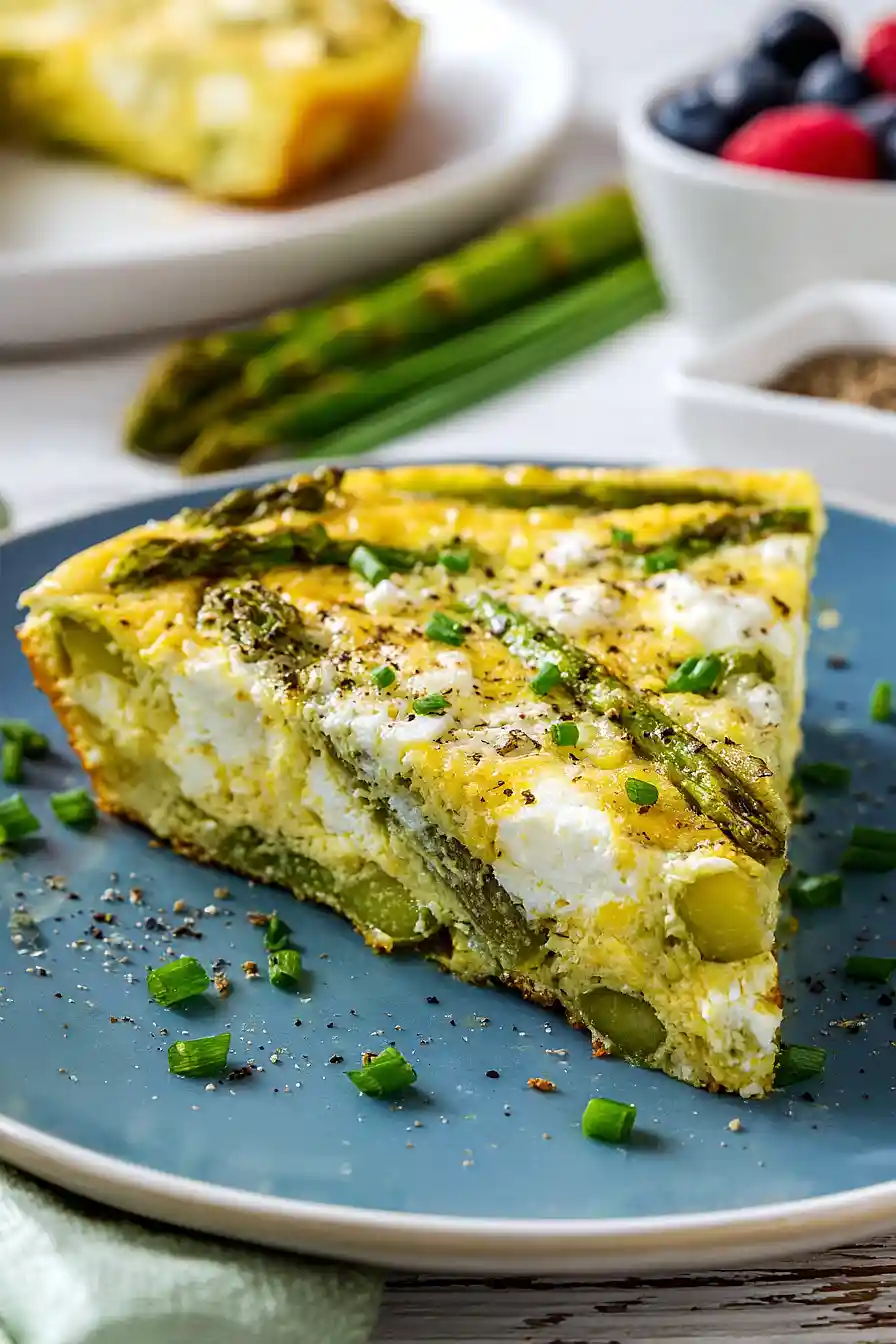
Options for Substitutions
This frittata is pretty forgiving when it comes to swapping ingredients:
- Shallots: If you don’t have shallots, use about 1/2 cup of diced yellow or white onion instead. They’ll give you a similar mild, sweet flavor.
- Asparagus: Feel free to swap asparagus with other vegetables like zucchini, bell peppers, broccoli, or spinach. Just make sure to cook them until tender before adding the eggs.
- Cottage cheese: You can use ricotta cheese as a substitute – it has a similar creamy texture. Greek yogurt also works, though it will make the frittata slightly tangier.
- Egg whites: If you don’t want to separate eggs, just use 6 whole eggs total instead of the 4 eggs plus 1/2 cup egg whites.
- Feta cheese: Goat cheese, shredded mozzarella, or grated parmesan all work well here. Pick whatever cheese you have on hand or prefer.
Watch Out for These Mistakes While Cooking
The biggest mistake when making frittata is cranking up the heat too high on the stovetop, which can cause the bottom to burn while the center stays runny – keep your burner at medium heat for even cooking.
Another common error is overcooking the asparagus before adding the eggs, since it will continue to cook in the oven and can turn mushy and gray if you’re not careful.
Don’t skip the step of letting your frittata rest for 5 minutes after pulling it from the oven, as this cooling time helps it set properly and makes slicing much cleaner.
Finally, resist the urge to stir the eggs once they’re in the pan – just let them cook undisturbed on the stovetop before transferring to the oven, which gives you those nice, fluffy layers instead of scrambled eggs.

What to Serve With Asparagus Frittata?
This asparagus frittata makes a great brunch or light dinner, and I love serving it with a simple mixed greens salad dressed with lemon vinaigrette to keep things fresh. A basket of warm, buttered toast or toasted baguette slices on the side is perfect for rounding out the meal, especially if you want something to balance out the eggs. Fresh fruit like berries or melon works really well too, adding a sweet contrast to the savory frittata. If you’re feeding a crowd for brunch, consider adding some crispy bacon or breakfast sausage on the side, along with roasted potatoes for a more filling spread.
Storage Instructions
Store: This frittata keeps really well in the fridge for up to 4 days in an airtight container. I love making it on Sunday and having it ready for quick breakfasts throughout the week. It’s great cold straight from the fridge or warmed up, whatever you prefer!
Freeze: You can freeze individual slices wrapped in plastic wrap and then placed in a freezer bag for up to 2 months. This makes it super easy to grab a single portion whenever you need a quick meal.
Reheat: Warm up slices in the microwave for about 45-60 seconds, or pop them in a 350°F oven for 10 minutes if you want to crisp up the edges a bit. The microwave is faster, but the oven gives you a nicer texture.
| Preparation Time | 10-15 minutes |
| Cooking Time | 25-30 minutes |
| Total Time | 35-45 minutes |
| Level of Difficulty | Easy |
| Servings | 4 servings |
Estimated Nutrition
Estimated nutrition for the whole recipe (without optional ingredients):
- Calories: 450-520
- Protein: 40-48 g
- Fat: 28-33 g
- Carbohydrates: 14-18 g
Ingredients
For the vegetables:
- 3 tbsp olive oil (I prefer Bertolli Extra Virgin for better sautéing)
- 1/3 cup shallots (finely diced into 1/4-inch pieces)
- 0.6 lb asparagus (tough ends removed and sliced into 1-inch lengths)
- 1 pinch salt
- 1 tbsp water
For the egg mixture:
- 4 eggs
- 1/2 cup egg whites
- 3/4 cup cottage cheese (I use Good Culture for a thicker, creamier texture)
- 1/4 tsp salt
- 1/4 tsp pepper
- 1/4 tsp dried dill
For the topping:
- 1/4 cup feta cheese (crumbled into small chunks for even melting)
Step 1: Prepare Mise en Place and Preheat Oven
- 1/3 cup shallots
- 0.6 lb asparagus
Preheat your oven to 350°F.
While it heats, finely dice the shallots into 1/4-inch pieces and slice the asparagus into 1-inch lengths, removing and discarding the tough woody ends.
Having everything prepped and ready before you start cooking ensures smooth transitions between steps and allows you to focus on building flavor through proper cooking.
Step 2: Sauté Shallots and Asparagus
- 3 tbsp olive oil
- 1/3 cup shallots
- 0.6 lb asparagus
- 1 pinch salt
- 1 tbsp water
Heat 1 tablespoon of olive oil in a 10-inch nonstick skillet over medium heat.
Add the diced shallots and cook for 2-3 minutes, stirring occasionally, until they become translucent and fragrant—this develops their natural sweetness.
Add the remaining 2 tablespoons of oil along with the sliced asparagus and a pinch of salt, then cook for 2 minutes.
Pour in the water and continue cooking for 2-3 minutes more until the asparagus is just tender-crisp.
I like to taste a piece at this point to ensure it has a slight firmness—the residual heat during baking will continue to soften it.
Step 3: Mix the Egg and Cottage Cheese Base
- 4 eggs
- 1/2 cup egg whites
- 3/4 cup cottage cheese
- 1/4 tsp salt
- 1/4 tsp pepper
- 1/4 tsp dried dill
In a medium bowl, whisk together the whole eggs and egg whites until well combined.
Add the cottage cheese, 1/4 teaspoon salt, pepper, and dried dill, then stir gently until the mixture is evenly blended—avoid overbeating, as you want to maintain some texture from the cottage cheese rather than completely homogenizing it.
The cottage cheese will add creaminess and protein while the dill provides herbal seasoning that complements the asparagus beautifully.
Step 4: Combine and Set the Frittata Base
- egg and cottage cheese mixture from Step 3
- sautéed vegetables from Step 2
Pour the egg and cottage cheese mixture from Step 3 over the sautéed asparagus and shallots in the skillet, stirring gently to distribute the vegetables evenly.
Cook over medium heat for 3-4 minutes without stirring, until the edges begin to set and pull away slightly from the sides of the pan.
This initial stovetop cooking helps the frittata firm up before it goes into the oven, creating a better texture in the final dish.
Step 5: Top with Feta and Bake Until Golden
- 1/4 cup feta cheese
Scatter the crumbled feta cheese evenly over the surface of the partially set frittata.
Transfer the skillet to the preheated 350°F oven and bake for 15-17 minutes, until the top is lightly golden and the center is just set when gently jiggled.
I find that checking at the 15-minute mark helps prevent overcooking—the frittata should jiggle just slightly in the very center but be mostly firm.
Step 6: Cool and Serve
Remove the skillet from the oven and let the frittata cool for 3-5 minutes before slicing.
This resting time allows the structure to set completely and makes serving easier.
Slice into wedges directly from the skillet and serve warm or at room temperature.

Low-Carb Asparagus Frittata with Cottage Cheese
Ingredients
For the vegetables::
- 3 tbsp olive oil (I prefer Bertolli Extra Virgin for better sautéing)
- 1/3 cup shallots (finely diced into 1/4-inch pieces)
- 0.6 lb asparagus (tough ends removed and sliced into 1-inch lengths)
- 1 pinch salt
- 1 tbsp water
For the egg mixture::
- 4 eggs
- 1/2 cup egg whites
- 3/4 cup cottage cheese (I use Good Culture for a thicker, creamier texture)
- 1/4 tsp salt
- 1/4 tsp pepper
- 1/4 tsp dried dill
For the topping::
- 1/4 cup feta cheese (crumbled into small chunks for even melting)
Instructions
- Preheat your oven to 350°F. While it heats, finely dice the shallots into 1/4-inch pieces and slice the asparagus into 1-inch lengths, removing and discarding the tough woody ends. Having everything prepped and ready before you start cooking ensures smooth transitions between steps and allows you to focus on building flavor through proper cooking.
- Heat 1 tablespoon of olive oil in a 10-inch nonstick skillet over medium heat. Add the diced shallots and cook for 2-3 minutes, stirring occasionally, until they become translucent and fragrant—this develops their natural sweetness. Add the remaining 2 tablespoons of oil along with the sliced asparagus and a pinch of salt, then cook for 2 minutes. Pour in the water and continue cooking for 2-3 minutes more until the asparagus is just tender-crisp. I like to taste a piece at this point to ensure it has a slight firmness—the residual heat during baking will continue to soften it.
- In a medium bowl, whisk together the whole eggs and egg whites until well combined. Add the cottage cheese, 1/4 teaspoon salt, pepper, and dried dill, then stir gently until the mixture is evenly blended—avoid overbeating, as you want to maintain some texture from the cottage cheese rather than completely homogenizing it. The cottage cheese will add creaminess and protein while the dill provides herbal seasoning that complements the asparagus beautifully.
- Pour the egg and cottage cheese mixture from Step 3 over the sautéed asparagus and shallots in the skillet, stirring gently to distribute the vegetables evenly. Cook over medium heat for 3-4 minutes without stirring, until the edges begin to set and pull away slightly from the sides of the pan. This initial stovetop cooking helps the frittata firm up before it goes into the oven, creating a better texture in the final dish.
- Scatter the crumbled feta cheese evenly over the surface of the partially set frittata. Transfer the skillet to the preheated 350°F oven and bake for 15-17 minutes, until the top is lightly golden and the center is just set when gently jiggled. I find that checking at the 15-minute mark helps prevent overcooking—the frittata should jiggle just slightly in the very center but be mostly firm.
- Remove the skillet from the oven and let the frittata cool for 3-5 minutes before slicing. This resting time allows the structure to set completely and makes serving easier. Slice into wedges directly from the skillet and serve warm or at room temperature.