If you ask me, Greek yogurt is one of the smartest swaps you can make in the kitchen.
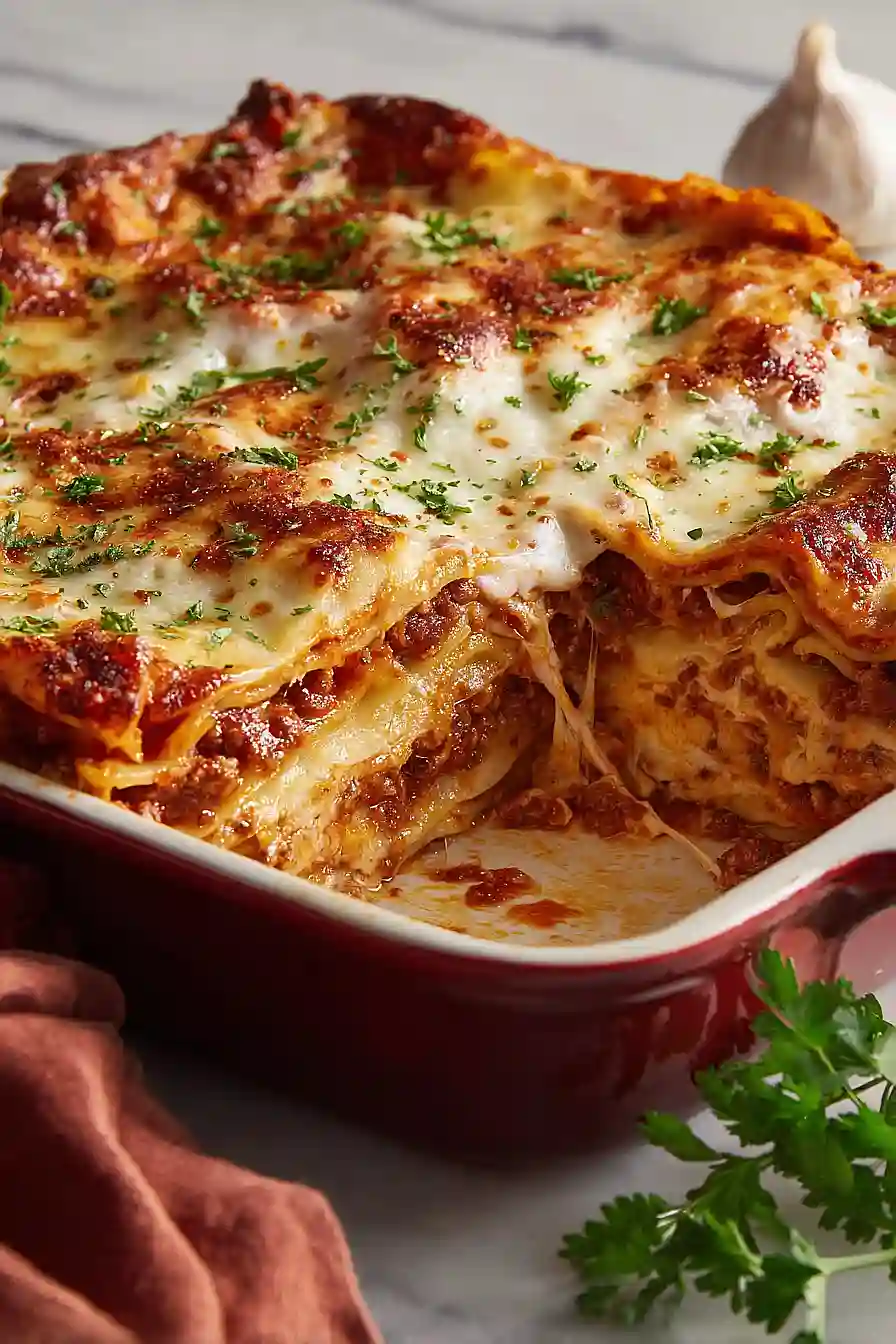
This hearty lasagna takes a classic comfort food and gives it a lighter twist. Creamy Greek yogurt replaces the traditional béchamel sauce, cutting down on butter and flour while keeping everything rich and satisfying.
It’s layered with a meaty tomato sauce packed with grated carrots that practically disappear into the mix. Melted cheese and no-boil noodles make the whole thing come together without any fuss.
It’s a weeknight-friendly dinner that tastes like you spent hours in the kitchen, perfect for feeding a hungry family.
Why You’ll Love This Greek Yogurt Lasagna
- Lighter than traditional lasagna – Using Greek yogurt instead of heavy ricotta or béchamel sauce cuts down on calories and fat while keeping everything creamy and delicious.
- High in protein – Between the ground beef, Greek yogurt, and cheese, you’re getting a protein-packed meal that will keep you satisfied for hours.
- Ready in about an hour – This lasagna comes together faster than most recipes, making it perfect for weeknight dinners when you want something hearty without spending all evening in the kitchen.
- Familiar ingredients – No need to hunt down specialty items—this recipe uses everyday pantry staples and fresh ingredients you probably already have on hand.
- Great for meal prep – Lasagna tastes even better the next day, so you can make it ahead or enjoy leftovers throughout the week without any extra effort.
What Kind of Greek Yogurt Should I Use?
For this lasagna, you’ll want to use full-fat Greek yogurt to get the best creamy texture and richness. The thicker consistency of Greek yogurt works perfectly as a substitute for traditional ricotta or béchamel sauce, and it won’t make your lasagna watery. If you only have regular yogurt on hand, you can strain it through cheesecloth for a few hours to thicken it up, but Greek yogurt saves you that extra step. Just make sure to bring it to room temperature before using it in your lasagna – cold yogurt straight from the fridge can be harder to spread evenly between the layers.
Options for Substitutions
This Greek-style lasagna is pretty forgiving when it comes to swaps:
- Greek yogurt: Regular Greek yogurt is key here for that tangy flavor and creamy texture, but if you’re in a pinch, you can use sour cream or a mix of ricotta and a splash of lemon juice. Don’t skip the dairy component entirely though – it’s what makes this lasagna special.
- Ground beef: Ground lamb would be amazing here for a more traditional Greek taste, or you can use ground turkey or chicken for a lighter version. You could even do half beef and half lamb for the best of both worlds.
- Lasagna noodles: Regular lasagna sheets work great, but you can also use no-boil noodles to save time. If using no-boil, you might need to add a bit more liquid to the sauce.
- Cheese: While the recipe calls for cheese (likely mozzarella), try using a mix of mozzarella and feta for more Greek flavor. Parmesan also works well mixed in.
- Stock: Beef stock is ideal, but chicken or vegetable stock will work just fine. In a pinch, you can use water with an extra bouillon cube.
- Carrots: If you’re not a carrot fan, you can swap them with zucchini or bell peppers, or leave them out completely without affecting the dish too much.
Watch Out for These Mistakes While Baking
The biggest mistake people make with lasagna is skipping the resting time after baking – those 10 minutes are crucial for letting the layers set, otherwise you’ll end up with a runny mess when you try to slice it.
Another common error is not cooking your meat sauce long enough to reduce excess liquid, which can make your lasagna watery, so if your sauce looks too thin after the 5-minute simmer, let it go a few minutes longer until it thickens up.
Don’t forget to season your meat mixture well with salt and pepper during cooking rather than at the end, as this builds better flavor throughout the dish.
Finally, make sure your yogurt mixture is well combined and spread evenly between layers – any clumps or gaps will create uneven texture and pockets of bland spots in your finished lasagna.

What to Serve With Lasagna?
A crisp green salad is my go-to side for lasagna since it balances out all that rich, cheesy goodness. I usually toss together some romaine lettuce, cherry tomatoes, cucumbers, and red onion with a simple olive oil and lemon dressing. Garlic bread is another must-have for soaking up any extra sauce on your plate, and you can never go wrong with some roasted vegetables like zucchini, bell peppers, or broccoli on the side. If you’re feeding a crowd, a Caesar salad or caprese salad with fresh mozzarella and basil also pairs really nicely with this Greek yogurt lasagna.
Storage Instructions
Store: Lasagna is one of those dishes that actually gets better after a day or two in the fridge. Cover your baking dish tightly with foil or transfer portions to airtight containers, and it’ll stay fresh for up to 4 days. The flavors really meld together nicely overnight!
Freeze: This lasagna freezes like a dream, either as a whole dish or in individual portions. Wrap it tightly in plastic wrap and then foil to prevent freezer burn, and it’ll keep for up to 3 months. I like to slice it into portions before freezing so I can grab just what I need.
Reheat: For the best results, thaw frozen lasagna in the fridge overnight before reheating. Cover with foil and warm in a 350°F oven for about 30-40 minutes until heated through, or microwave individual portions for 3-4 minutes. Add a splash of water before reheating if it seems a bit dry.
| Preparation Time | 20-30 minutes |
| Cooking Time | 30-40 minutes |
| Total Time | 50-70 minutes |
| Level of Difficulty | Medium |
| Servings | 8 servings |
Estimated Nutrition
Estimated nutrition for the whole recipe (without optional ingredients):
- Calories: 3550-3850
- Protein: 235-260 g
- Fat: 185-210 g
- Carbohydrates: 180-210 g
Ingredients
For the meat sauce:
- 1 large onion (finely diced into 1/4-inch pieces)
- 6 garlic cloves (minced)
- 3 medium carrots (grated to melt into the sauce texture)
- 1 tbsp olive oil
- 2.2 lb lean ground beef
- 2.5 tbsp tomato paste
- 28 oz chopped tomatoes (canned)
- 2.5 tsp dried oregano
- 1.5 tsp sweet paprika powder
- Fine sea salt (to taste)
- Freshly ground black pepper (to taste)
- 1 bay leaf
For the assembly and topping:
- 1.5 cups low-fat Greek yogurt (e.g., Fage 5%)
- 1 cup hot chicken or vegetable stock
- 2 cups shredded cheese (e.g., mozzarella or a blend, shredded from a block)
- 12 no-boil lasagna sheets
Step 1: Prepare Mise en Place and Preheat
- 1 large onion
- 6 garlic cloves
- 3 medium carrots
Preheat your oven to 400°F.
While the oven heats, finely dice the onion into 1/4-inch pieces, mince the garlic cloves, and grate the carrots on a box grater—this grating technique allows the carrots to essentially melt into the sauce, adding sweetness and body without chunks.
Measure out the tomato paste, oregano, paprika, Greek yogurt, and stock so everything is ready when you need it.
Step 2: Build the Meat Sauce Base
- 1 tbsp olive oil
- prepared onion from Step 1
- prepared garlic from Step 1
- prepared carrots from Step 1
Heat the olive oil in a large, heavy-bottomed pan over medium heat.
Add the diced onion and cook for 3-4 minutes, stirring occasionally, until the onion becomes translucent and soft.
Add the minced garlic and grated carrots, stirring constantly for about 2 minutes until the garlic becomes fragrant—this technique of blooming aromatics in fat releases their essential oils and builds the flavor foundation for the entire sauce.
Step 3: Brown the Beef and Deepen the Flavor
- 2.2 lb lean ground beef
- 2.5 tbsp tomato paste
Increase the heat to medium-high and add the ground beef to the aromatic mixture, breaking it apart with a wooden spoon as it cooks.
Cook for 5-7 minutes, stirring frequently, until the beef is completely browned and any liquid has evaporated—this browning step, called the Maillard reaction, creates complex, savory flavors that are essential to the sauce.
Add the tomato paste and stir constantly for 1 minute, allowing it to caramelize slightly and lose its raw taste.
Step 4: Simmer the Meat Sauce
- 28 oz chopped tomatoes
- 2.5 tsp dried oregano
- 1.5 tsp sweet paprika powder
- Fine sea salt
- Freshly ground black pepper
- 1 bay leaf
Pour in the canned chopped tomatoes along with their juices, then add the dried oregano, sweet paprika powder, bay leaf, and season with fine sea salt and freshly ground black pepper to taste.
Bring the mixture to a gentle boil, then immediately reduce the heat to low and simmer uncovered for 5 minutes, stirring occasionally.
I like to taste the sauce at this point and adjust the seasoning—the paprika adds a subtle sweetness that balances the acidity of the tomatoes, and this brief simmer allows the flavors to meld without overcooking the dish.
Step 5: Prepare the Yogurt Custard
- 1.5 cups low-fat Greek yogurt
- 1 cup hot chicken or vegetable stock
- ½ cup shredded cheese
While the sauce simmers, combine the Greek yogurt with the hot chicken or vegetable stock in a bowl, whisking until smooth and fully incorporated.
The heat from the stock will slightly warm the yogurt, making it easier to blend.
Stir in ¾ cup of the shredded cheese and mix until combined.
I prefer to use yogurt as my béchamel alternative because it adds tanginess and protein while keeping the dish lighter than a cream-based sauce.
Step 6: Assemble the Lasagna
- meat sauce from Step 4
- 12 no-boil lasagna sheets
- yogurt custard from Step 5
- 1.5 cups shredded cheese
Spread a thin layer of the meat sauce from Step 4 on the bottom of a 9×13-inch baking dish.
Layer 4 no-boil lasagna sheets over the sauce, breaking them as needed to fit.
Spread half of the remaining meat sauce over the noodles, then spread half of the yogurt mixture from Step 5 over that.
Repeat with another layer of 4 noodles, the remaining meat sauce, and the remaining yogurt mixture.
Top with the final 4 lasagna sheets, then spread the remaining 1 cup of shredded cheese evenly over the top.
The layering ensures every bite has balanced flavors of meat, cheese, and tangy yogurt sauce.
Step 7: Bake and Rest the Lasagna
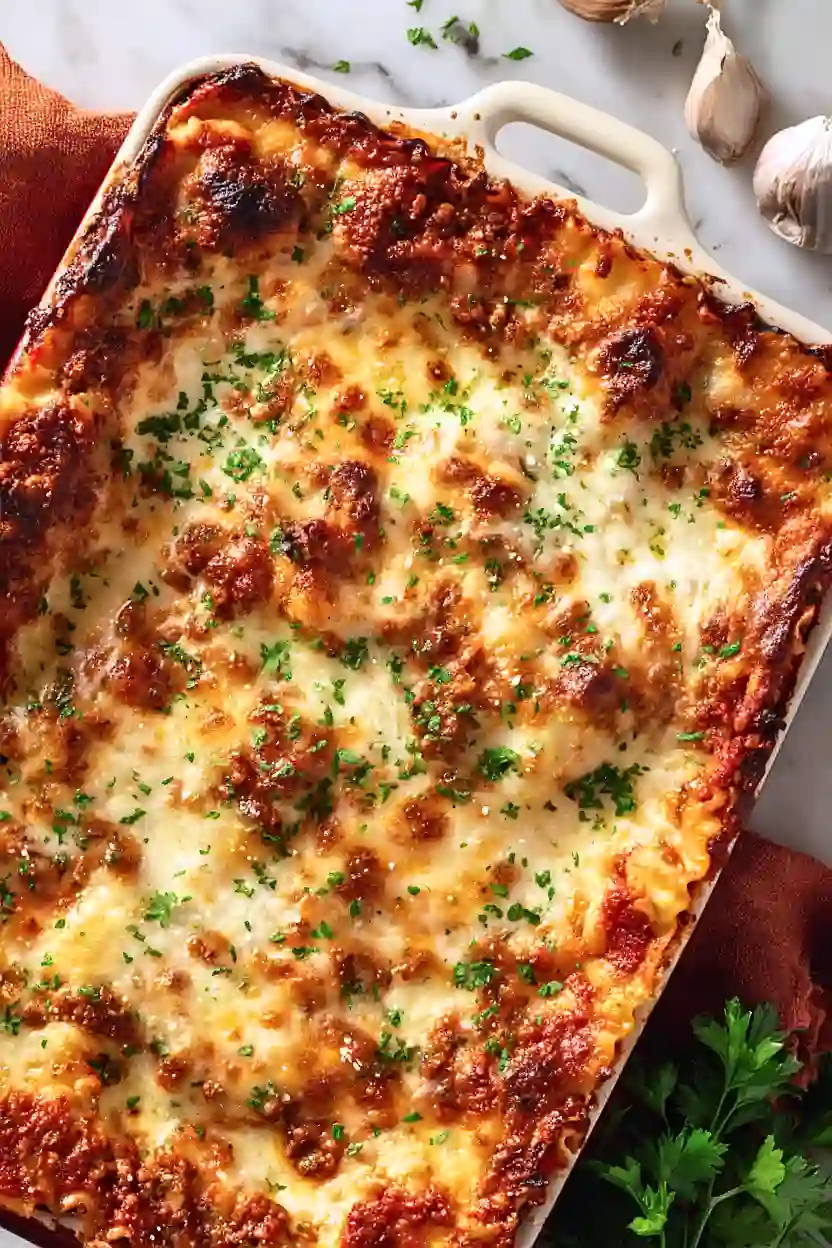
Place the assembled lasagna in the preheated 400°F oven and bake for 30 minutes, until the top is golden brown and the cheese is bubbling around the edges.
Remove from the oven and let rest for 10 minutes before serving—this resting period allows the layers to set slightly and makes the lasagna easier to cut and serve without falling apart.

Easy Greek Yogurt Lasagna
Ingredients
For the meat sauce::
- 1 large onion (finely diced into 1/4-inch pieces)
- 6 garlic cloves (minced)
- 3 medium carrots (grated to melt into the sauce texture)
- 1 tbsp olive oil
- 2.2 lb lean ground beef
- 2.5 tbsp tomato paste
- 28 oz chopped tomatoes (canned)
- 2.5 tsp dried oregano
- 1.5 tsp sweet paprika powder
- Fine sea salt (to taste)
- Freshly ground black pepper (to taste)
- 1 bay leaf
For the assembly and topping::
- 1.5 cups low-fat Greek yogurt (e.g., Fage 5%)
- 1 cup hot chicken or vegetable stock
- 2 cups shredded cheese (e.g., mozzarella or a blend, shredded from a block)
- 12 no-boil lasagna sheets
Instructions
- Preheat your oven to 400°F. While the oven heats, finely dice the onion into 1/4-inch pieces, mince the garlic cloves, and grate the carrots on a box grater—this grating technique allows the carrots to essentially melt into the sauce, adding sweetness and body without chunks. Measure out the tomato paste, oregano, paprika, Greek yogurt, and stock so everything is ready when you need it.
- Heat the olive oil in a large, heavy-bottomed pan over medium heat. Add the diced onion and cook for 3-4 minutes, stirring occasionally, until the onion becomes translucent and soft. Add the minced garlic and grated carrots, stirring constantly for about 2 minutes until the garlic becomes fragrant—this technique of blooming aromatics in fat releases their essential oils and builds the flavor foundation for the entire sauce.
- Increase the heat to medium-high and add the ground beef to the aromatic mixture, breaking it apart with a wooden spoon as it cooks. Cook for 5-7 minutes, stirring frequently, until the beef is completely browned and any liquid has evaporated—this browning step, called the Maillard reaction, creates complex, savory flavors that are essential to the sauce. Add the tomato paste and stir constantly for 1 minute, allowing it to caramelize slightly and lose its raw taste.
- Pour in the canned chopped tomatoes along with their juices, then add the dried oregano, sweet paprika powder, bay leaf, and season with fine sea salt and freshly ground black pepper to taste. Bring the mixture to a gentle boil, then immediately reduce the heat to low and simmer uncovered for 5 minutes, stirring occasionally. I like to taste the sauce at this point and adjust the seasoning—the paprika adds a subtle sweetness that balances the acidity of the tomatoes, and this brief simmer allows the flavors to meld without overcooking the dish.
- While the sauce simmers, combine the Greek yogurt with the hot chicken or vegetable stock in a bowl, whisking until smooth and fully incorporated. The heat from the stock will slightly warm the yogurt, making it easier to blend. Stir in ¾ cup of the shredded cheese and mix until combined. I prefer to use yogurt as my béchamel alternative because it adds tanginess and protein while keeping the dish lighter than a cream-based sauce.
- Spread a thin layer of the meat sauce from Step 4 on the bottom of a 9x13-inch baking dish. Layer 4 no-boil lasagna sheets over the sauce, breaking them as needed to fit. Spread half of the remaining meat sauce over the noodles, then spread half of the yogurt mixture from Step 5 over that. Repeat with another layer of 4 noodles, the remaining meat sauce, and the remaining yogurt mixture. Top with the final 4 lasagna sheets, then spread the remaining 1 cup of shredded cheese evenly over the top. The layering ensures every bite has balanced flavors of meat, cheese, and tangy yogurt sauce.
- Place the assembled lasagna in the preheated 400°F oven and bake for 30 minutes, until the top is golden brown and the cheese is bubbling around the edges. Remove from the oven and let rest for 10 minutes before serving—this resting period allows the layers to set slightly and makes the lasagna easier to cut and serve without falling apart.