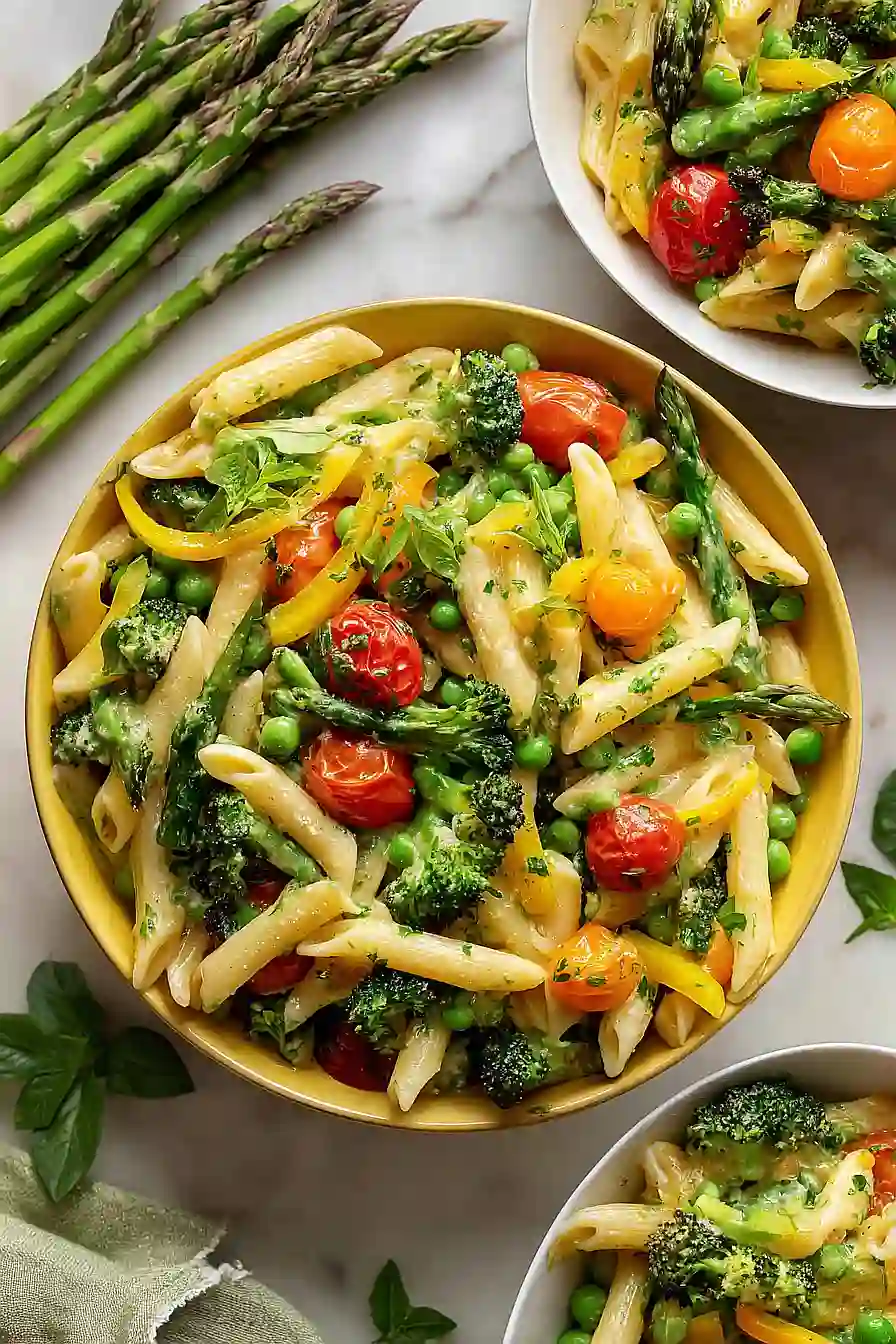
If you ask me, pasta primavera is one of the best ways to use up all those spring vegetables sitting in your fridge.
This Italian-American classic brings together tender penne and a rainbow of fresh vegetables in a light, creamy sauce. Crisp asparagus and broccoli pair with sweet peas and zucchini, all tossed in a lemony parmesan cream sauce.
The vegetables get a quick sauté to keep them just tender, then everything comes together with butter, garlic, and a splash of vegetable broth. Fresh herbs and a squeeze of lemon juice brighten the whole dish.
It’s a family-friendly dinner that feels fancy but comes together in about 30 minutes, perfect for busy weeknights when you want something satisfying.
Why You’ll Love This Pasta Primavera
- Packed with fresh vegetables – This dish is loaded with colorful veggies like asparagus, broccoli, zucchini, and tomatoes, making it an easy way to get your daily servings in one delicious meal.
- Light and creamy sauce – The lemon-infused cream sauce is just rich enough to coat the pasta without feeling heavy, perfect for a satisfying dinner that won’t weigh you down.
- Flexible and customizable – You can easily swap in whatever vegetables you have on hand or are in season, making this recipe work year-round with what’s available.
- Ready in under an hour – From start to finish, you’ll have this colorful pasta on the table in about 45 minutes, making it ideal for busy weeknights.
- Great for meal prep – This pasta primavera reheats well and tastes just as good the next day, so you can make extra for easy lunches throughout the week.
What Kind of Penne Should I Use?
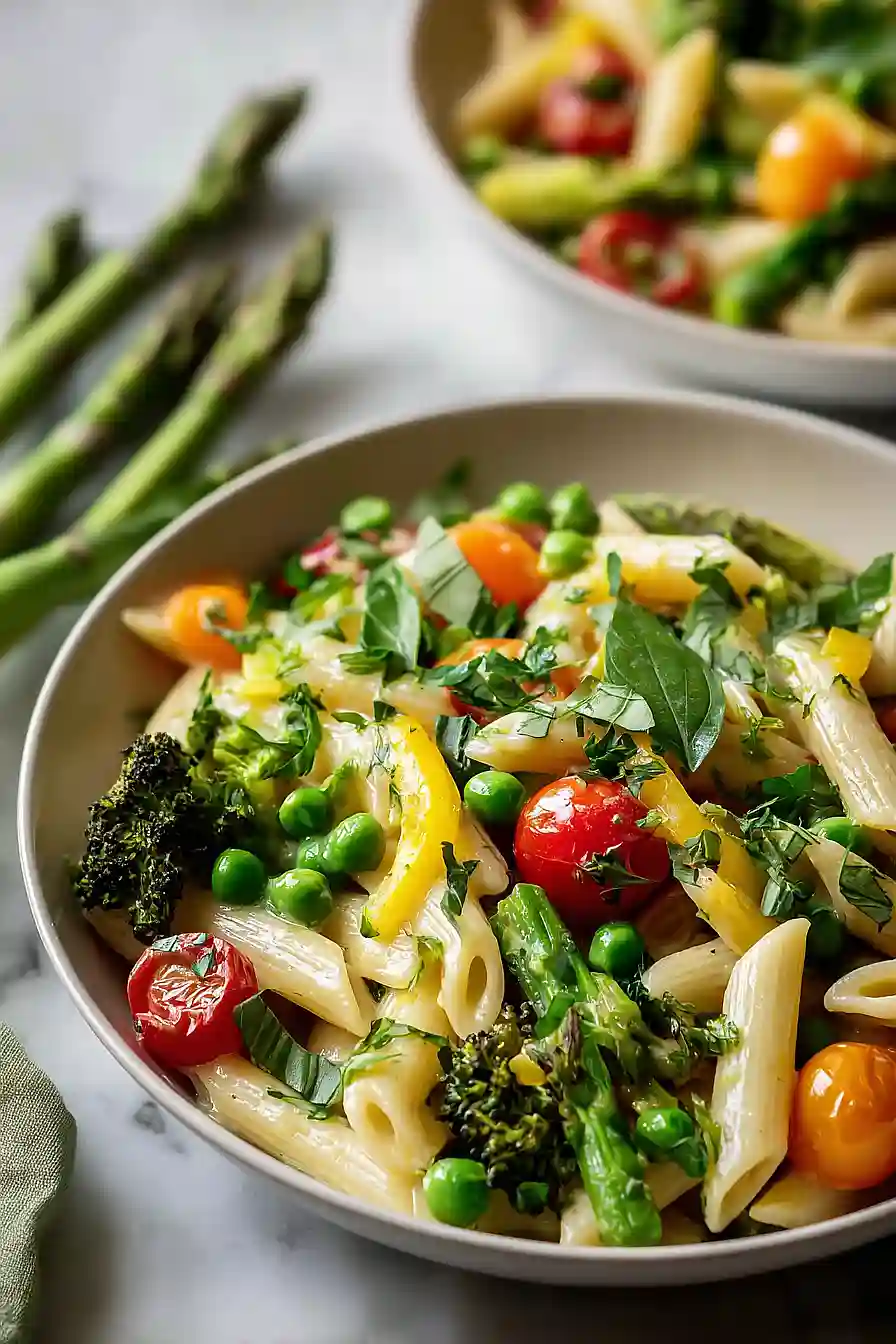
For this pasta primavera, any penne you have on hand will work great, whether it’s regular, whole wheat, or even a gluten-free variety. Regular penne pasta is the classic choice and holds up well with all those veggies and creamy sauce, but whole wheat adds a nice nutty flavor and extra fiber if that’s your thing. If you’re looking for a lower-carb option, chickpea or lentil-based penne works too, though keep in mind these alternative pastas can get mushy if overcooked, so watch your timer carefully. Whatever you choose, just make sure to cook it al dente since it’ll continue to absorb some of the sauce when you toss everything together.
Options for Substitutions
This pasta dish is all about using what you have on hand, so feel free to make these swaps:
- Penne: Any short pasta shape works great here – try rigatoni, fusilli, farfalle, or even spaghetti if that’s what you’ve got. The sauce will cling to whatever shape you choose.
- Vegetables: The vegetable mix is totally flexible. Swap in green beans, snap peas, mushrooms, cherry tomatoes, or bell peppers of any color. Just keep the total amount of veggies roughly the same and cut everything into similar-sized pieces so they cook evenly.
- Cream: Half-and-half works if you want something lighter, or use whole milk for an even lighter version. For a dairy-free option, try coconut cream or cashew cream.
- Vegetable broth: Chicken broth is a fine substitute if that’s what you have. You can also use pasta cooking water in a pinch – it adds starch that helps the sauce cling to the pasta.
- Parmesan: Pecorino Romano gives a sharper, saltier flavor, or try Grana Padano for something similar to Parmesan. For a dairy-free version, use nutritional yeast, though you’ll want to add it gradually and taste as you go.
- Fresh herbs: If you don’t have fresh basil or parsley, use about 1-2 teaspoons of dried herbs instead, adding them earlier in the cooking process so they have time to bloom.
Watch Out for These Mistakes While Cooking
The biggest mistake with pasta primavera is overcooking your vegetables, which turns them mushy and dull – aim for crisp-tender by cooking them in batches based on their density, with harder veggies like broccoli going in first and softer ones like zucchini added later.
Another common error is not salting your pasta water enough (it should taste like the sea), which means your pasta will be bland no matter how flavorful your sauce is.
To prevent a watery sauce that slides off your pasta, make sure to reserve a cup of starchy pasta water before draining – you can add splashes of it to help the cream sauce cling better to the noodles.
Finally, don’t add the Parmesan while the pan is over high heat, as this can cause the cheese to clump and separate instead of creating a smooth, creamy coating.
What to Serve With Pasta Primavera?
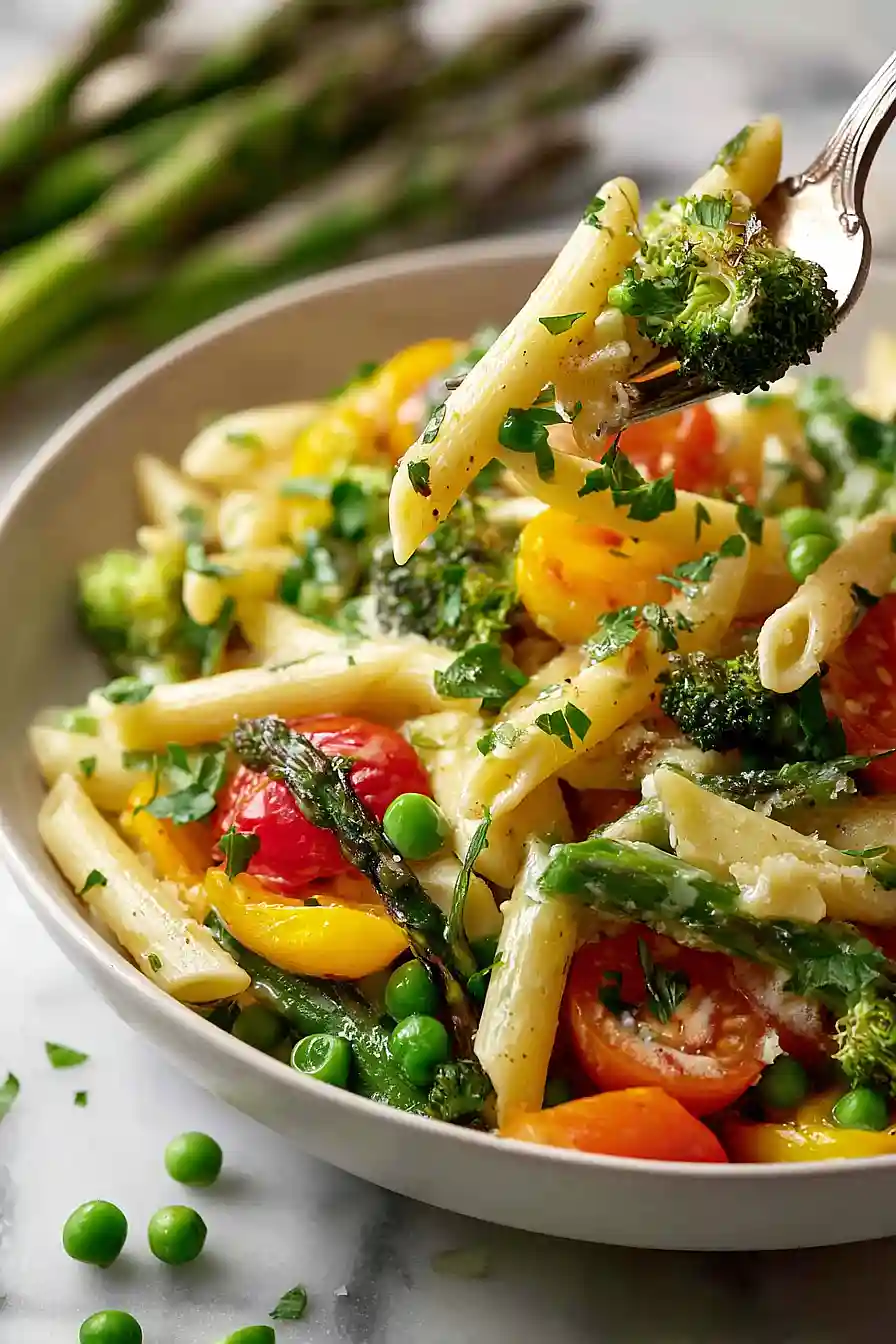
Pasta primavera is already packed with veggies, so I like to keep the sides simple and let the pasta shine. A warm loaf of garlic bread or some crusty Italian bread is perfect for soaking up that creamy lemon sauce at the bottom of your bowl. If you want to add some protein, grilled chicken, shrimp, or even some white beans tossed right into the pasta work really well with all those spring vegetables. A light arugula salad with a simple vinaigrette is also a nice way to round out the meal without making things too heavy.
Storage Instructions
Store: Keep your leftover pasta primavera in an airtight container in the fridge for up to 4 days. The veggies will soften a bit over time, but it still tastes great. I like to add a splash of vegetable broth or cream when reheating to bring back that creamy sauce.
Freeze: You can freeze this pasta for up to 2 months, though the texture of the veggies won’t be quite as crisp after thawing. Let it cool completely first, then store in freezer-safe containers. I usually freeze it in single portions so I can grab just what I need.
Reheat: Warm it up in a skillet over medium heat with a little extra broth or cream to loosen the sauce. You can also microwave it, but I find the stovetop method keeps the pasta from drying out. Give it a stir halfway through and add a fresh sprinkle of Parmesan on top.
| Preparation Time | 20-25 minutes |
| Cooking Time | 25-35 minutes |
| Total Time | 45-60 minutes |
| Level of Difficulty | Medium |
| Servings | 6 servings |
Estimated Nutrition
Estimated nutrition for the whole recipe (without optional ingredients):
- Calories: 1800-2000
- Protein: 55-65 g
- Fat: 55-65 g
- Carbohydrates: 270-300 g
Ingredients
For the pasta:
- 16 oz penne (I always use Barilla for the best al dente texture)
- 1 1/2 teaspoons salt
For the vegetables:
- 2 tbsp olive oil
- 8 oz asparagus (trimmed and cut into 1-inch pieces)
- 1 yellow pepper
- 2 cups broccoli
- 1 zucchini (sliced into 1/4-inch half-moons)
- 1 cup peas
- 1 1/2 cups tomatoes
- 1/2 teaspoon salt
- 1/4 teaspoon black pepper
For the sauce:
- 2 tbsp butter (I like Kerrygold unsalted butter for this)
- 1 shallot
- 5 garlic cloves (freshly minced for best flavor)
- 1 lemon zest
- 1 cup vegetable broth (I use Swanson organic broth)
- 1/2 cup heavy cream
- 3 tbsp lemon juice
- 1/2 cup parmesan (freshly grated for a smoother sauce)
- 1/8 teaspoon ground nutmeg
For the garnish:
- 1/4 cup basil
- 2 tbsp parsley
- 1/4 teaspoon red pepper flakes
Step 1: Prepare the Mise en Place
- 8 oz asparagus
- 1 yellow pepper
- 2 cups broccoli
- 1 zucchini
- 1 shallot
- 5 garlic cloves
- 1 lemon zest
- 1/4 cup basil
- 2 tbsp parsley
- 1/2 cup parmesan
Trim the asparagus and cut into 1-inch pieces, dice the yellow pepper into bite-sized chunks, cut the broccoli into small florets, and slice the zucchini into 1/4-inch half-moons.
Mince the garlic cloves finely, dice the shallot, zest the lemon, and mince the basil and parsley.
Grate the Parmesan cheese fresh (you’ll notice a much smoother sauce this way compared to pre-shredded).
Have all ingredients measured and ready before you start cooking.
Step 2: Cook the Pasta
- 16 oz penne
- 1 1/2 teaspoons salt
Bring a large pot of water to a boil and add 1 1/2 teaspoons salt.
Add the penne and cook for 11 minutes until al dente (the pasta should have a slight firmness when you bite it).
Drain the pasta in a colander but do not rinse it—the starch on the pasta helps the sauce adhere better.
Step 3: Sauté the Fresh Vegetables
- 2 tbsp olive oil
- 8 oz asparagus
- 1 yellow pepper
- 2 cups broccoli
- 1 zucchini
While the pasta cooks, heat 2 tablespoons of olive oil in a large skillet over medium-high heat.
Add the asparagus, yellow pepper, and broccoli, cooking for 2-3 minutes until they just begin to soften but remain crisp.
Add the zucchini and cook for another 1-2 minutes, then transfer all vegetables to a clean bowl.
The vegetables will continue to soften slightly when mixed with the warm sauce, so keeping them just slightly undercooked here ensures the final dish has great texture.
Step 4: Build the Sauce Base
- 2 tbsp butter
- 1 shallot
- 5 garlic cloves
- 1 lemon zest
- 1 cup vegetable broth
In the same skillet, melt the butter over medium heat and add the diced shallot and minced garlic.
Cook for about 2 minutes, stirring occasionally, until fragrant and slightly softened.
Stir in the lemon zest, then pour in the vegetable broth and simmer for 4-5 minutes to allow the broth to reduce slightly and the flavors to concentrate.
The lemon zest will release its oils and create a bright, fresh base for the sauce.
Step 5: Finish the Sauce and Combine
- 1/2 cup heavy cream
- 3 tbsp lemon juice
- cooked pasta from Step 2
- sautéed vegetables from Step 3
- 1 cup peas
- 1/2 cup parmesan
- 1 1/2 cups tomatoes
- 1/4 cup basil
- 1/2 teaspoon salt
- 1/4 teaspoon black pepper
- 1/8 teaspoon ground nutmeg
Remove the skillet from heat and stir in the heavy cream and 2 tablespoons of lemon juice.
Return to medium heat and add the cooked pasta from Step 2, the sautéed vegetables from Step 3, and the peas.
Gently fold everything together for about 1-2 minutes to warm through.
Then stir in the freshly grated Parmesan cheese, the remaining 1 tablespoon of lemon juice, the tomatoes, and the minced basil.
Season with 1/2 teaspoon salt, 1/4 teaspoon black pepper, and 1/8 teaspoon nutmeg, stirring gently to combine.
Step 6: Plate and Serve
- 2 tbsp parsley
- 1/4 teaspoon red pepper flakes
Divide the pasta primavera among serving bowls or plates.
Top each serving with a small amount of freshly grated Parmesan cheese, a sprinkle of fresh parsley, and a pinch of red pepper flakes for a subtle kick.
Serve immediately while the pasta is still warm and creamy.
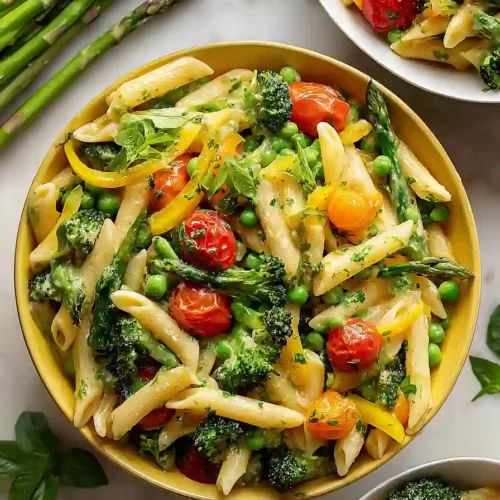
Creamy Pasta Primavera
Ingredients
For the pasta::
- 16 oz penne (I always use Barilla for the best al dente texture)
- 1 1/2 teaspoons salt
For the vegetables::
- 2 tbsp olive oil
- 8 oz asparagus (trimmed and cut into 1-inch pieces)
- 1 yellow pepper
- 2 cups broccoli
- 1 zucchini (sliced into 1/4-inch half-moons)
- 1 cup peas
- 1 1/2 cups tomatoes
- 1/2 teaspoon salt
- 1/4 teaspoon black pepper
For the sauce::
- 2 tbsp butter (I like Kerrygold unsalted butter for this)
- 1 shallot
- 5 garlic cloves (freshly minced for best flavor)
- 1 lemon zest
- 1 cup vegetable broth (I use Swanson organic broth)
- 1/2 cup heavy cream
- 3 tbsp lemon juice
- 1/2 cup parmesan (freshly grated for a smoother sauce)
- 1/8 teaspoon ground nutmeg
For the garnish::
- 1/4 cup basil
- 2 tbsp parsley
- 1/4 teaspoon red pepper flakes
Instructions
- Trim the asparagus and cut into 1-inch pieces, dice the yellow pepper into bite-sized chunks, cut the broccoli into small florets, and slice the zucchini into 1/4-inch half-moons. Mince the garlic cloves finely, dice the shallot, zest the lemon, and mince the basil and parsley. Grate the Parmesan cheese fresh (you'll notice a much smoother sauce this way compared to pre-shredded). Have all ingredients measured and ready before you start cooking.
- Bring a large pot of water to a boil and add 1 1/2 teaspoons salt. Add the penne and cook for 11 minutes until al dente (the pasta should have a slight firmness when you bite it). Drain the pasta in a colander but do not rinse it—the starch on the pasta helps the sauce adhere better.
- While the pasta cooks, heat 2 tablespoons of olive oil in a large skillet over medium-high heat. Add the asparagus, yellow pepper, and broccoli, cooking for 2-3 minutes until they just begin to soften but remain crisp. Add the zucchini and cook for another 1-2 minutes, then transfer all vegetables to a clean bowl. The vegetables will continue to soften slightly when mixed with the warm sauce, so keeping them just slightly undercooked here ensures the final dish has great texture.
- In the same skillet, melt the butter over medium heat and add the diced shallot and minced garlic. Cook for about 2 minutes, stirring occasionally, until fragrant and slightly softened. Stir in the lemon zest, then pour in the vegetable broth and simmer for 4-5 minutes to allow the broth to reduce slightly and the flavors to concentrate. The lemon zest will release its oils and create a bright, fresh base for the sauce.
- Remove the skillet from heat and stir in the heavy cream and 2 tablespoons of lemon juice. Return to medium heat and add the cooked pasta from Step 2, the sautéed vegetables from Step 3, and the peas. Gently fold everything together for about 1-2 minutes to warm through. Then stir in the freshly grated Parmesan cheese, the remaining 1 tablespoon of lemon juice, the tomatoes, and the minced basil. Season with 1/2 teaspoon salt, 1/4 teaspoon black pepper, and 1/8 teaspoon nutmeg, stirring gently to combine.
- Divide the pasta primavera among serving bowls or plates. Top each serving with a small amount of freshly grated Parmesan cheese, a sprinkle of fresh parsley, and a pinch of red pepper flakes for a subtle kick. Serve immediately while the pasta is still warm and creamy.