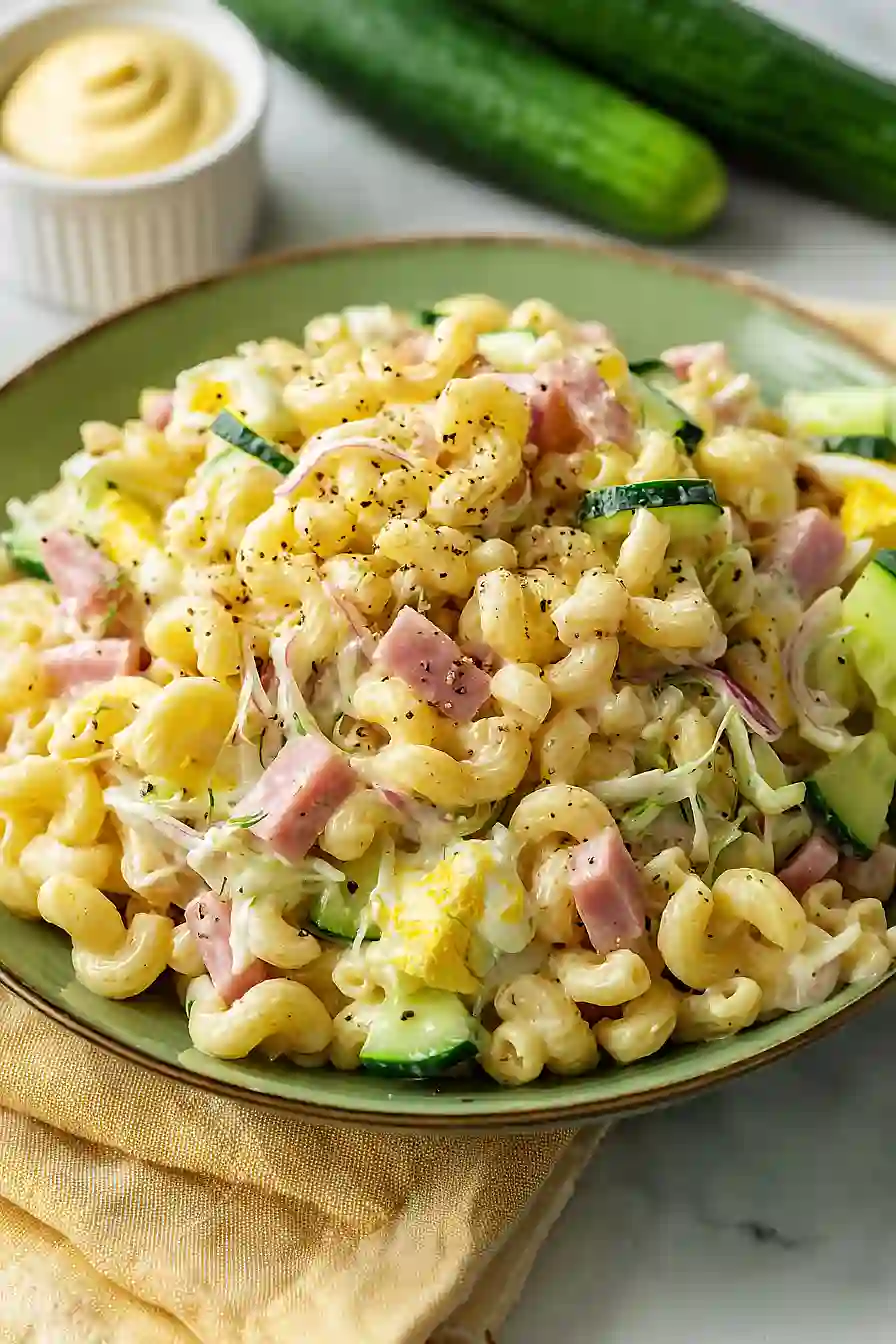
I didn’t try Japanese macaroni salad until I was in my thirties, and honestly, I thought it would be just like the American version we always had at summer barbecues. Boy, was I wrong. The first time I tasted it at a Japanese restaurant, I was hooked—it was creamier, slightly sweeter, and way more interesting than what I grew up eating.
The secret is in the details. Japanese macaroni salad uses Kewpie mayo, which has this rich, tangy flavor that regular mayo just can’t match. Plus, there’s a trick with the onions—you soak them in water first so they lose that sharp bite. It sounds like a small thing, but it makes a real difference. Now I make this all the time for potlucks, and people always ask for the recipe.
Why You’ll Love This Japanese Macaroni Salad
- Simple, everyday ingredients – You probably have most of these items in your kitchen already—just pasta, veggies, ham, and mayo with a Japanese twist.
- Perfect make-ahead dish – This salad actually tastes better after sitting in the fridge for a few hours, making it ideal for meal prep or potlucks.
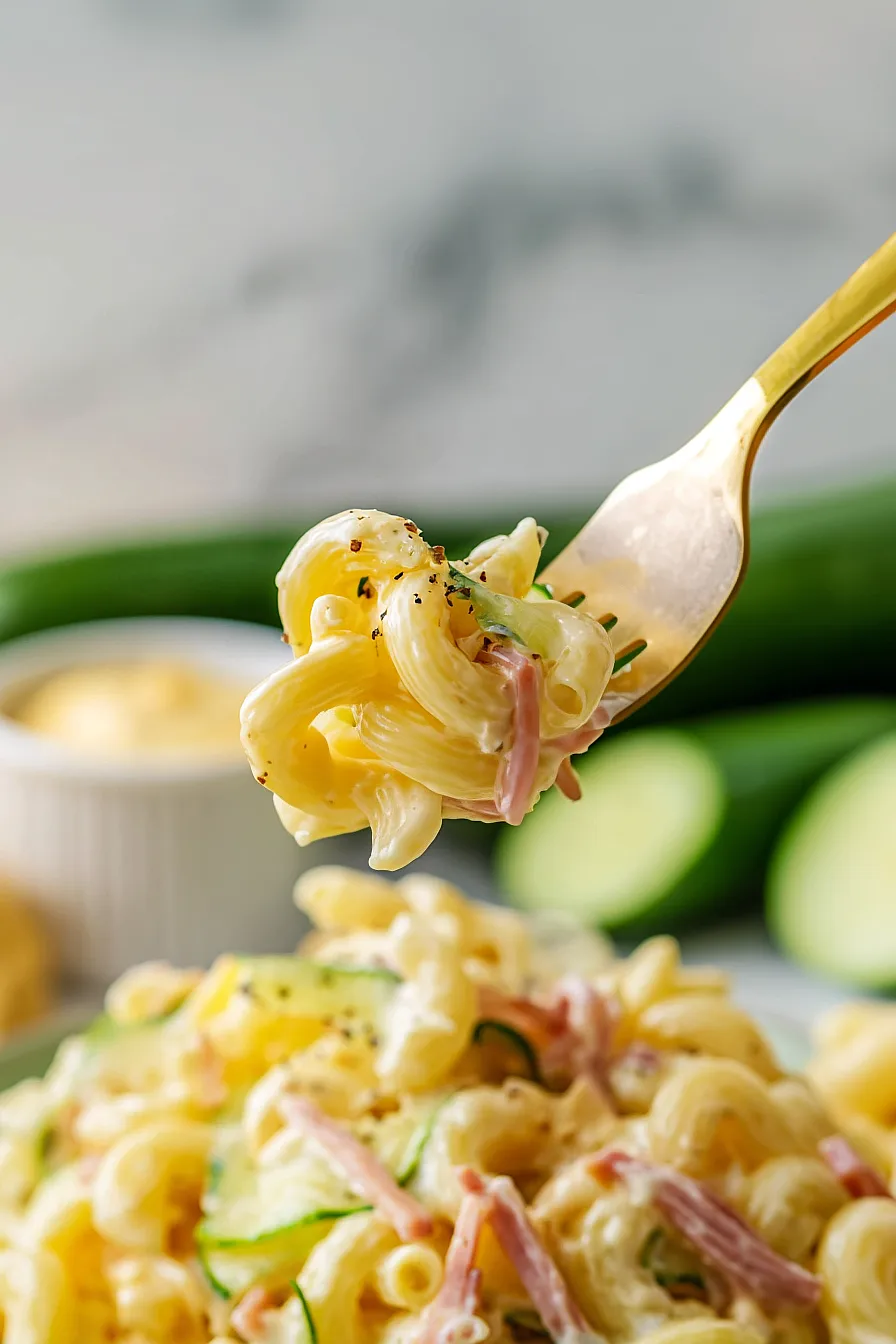
- Creamy and refreshing – The Japanese Kewpie mayo gives it a richer, tangier flavor than regular macaroni salad, while the cucumbers add a nice crunch.
- Great for any occasion – Whether you’re packing lunch, hosting a barbecue, or need a side dish for dinner, this macaroni salad fits the bill.
What Kind of Macaroni Should I Use?
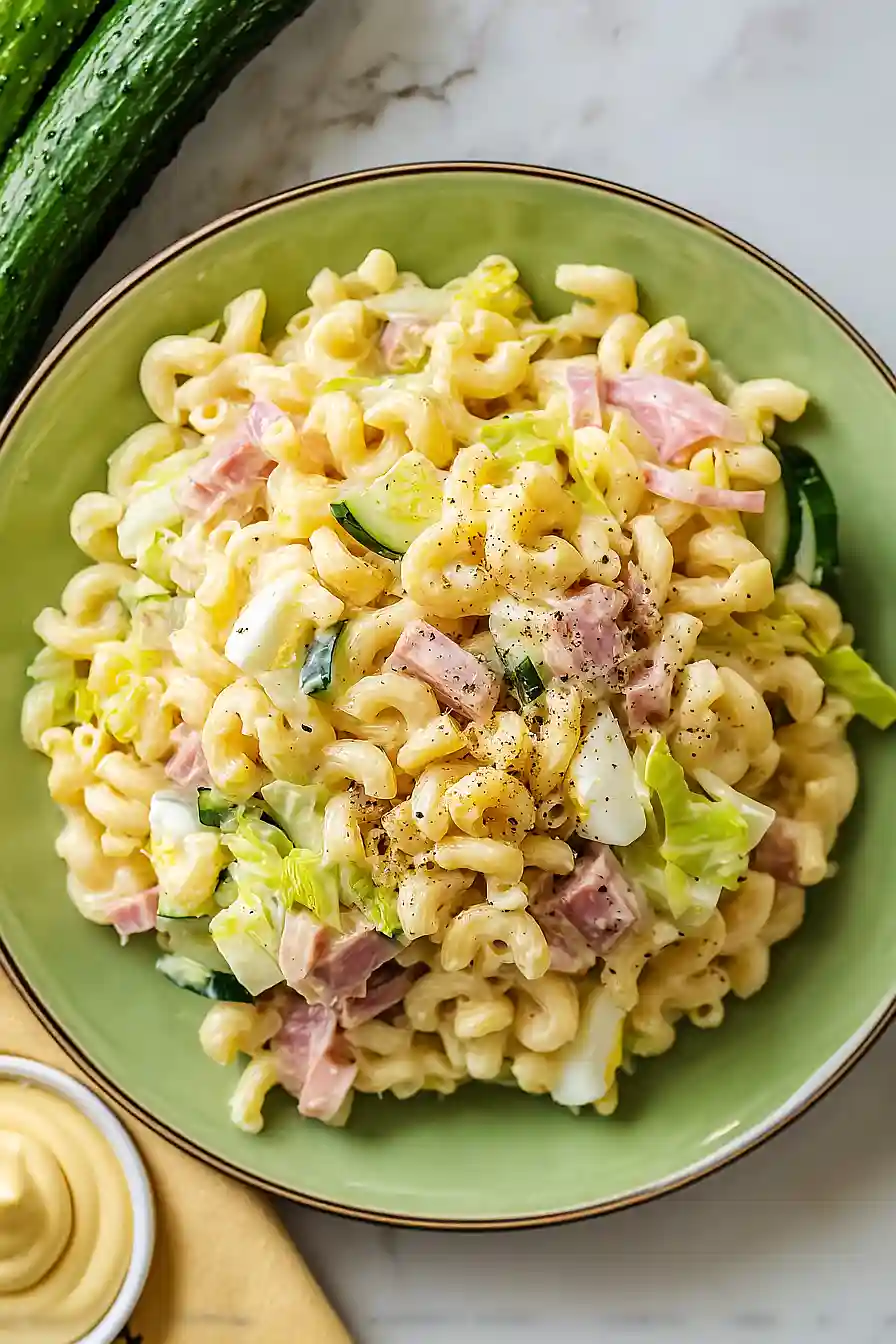
While elbow macaroni is the classic choice for Japanese macaroni salad, you’ve got plenty of options here. Short pasta shapes like penne, farfalle, or fusilli all work great because they hold onto the creamy mayo dressing really well. You can even use spaghetti if that’s what you have in your pantry – just break it into shorter pieces before cooking. The key is to cook your pasta until it’s nice and soft, not al dente like you would for Italian pasta dishes. Japanese macaroni salad is all about that tender, creamy texture, so let it cook a bit longer than you normally would.
Options for Substitutions
This Japanese macaroni salad is pretty forgiving when it comes to swaps:
- Elbow macaroni: The recipe already mentions this, but penne, farfalle, fusilli, or even broken spaghetti work great. Just cook according to package directions and make sure to rinse with cold water after draining.
- Japanese Kewpie mayonnaise: Kewpie is really what makes this salad special with its tangy, rich flavor, so I’d recommend keeping it if possible. But if you can’t find it, regular mayonnaise mixed with a tiny splash of rice vinegar and a pinch of sugar can work in a pinch.
- Persian or Japanese cucumber: Regular cucumbers are fine – just peel them and scoop out the seeds before slicing, since they have more water content than Persian or Japanese varieties.
- Ham: Turkey slices, cooked chicken breast, or even imitation crab (kanikama) make good substitutes. You can also leave out the meat entirely for a vegetarian version.
- Rice vinegar: White wine vinegar or apple cider vinegar can substitute, though rice vinegar has a milder taste that works better with this dish.
- Onion: If raw onion is too strong for you, try using green onions or shallots instead for a milder flavor.
Watch Out for These Mistakes While Cooking
The biggest mistake people make with Japanese macaroni salad is undercooking the pasta – you actually want to cook it one minute longer than the package directions so it’s soft enough to absorb the dressing without being crunchy.
Don’t skip the step of salting and rinsing the cucumber and onion, because this removes excess moisture and bitterness that would otherwise water down your salad and make it taste harsh.
Another common error is adding the mayonnaise while the pasta is still warm, which causes it to separate and get oily, so make sure everything is completely cooled before mixing in the Kewpie mayo.
Finally, resist the urge to serve it right away – this salad really needs that hour in the fridge for the flavors to blend together and for the pasta to fully soak up all the creamy dressing.
What to Serve With Japanese Macaroni Salad?
Japanese macaroni salad is perfect as a side dish for grilled meats like teriyaki chicken, yakitori skewers, or even simple burgers at your next cookout. I love serving it alongside other Japanese-style dishes like tonkatsu, karaage (fried chicken), or grilled fish for a complete meal. Since it’s creamy and a bit tangy, it pairs really well with crispy foods that need something cool and refreshing on the side. You can also pack it up for bentos or picnics, where it works great next to rice balls, edamame, or some pickled vegetables.
Storage Instructions
Store: Keep your macaroni salad in an airtight container in the fridge for up to 3 days. It actually tastes even better the next day once all the flavors have had time to mingle together. Just give it a quick stir before serving since the mayo might settle a bit.
Make Ahead: This salad is perfect for making ahead! You can prep it the night before a picnic or potluck. If you’re planning to store it for more than a day, you might want to hold back a tablespoon of mayo to stir in before serving to freshen it up.
Serve: This salad is meant to be served cold, so just pull it straight from the fridge when you’re ready to eat. If it seems a little dry after sitting, just mix in an extra spoonful of Kewpie mayo to bring back that creamy texture.
| Preparation Time | 25-35 minutes |
| Cooking Time | 20-30 minutes |
| Total Time | 120-140 minutes |
| Level of Difficulty | Medium |
| Servings | 4 servings |
Estimated Nutrition
Estimated nutrition for the whole recipe (without optional ingredients):
- Calories: 650-750
- Protein: 18-22 g
- Fat: 35-42 g
- Carbohydrates: 60-70 g
Ingredients
For the pasta base:
- 4 oz macaroni (I use Barilla elbows for the perfect bite)
- 1 1/2 tbsp salt
- 2 1/2 tsp olive oil (prevents pieces from sticking together)
- 1 1/4 tbsp rice vinegar
- 1 1/4 tsp sugar
For the salad mix:
- 2 eggs (hard-boiled and chopped into 1/2-inch pieces)
- 1/2 onion (sliced paper-thin and soaked in water to remove bite)
- 2 cucumbers
- 4 slices ham (cut into thin 1-inch strips)
- 1/4 cup carrots (finely julienned)
For the dressing:
- 5 tbsp mayonnaise (I highly recommend Kewpie for that authentic Japanese flavor)
- 1/2 tsp Dijon mustard (for subtle tang and depth)
- 1/2 tsp freshly ground black pepper
Step 1: Prepare mise en place and start cooking eggs and pasta
- 2 eggs
- 1/2 onion, sliced paper-thin
- 1 1/2 tbsp salt
- 4 oz macaroni
- 1/4 cup carrots, finely julienned
Begin by bringing two separate pots of water to a boil—one for the eggs and one for the pasta.
While the water heats, slice the onion paper-thin and place it in a bowl of cold water to soak and mellow out its sharp bite; this is a key step in Japanese cooking that removes the raw onion harshness.
Finely julienne the carrots and set aside.
When the egg water reaches a boil, carefully add the eggs and set a timer for 12 minutes.
Once the pasta water is boiling, add salt and the macaroni, then cook for 1 minute longer than the package directions recommend—this slight overcooking gives the pasta the tender, almost creamy texture characteristic of Japanese macaroni salad.
Step 2: Cool and prepare the pasta base
- cooked macaroni from Step 1
- 2 1/2 tsp olive oil
- 1 1/4 tbsp rice vinegar
- 1 1/4 tsp sugar
Drain the cooked macaroni in a colander and transfer to a large mixing bowl.
While the pasta is still warm, toss it immediately with the olive oil, rice vinegar, and sugar—this seasoning absorption happens best when the pasta is hot, allowing it to soak up the flavors evenly.
Let the pasta cool to room temperature, stirring occasionally to prevent clumping and to ensure even cooling.
The oil coating prevents the pieces from sticking together while they cool.
Step 3: Prepare vegetables and hard-boiled eggs
- 2 eggs, hard-boiled
- 2 cucumbers, sliced thin
- 1/2 onion, soaked from Step 1
When the eggs have finished cooking (12 minutes), transfer them immediately to an ice bath to stop the cooking process and ensure a perfectly set yolk with no grey-green ring.
While the eggs cool, slice the cucumbers into thin rounds or matchsticks.
Drain the soaked onions and pat them dry with paper towels—this removes excess water that would dilute the dressing.
I like to squeeze the onions gently to extract as much moisture as possible, which concentrates their flavor and prevents the salad from becoming watery.
Once the eggs are cool enough to handle, peel them gently, chop them into roughly 1/2-inch pieces, and set aside.
Step 4: Prepare remaining components and create dressing base
- 4 slices ham, cut into strips
- 5 tbsp mayonnaise
- 1/2 tsp Dijon mustard
- 1/2 tsp freshly ground black pepper
- salt to taste
Cut the ham into thin 1-inch strips and set aside.
In a small bowl, whisk together the mayonnaise, Dijon mustard, salt, and black pepper until smooth—I highly recommend using Kewpie mayonnaise for its richer, slightly sweeter flavor that’s more authentic to Japanese versions.
The mustard adds a subtle tang and depth that balances the creamy richness without making the salad taste overtly tangy.
Step 5: Assemble the salad and chill
- cooled macaroni from Step 2
- prepared vegetables from Step 3
- ham from Step 4
- chopped egg from Step 3
- dressing from Step 4
- 1/4 cup carrots from Step 1
Add the drained vegetables (cucumber, onion, and carrots from the earlier steps), ham, and chopped egg to the cooled pasta base from Step 2.
Pour the dressing from Step 4 over everything and gently fold together using a spatula or large spoon, being careful not to break up the delicate pasta pieces.
Once thoroughly combined, transfer the salad to a serving dish or storage container and refrigerate for at least 1 hour before serving—the chilling time allows all the flavors to meld together and the salad to set to the proper texture.
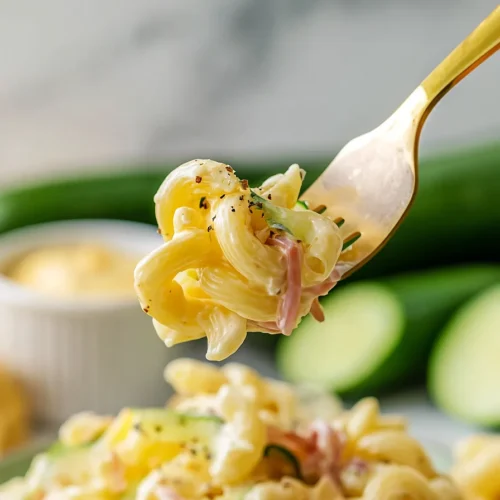
Cucumber Japanese Macaroni Salad
Ingredients
For the pasta base
- 4 oz macaroni (I use Barilla elbows for the perfect bite)
- 1 1/2 tbsp salt
- 2 1/2 tsp olive oil (prevents pieces from sticking together)
- 1 1/4 tbsp rice vinegar
- 1 1/4 tsp sugar
For the salad mix
- 2 eggs (hard-boiled and chopped into 1/2-inch pieces)
- 1/2 onion (sliced paper-thin and soaked in water to remove bite)
- 2 cucumbers
- 4 slices ham (cut into thin 1-inch strips)
- 1/4 cup carrots (finely julienned)
For the dressing
- 5 tbsp mayonnaise (I highly recommend Kewpie for that authentic Japanese flavor)
- 1/2 tsp Dijon mustard (for subtle tang and depth)
- 1/2 tsp freshly ground black pepper
Instructions
- Begin by bringing two separate pots of water to a boil—one for the eggs and one for the pasta. While the water heats, slice the onion paper-thin and place it in a bowl of cold water to soak and mellow out its sharp bite; this is a key step in Japanese cooking that removes the raw onion harshness. Finely julienne the carrots and set aside. When the egg water reaches a boil, carefully add the eggs and set a timer for 12 minutes. Once the pasta water is boiling, add salt and the macaroni, then cook for 1 minute longer than the package directions recommend—this slight overcooking gives the pasta the tender, almost creamy texture characteristic of Japanese macaroni salad.
- Drain the cooked macaroni in a colander and transfer to a large mixing bowl. While the pasta is still warm, toss it immediately with the olive oil, rice vinegar, and sugar—this seasoning absorption happens best when the pasta is hot, allowing it to soak up the flavors evenly. Let the pasta cool to room temperature, stirring occasionally to prevent clumping and to ensure even cooling. The oil coating prevents the pieces from sticking together while they cool.
- When the eggs have finished cooking (12 minutes), transfer them immediately to an ice bath to stop the cooking process and ensure a perfectly set yolk with no grey-green ring. While the eggs cool, slice the cucumbers into thin rounds or matchsticks. Drain the soaked onions and pat them dry with paper towels—this removes excess water that would dilute the dressing. I like to squeeze the onions gently to extract as much moisture as possible, which concentrates their flavor and prevents the salad from becoming watery. Once the eggs are cool enough to handle, peel them gently, chop them into roughly 1/2-inch pieces, and set aside.
- Cut the ham into thin 1-inch strips and set aside. In a small bowl, whisk together the mayonnaise, Dijon mustard, salt, and black pepper until smooth—I highly recommend using Kewpie mayonnaise for its richer, slightly sweeter flavor that's more authentic to Japanese versions. The mustard adds a subtle tang and depth that balances the creamy richness without making the salad taste overtly tangy.
- Add the drained vegetables (cucumber, onion, and carrots from the earlier steps), ham, and chopped egg to the cooled pasta base from Step 2. Pour the dressing from Step 4 over everything and gently fold together using a spatula or large spoon, being careful not to break up the delicate pasta pieces. Once thoroughly combined, transfer the salad to a serving dish or storage container and refrigerate for at least 1 hour before serving—the chilling time allows all the flavors to meld together and the salad to set to the proper texture.