I used to think frittatas were one of those fancy brunch things you could only get at restaurants. The kind of dish that required special skills or equipment I didn’t have. Turns out, I was totally wrong.
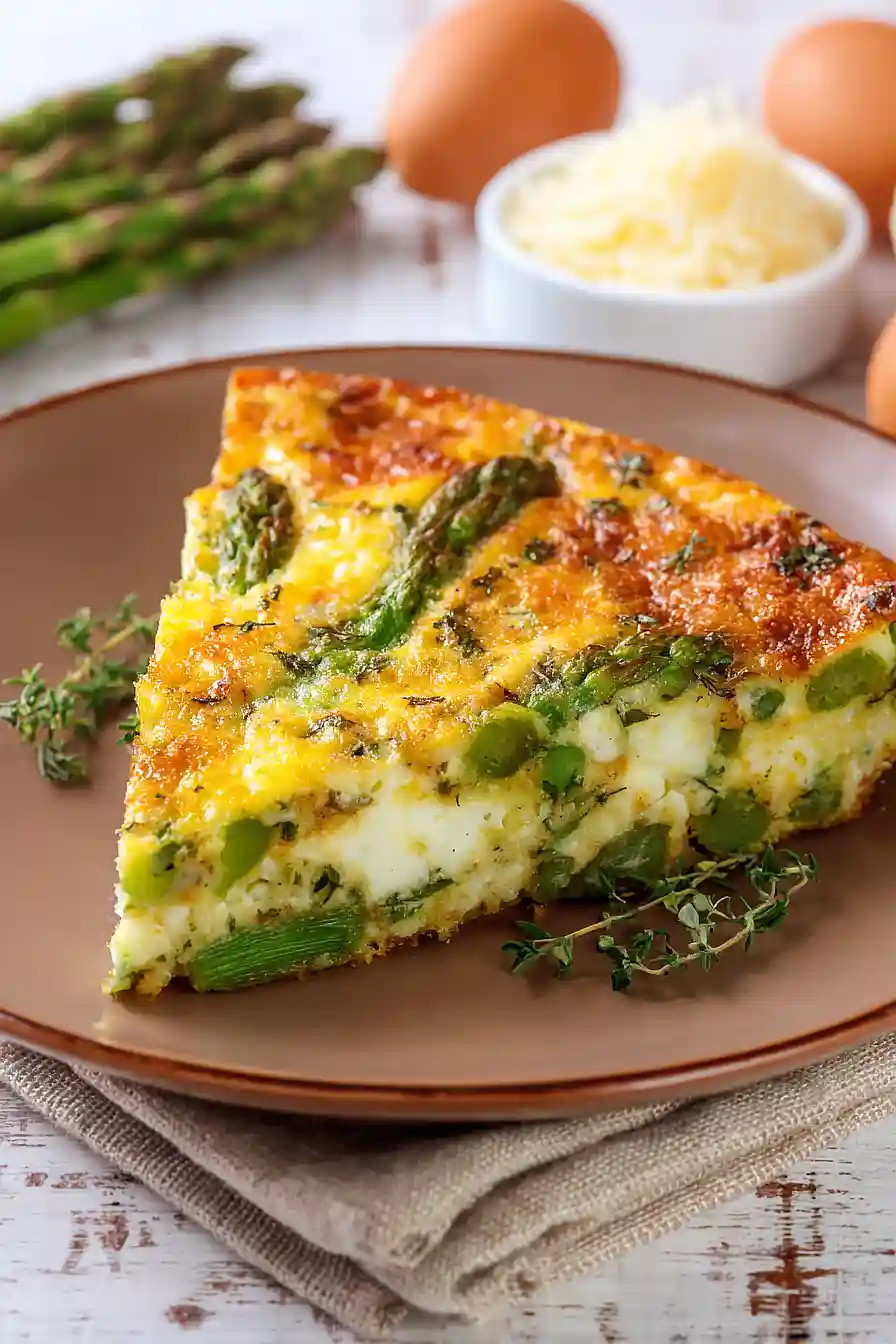
A frittata is basically just eggs, cheese, and whatever vegetables you have on hand, all cooked together in one pan. No flipping required like with an omelet. No stress. When asparagus is in season, this is my go-to recipe because it feels special enough for weekend guests but easy enough for a regular Tuesday dinner.
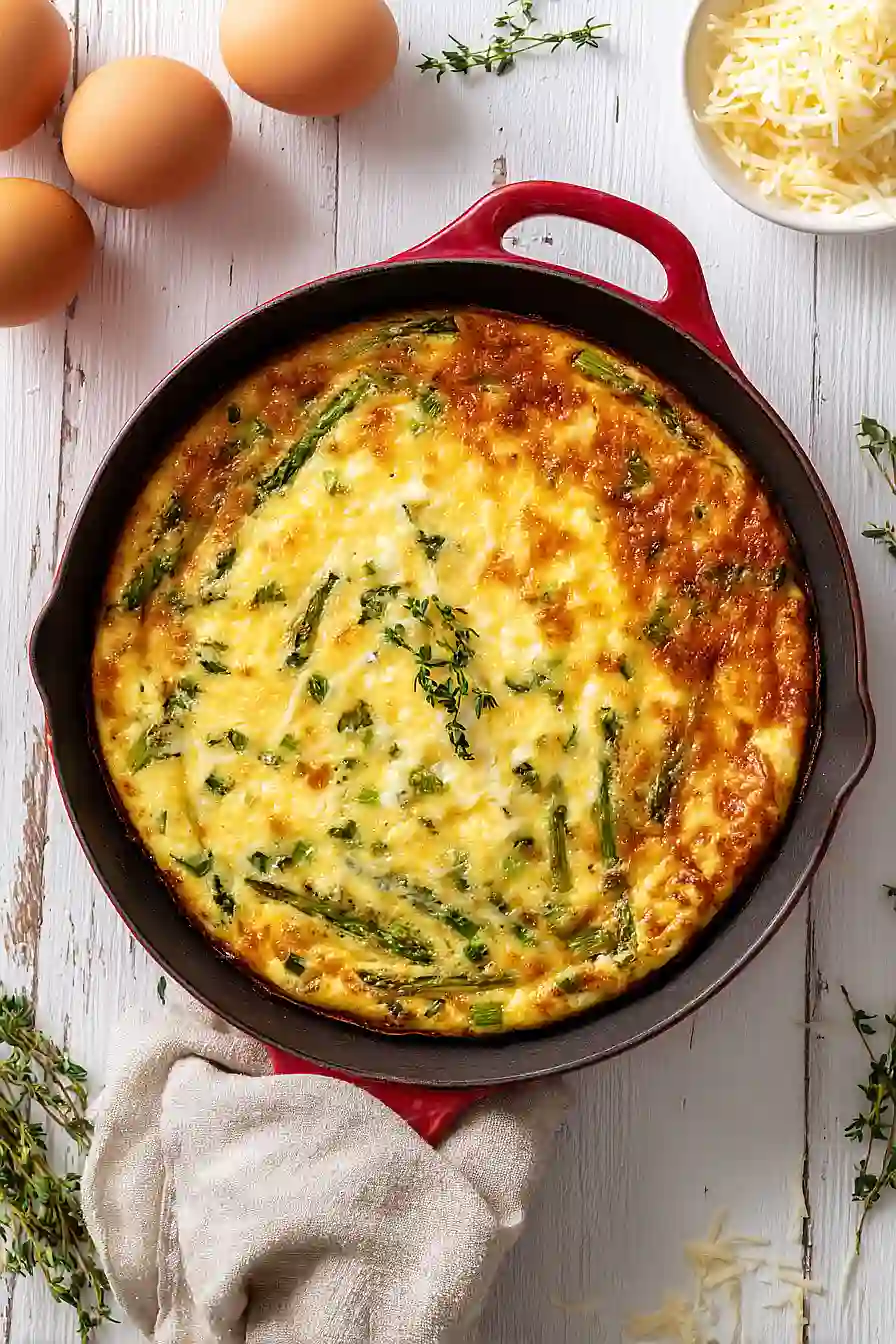
The best part? You start it on the stovetop and finish it under the broiler, which means you get a creamy middle and a slightly golden top without having to do any fancy pan flipping that might end with eggs on your kitchen floor.
Why You’ll Love This Asparagus Frittata
- Quick and easy – Ready in under 45 minutes, this frittata is perfect for busy mornings or when you need a fast dinner solution.
- High-protein breakfast or brunch – With 6 eggs, ricotta, and Gruyere cheese, this dish packs plenty of protein to keep you satisfied throughout the day.
- Works for any meal – Enjoy it hot for breakfast, serve it at room temperature for brunch, or pair it with a salad for a light dinner.
- Fresh spring flavors – The combination of tender asparagus, creamy ricotta, and nutty Gruyere creates a restaurant-quality dish right in your own kitchen.
- One-pan wonder – Everything cooks in a single skillet, which means less cleanup and more time to enjoy your meal.
What Kind of Asparagus Should I Use?
Fresh asparagus is definitely the way to go for this frittata, and you’ll want to look for spears that are firm with tight, compact tips. Medium-thickness asparagus tends to work best since thin spears can get a bit mushy during cooking, while really thick ones might not cook through evenly. When you’re at the store, give the bunch a gentle squeeze near the tips – if they feel squishy or look dried out, skip them and find a fresher bunch. Don’t forget to snap off the woody ends before cooking, which usually happens naturally about two-thirds of the way down the spear when you bend it gently.

Options for Substitutions
This frittata is pretty forgiving when it comes to swapping ingredients:
- Shallots: If you don’t have shallots, use about 1/3 cup of finely chopped yellow onion or even a couple of green onions for a milder flavor.
- Asparagus: Feel free to swap asparagus with other spring vegetables like zucchini, bell peppers, or broccoli florets. Just make sure to cut them into similar-sized pieces and cook them until tender before adding the eggs.
- Ricotta: Cottage cheese works well here – just blend it smooth if you prefer a creamier texture. You could also use cream cheese or mascarpone, though you might want to thin them with a splash of milk.
- Gruyere: Swiss cheese is the closest match, but cheddar, fontina, or even mozzarella will work fine. Just pick a cheese that melts well.
- Fresh herbs: Don’t have fresh chives or tarragon? Use what you have – parsley, dill, or basil all work nicely. You can also use about 1/4 teaspoon of dried tarragon instead of fresh.
- Eggs: The eggs are really the star of a frittata, so I wouldn’t recommend substituting these – they’re what holds everything together and gives you that classic texture.
Watch Out for These Mistakes While Cooking
The biggest mistake when making frittata is cranking up the heat too high on the stovetop, which causes the bottom to burn while the center stays runny – keep your burner at medium or even medium-low for even cooking throughout.
Another common error is forgetting to use an oven-safe skillet, so make sure your pan can handle the broiler before you start (cast iron or stainless steel works great, but skip anything with a plastic handle).
When it comes to the broiler step, don’t walk away from the kitchen because frittatas can go from golden to burnt in less than a minute – stay close and check it every couple minutes.
Finally, resist the urge to slice into your frittata right away, as letting it rest for 5 minutes helps it set up properly and makes cutting clean slices much easier.
What to Serve With Asparagus Frittata?
An asparagus frittata is perfect for brunch or a light dinner, and it pairs really well with a simple mixed greens salad dressed with lemon vinaigrette. I love serving it alongside some crusty bread or toasted baguette slices that you can use to scoop up any extra bites. If you’re making it for breakfast or brunch, some crispy bacon or breakfast sausage on the side adds a nice savory touch. For a lighter option, fresh fruit like berries or melon makes a refreshing contrast to the rich, cheesy frittata.
Storage Instructions
Store: This asparagus frittata keeps really well in the fridge for up to 4 days. Just let it cool completely, then cover it tightly with plastic wrap or store it in an airtight container. It’s great for meal prep since you can slice off a piece whenever you need a quick breakfast or lunch.
Freeze: You can freeze individual slices of frittata for up to 2 months. Wrap each piece in plastic wrap, then place them all in a freezer bag. This way you can grab just what you need without thawing the whole thing.
Serve: Frittata is actually delicious cold straight from the fridge, which makes it perfect for packed lunches. If you prefer it warm, just microwave a slice for about 45 seconds or reheat it in a 350°F oven for 10 minutes until warmed through.
| Preparation Time | 10-15 minutes |
| Cooking Time | 15-30 minutes |
| Total Time | 25-45 minutes |
| Level of Difficulty | Medium |
| Servings | 4 servings |
Estimated Nutrition
Estimated nutrition for the whole recipe (without optional ingredients):
- Calories: 1050-1200
- Protein: 60-70 g
- Fat: 75-85 g
- Carbohydrates: 30-36 g
Ingredients
For the base:
- 3 tbsp butter (I like Kerrygold unsalted butter for this)
- 1/2 cup shallots
- 1 lb asparagus (tough ends trimmed and cut into 1-inch pieces)
For the egg mixture:
- 6 eggs
- 1 cup ricotta (I use Galbani whole milk ricotta for a creamier texture)
- 3/4 tsp salt
- 1 tbsp chives
- 1/4 tsp tarragon
- 1/8 tsp black pepper
For the topping:
- 1 cup gruyere (shredded, makes it extra creamy and rich)
Step 1: Prepare Mise en Place and Egg Mixture
- 1 lb asparagus
- 1/2 cup shallots
- 6 eggs
- 1 cup ricotta
- 3/4 tsp salt
- 1 tbsp chives
- 1/4 tsp tarragon
- 1/8 tsp black pepper
Trim the tough ends from the asparagus and cut into 1-inch pieces.
Dice the shallots into small, even pieces.
In a medium bowl, whisk together the eggs, ricotta, salt, chives, tarragon, and black pepper until well combined and smooth.
The ricotta will create a creamy texture, so whisk thoroughly to break up any lumps.
Set the egg mixture aside and position your oven rack about 6 inches from the broiler element, then turn the broiler to high so it preheats while you cook on the stovetop.
Step 2: Sauté Shallots and Asparagus
- 3 tbsp butter
- 1/2 cup shallots
- 1 lb asparagus
Melt the butter in a 10-inch oven-safe skillet over medium heat, swirling to coat the pan evenly.
Add the diced shallots and cook for about 3 minutes, stirring occasionally, until they become soft and translucent.
Add the asparagus pieces and continue cooking for another 3 minutes, stirring gently to combine.
The asparagus should start to soften slightly but still have a bit of firmness—you’re not trying to fully cook it since it will continue cooking in the broiler.
I like to use a quality butter like Kerrygold here because it adds a subtle richness that complements the creamy ricotta beautifully.
Step 3: Build the Frittata Base and Start Cooking
- egg mixture from Step 1
- sautéed shallots and asparagus from Step 2
Pour the egg mixture from Step 1 evenly over the sautéed shallots and asparagus, tilting the pan gently to distribute it throughout.
Reduce the heat to medium and cook undisturbed for 4-5 minutes, until the edges begin to set but the center still looks slightly wet and jiggly.
You’re looking for the frittata to be mostly cooked on the bottom but still quite runny on top—this is the perfect moment to move it to the broiler.
Step 4: Finish Under the Broiler with Cheese
- 1 cup gruyere
Scatter the shredded Gruyère evenly over the top of the frittata.
Carefully transfer the skillet to the preheated broiler and cook for 6-8 minutes, watching carefully to prevent burning.
The cheese will melt and the top will puff slightly and turn golden brown.
The eggs in the center should set completely, but they should still be slightly creamy and tender, not rubbery.
I find that checking around the 6-minute mark helps you catch it at the perfect moment—you want a nice golden top without any dark spots.
Step 5: Rest and Serve
Remove the skillet from the broiler and let it rest for 1-2 minutes so the eggs set completely and the cheese becomes even creamier.
Using a rubber spatula, loosen the frittata around the edges and slide it onto a cutting board or serve directly from the skillet.
Cut into wedges and serve warm.

Quick Asparagus Frittata
Ingredients
For the base::
- 3 tbsp butter (I like Kerrygold unsalted butter for this)
- 1/2 cup shallots
- 1 lb asparagus (tough ends trimmed and cut into 1-inch pieces)
For the egg mixture::
- 6 eggs
- 1 cup ricotta (I use Galbani whole milk ricotta for a creamier texture)
- 3/4 tsp salt
- 1 tbsp chives
- 1/4 tsp tarragon
- 1/8 tsp black pepper
For the topping::
- 1 cup gruyere (shredded, makes it extra creamy and rich)
Instructions
- Trim the tough ends from the asparagus and cut into 1-inch pieces. Dice the shallots into small, even pieces. In a medium bowl, whisk together the eggs, ricotta, salt, chives, tarragon, and black pepper until well combined and smooth. The ricotta will create a creamy texture, so whisk thoroughly to break up any lumps. Set the egg mixture aside and position your oven rack about 6 inches from the broiler element, then turn the broiler to high so it preheats while you cook on the stovetop.
- Melt the butter in a 10-inch oven-safe skillet over medium heat, swirling to coat the pan evenly. Add the diced shallots and cook for about 3 minutes, stirring occasionally, until they become soft and translucent. Add the asparagus pieces and continue cooking for another 3 minutes, stirring gently to combine. The asparagus should start to soften slightly but still have a bit of firmness—you're not trying to fully cook it since it will continue cooking in the broiler. I like to use a quality butter like Kerrygold here because it adds a subtle richness that complements the creamy ricotta beautifully.
- Pour the egg mixture from Step 1 evenly over the sautéed shallots and asparagus, tilting the pan gently to distribute it throughout. Reduce the heat to medium and cook undisturbed for 4-5 minutes, until the edges begin to set but the center still looks slightly wet and jiggly. You're looking for the frittata to be mostly cooked on the bottom but still quite runny on top—this is the perfect moment to move it to the broiler.
- Scatter the shredded Gruyère evenly over the top of the frittata. Carefully transfer the skillet to the preheated broiler and cook for 6-8 minutes, watching carefully to prevent burning. The cheese will melt and the top will puff slightly and turn golden brown. The eggs in the center should set completely, but they should still be slightly creamy and tender, not rubbery. I find that checking around the 6-minute mark helps you catch it at the perfect moment—you want a nice golden top without any dark spots.
- Remove the skillet from the broiler and let it rest for 1-2 minutes so the eggs set completely and the cheese becomes even creamier. Using a rubber spatula, loosen the frittata around the edges and slide it onto a cutting board or serve directly from the skillet. Cut into wedges and serve warm.