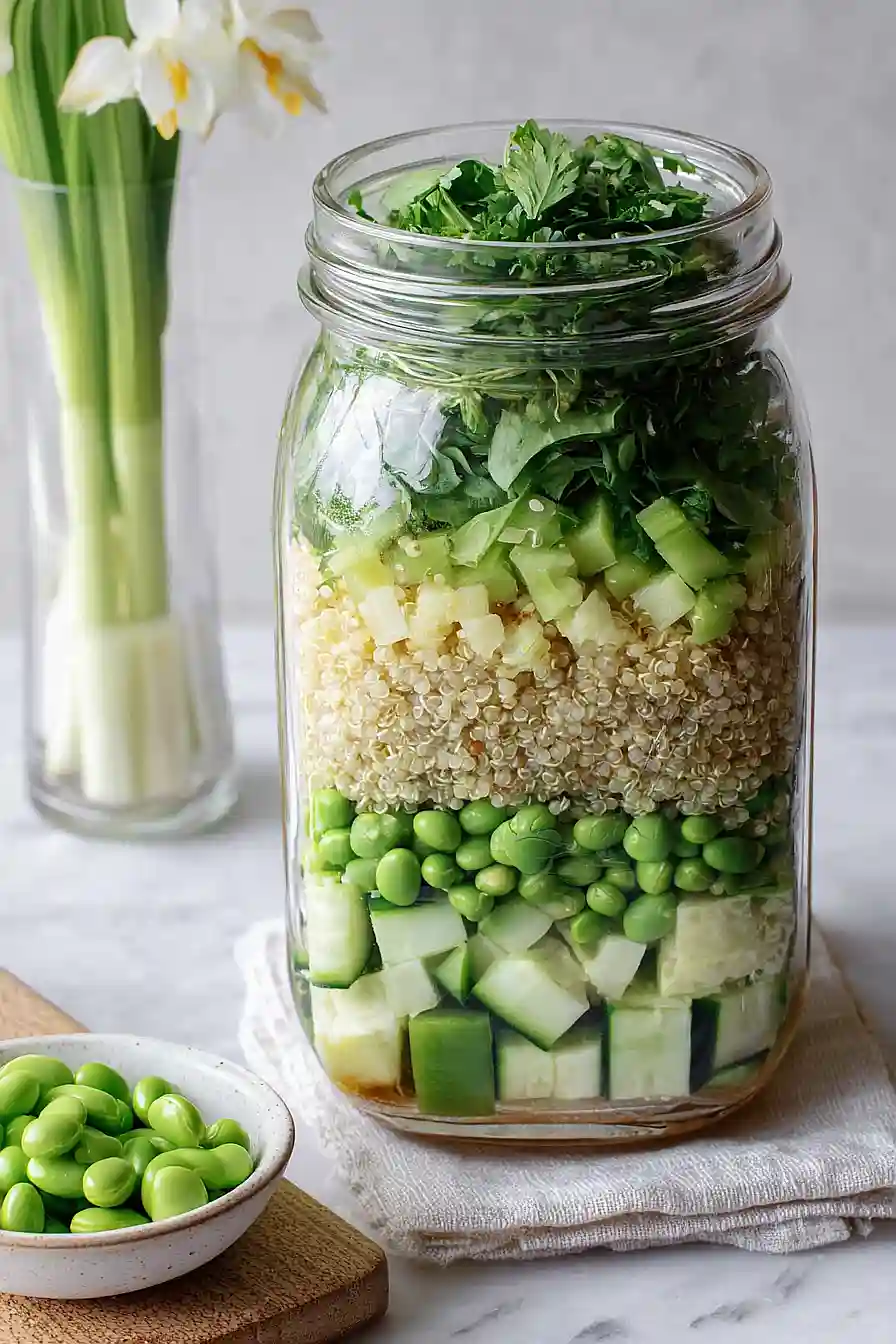
I’m always looking for ways to add more protein to my lunch without feeling weighed down. Salads are great, but let’s be honest—most of them leave me hungry an hour later. That’s when I started playing around with adding quinoa, edamame, and peas to my bowls. Game changer.
This salad has become my go-to meal prep recipe. I make a big batch on Sunday, and it stays fresh in the fridge all week. The Asian dressing is simple—just whisk everything together in a bowl. No fancy equipment needed. The best part? Every ingredient pulls its weight in the protein department, so you’re actually satisfied.
Want something crunchy? Check. Need it to travel well? Done. Looking for a lunch that tastes good cold? This is it.
Why You’ll Love This High Protein Salad
- Packed with protein – With edamame, quinoa, and peas, this salad delivers serious protein to keep you full and satisfied for hours.
- Ready in minutes – This comes together in just 10-15 minutes, making it perfect for busy weekdays or meal prep.
- Fresh and flavorful – The homemade Asian dressing with tamari, sesame oil, and lime juice brings all the fresh vegetables to life without any processed ingredients.
- Great for meal prep – Make a big batch on Sunday and enjoy healthy lunches all week long. The ingredients hold up well in the fridge.
- Naturally plant-based – This salad is vegan-friendly and loaded with nutrient-dense vegetables, making it a wholesome choice for any diet.
What Kind of Quinoa Should I Use?
You can use white, red, or black quinoa for this salad – they all work great and have similar nutritional profiles. White quinoa has the mildest flavor and fluffiest texture, which lets the Asian dressing really shine through. Red and black quinoa have a slightly nuttier taste and hold their shape a bit better, which some people prefer for salads since the grains stay more distinct. If you can find tri-color quinoa at the store, that’s a fun option too since it adds some visual interest to your bowl. Just make sure to rinse your quinoa well before cooking to remove the natural coating that can make it taste bitter.

Options for Substitutions
This salad is pretty forgiving and works well with different ingredients you might have on hand:
- Tamari: Regular soy sauce works perfectly here if you don’t have tamari. If you need a gluten-free option and don’t have tamari, try coconut aminos – just add a pinch of salt since it’s a bit less salty.
- Quinoa: Brown rice, farro, or couscous make great swaps for quinoa. Just cook according to package directions and let cool before adding to the salad.
- Edamame: If you can’t find edamame, chickpeas or white beans work well to keep the protein content high. You can also use cooked chicken or tofu for extra protein.
- Maple syrup: Honey or agave nectar can replace maple syrup in the dressing. Use the same amount and adjust to taste.
- Rice vinegar: White wine vinegar or apple cider vinegar work in a pinch. Start with 4 tablespoons and add more if needed, as they can be slightly stronger.
- Spinach: Feel free to use any leafy greens you prefer – mixed greens, arugula, or chopped romaine all work great.
- Cilantro: If you’re one of those people who thinks cilantro tastes like soap, fresh basil or mint make tasty alternatives in this salad.
Watch Out for These Mistakes While Cooking
The biggest mistake with this high protein salad is adding the dressing too early, which can make your greens wilted and sad – wait until just before serving, or pack the dressing separately if you’re meal prepping for the week.
Another common error is using hot or warm quinoa, which will steam and soften your crisp vegetables, so make sure to cook it ahead of time and let it cool completely in the fridge.
Don’t skip rinsing your quinoa before cooking, as this removes the bitter coating and makes a huge difference in taste, and be careful not to overcook it – you want it fluffy, not mushy.
For the best texture, try toasting your sesame seeds in a dry pan for a few minutes before adding them to the salad, which brings out their nutty flavor and adds a nice crunch.

What to Serve With High Protein Salad?
This salad is pretty filling on its own thanks to all the quinoa and edamame, but it pairs really well with some grilled chicken, salmon, or tofu if you want to make it even heartier. I love serving it alongside some crispy spring rolls or potstickers for a complete Asian-inspired meal that feels like takeout at home. If you’re looking for something on the side, some miso soup or a simple bowl of steamed rice works great to round out the meal. You could also wrap leftovers in a whole wheat tortilla with some extra protein for an easy lunch the next day.
Storage Instructions
Store: This salad keeps really well for meal prep! Store the dressing separately in a small jar or container, and keep the salad in an airtight container in the fridge for up to 4 days. The quinoa and veggies hold up great, so you can make a big batch on Sunday and have healthy lunches ready all week.
Make Ahead: I actually think this salad tastes better after sitting for a few hours because the flavors really come together. You can prep everything the night before and just toss with the dressing right before eating. If you want to add the dressing ahead of time, it’ll still be good for about 2 days, though the greens might soften a bit.
Serve: This salad is meant to be enjoyed cold or at room temperature, so no reheating needed. Just give it a good toss before serving to redistribute the dressing and toppings. If you stored it without dressing, add it right before eating and sprinkle with extra sesame seeds for a nice crunch.
| Preparation Time | 10-15 minutes |
| Cooking Time | 0 minutes |
| Total Time | 10-15 minutes |
| Level of Difficulty | Easy |
| Servings | 8 servings |
Estimated Nutrition
Estimated nutrition for the whole recipe (without optional ingredients):
- Calories: 900-1050
- Protein: 45-55 g
- Fat: 28-35 g
- Carbohydrates: 125-140 g
Ingredients
For the asian dressing:
- 6 tbsp tamari (I prefer San-J for a richer umami flavor)
- 1/4 cup rice vinegar
- 1 tbsp maple syrup (use Grade A for a cleaner sweetness)
- 1 tbsp sesame oil
- 1 lime juice
- 1/2 tsp grated ginger
For the salad base:
- 2 cups cucumber (diced into 1/2-inch pieces)
- 2 cups celery
- 2 cups green peas
- 2 cups edamame (I use Seapoint Farms shelled edamame)
- 2 cups quinoa (cooked and cooled to room temperature)
- 2 cups spinach (finely chopped into 1/4-inch ribbons)
- 1/2 cup cilantro
- 1/2 cup scallion
- 1/4 cup sesame seeds
Step 1: Prepare the Asian Dressing Base
- 6 tbsp tamari
- 1/4 cup rice vinegar
- 1 tbsp maple syrup
- 1 tbsp sesame oil
- 1/2 tsp grated ginger
In a small bowl, whisk together the tamari, rice vinegar, maple syrup, sesame oil, and grated ginger until fully combined and the syrup is dissolved.
This creates your flavor foundation.
Set the dressing aside and taste it—you’ll adjust the lime juice to balance the flavors at the end, so hold off on that for now.
I like to make the dressing first so the flavors have time to meld while you prepare the vegetables.
Step 2: Prepare All Vegetables and Proteins
- 2 cups cucumber
- 2 cups celery
- 2 cups spinach
- 1/2 cup cilantro
- 1/2 cup scallion
- 2 cups quinoa
- 2 cups edamame
- 2 cups green peas
While the dressing sits, prepare all your vegetables and proteins with proper cuts for texture and eating.
Dice the cucumber into 1/2-inch pieces, chop the celery into similar-sized pieces, finely slice the spinach into 1/4-inch ribbons, and chop the cilantro and scallions.
If your quinoa isn’t already cooked and cooled, prepare it now and let it reach room temperature—this prevents it from wilting the delicate vegetables when tossed together.
Ensure the edamame and peas are ready to use.
Step 3: Assemble the Salad and Finish with Dressing
- dressing mixture from Step 1
- prepared vegetables and proteins from Step 2
- 1 lime juice
- 1/4 cup sesame seeds
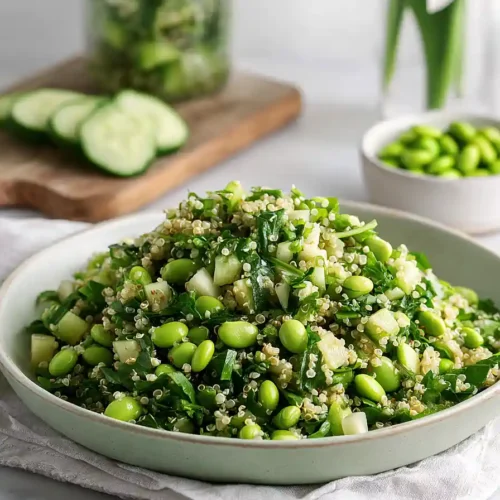
In a large bowl, combine the prepared cucumber, celery, peas, edamame, cooled quinoa, spinach, cilantro, and scallions.
Pour the dressing from Step 1 over the salad and gently toss until all ingredients are evenly coated.
Add the lime juice gradually, tasting as you go—this allows you to control the acidity level since lime juice intensity varies.
Finish by sprinkling the sesame seeds over the top just before serving, which keeps them from softening in the dressing.
10-Minute High Protein Salad with Asian Dressing
Ingredients
For the asian dressing::
- 6 tbsp tamari (I prefer San-J for a richer umami flavor)
- 1/4 cup rice vinegar
- 1 tbsp maple syrup (use Grade A for a cleaner sweetness)
- 1 tbsp sesame oil
- 1 lime juice
- 1/2 tsp grated ginger
For the salad base::
- 2 cups cucumber (diced into 1/2-inch pieces)
- 2 cups celery
- 2 cups green peas
- 2 cups edamame (I use Seapoint Farms shelled edamame)
- 2 cups quinoa (cooked and cooled to room temperature)
- 2 cups spinach (finely chopped into 1/4-inch ribbons)
- 1/2 cup cilantro
- 1/2 cup scallion
- 1/4 cup sesame seeds
Instructions
- In a small bowl, whisk together the tamari, rice vinegar, maple syrup, sesame oil, and grated ginger until fully combined and the syrup is dissolved. This creates your flavor foundation. Set the dressing aside and taste it—you'll adjust the lime juice to balance the flavors at the end, so hold off on that for now. I like to make the dressing first so the flavors have time to meld while you prepare the vegetables.
- While the dressing sits, prepare all your vegetables and proteins with proper cuts for texture and eating. Dice the cucumber into 1/2-inch pieces, chop the celery into similar-sized pieces, finely slice the spinach into 1/4-inch ribbons, and chop the cilantro and scallions. If your quinoa isn't already cooked and cooled, prepare it now and let it reach room temperature—this prevents it from wilting the delicate vegetables when tossed together. Ensure the edamame and peas are ready to use.
- In a large bowl, combine the prepared cucumber, celery, peas, edamame, cooled quinoa, spinach, cilantro, and scallions. Pour the dressing from Step 1 over the salad and gently toss until all ingredients are evenly coated. Add the lime juice gradually, tasting as you go—this allows you to control the acidity level since lime juice intensity varies. Finish by sprinkling the sesame seeds over the top just before serving, which keeps them from softening in the dressing.