I’ve always had a soft spot for cookies that look as good as they taste. There’s something special about thumbprint cookies—they’re fancy enough for a party but easy enough to make on a random Tuesday. Plus, you get to press your thumb into the dough, which is oddly satisfying.
These Italian thumbprint cookies take the classic recipe and give it a little twist. Instead of the usual jam filling, we’re using fig spread, which adds a nice depth of flavor. The chopped almonds on the outside give them a bit of crunch, and the almond extract brings everything together.
The best part? They come together with ingredients you probably already have in your pantry. And if you can’t find fig spread, you can swap in your favorite jam. No judgment here—I just happen to think the fig version is worth trying at least once.
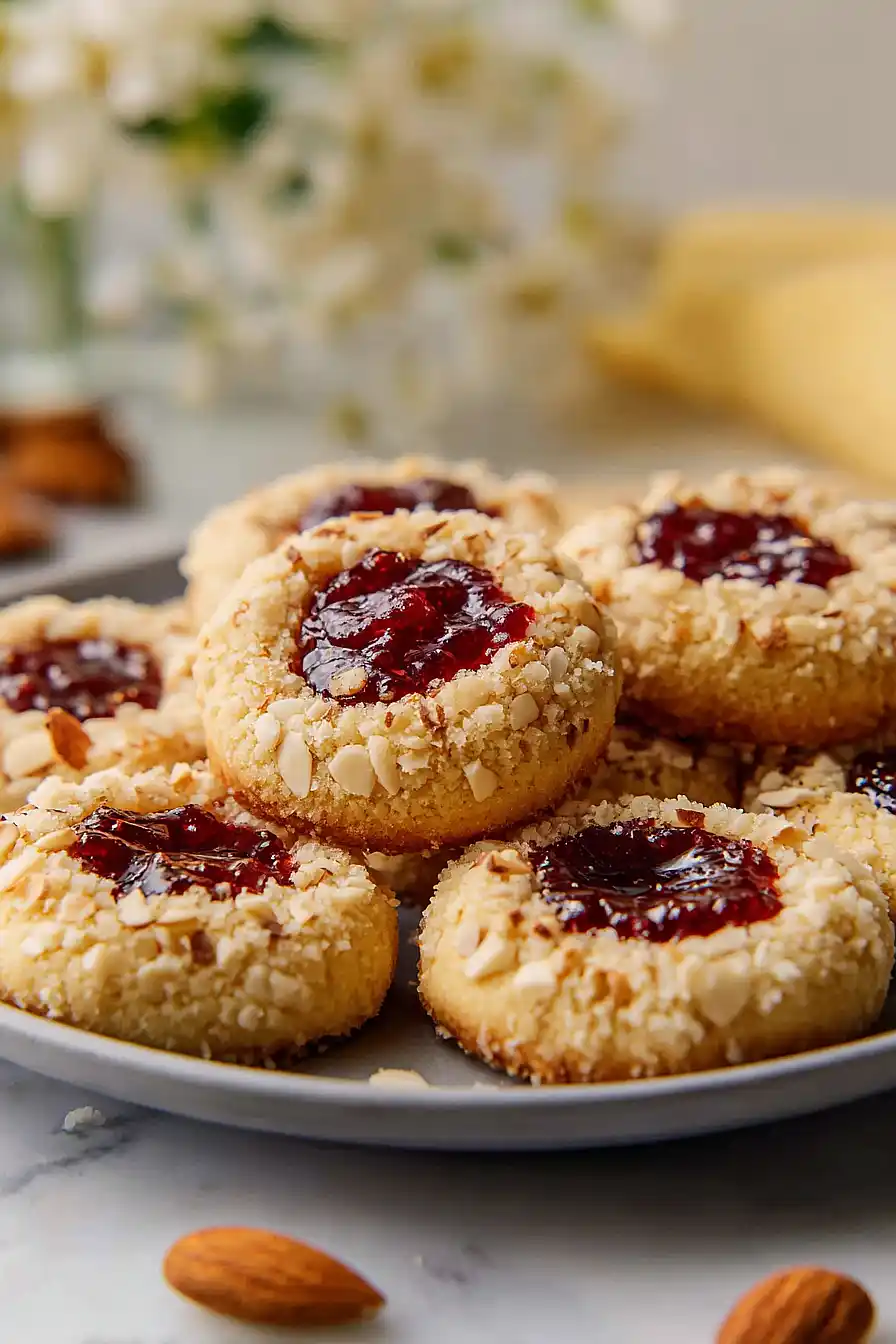
Why You’ll Love These Italian Thumbprint Cookies
- Quick and easy to make – These cookies come together in under an hour, making them perfect for last-minute gatherings or when you need a homemade treat without spending all day in the kitchen.
- Simple ingredients – You probably have most of these staples in your pantry already, and the ingredient list is short and straightforward.
- Beautiful presentation – The thumbprint filled with fig spread and the almond coating make these cookies look bakery-quality, so they’re great for gifting or serving at parties.
- Unique flavor combination – The buttery cookie base with almond extract, crunchy almond coating, and sweet fig filling creates a sophisticated taste that stands out from your typical cookie.
What Kind of Fig Spread Should I Use?
For these Italian thumbprint cookies, you can use any good quality fig spread or fig jam you find at the grocery store. Some brands call it fig preserves or fig butter, and they’ll all work just fine for this recipe. If you want a smoother filling, look for a fig spread that’s been processed more finely, but a chunkier preserve will give you nice texture and a more rustic look. You can also swap in other fruit spreads like apricot or raspberry if fig isn’t your thing, though fig is traditional for Italian cookies and pairs beautifully with the almond flavor.
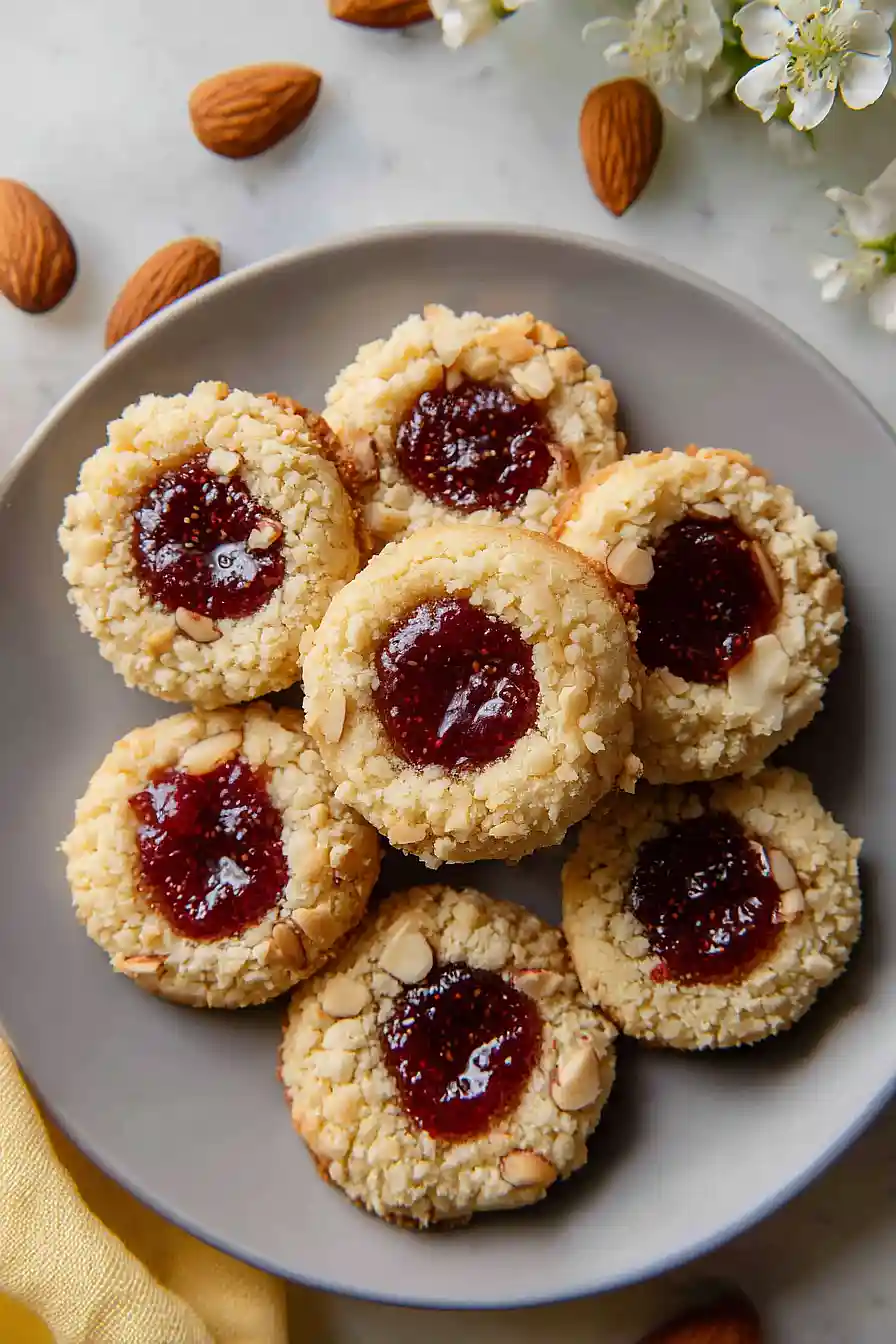
Options for Substitutions
These cookies are pretty forgiving, so here are some swaps you can make:
- Almond extract: If you’re not a fan of almond flavor or don’t have any on hand, vanilla extract works perfectly. You can also try orange or lemon extract for a citrus twist.
- Almonds: Feel free to use walnuts, pecans, or hazelnuts instead. Just chop them finely so they stick to the cookies properly. If you have nut allergies, crushed graham crackers or finely chopped pretzels can give you that crunchy coating.
- Fig spread: This is where you can really get creative! Raspberry, apricot, strawberry jam, or even Nutella all work great. Just make sure whatever you use is thick enough to stay in the thumbprint without running.
- Brown sugar: Regular white granulated sugar works fine here. Your cookies will be slightly less chewy but still tasty.
- Raw coarse sugar: If you don’t have coarse sugar, you can skip it entirely or use regular granulated sugar. It’s mainly for texture and a bit of sparkle.
- Butter: Stick with unsalted butter for this recipe – it’s important for controlling the salt level and getting the right texture in these delicate cookies.
Watch Out for These Mistakes While Baking
The biggest mistake with thumbprint cookies is making the indentation too shallow, which causes the jam to spill over during baking – press your thumb down firmly (about halfway through the dough ball) to create a deep enough well for the fig spread.
Another common error is adding the filling before baking, but it’s actually better to bake the cookies for about 8 minutes first, then press the indentation again and add the fig spread for the remaining baking time to prevent burning.
Don’t skip chilling the dough for 15-20 minutes if it feels too soft to work with, as this makes rolling the balls much easier and helps the cookies hold their shape better.
Finally, make sure your egg white is at room temperature before coating the cookies, as cold egg whites don’t stick as well to the dough and can result in the almond coating falling off.
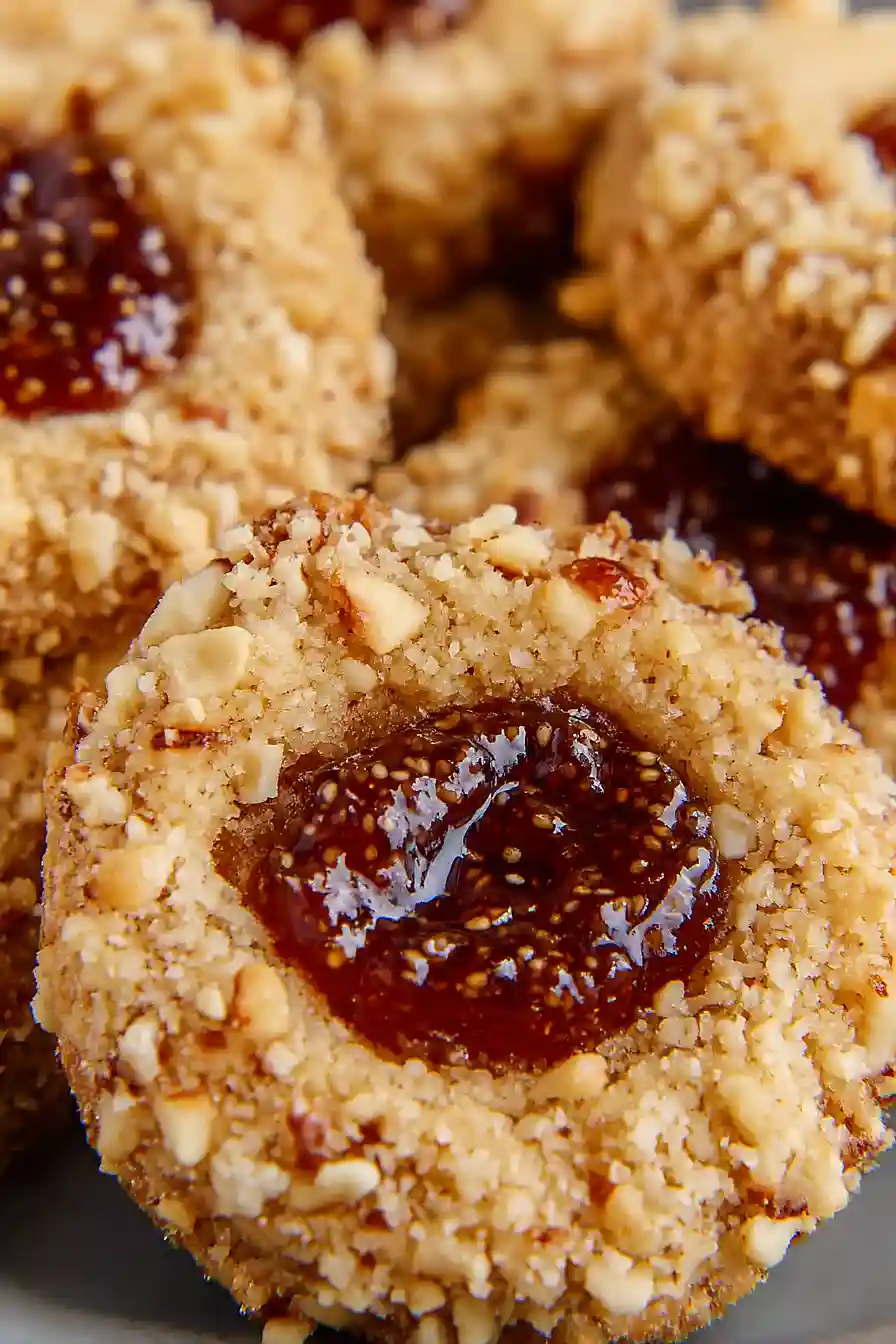
What to Serve With Italian Thumbprint Cookies?
These cookies are perfect alongside a cup of hot coffee or espresso, especially if you’re going for that authentic Italian café vibe. They also make a great addition to a dessert platter with other cookies like biscotti or pizzelles when you’re having people over. I love setting these out with some fresh fruit like grapes or sliced pears, which balance out the sweetness of the fig filling. If you’re feeling fancy, pour some sweet dessert wine like Vin Santo for dipping, or keep it simple with a glass of cold milk.
Storage Instructions
Store: These thumbprint cookies keep really well in an airtight container at room temperature for up to a week. Just make sure they’re completely cooled before you stack them, and you can put a piece of parchment paper between layers if you’re worried about the fig filling sticking.
Freeze: You can freeze these cookies for up to 3 months in a freezer-safe container. I actually like to freeze the dough balls before baking too – just roll them in the almonds and sugar, then freeze on a baking sheet before transferring to a bag. When you want fresh cookies, bake them straight from frozen and add a couple extra minutes to the baking time.
Make Ahead: These are great for making ahead since they actually taste better the next day once the flavors have time to settle. You can bake them up to 3 days before you need them, and they’ll still be just as good as fresh.
| Preparation Time | 15-30 minutes |
| Cooking Time | 15-20 minutes |
| Total Time | 30-50 minutes |
| Level of Difficulty | Medium |
Estimated Nutrition
Estimated nutrition for the whole recipe (without optional ingredients):
- Calories: 1400-1550
- Protein: 16-20 g
- Fat: 75-85 g
- Carbohydrates: 170-190 g
Ingredients
For the cookie dough:
- 1 cup all-purpose flour (I use King Arthur all-purpose flour)
- 1/4 tsp almond extract (for best flavor and aroma)
- 1/4 tsp salt
- 1/2 cup unsalted butter (room temperature, about 70°F)
- 1 large egg yolk
- 1/4 cup brown sugar
For the coating:
- 1/3 cup chopped almonds (finely chopped, about 1/8-inch pieces)
- 2 tbsp raw coarse sugar
- 1 large egg white (room temperature)
For the filling:
- 1/2 cup fig spread (I prefer Bonne Maman)
Step 1: Prepare Mise en Place and Preheat Oven
- 1/3 cup almonds, finely chopped
- All dry ingredients measured
Preheat your oven to 350°F and position a rack in the middle.
While the oven heats, measure out all your ingredients and chop the almonds into fine, uniform pieces (about 1/8-inch)—this ensures even coating and consistent texture on the cookies.
Having everything ready before you start mixing is key to a smooth, stress-free baking process.
Step 2: Cream Butter and Brown Sugar
- 1/2 cup unsalted butter
- 1/4 cup brown sugar
In a mixing bowl, beat the room-temperature butter with brown sugar for 2-3 minutes until the mixture is light, fluffy, and pale.
This creaming process incorporates air into the dough, which creates a tender, delicate cookie texture.
Don’t skip this step—proper creaming makes a real difference in the final result.
Step 3: Build the Dough Base
- creamed butter and brown sugar from Step 2
- 1 large egg yolk
- 1/4 tsp almond extract
- 1 cup all-purpose flour
- 1/4 tsp salt
Add the egg yolk and almond extract to the creamed mixture from Step 2 and beat for 1 minute until fully incorporated.
Then add the flour and salt, mixing on low speed just until the dough comes together—don’t overmix, as this can develop too much gluten and make the cookies tough.
Once combined, transfer the dough to the refrigerator for 15 minutes to firm up, which makes shaping much easier.
Step 4: Prepare Coatings and Shape Cookies
- 1 large egg white
- 1/3 cup chopped almonds from Step 1
- 2 tbsp raw coarse sugar
- chilled dough from Step 3
While the dough chills, whisk the egg white in one small bowl until foamy (about 30 seconds), and mix the chopped almonds with the raw coarse sugar in another bowl.
Remove the chilled dough from the fridge and roll it into 12 equal balls—I find rolling between my palms gives a smooth, even sphere.
Dip each dough ball into the egg white, then immediately roll it in the almond-sugar mixture, coating all sides evenly.
Step 5: Create Indentations and First Bake
- coated dough balls from Step 4
Place the coated dough balls on a parchment-lined baking sheet, spacing them about 2 inches apart.
Using your thumb or the back of a small spoon, press a gentle indent into the center of each cookie—don’t press too hard or you’ll crack the almond coating.
Bake for 8 minutes until the cookies are just set but still pale; they should look slightly underdone at this point.
Step 6: Fill and Finish Baking
- partially baked cookies from Step 5
- 1/2 cup fig spread
Remove the cookies from the oven and while they’re still warm, spoon about 1 teaspoon of fig spread into the center indent of each cookie.
Return the baking sheet to the oven and bake for 7-8 minutes more until the edges are golden brown and the fig spread is warm.
The cookies will continue to set as they cool, so don’t overbake or they’ll become dry.
Step 7: Cool and Serve
Remove the cookies from the oven and let them cool on the baking sheet for 5 minutes—this helps them firm up without cracking.
Transfer to a wire rack to cool completely before serving.
Store in an airtight container for up to 5 days.
Mouthwatering Italian Thumbprint Cookies
Ingredients
For the cookie dough:
- 1 cup all-purpose flour (I use King Arthur all-purpose flour)
- 1/4 tsp almond extract (for best flavor and aroma)
- 1/4 tsp salt
- 1/2 cup unsalted butter (room temperature, about 70°F)
- 1 large egg yolk
- 1/4 cup brown sugar
For the coating:
- 1/3 cup chopped almonds (finely chopped, about 1/8-inch pieces)
- 2 tbsp raw coarse sugar
- 1 large egg white (room temperature)
For the filling:
- 1/2 cup fig spread (I prefer Bonne Maman)
Instructions
- Preheat your oven to 350°F and position a rack in the middle. While the oven heats, measure out all your ingredients and chop the almonds into fine, uniform pieces (about 1/8-inch)—this ensures even coating and consistent texture on the cookies. Having everything ready before you start mixing is key to a smooth, stress-free baking process.
- In a mixing bowl, beat the room-temperature butter with brown sugar for 2-3 minutes until the mixture is light, fluffy, and pale. This creaming process incorporates air into the dough, which creates a tender, delicate cookie texture. Don't skip this step—proper creaming makes a real difference in the final result.
- Add the egg yolk and almond extract to the creamed mixture from Step 2 and beat for 1 minute until fully incorporated. Then add the flour and salt, mixing on low speed just until the dough comes together—don't overmix, as this can develop too much gluten and make the cookies tough. Once combined, transfer the dough to the refrigerator for 15 minutes to firm up, which makes shaping much easier.
- While the dough chills, whisk the egg white in one small bowl until foamy (about 30 seconds), and mix the chopped almonds with the raw coarse sugar in another bowl. Remove the chilled dough from the fridge and roll it into 12 equal balls—I find rolling between my palms gives a smooth, even sphere. Dip each dough ball into the egg white, then immediately roll it in the almond-sugar mixture, coating all sides evenly.
- Place the coated dough balls on a parchment-lined baking sheet, spacing them about 2 inches apart. Using your thumb or the back of a small spoon, press a gentle indent into the center of each cookie—don't press too hard or you'll crack the almond coating. Bake for 8 minutes until the cookies are just set but still pale; they should look slightly underdone at this point.
- Remove the cookies from the oven and while they're still warm, spoon about 1 teaspoon of fig spread into the center indent of each cookie. Return the baking sheet to the oven and bake for 7-8 minutes more until the edges are golden brown and the fig spread is warm. The cookies will continue to set as they cool, so don't overbake or they'll become dry.
- Remove the cookies from the oven and let them cool on the baking sheet for 5 minutes—this helps them firm up without cracking. Transfer to a wire rack to cool completely before serving. Store in an airtight container for up to 5 days.