Finding a cookie recipe that’s both vegan and captures that classic snickerdoodle flavor can feel like an impossible task. After all, traditional snickerdoodles rely heavily on butter and eggs for their soft, chewy texture and signature tang, and most vegan versions end up either too cakey or missing that special something that makes snickerdoodles so craveable.
Luckily, these vegan snickerdoodles check all the boxes: they’re perfectly soft and chewy, have that tangy cinnamon-sugar coating we all love, and use simple plant-based ingredients you probably already have in your pantry.

Why You’ll Love These Vegan Snickerdoodles
- Quick and easy – These cookies come together in under 35 minutes, making them perfect for last-minute cravings or unexpected guests.
- Plant-based friendly – Made without eggs or dairy, these snickerdoodles are completely vegan while still delivering that classic soft, chewy texture everyone loves.
- Simple pantry ingredients – You probably already have most of these basic baking staples in your kitchen, so no special shopping trip required.
- Classic cinnamon-sugar flavor – The sweet cinnamon coating and soft cookie center taste just like the traditional version, so no one will even know they’re vegan.
Which Type of Vegan Butter Works Best in The Recipe?
Any store-bought vegan butter will work great for these snickerdoodles, so feel free to use whatever brand you prefer or have on hand.
Popular options like Earth Balance, Miyoko’s, or Country Crock Plant Butter all perform well in cookie recipes.
The key is to make sure your vegan butter is at room temperature before you start mixing – this helps it cream properly with the sugar and gives you that classic soft and chewy snickerdoodle texture.

Options for Substitutions
- Vegan butter: You can use coconut oil in place of vegan butter – just make sure it’s at room temperature so it’s soft but not melted. The cookies will spread a bit more and have a slight coconut flavor.
- Apple cider vinegar: White vinegar or lemon juice work just as well here. You only need that little bit of acid to help the cookies rise and get that perfect texture.
- Cream of tartar: This is what gives snickerdoodles their signature tangy flavor, so I’d recommend keeping it if possible. But if you’re in a pinch, you can use 2 teaspoons of lemon juice instead, though the flavor won’t be quite the same.
- Soy milk: Any non-dairy milk works here – almond, oat, cashew, or even regular dairy milk if you’re not strictly vegan. You just need a splash to bring the dough together.
- All purpose flour: For a gluten-free version, try a 1:1 gluten-free baking flour blend. The texture might be slightly different, but they’ll still taste great.
Watch Out for These Mistakes While Baking
Avoid skipping the chilling step – if your dough feels too soft or sticky, pop it in the fridge for 15-20 minutes so the cookies hold their shape instead of spreading into flat pancakes.
Another common error is over-mixing the dough once you add the flour, which can make your cookies tough and dense rather than soft and chewy, so mix just until the flour disappears.
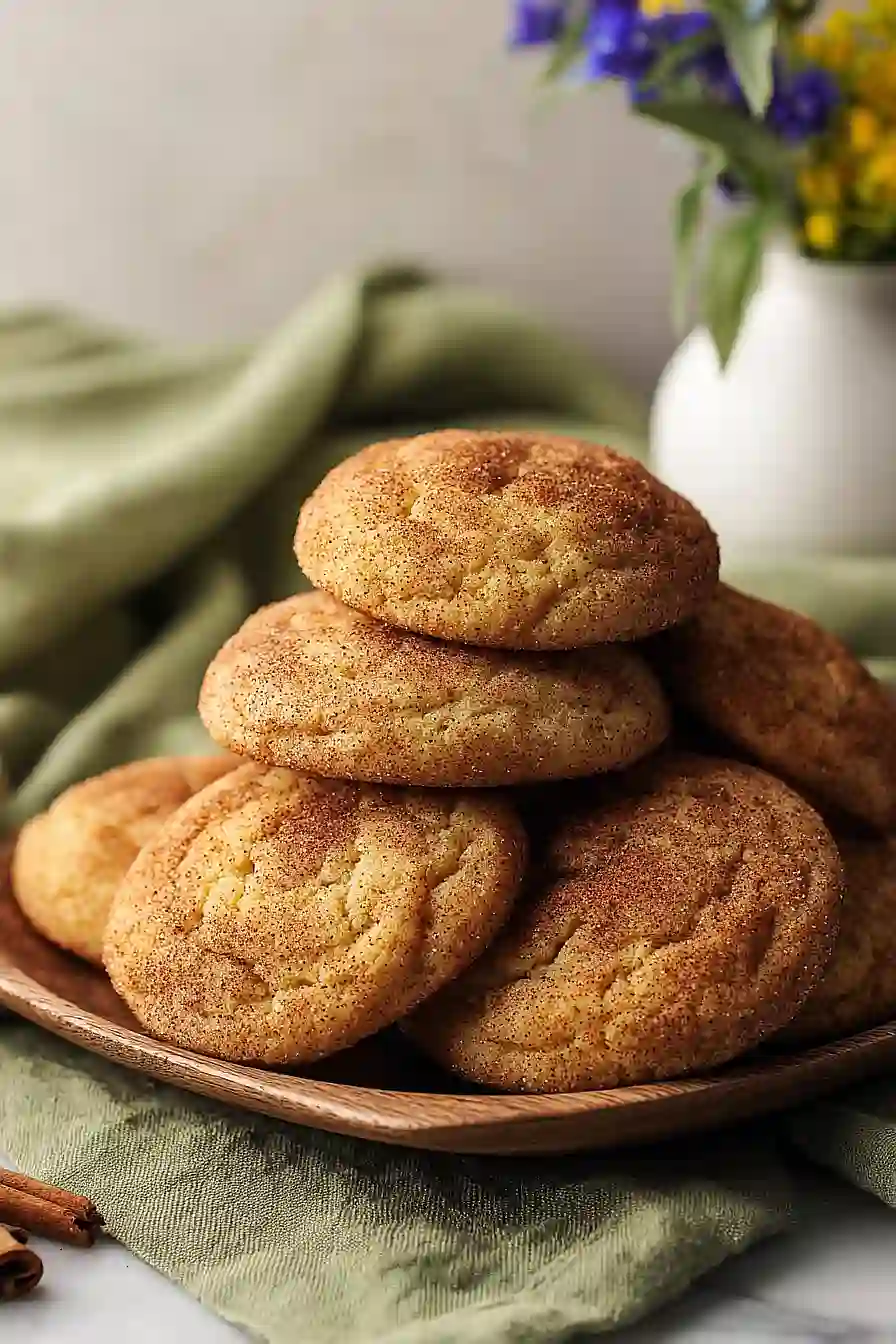
How to Store
Store: Keep your snickerdoodles in an airtight container at room temperature for up to 5 days. They’ll stay soft and chewy if you toss a slice of bread in the container with them.
Freeze: These cookies freeze really well, either baked or as dough. For baked cookies, layer them between parchment paper in a freezer-safe container for up to 3 months.
Enjoy: Frozen cookies thaw quickly at room temperature in about 15 minutes, or you can warm them in the microwave for 10-15 seconds.
| Preparation Time | 15-20 minutes |
| Cooking Time | 10-15 minutes |
| Total Time | 25-35 minutes |
| Level of Difficulty | Easy |
Estimated Nutrition
Estimated nutrition for the whole recipe (without optional ingredients):
- Calories: 1600-1800
- Protein: 12-16 g
- Fat: 70-80 g
- Carbohydrates: 240-260 g
Ingredients
For the dough:
- 2/3 cup sugar
- 1/4 tsp salt
- 1 tsp apple cider vinegar (activates the baking soda)
- 1 tsp baking soda
- 1.5 cups all-purpose flour (I use King Arthur all-purpose flour)
- 1.25 tsp cinnamon (freshly ground preferred)
- 1 tsp vanilla extract
- 1 tsp cream of tartar (creates the signature tang)
- 1 tbsp soy milk (or any plant-based milk)
- 1/2 cup vegan butter (softened to room temperature)
For the cinnamon-sugar coating:
- 1 tsp cinnamon (for rolling cookies)
- 3 tbsp sugar
Step 1: Prepare Your Mise en Place and Preheat
- 1.5 cups all-purpose flour
- 1.25 tsp cinnamon
- 1 tsp baking soda
- 1/4 tsp salt
- 1 tsp cream of tartar
- 1 tsp cinnamon
- 3 tbsp sugar
Start by preheating your oven to 375°F so it’s ready when your dough is.
While the oven heats, measure out all your ingredients into separate bowls—this includes the flour, cream of tartar, baking soda, cinnamon, and salt.
I like to sift the flour and cinnamon together to remove any lumps and ensure even distribution of the spices, which gives you more consistent flavor in every bite.
Set aside the cinnamon-sugar mixture (1 tsp cinnamon mixed with 3 tbsp sugar) in a small shallow bowl for rolling the cookies later.
Step 2: Cream the Butter and Sugar Base
- 1/2 cup vegan butter
- 2/3 cup sugar
- 1 tsp vanilla extract
- 1 tsp apple cider vinegar
Using an electric mixer, cream together the softened vegan butter and sugar until the mixture is light, fluffy, and pale—this usually takes about 2-3 minutes.
This creaming step is crucial because it incorporates air into the dough, which helps your cookies rise and develop that classic snickerdoodle texture.
Add the vanilla extract and apple cider vinegar to the creamed mixture and beat for another 30 seconds until everything is well combined.
The vinegar reacts with the baking soda to create lift and tang, so don’t skip it!
Step 3: Combine Dry Ingredients and Mix Into Dough
- butter and sugar mixture from Step 2
- dry ingredient mixture from Step 1
- 1 tbsp soy milk
Switch to mixing by hand with a wooden spoon or spatula.
Add the dry ingredient mixture from Step 1 (flour, cream of tartar, baking soda, cinnamon, and salt) to the butter mixture and stir until the mixture becomes crumbly and no large flour streaks remain.
This hand-mixing prevents overmixing, which can make snickerdoodles tough instead of tender.
Add the soy milk and stir gently just until a soft dough comes together.
The dough should be slightly sticky but still manageable—if it feels too dry, add a few drops more plant-based milk.
Step 4: Shape and Coat the Cookies
- dough from Step 3
- cinnamon-sugar mixture from Step 1
Working with about 1 tablespoon of dough at a time, roll each portion into a ball between your palms.
Roll each ball generously in the cinnamon-sugar mixture from Step 1, making sure to coat all sides evenly for that signature snickerdoodle finish.
Place the coated balls on a parchment-lined baking tray, spacing them about 2 inches apart since they’ll spread slightly during baking.
Step 5: Bake and Cool
Bake in the preheated 375°F oven for 10 minutes, until the edges are set but the centers still look slightly underdone—this is the secret to keeping them chewy!
Let the cookies cool on the baking tray for 5 minutes, which allows them to firm up just enough to handle without being fragile.
Then transfer them to a wire rack to cool completely.
I find that snickerdoodles actually taste better the next day once the flavors have mellowed, so don’t judge them immediately!
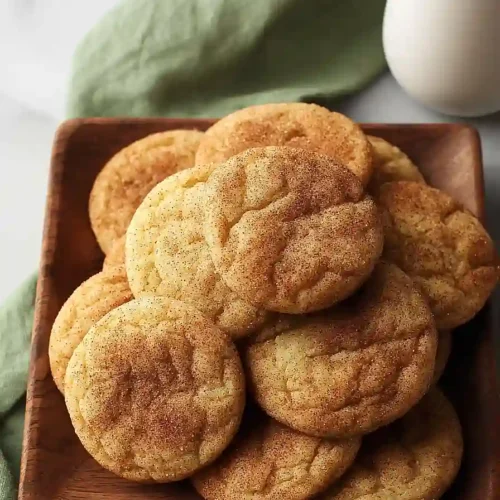
Soft Vegan Snickerdoodles
Ingredients
For the dough:
- 2/3 cup sugar
- 1/4 tsp salt
- 1 tsp apple cider vinegar (activates the baking soda)
- 1 tsp baking soda
- 1.5 cups all-purpose flour (I use King Arthur all-purpose flour)
- 1.25 tsp cinnamon (freshly ground preferred)
- 1 tsp vanilla extract
- 1 tsp cream of tartar (creates the signature tang)
- 1 tbsp soy milk (or any plant-based milk)
- 1/2 cup vegan butter (softened to room temperature)
For the cinnamon-sugar coating:
- 1 tsp cinnamon (for rolling cookies)
- 3 tbsp sugar
Instructions
- Start by preheating your oven to 375°F so it’s ready when your dough is. While the oven heats, measure out all your ingredients into separate bowls—this includes the flour, cream of tartar, baking soda, cinnamon, and salt. I like to sift the flour and cinnamon together to remove any lumps and ensure even distribution of the spices, which gives you more consistent flavor in every bite. Set aside the cinnamon-sugar mixture (1 tsp cinnamon mixed with 3 tbsp sugar) in a small shallow bowl for rolling the cookies later.
- Using an electric mixer, cream together the softened vegan butter and sugar until the mixture is light, fluffy, and pale—this usually takes about 2-3 minutes. This creaming step is crucial because it incorporates air into the dough, which helps your cookies rise and develop that classic snickerdoodle texture. Add the vanilla extract and apple cider vinegar to the creamed mixture and beat for another 30 seconds until everything is well combined. The vinegar reacts with the baking soda to create lift and tang, so don’t skip it!
- Switch to mixing by hand with a wooden spoon or spatula. Add the dry ingredient mixture from Step 1 (flour, cream of tartar, baking soda, cinnamon, and salt) to the butter mixture and stir until the mixture becomes crumbly and no large flour streaks remain. This hand-mixing prevents overmixing, which can make snickerdoodles tough instead of tender. Add the soy milk and stir gently just until a soft dough comes together. The dough should be slightly sticky but still manageable—if it feels too dry, add a few drops more plant-based milk.
- Working with about 1 tablespoon of dough at a time, roll each portion into a ball between your palms. Roll each ball generously in the cinnamon-sugar mixture from Step 1, making sure to coat all sides evenly for that signature snickerdoodle finish. Place the coated balls on a parchment-lined baking tray, spacing them about 2 inches apart since they’ll spread slightly during baking.
- Bake in the preheated 375°F oven for 10 minutes, until the edges are set but the centers still look slightly underdone—this is the secret to keeping them chewy! Let the cookies cool on the baking tray for 5 minutes, which allows them to firm up just enough to handle without being fragile. Then transfer them to a wire rack to cool completely. I find that snickerdoodles actually taste better the next day once the flavors have mellowed, so don’t judge them immediately!


Yum! Just tried these! Turned out perfect! Thank you for sharing!